Authored By: Lyn Maluleke
Tshwane University Of Technology
Cyberbullying in South Africa: Is the Law keeping up with online Abuse?
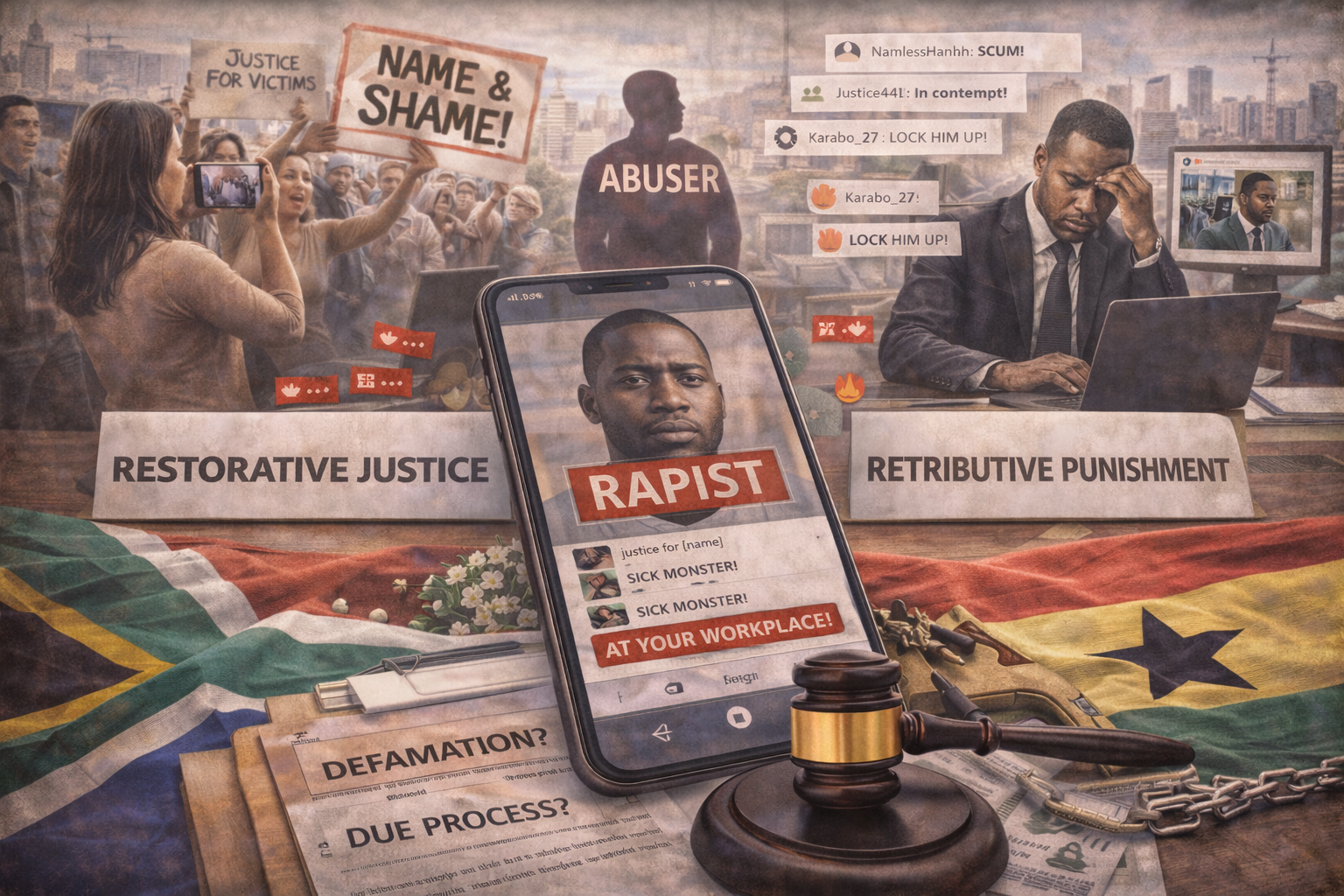
Technology plays a big role in our lives today. It changes how we communicate, learn, and meet people. Millions of South Africans use apps like WhatsApp, Facebook, Instagram, TikTok and X every day. We use them to talk, share ideas, and get news. But apps also have downsides. One big problem is cyber bullying. Bullying online is when someone keeps using phones or the internet to hurt someone else. They might send threats, embarrassing pictures, or hurtful comments. Unlike regular bullying, it never stops. It can happen anytime or at night. One post can spread to lots of people very quickly. Once something is online, it is hard to remove it. This hurts people a lot. Victims often feel scared, alone, and ashamed. In some cases, this also causes mental health issues.
South Africa took important steps too. Two laws were made: the Cyber Crimes Act of 2020 and the Protection from Harassment Act of 2011[1]. These laws are meant to stop bullying that happens online and help people who are bullied. They also safeguard rights like privacy and respect. But laws alone are not enough. Many people do not report cyber bullying. Some do not know they can get help and others struggle because people online can hide and new technology moves so fast. I think South Africa needs more than just laws. We need police to enforce rules better. We need more people to know their rights, and schools need to teach digital safety. If we do that, then the law can really protect everyone from bullying.
The Legal Framework Governing Cyberbullying in South Africa.
In South Africa there is not one law that specifically says, “cyberbullying is a crime”. What we have instead is a set of different laws that together are used to deal with online abuse. Many of them were written before social media became such a huge problem, but they are still used today to protect victims and hold people accountable.
We first look at Constitution of the Republic of South Africa, 1996. It is the basis of our rights. Section 10 protects our dignity; section 12 protects our right to feel safe as a person, and section 14 protects or privacy. When a person is insulted or exposed online, these rights are often the big ones being broken. That is why the government has a responsibility to fight and protect people.
Another important law is the Cybercrimes Act 19 of 2020. This act was made to deal with crime online. It emphasizes that sharing someone’s private pictures without permission is not allowed. Even to send messages that threaten people or cause harm is illegal in South Africa. Because of this, police can open cases and prosecute offenders for what they do online.
We also have the Protection from Harassment Act 17 of 2011. This law helps people who are targeted online. Victims can go to court and ask for a protection order to make the harassment stop. The Act also gives courts power to try and trace people who use fake profiles to bully others.
So, South Africa has legal minds to fight cyberbullying, but the fact that online abuse is continuing reveal that having laws is not enough. We must look at whether these laws are being used and working in real life.
A good example is the case of Heroldt v Wills ZAGPPHC 1[2]. In this case, the Hight Court dealt with the harmful Facebook posts. The court said online comments can damage someone’s dignity and reputation very quickly because they reach so many people who can still be held legally responsible for what they are online, even if it is not done in person.
Can South Africa’s current legal framework effectively address cyberbullying?
Anonymity makes perpetrators difficult to trace
Many perpetrators use fake accounts to avoid exposing their real identities. This hidden identity prevents police from carrying out smooth tracking. Even when victims submit reports, investigations are delayed and stalled. As a result, victims often must wait a long time to receive real help and protection.
Limited knowledge
Many victims, especially learners and teenagers, do not know they have legal options. Most do not understand they can apply for a protection order, or that specific online acts are crimes under South African law. Others do not say anything because they are afraid it will get worse, feel embarrassed, or do not trust anything that will change. As result many cases never get reported.
Technology moves faster than the law
New apps, platforms, and methods to communicate shows every month. Bullies fit quickly, but the law and people applying are struggling to keep up. While the Cybercrimes Act was an important step forward, police and prosecutors still need better training, and resources to handle these cases
4.Recommendations
If we really want to deal with cyberbullying, we cannot just rely on laws alone. We have to do better in 3 areas.
Police and courts need proper training.
The internet changes every week. New apps, new tricks, new ways people hide online. So, our law enforcement needs to be kept up too. If police and prosecutors understand how cyber abuse works and have the right tools, it becomes easier to find the people behind the screens and hold them responsible under the Cybercrimes Act.
The need to talk about this more in schools, at home, in communities.
Kids and students should be taught from a young age how to be safe and kind online. Not just “do not post that”, but also here is what you do if someone is bullying you. For example, people should know they can get a protection order under the Protection from Harassment Act. The truth is that many people stay quiet because they do not even understand how they have rights. Once people know, they are more likely to speak up.
Social media companies must step up.
Instagram, TikTok, WhatsApp are not just fun apps anymore. They are where a lot of harm happens. They cannot just say “not our problem.” When someone reports abusive posts, the platforms need to take them down fast and work with police when it is serious. If they do their part, the internet will feel a lot safer for all of us.
5.Conclusion
The truth is that cyberbullying is not just children being mean online anymore. In South Africa it is a serious issue and young people are taking it easy because they depend more in social media. Even though social media makes us connect with family and friends, it also gives people access to being cruel without facing consequences. Cruelty sticks and it can leave emotional scars that last for years.
But the problem is, many victims still do not get justice. Some bullies hide behind fake profiles. Many people do not know where to go for help. And by the time the law follows up, technology has already moved on. For things to change, we need more than just laws on paper. We need those laws to be enforced. We need to keep teaching people about online safety. And we need social media companies to be held accountable. If government, schools, communities, and tech companies work together, we can make the internet a safer place and better protect people from cyberbullying.
6.References
Legislation
Constitution of the Republic of South Africa, 1996.
Cybercrimes Act 19, 2020. [gov.za], [gov.za]
Protection from Harassment Act 17 of 2011. [justice.gov.za], [gov.za]
Cases
Heroldt v Wills 2013 (2) SA 530 (GSJ). [dmllaw.co.za], [lawblogsa….dpress.com]
Online Sources
South African Government, ‘Cybercrimes Act 19 of 2020’ https://www.gov.za/documents/acts/cybercrimes-act-19-2020-english-afrikaans-01-jun-2021 accessed 6 August 2026. [gov.za]
South African Government, ‘Protection from Harassment Act 17 of 2011’ https://www.gov.za/documents/acts/protection-harassment-act-17-2011-05-dec-2011 accessed 6 August 2026. [gov.za]
South African Government, ‘Constitution of the Republic of South Africa, 1996’ https://www.gov.za/documents/constitution/constitution-republic-south-africa-1996-04-feb-1997 accessed 6 August 2026
[1] Cybercrime Act 2020
Protection from harassment Act 17 of 2011
[2] Heroldt v Willa ZAGPPHC 1