Authored By: Vaishnavi Santosh Nighute
I.L.S Law College Pune
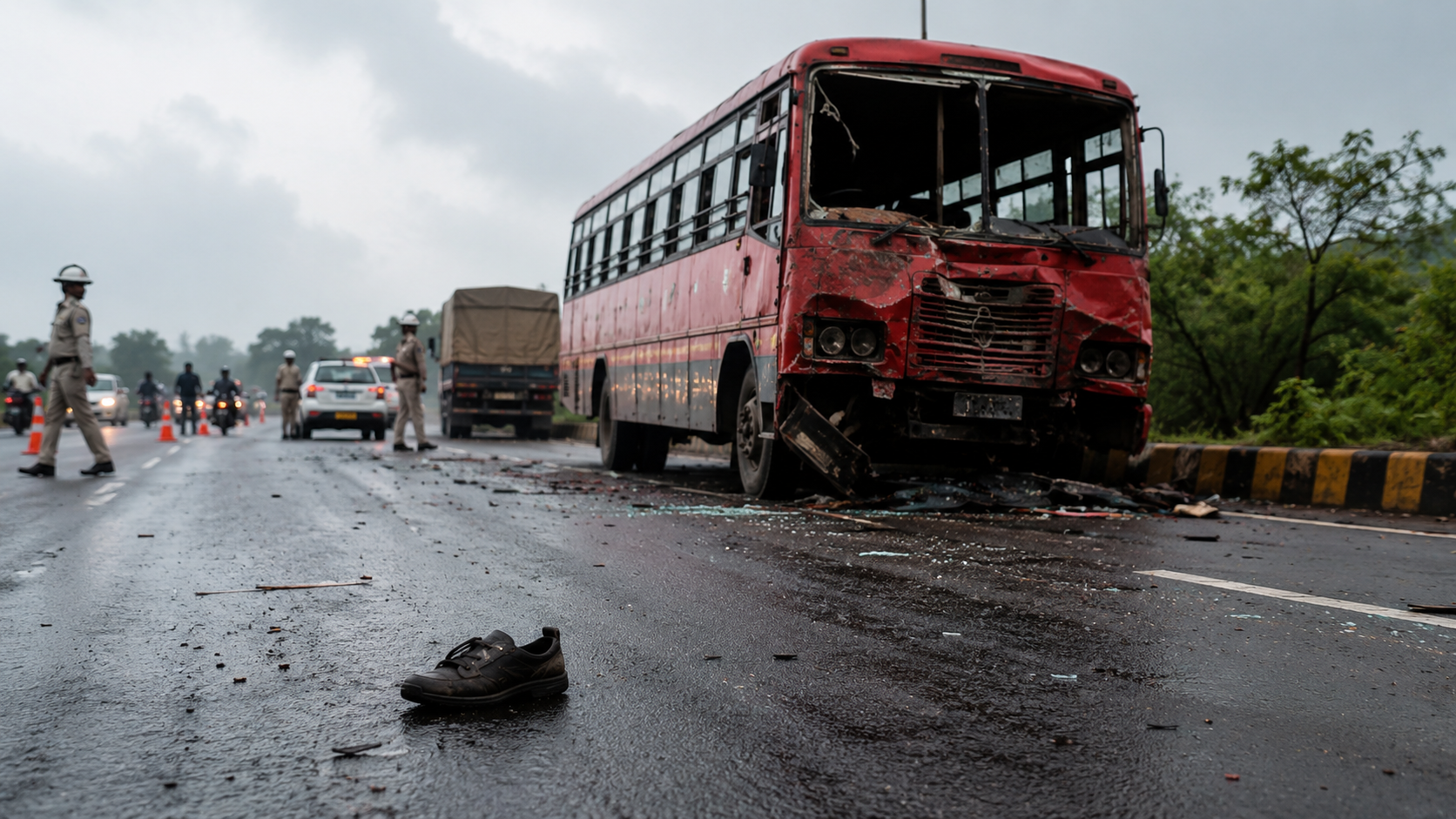
India has the largest number of road deaths worldwide, with approximately 1,72,000 fatalities from traffic-related incidents in 2023.[1] Despite being one of the most vulnerable groups of road users, pedestrians continue to receive the least attention when it comes to both physical infrastructure and legal protection. Pedestrian safety is reduced to a question of chance rather than a guaranteed right in Indian cities and roads due to the absence of functional pedestrian walkways, dimly lit crossings, and encroached pavements. The Indian legal framework, anchored by Article 21 of the Constitution of India, guarantees every citizen the right to life and personal liberty. Courts have consistently interpreted this right broadly to encompass the right to live with dignity and safety in public spaces. Yet despite this constitutional guarantee, no dedicated legislative framework exists to enforce pedestrian safety or impose clear accountability on the State for failures of road infrastructure.
This article makes the case that the State’s continuous inability to provide safe pedestrian infrastructure violates the fundamental right to walk safely on public roads as guaranteed by Article 21 of the Constitution and includes the right to access safe, demarcated, and well-maintained footpaths as per the recent Supreme Court judgement. Although it offers accident victims some relief, the present structure under the Motor Vehicles Act, 2019, is nevertheless insufficient and poorly implemented.
A bench of Justices P. S Narasimha and Atul S.Chandurkar said that pedestrians’ rights must take precedence over the movement of motor vehicles. Article 21 of the Constitution of India provides that no person shall be deprived of his life or personal liberty except according to procedure established by law. The Supreme Court of India has interpreted Article 21 to include the right to live with dignity, safety, and access to public spaces. [2]It is submitted that this interpretation necessarily encompasses the right of every citizen to walk safely on public roads without risk of death or injury caused by State negligence.
Article 19(1)(d) further guarantees every citizen the right to move freely throughout the territory of India. [3]The constitution protects not just the freedom to move, but also the ability to do so safely. This right of free movement is rendered meaningless where basic pedestrian infrastructure is absent or dangerous.
The Motor Vehicles Act, 2019, represents the primary statutory framework governing road safety in India. The Act introduces provisions for enhanced compensation for road accident victims, including hit-and-run cases under Section 161, and establishes the Motor Vehicle Accident Fund under Section 164B to provide relief to victims of road accidents.[4] However, the Act focuses predominantly on motorised vehicles and their operators, leaving pedestrian infrastructure and State accountability largely unaddressed.
The National Road Safety Policy, 2010, acknowledges pedestrian safety as a priority and calls for the development of pedestrian-friendly infrastructure. But the Policy lacks statutory force and imposes no binding obligations on State governments or municipal authorities. Its recommendations have been inconsistently implemented across the country. [5]
The responsibility is on urban development authorities, municipal corporations, and panchayats, which must ensure that these guidelines are followed. And footpaths and other pedestrian infrastructure are properly constructed, maintained and protected.
III. Case Law Analysis
The most significant and recent judicial development in the field of pedestrian rights, affecting millions of pedestrians in India, is the Supreme Court’s landmark ruling in Maniyar Iliyaz @ Shaik Riyaz v P. Ayyappan & Ors. (2026).[6] where it holds that the right to walk is a fundamental right guaranteed under the constitution and includes the right to access safe, demarcated, and well-maintained footpaths.
“These rights are primary and shall have priority over movement by motorised vehicles”, the Court said.
The Court grounded this right in a conjunctive reading of multiple constitutional provisions. The right to walk was held to be an integral component of the right to free movement guaranteed under Article 19(1)(d), further embodying expressive, congregational, and associational rights under Articles 19(1)(a), 19(1)(b), and 19(1)(c), read in conjunction with the right to life and personal liberty under Article 21. This multi-constitutional foundation significantly strengthens the enforceability of pedestrian rights. Justice Narasimha, in the judgment, said that it is the “ simplest of the simple human activity, inextricably connected to life” [7]
Critically, the Court held that the mere existence of a road creates an enforceable legal duty on public bodies — specifically Urban Development Authorities, Municipal Corporations, Municipalities, and Panchayats — to demarcate, construct, and maintain safe footpaths. This ruling establishes for the first time a direct, judicially enforceable correlative duty on State bodies corresponding to the pedestrian’s fundamental right.
The Court also clarified that citizens may now invoke restitutionary constitutional and legal remedies against these duty-bearers independently of compensation remedies available under the Motor Vehicles Act, 1988. This is a crucial development, as it creates a parallel accountability mechanism beyond mere monetary compensation.
The Supreme Court directly criticised the Motor Vehicles Act, 1988, observing that the legislation treats vehicles as its primary subject and reduces human and pedestrian interests to merely incidental concerns. The Court urged the formulation of dedicated pedestrian legislation and the establishment of an independent regulatory body with domain expertise to protect and plan for pedestrian rights.
Exercising its Suo motu jurisdiction, the Court directed its Registry to forward the judgment to the Law Commission of India and key ministries, including Housing and Urban Affairs, Rural Development, and Road Transport and Highways, with directions to initiate an appropriate legal framework.
The constitutional duty of the State to protect citizens in public spaces was earlier established in MC Mehta v Union of India (1988), where the Supreme Court affirmed that Article 21 imposes positive obligations on the State to prevent foreseeable harm to life.[8] This principle laid the groundwork for the more specific pedestrian rights recognised in Maniyar Iliyaz (2026).
While the judgment in Maniyar Iliyaz (2026) represents a landmark constitutional development, its practical impact remains contingent upon effective enforcement. India has historically suffered from a significant gap between legislative intent and implementation. The National Road Safety Policy, 2010, articulated similar pedestrian-friendly goals over a decade ago, yet pedestrian fatalities surged by 163% between 2015 and 2024.[9] This trajectory shows that judicial declarations and policy documents alone are insufficient without binding enforcement mechanisms.
The absence of a dedicated statutory authority responsible for pedestrian infrastructure means accountability remains diffuse. Urban Development Authorities, Municipal Corporations, and Panchayats share overlapping jurisdictions, creating conditions in which each body may deflect responsibility onto another. This institutional fragmentation is a structural weakness that the current legal framework has failed to address. The Motor Vehicles Act, 2019, enhanced compensation provisions for accident victims, including hit-and-run cases under Section 161. However, as the Supreme Court itself observed in Maniyar Iliyaz (2026), the Act is fundamentally vehicle-centric.[10] It addresses the consequences of road accidents rather than their prevention. Compensation, however calculated, does not restore life or prevent future deaths. A framework that responds only after harm has occurred cannot be considered adequate protection of a fundamental right.
Furthermore, the compensation mechanism under the Act is slow, adversarial, and inaccessible to many victims, particularly those from economically disadvantaged backgrounds who lack legal representation. The Motor Vehicle Accident Fund established under Section 164B is theoretically available, but it remains underutilised due to a lack of awareness and procedural complexity.[11]
Perhaps the most critical gap identified in the current framework is the complete absence of dedicated pedestrian safety legislation in India. Unlike the United Kingdom, which imposes clear statutory duties on highway authorities under the Highways Act 1980, India has no such strong legislation that places binding, enforceable obligations on State bodies to construct and maintain safe pedestrian infrastructure.[12]
The Supreme Court’s direction in Maniyar Iliyaz (2026) to the Law Commission and relevant ministries to initiate such a framework is welcome, but it remains a direction rather than a mandate. Until Parliament enacts dedicated legislation, pedestrian safety will continue to depend on judicial intervention rather than systematic legal protection.
Resource Constraints
It may be argued that the State faces genuine resource constraints in constructing and maintaining pedestrian infrastructure across a country of India’s size and diversity. This article acknowledges that implementation will require substantial public investment. However, resource constraints cannot justify the continued violation of fundamental rights. The Supreme Court has consistently held that financial limitations do not excuse the State from its constitutional obligations under Article 21. Moreover, the cost of inaction — measured in human lives and economic losses from road accidents — far exceeds the cost of investment in pedestrian infrastructure.
Civic Responsibility
Roads are a shared public space. Alone in India, millions of people navigate the streets every day – whether by walking or driving. Yet, the freedom of mobility comes with the fundamental civic obligations: the duty to protect one another. While governments and municipalities are responsible for designing safe infrastructure and enforcing traffic laws, the ultimate safety of pedestrians relies on the everyday actions, ethics, and responsibility of the citizens themselves.
Conclusion
The right to walk safely on public roads is not a privilege — it is a fundamental right guaranteed by the Constitution of India. The Supreme Court’s landmark judgment in Maniyar Iliyaz @ Shaik Riyaz v P. Ayyappan & Ors. (2026) has firmly established this principle, declaring that pedestrian safety is enforceable under Articles 19(1)(a), 19(1)(b), 19(1)(c), 19(1)(d), and 21 of the Constitution. This article has demonstrated that despite this constitutional foundation, the existing legal framework remains structurally inadequate to deliver meaningful protection to pedestrians across India.
The Motor Vehicles Act, 2019, while providing compensation mechanisms, is fundamentally reactive and vehicle-centric. The National Road Safety Policy, 2010, lacks statutory force. Municipal and urban bodies bear overlapping and poorly defined responsibilities. The result is a framework that responds to pedestrian deaths after they occur rather than preventing them from occurring in the first place.
This article submits that the following reforms are necessary. First, Parliament must enact a dedicated Pedestrian Safety Act that assigns clear, non-delegable duties to identified public bodies for the construction and maintenance of safe footpaths. Second, an independent regulatory authority must be established, as directed by the Supreme Court, with full-time domain expertise in pedestrian safety planning. Third, citizens must be empowered with accessible legal remedies against duty-bearing authorities, independent of and in addition to compensation under the Motor Vehicles Act. Fourth, it is the responsibility of all who use the roads to keep pedestrians safe.
The Supreme Court has shown the way. It is now for Parliament and the Executive to follow. Every year that dedicated legislation is delayed, thousands of pedestrians pay with their lives for a failure of will rather than a failure of legal knowledge.
Reference(S):
[1] Ministry of Road Transport and Highways, Road Accidents in India 2023 (Government of India 2023).
[2] Constitution of India, art 21
[3] Constitution of India, art 19(1)(d).
[4] Motor Vehicles Act 2019 (India), ss 161, 164B.
[5] Ministry of Road Transport and Highways, National Road Safety Policy (Government of India 2010).
[6] Maniyar Iliyaz @ Shaik Riyaz v P Ayyappan and Ors [2026] SC <indiankanoon.org/doc/733536> accessed 23 June 2026.
[7] Maniyar Iliyaz @ Shaik Riyaz v P Ayyappan and Ors [2026] SC <indiankanoon.org/doc/733536> accessed 23 June 2026.
[8] MC Mehta v Union of India [1988] 1 SCC 471.
[9] Paschim Banga Khet Mazdoor Samity v State of West Bengal [1996] 4 SCC 37.
[10] Ministry of Road Transport and Highways, ‘Road Accidents in India 2023’ (Government of India 2023).
[11] Motor Vehicles Act 2019 (India), ss 161, 164B.
[12] Highways Act 1980 (UK), s 41.