Authored By: Genevieve Kaimana
University of South Africa
On Sunday, 7 June 2026, President Cyril Ramaphosa addressed the South African nation, focusing on illegal immigration and enforcing proper border security measures. Immigrants had entered South African borders over the years without the papers proving they are permitted to stay or become citizens. The announcement changed every affected person’s life, given the impact it had on families and on the immigrants who helped build South Africa into the country it is today. Immigrants were devastated and fearful hearing the president’s decision, and how quickly their lives could change in a moment. Their hard work building the country goes unacknowledged, and their drive to create job opportunities in South Africa is overlooked. These immigrants have played an important and effective role in the lives of South African citizens. Without their contribution and determination, the South African economy would likely be in a state of decline rather than the modest prosperity it has achieved, lacking the resources to sustain growth and become a developed economy. President Ramaphosa stated, “Illegal migration, if unchecked, poses a risk to South Africa’s security, stability and economic progress.”1 Before the issue of illegal migration became a national focus, had the South African economy meaningfully progressed at all? That is a question many South Africans are asking themselves.
This article argues that while the government’s enforcement of the Immigration Act 13 of 2002 and the Refugees Act 130 of 1998 is legally grounded, the short compliance windows built into that framework — combined with the speed of the June 2026 crackdown — have caused disproportionate harm to foreign families, mixed-status households, and children, harm that a landmark July 2026 Constitutional Court ruling has only partly addressed.
The Legal Framework: Immigration Act 13 of 2002 and Refugees Act 130 of 1998
The foundation of this constitutional matter forms part of section 30 of the Immigration Act 13 of 2002. To establish legal migration, a claimant must prove: (i) valid documents; (ii) compliance with section 29; (iii) compliance with section 30(2); (iv) financial self-sufficiency; and (v) compliance with administrative requirements. This standard was applied in Minister of Home Affairs and Others v Watchenuka and Others 2004 (4) SA 326 (SCA).2
The importance of ensuring one’s documents are valid, and understanding the standard procedure for entering South Africa legally, is not sufficiently taught. Better public education on this point would reduce the risk of deportation and the danger that comes with it. It can reasonably be assumed that the government, having noticed disruptions in the migration process, took the position that deporting illegal foreigners would help the economy and create employment for South African citizens.
Under the Immigration Act, a foreigner cannot be classified as an “illegal foreigner” while their application is pending, as provided under section 22. An illegal foreigner is defined as a person who does not hold a legal or valid permit to enter and reside in South Africa. Without a valid permit or a pending application, that person is at high risk of deportation, arrest, or detention, as this constitutes a violation of South African law. Conversely, if an asylum seeker does have a pending application, they cannot lawfully be arrested, deported, or detained, since doing so would violate the right to dignity protected under section 10 of the Constitution.
This places the burden on the foreigner to provide evidence that their documentation is valid; the responsibility for discharging that burden rests with the individual. Understanding both the Immigration Act and the Refugees Act 130 of 1998 helps prevent confusion about one’s legal position. Foreigners are obligated under the Refugees Act to hold a permit and carry their legal documents at all times. Obtaining a work or study visa is essential to accessing employment and basic rights. Section 22 permits exist specifically to protect foreigners from deportation while their applications are being processed.
‘Once denied the opportunity to apply, the asylum seeker is vulnerable to arrest, detention and eventually deportation to the country of origin — to almost certainly face persecution and threat to life.’3 This captures the difficulty facing foreigners who fail to report to a refugee reception office within five days, a requirement that was challenged before the courts and, on 7 July 2026, addressed by the Constitutional Court. The Court concluded that ‘the challenged provisions [are] inconsistent with the Constitution,’ suspending its declaration of invalidity pending confirmation.4
Based on what has been presented, the current law on deportation does affect foreigners’ lives significantly, given the short window they are given to validate their documentation and legally reside in South Africa. This leaves foreigners vulnerable to missing a filing deadline and having their application declined — a decision that brands them “illegal immigrants” regardless of their character or circumstances. The South African government needs to weigh its citizens’ interests alongside the human rights of foreigners when making decisions with this magnitude of impact. Understanding the Immigration Act and the Refugees Act should be common knowledge among foreigners entering South Africa, and greater public awareness would serve everyone affected.
The Human Impact on Families and Children
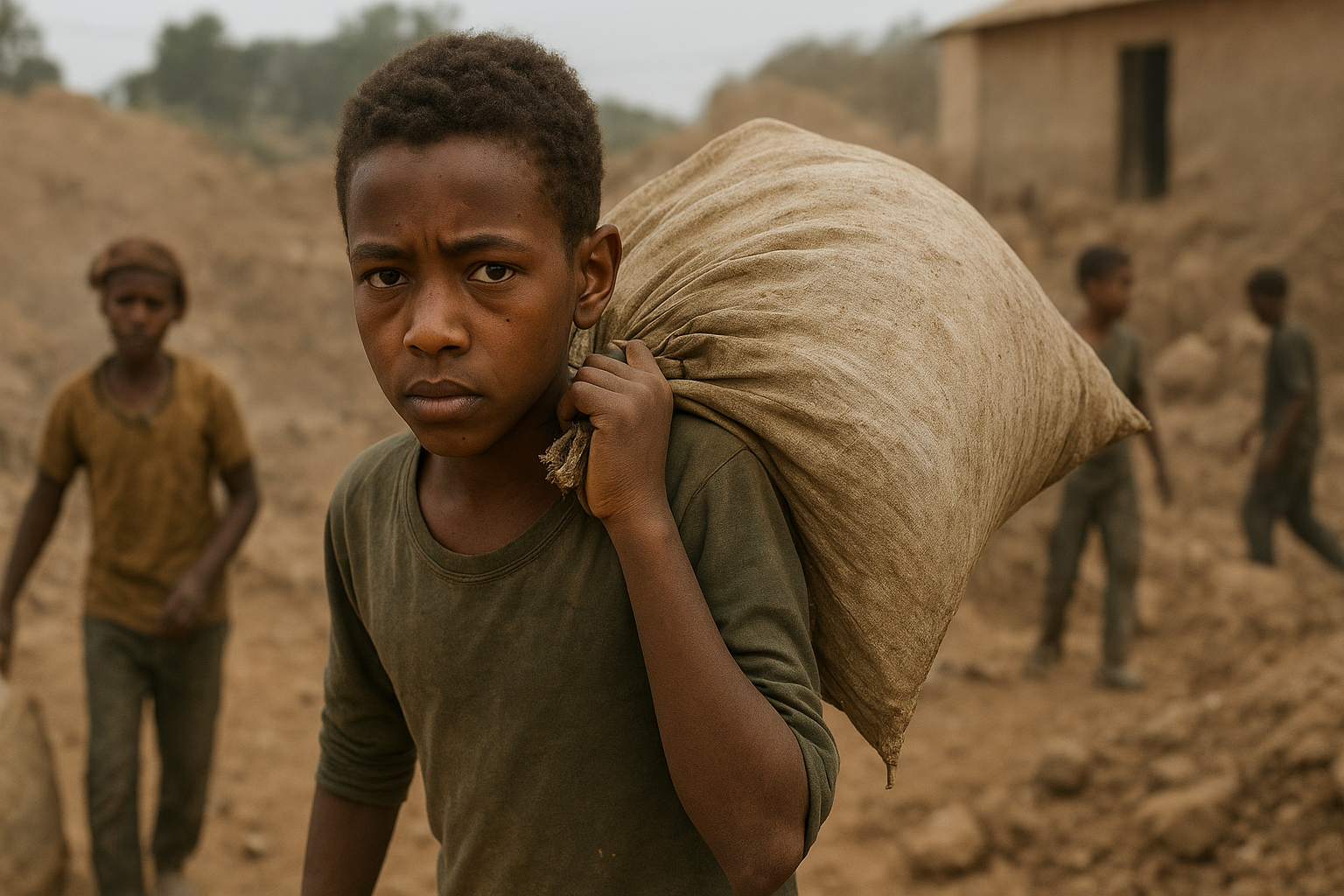
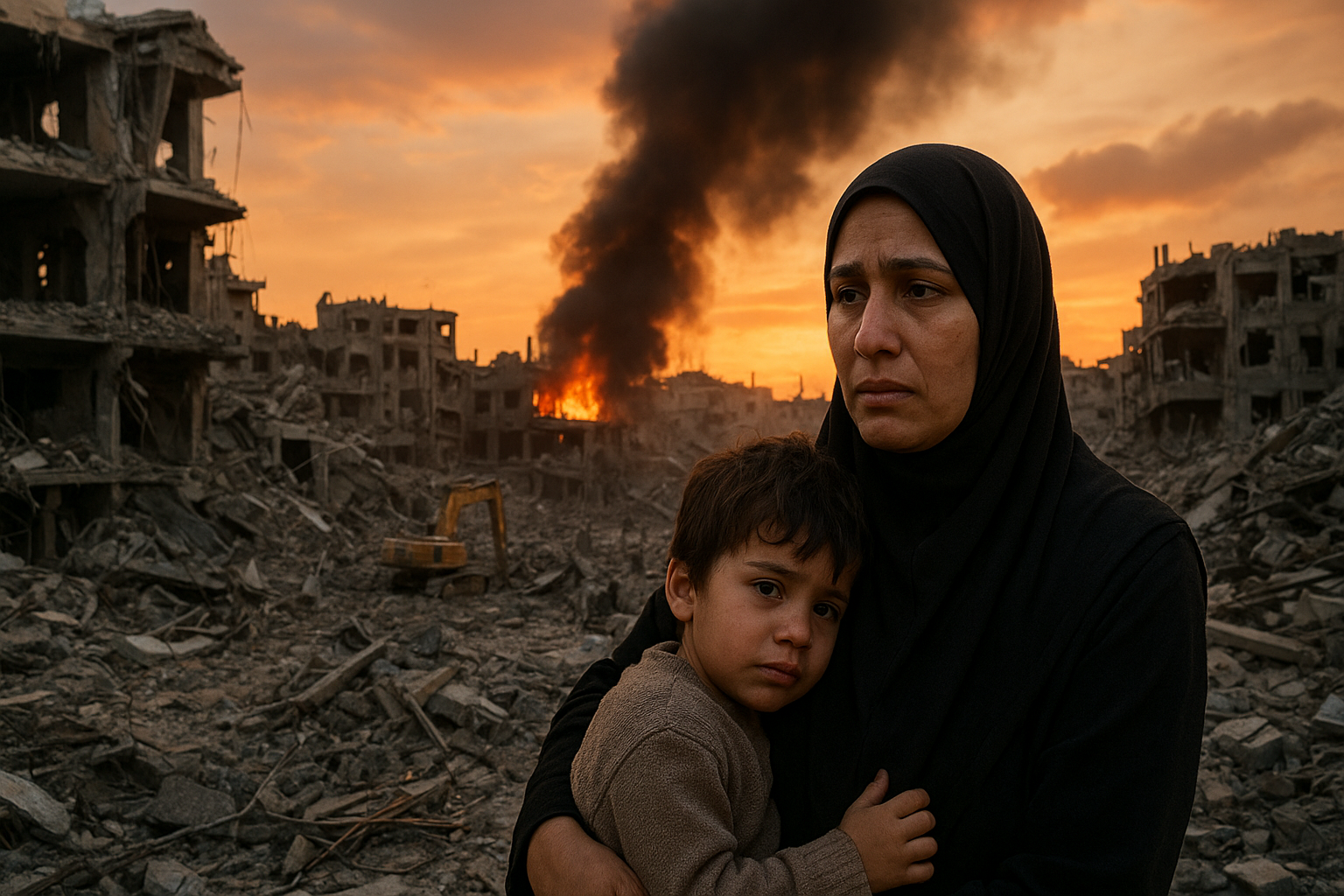
The South African government needs to take measures to prevent this kind of disruption from recurring, by setting out proper provisions that avoid unnecessary deportation and protect human dignity and the right to life. This issue also affects South African citizens who share children with foreign nationals: those children stand to lose a parent who has been present throughout their lives, because of a constitutional and political dispute they had no part in. Foreign children should still have the right to basic needs and education, since they bear no responsibility for their own documentation and carry a heavy burden as minors through no fault of their own. This has brought real devastation to the families caught in an issue that should have been resolved at the border years ago.
Economic Contribution
South Africa’s relative economic opportunity, set against the lack of resources in neighbouring countries, is part of what drives immigration — and, given the country’s system, what turns some of that immigration into illegal immigration. Many foreigners create their own employment in South Africa, earning a living through informal stalls, R5 stores, and businesses within areas often referred to as “China Town.” Without these entrepreneurs, South African citizens would lose access to affordable goods that formal, VAT-registered retailers cannot match on price. Deporting the “illegal immigrants” who supply many citizens’ daily needs is, on this view, a policy injustice that needs to be addressed.
On 30 June 2026, undocumented immigrants were forcibly deported by police officials following President Ramaphosa’s announcement, a move that reshaped daily life for many communities. Some citizens argue that their employment opportunities are being taken by these foreigners; others do not share the same drive and work ethic that many foreign entrepreneurs bring to the informal economy.
Rising Social Tension
In the aftermath, there has been a troubling rise in South Africans racially discriminating against people of colour connected to the deportations, both in person and online. This has created lasting tension between foreign nationals and citizens who had not previously viewed one another through this lens, tension directly traceable to the deportation decision. Part of the problem is a lack of civic education: schoolchildren are not taught enough about political issues that directly shape their lives and human rights. Greater knowledge of these issues would help the public better understand events like the recent deportations, and why they occurred.
Possible Improvement of the Immigration Process
Action SA has proposed initiatives to help undocumented foreigners participate in the formal economy and access social support mechanisms.5 The organisation estimates that a meaningful share of undocumented foreigners in South Africa lack correct documentation because of dysfunction within the Department of Home Affairs itself, rather than any unwillingness to comply.6 Action SA has identified this as a challenge worth addressing in order to improve both the economy and the government’s administrative systems, while accounting for the human rights of the individuals involved. Many undocumented foreigners are skilled workers who could meaningfully contribute to South Africa’s economic growth if given a workable path to documentation.
Recent Legal Developments
‘The Constitutional Court has ruled that procedural delays cannot be used to reject asylum applications, ensuring all claims are evaluated on their merits and protecting vulnerable children from deportation.’7 This ruling, handed down on 7 July 2026, followed years of challenges brought by law firms and legal practitioners. It offers real relief to families and to the children of foreign nationals, confirming that their human rights cannot simply be set aside by procedural technicality, and that they remain entitled to apply for legal residency in South Africa.
It is worth noting that the Court’s protection in this ruling was specifically directed at children — those who entered South Africa, or were born here, as minors. It did not extend the same protection to adults who entered the country as children and have since aged out of that category. Their parents were responsible for regularising their status at the time, yet these individuals may still be left to bear the consequences of decisions made on their behalf.
Conclusion
Illegal immigration cannot be addressed through blunt, sweeping enforcement without consequence. Every policy decision carries real effects on real lives. It is difficult to call the current wave of deportations fair to the foreigners affected, given how much of the underlying problem traces back to a lack of structure at South Africa’s borders over many years. The stated purpose of the removals announced in June 2026 was to strengthen the economy, yet the immediate effect was to disrupt the lives of people already living and working in South Africa — many removed from businesses and workplaces, some without adequate warning of the announcement itself.
This article has tried to give voice to the foreigners affected by these events, to the citizens who supported the crackdown, and to the citizens who spoke out on behalf of foreign nationals experiencing real hardship. The July 2026 Constitutional Court ruling represents a genuine, if partial, correction — protecting children from being deported for their parents’ procedural failures, while leaving open the position of the adults who grew up in the same circumstances. Organisations like Action SA continue to push for a more workable path forward, and that work is far from finished.
Note(S):
1. The Presidency, Republic of South Africa, Address by President Cyril Ramaphosa on Migration, Union Buildings, Tshwane, 7 June 2026.
2. Minister of Home Affairs and Others v Watchenuka and Others (010/2003) [2003] ZASCA 142; [2004] 1 All SA 21 (SCA); 2004 (2) BCLR 120 (SCA); 2004 (4) SA 326 (SCA) (28 November 2003).
3. Jacquie Cassette, Gift Nkosinathi Xaba & Krishaan Nte, “No Person Should Be Arbitrarily Returned to a Country to Face Persecution,” Cliffe Dekker Hofmeyr (2026).
4. Ibid.
5. Action SA, policy statement (2026).
6. Ibid.
7. Naledi Mashishi, “ConCourt Affirms Asylum Seekers’ Rights in Landmark Ruling,” Daily Maverick (7 July 2026).
Bibliography
Cases
Minister of Home Affairs and Others v Watchenuka and Others (010/2003) [2003] ZASCA 142; 2004 (4) SA 326 (SCA).
Legislation
Immigration Act 13 of 2002.
Refugees Act 130 of 1998.
Secondary Sources
The Presidency, Republic of South Africa, Address by President Cyril Ramaphosa on Migration, Union Buildings, Tshwane, 7 June 2026.
Jacquie Cassette, Gift Nkosinathi Xaba & Krishaan Nte, “No Person Should Be Arbitrarily Returned to a Country to Face Persecution,” Cliffe Dekker Hofmeyr (2026).
Naledi Mashishi, “ConCourt Affirms Asylum Seekers’ Rights in Landmark Ruling,” Daily Maverick (7 July 2026).
Action SA, policy statement on undocumented migrants (2026).