Authored By: Arti Sharma
Sri Sathya Sai Law College For Women Bhopal
I. Introduction
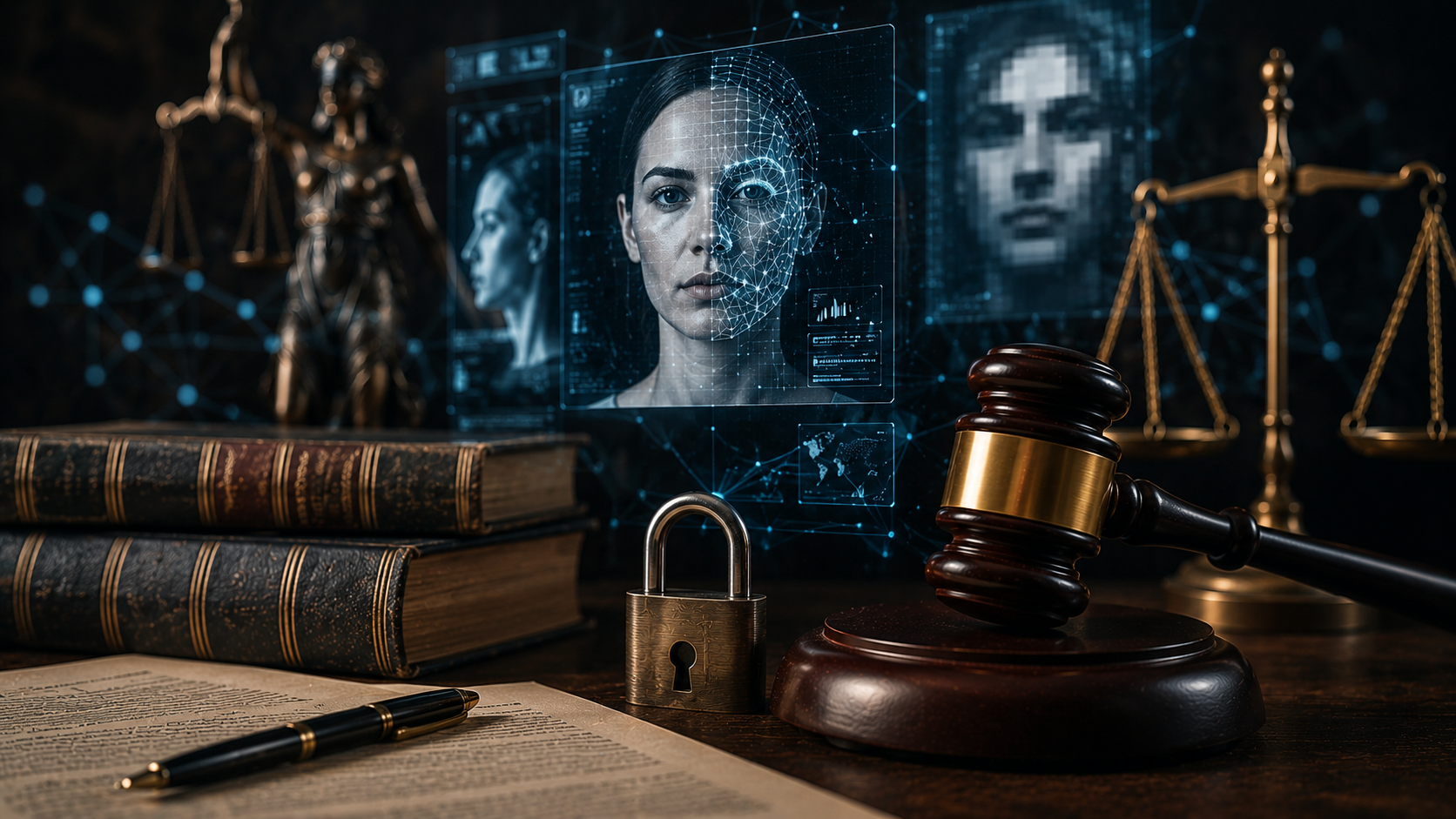
Technology has always evolved faster than the law, but the rise of artificial intelligence has widened this gap in ways that are difficult to ignore. One of the most troubling developments in recent years is deepfake technology—tools that can create highly realistic but entirely fake videos, images, or audio clips. At first glance, these may seem harmless or even entertaining, but their misuse has already started causing serious legal and social harm.
In India, several incidents have surfaced where individuals, particularly women, have been targeted through morphed or AI-generated explicit content. Unlike traditional cybercrimes, deepfakes do not merely misuse existing material; they create a false reality that can be extremely difficult to disprove once it spreads online. The damage, both emotional and reputational, is often immediate and long-lasting.
This article attempts to examine whether the current Indian legal framework is capable of addressing such harms. It argues that although existing laws provide some remedies, they were not designed to deal with AI-generated manipulation. As a result, there remains a significant legal gap that needs urgent attention.
II. Existing Legal Framework: Stretching Old Laws to New Problems
At present, there is no law in India that directly defines or regulates deepfake technology. Authorities, therefore, rely on existing provisions, mainly under the Information Technology Act, 2000 and the Indian Penal Code, 1860.
Section 66E of the Information Technology Act deals with the violation of privacy through capturing or transmitting private images without consent.¹ Similarly, Sections 67 and 67A address the publication of obscene or sexually explicit material in electronic form.² While these provisions can be applied in certain situations, they assume that the content originates from real images or recordings. Deepfakes, on the other hand, may be entirely fabricated, making these sections somewhat inadequate.
The Indian Penal Code also offers indirect remedies. For example, Section 499 deals with defamation, while Sections 354A and 509 address sexual harassment and insults to the modesty of a woman.³ However, these provisions focus more on the consequences rather than the method. They do not account for the technological sophistication involved in creating synthetic media.
In practice, this means that the law is being stretched to fit situations it was never designed for. While courts may still provide relief, the absence of clear legal recognition creates uncertainty for both victims and enforcement agencies.
III. Judicial Insights: Principles That Still Matter
Even though Indian courts have not yet dealt with a direct deepfake case, certain landmark judgments provide useful guidance.
Justice K.S. Puttaswamy v. Union of India (2017)
Facts:
This case arose out of concerns regarding the Aadhaar scheme and the collection of personal data by the State.
Held:
The Supreme Court recognised the Right to Privacy as a fundamental right under Article 21.⁴
Analysis:
This judgment has far-reaching implications. Deepfake technology, especially when used without consent, strikes at the very core of privacy. It does not just expose personal information—it creates false and often harmful representations. In that sense, the violation is even more intrusive.
Shreya Singhal v. Union of India (2015)
Facts:
The case challenged the constitutionality of Section 66A of the IT Act, which penalised offensive online content.
Held:
The Supreme Court struck down the provision, emphasising that vague laws can lead to misuse and restrict free speech.⁵
Analysis:
This case highlights a critical concern for any future deepfake regulation. While there is a need to control misuse, overly broad laws could suppress legitimate expression, including satire or artistic work. Therefore, any new legislation must be carefully drafted.
3. State of Tamil Nadu v. Suhas Katti (2004)
Facts:
The accused posted defamatory and obscene messages about a woman on an online platform.
Held:
He was convicted under the IT Act, making it one of the earliest cybercrime convictions in India.⁶
Analysis:
This case shows that the legal system can adapt to digital offences. However, it also reflects the limitations of older laws. The offence here involved direct posting, whereas deepfakes involve sophisticated digital manipulation, making detection and attribution far more complex.
R. Rajagopal v. State of Tamil Nadu (1994)
Facts:
The dispute concerned the unauthorised publication of an individual’s life story.
Held:
The Court upheld the right to privacy and control over personal information.⁷
Analysis:
Deepfakes take this issue a step further. Instead of merely publishing private facts, they create entirely fictional narratives. This makes the harm not only invasive but also deeply misleading.
IV. The Real Problem: Where the Law Falls Short
After examining both statutory provisions and judicial principles, it becomes clear that the real issue is not the absence of remedies, but their inadequacy.
Firstly, there is no legal definition of deepfakes in India. This alone creates confusion in enforcement and prosecution. Without a clear understanding of what constitutes a deepfake, it becomes difficult to regulate its misuse effectively.
Secondly, tracing the origin of deepfake content is a major challenge. The technology is easily accessible and often used anonymously. Law enforcement agencies are not always equipped with the technical expertise required to investigate such cases.
Another serious concern is the disproportionate impact on women. Many reported cases involve non-consensual explicit content, which not only harms reputation but also affects mental well-being. This raises broader questions about dignity, equality, and protection under the Constitution.
At the same time, there is a genuine concern about over-regulation. Deepfake technology is not inherently harmful; it also has legitimate uses in entertainment, education, and research. The challenge, therefore, is to regulate misuse without stifling innovation.
V. Conclusion: The Need for a Balanced Legal Response
Deepfake technology represents a new frontier where law and technology intersect in complex ways. While existing laws in India provide some level of protection, they are clearly not sufficient to deal with the unique challenges posed by AI-generated content.
There is an urgent need for a more focused legal approach. This could include introducing a clear definition of deepfakes, creating specific offences for malicious use, and establishing stronger mechanisms for investigation and enforcement. At the same time, safeguards must be built in to protect freedom of expression and legitimate use of technology.
Ultimately, the goal should not be to control technology, but to ensure that it is used responsibly. As digital spaces continue to expand, the law must evolve alongside them. It is submitted that without timely intervention, deepfake crimes will continue to grow, leaving victims with limited avenues for justice.
FOOTNOTE(S): (Bluebook Style)
Information Technology Act, 2000, section 66E.
Id. Section 67, 67A.
Indian Penal Code, 1860, section 354A, 499, 509.
Justice K.S. Puttaswamy v. Union of India, (2017) 10 SCC 1.
Shreya Singhal v. Union of India, (2015) 5 SCC 1.
State of Tamil Nadu v. Suhas Katti, C.C. No. 4680 of 2004.
R. Rajagopal v. State of Tamil Nadu, (1994) 6 SCC 632.