Authored By: Ennie
University of South Africa
Introduction
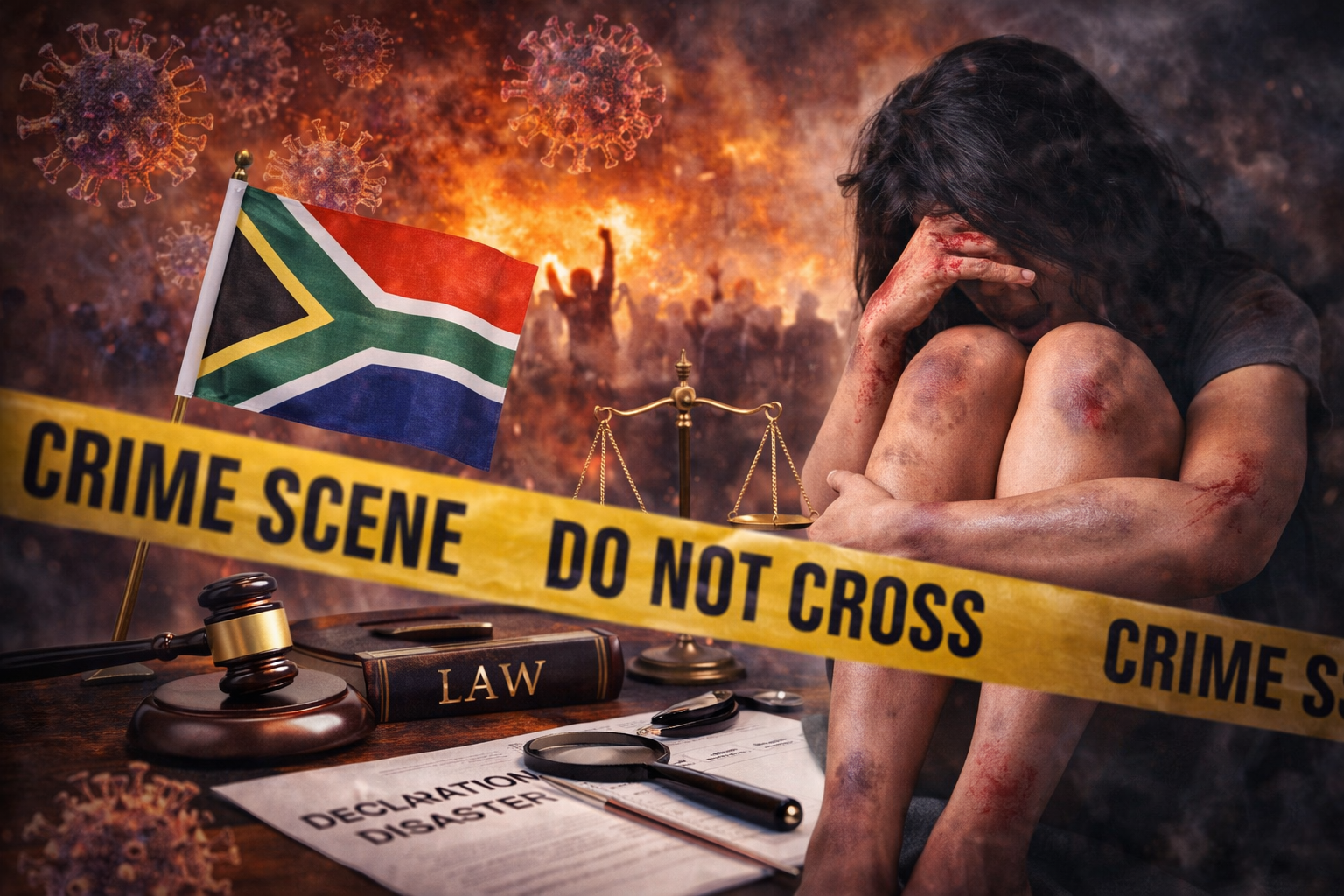
On June 30,2026 many protesting groups in South Africa held a nationwide anti-foreign protest. The protests marked an unconfirmed order demanding that all undocumented foreign nationals to voluntarily leave the country. The protesters including the March and March movement marched across cities in South Africa to mark a deadline they have set for undocumented migrants to leave , with some protests leading to violence and looting.[1]
Many of the African foreign nationals had already run away from South Africa days before the 30th of June time limit, and shops closed and foreign workers stayed home in expectation of more trouble after months of unrest. Protesters protested with posters metioning troubles over high-rate unemployment, access to public services and claimed criminal activities linked to undocumented foreigners.[2]
In this article we will examine the June 30 protest through legal analysis, relevant case laws and make use of the Constitution of the republic of South Africa for references to the Acts and laws relevant to this article.
Socio -Economic background
South Africa’s frustration with foreign nationals is nothing new. The publics frustration is associated with socio-economic factors such as the high unemployment rate in the country, and limited access to public service that are meant for the consumption of South African citizens. The public channel their frustration towards foreign nationals whether documented or not.
The “March and March” movement was the primary influence behind the marching taking place and it is directed nationally by Jacinta Ngobese-Zuma.[3] The June 30 march was carefully planned six months ahead by Nkosikhona Ndabandaba, this long-term time limit was made public as a notice period for undocumented foreign nationals to voluntarily leave the county.[4]
The main purpose of the June 30 protest was to demand for stricter border control to prevent illegal entry into the country and forcing removals of undocumented foreigners from hijacked buildings.
Moreover, the president of South Africa Cyril Ramaphosa addressed the citizens of the country on the 29 of June 2026. He stated that “the right to protest does not allow for violence, vandalism or intimidation”. Days before of the expected marches aimed against undocumented foreign nationals the president encouraged protesters to remain peaceful and lawful.[5] Section 17 of the constitution states that “everyone has the right, peacefully and unarmed, to assemble, to demonstrate, to picket and to present petitions”.[6]
Limitations around protests in South Africa
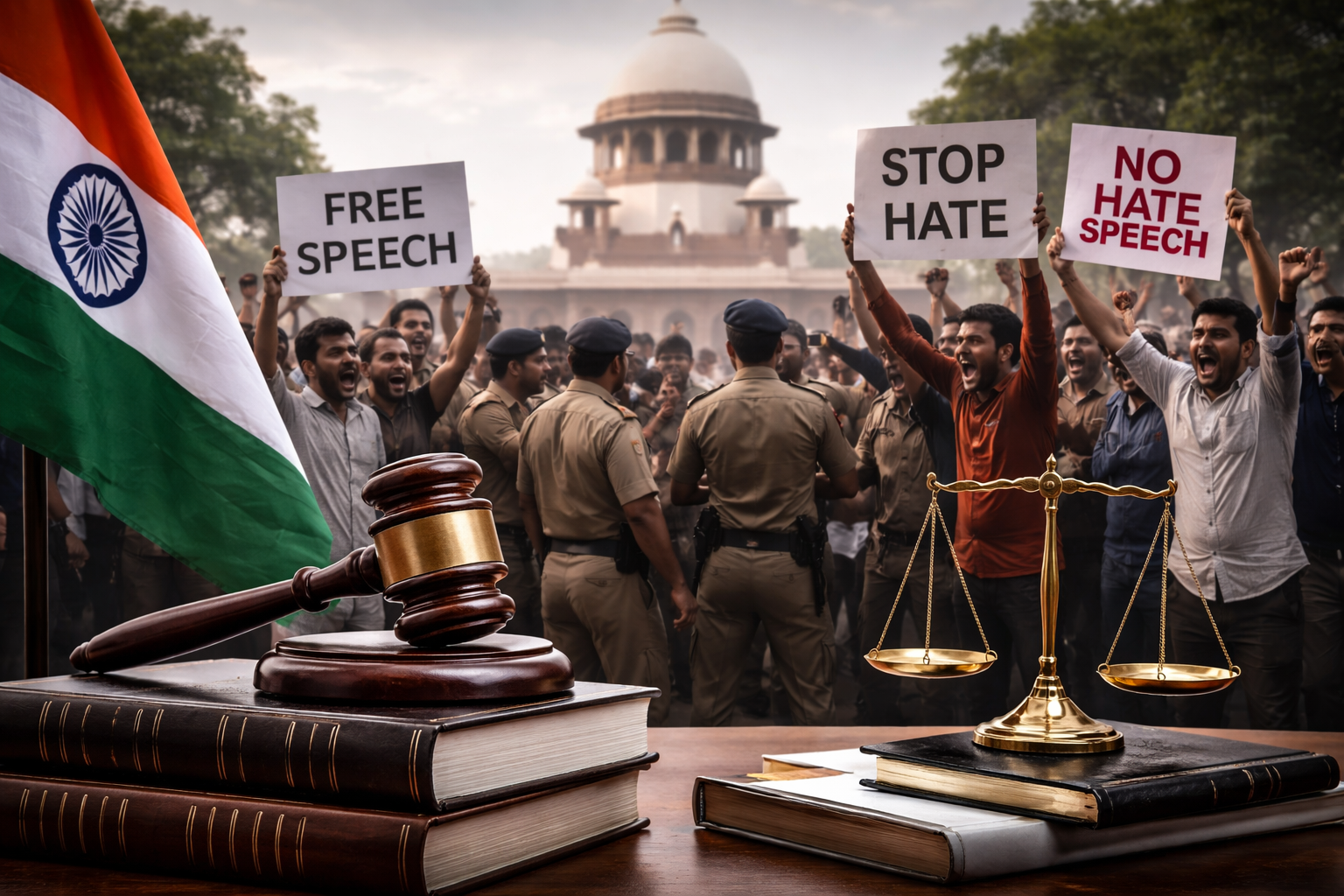
The regulation of Gatherings Act.205 of 1993 governs how congregations take place to balance human rights with public order. This legislation governs matters linked with gatherings that convey any form of protest, contest or criticism in a public space.[7] Notice of the congregation should be provided to local authorities seven days before a march takes place. It is however not a requirement to ask for permission to protest but one must give notice to do so, any protest that takes place without a notice is viewed as an illegal gathering.[8]
Furthermore, the South African Police service (SAPS) is required to uphold and implement the law and create a safe and secure environment for all the citizens in South Africa, SAPS also must stop anything that may threaten the safety or security of any community.[9]
For instance, In the case of Mlungwana and others v S and Another (2018) ZACC 45 the demonstrators were condemned in the Magistrate’s Court for contravening the s 12 (1) (a) of the Regulation of Gatherings Act 205 of 1993. This section made it a criminal offence to assemble a gathering without giving the required seven-day notice to the local authority.[10]
They had planned a peaceful march in Durban to protest service delivery, no violence occurred, no property was damaged, and the police were present . The applicants argued that outlawing the failure to give notice unjustifiably restricted the right to assemble in s 17 of the constitution. [11]
The High Court affirmed the conviction. The matter went to the constitutional court on direct appeal and the court announced s 12 (1) (a) unconstitutional and invalid to the extent that it illegalized failure to give notice, reason being that notice under the Regulation of Gatherings Act 205 1993is meant to facilitate protests not to give the government a rejection . The government can still impose reasonable conditions.[12]
Moreover, the importance and broader implications of this case allowed people to assemble gatherings without notice, however notice is still encouraged under the Regulation of Gatherings Act 205 1993, and the police must facilitate not ban gatherings , they can negotiate routes and impose conditions but cannot arrest for lack of notice alone.[13]
Therefore , the case supports the role police played on June 30 to monitor the protest and only intervene if there was violence or a real threat to public order any arrest had to be for an actual crime such as public violence for instance some protests that took place on June 30 lead to violence and looting which led police having to take action. The protesters had also placed a notice period months ahead of the time limit .
Immigration law and limitations
The South African immigration law is mainly governed by the Immigration Act 13 of 2002. This Act regulates how foreigners enter, live in, work in and leave from the country of South Africa, balancing notional security and economic growth with human rights duties.[14] In section 32 of the Act states that only after a warrant and within 48 hours can undocumented foreigners be arrested for deportation before a court appearance.
Therefore, in this section of the Act, we can identify that without following the legal route of obtaining a warrant to arrest an undocumented foreigner would be an illegal act. On the June 30 march some private individuals had taken the law into their own hands by using force such as committing the act of violence on an individual whether the individual was a documented or undocumented foreigner which led to some of these foreign nationals losing their lives. “At least four people have been killed and thousand of foreigners have been driven from their homes and seen their business and property vandalised”.[15]
In section 41 of the Immigration Act 13 0f 2002 states that “no person shall be refused emergency medical treatment, and all persons shall have the right to basic education”. [16]The word “persons” includes everyone even non-South African.
Again, in this section we can identify that public services such as medical treatment and basic education are allowed and available to every South African including non-citizens provided, they also adhere to the laws of the country by having the necessary documents and permits. However, on the June 30 march some protesters used factors such as high unemployment rate and the limited access to public services as an excuse to target both documented and undocumented foreigners to release their frustration.
We can therefore say that private individuals cannot target foreign peoples business, demand permits and to forcefully remove foreigners this would be deemed illegal and can and should be punishable by law as this would be assaulting another human being and going against their human right.
Equality and unfair discrimination
In section 9 (1) of the constitution states that “Everyone is equal before the law and has the right to equal protection benefit of the law”[17] The June 30 protest violated section 9 (1) of the South African constitution by directly overlooking the principle that every individual whether South African or not is equal before the law. Protesters enforced immigration laws on the South African foreign nationals by setting an unofficial time limit for the foreigners to voluntary leave the country. By doing this they ignored the legal procedures that apply equally to everyone.
Section 11 of the constitution states that “everyone has the right to life”.[18] On the June 30 protesters, some foreigner nationals lost their lives that was caused by protesters that used intimidation and violence which put human live in danger. While some protests were peaceful others led to extreme violence and looting the foreign national’s businesses. Section 11 was violated as these protesters took a human life .
Furthermore, in the case of lawyers for Human rights vs Minster of Home affairs Zacc 12, the applicants were undocumented foreign nationals arrested for pending deportation under section 34of the immigration Act 13 of 2002.[19] They argued that the authorities were arresting people without following the proper procedures and in doing so they were violating the Bill of Rights.
The court found that section 34 allowed for an arrest of up to 120 days, but the authorities must follow the legal channels of doing things. It ruled that an arrest should be made for the purpose of deportation only and treatment must be fair and humane.[20] The Constitutional court’s reasoning was that of section 10 of the constitution which states that “Everyone has inherent dignity and the right to have their dignity respected and protected”[21] and section 12 which is about the freedom and security of an individual[22] including undocumented foreigners.
Therefore, through this case we can see that rights do not only apply to South African citizens but to every other individual whether he or she is documented or not and resides in South Africa . we can also see that only authorities may enforce immigration laws and not private individuals, those who do are acting unlawfully.
In conclusion, the citizens of South Africa have a right to be angry about the high rate of unemployment in the country and to demand stricter boarder controls . However, taking the law into one’s hands and violating the constitution is an unlawful act and needs to be punished . Authorities need to enforce the law where crime was committed during the June 30 anti-foreign protests and address the legal matters surrounding undocumented foreign nationals.
Reference(S):
Cases
Mlungwana and others v S and Another ZACC 43 <concourt.org.za> accessed 19 June 2026.
Lawyers for Human Rights v Minster of Home Affairs ZACC 12
Legislation
Constitution of the republic of South Africa 1996, s 9 (1)
Constitution of the republic of South Africa 1996, s 10
Constitution of the republic of South Africa 1996, s 11
Constitution of the republic of South Africa 1996, s 12
Constitution of the republic of South Africa 1996, s 17
Secondary sources
Nellie Peyton and Siyabonga Sishi, “South Africa’s anti-migrant protesters march nationwide, after thousands flee violence”(Reuters, 30 June 2026) www.reuters.com accessed 18 June 2026
Natasha Phiri, “Ramaphosa warns against violence, vandalism during June 30 protests” (SABC News, 29 June 2026) www.sabcnews.com accessed 19 June 2026
South African Human Rights Commission, community Protests: A guide to your rights and responsibilities(SAHRC 20 March 2018) accessed 19 June 2026
South African Human Rights Commission, community Protests: A guide to your rights and responsibilities(SAHRC 20 March 2018) accessed 20 June 2026
[1]Nellie Peyton and Siyabonga Sishi, “South Africa’s anti-migrant protesters march nationwide, after thousands flee violence”(Reuters, 30 June 2026) www.reuters.com accessed 18 June 2026
[2] Peyton and Sishi (n 1)
[3] Peyton and Sishi (n 1)
[4] Peyton and Sishi (n 1)
[5] Natasha Phiri, “Ramaphosa warns against violence, vandalism during June 30 protests” (SABC News, 29 June 2026) www.sabcnews.com accessed 19 June 2026
[6] Constitution of the republic of South Africa 1996, s 17
[7] South African Human Rights Commission, Community Protests: A Guide to Your Rights and Responsibilities (SAHRC 20 March 2018) accessed 19 June 2026
[8] SAHRC, Community Protest (n 1) p 3
[9] SAHRC, Community Protest (n 1) p 4
[10] Mlungwana and others v S and Another ZACC 43 <concourt.org.za> accessed 19 June 2026.
[11] Mlungwana (n 1)
[12] Mlungwana (n 1)
[13] Mlungwana (n 1)
[14] South African Human Rights Commission, Community Protests: A guide to your rights and responsibilities (SAHRC 20 March 2018) accessed 20 June 2026
[15] Peyton and Sishi (n 1)
[16] SAHRC, Community Protest (n 1) p 5
[17] Constitution of the republic of South Africa 1996, s 9(1)
[18] Constitution of the republic of South Africa 1996, s 11
[19] Lawyers for Human Rights v Minster of Home Affairs ZACC 12
[20] Lawyers for Human Rights v Minster of Home Affairs ZACC 12
[21] Constitution of the republic of South Africa 1996, s 10
[22] Constitution of the republic of South Africa 1996, s 12