Authored By: Akshata Rajendra Patole
Parul Institute of Law, Parul University
Introduction
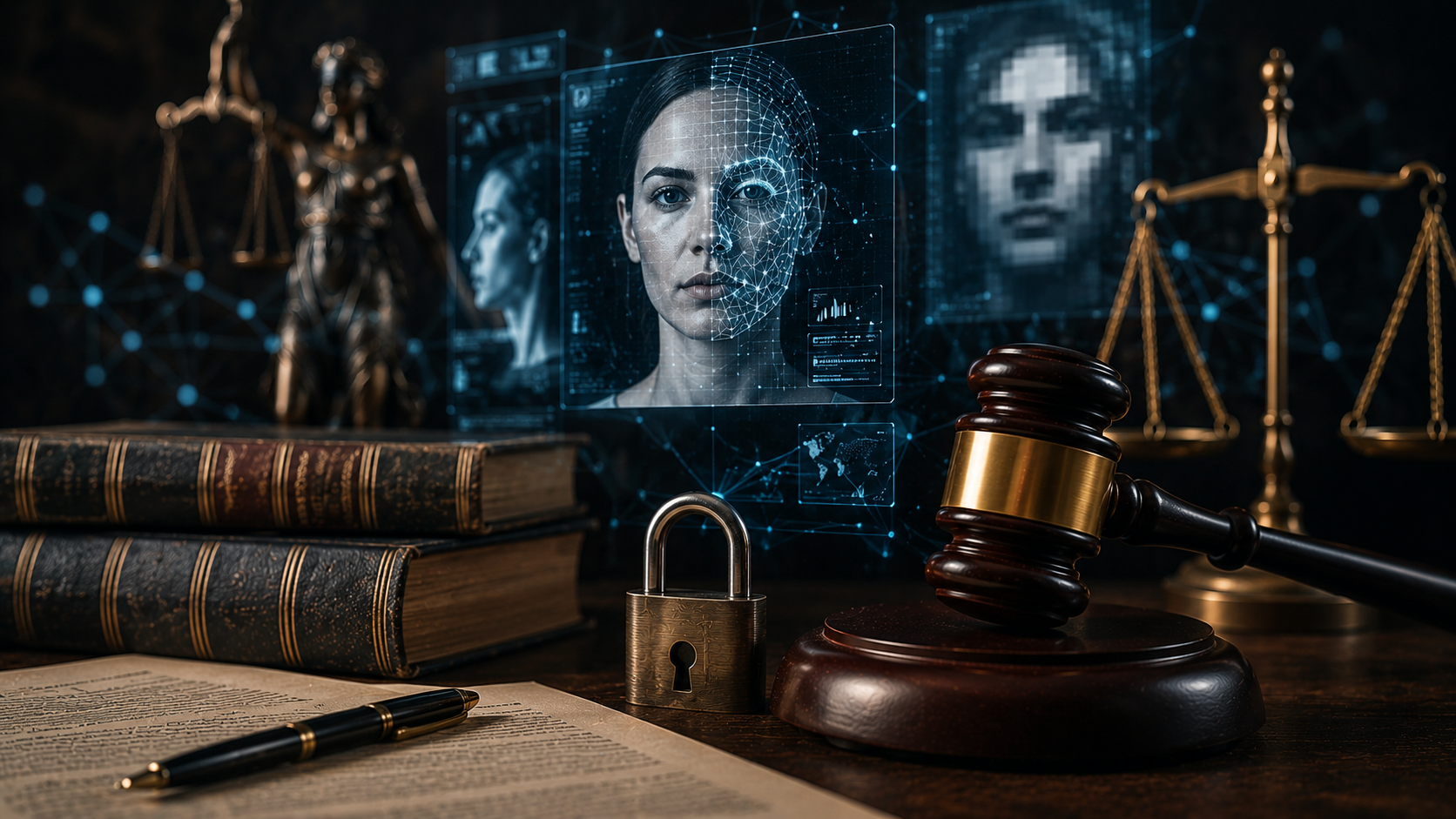
The exponential growth of social media platforms has revolutionized communication, reshaping the way individuals interact, share information and express opinions. However along these advancements lies an increasing threat to vulnerable groups, particularly children. Issues such as cyberbullying, online grooming, exposure to harmful content and misuse of personal data have raised serious concerns about the adequacy of legal frameworks governing social media liability.
The challenge of modern legal systems lies in balancing the fundamental right to freedom of speech with the need to impose accountability on digital platforms. This article critically examines the legal principles governing intermediary liability, the effectiveness of child protection laws and the evolving judicial and legislative response in India and globally.
Concept of Social Media Liability
Intermediary Liability and Safe Harbour
Intermediary liability determines the extent to which social media platforms can be held responsible for user-generated content, In India, Section 79 of the Information Technology Act, 2000 grants inter mediaries conditional immunity, commonly referred to as “safe harbour”. This protection applies only if intermediaries:
Do not initiate or modify content.
Exercise due diligence Remove unlawful content upon receiving actual knowledge.
The Supreme Court clarified the scope of this provision in Shreya Singhal v. Union of India holding that intermediaries are required to act only upon receiving a court order or government notification. This judgment limited arbitrary censorship while ensuring accountability.
Comparative Legal Frameworks.
In the United States, section 230 of the Communication Decency Act provides broad immunity to platforms for third-party content. However, increasing concerns regarding child safety have triggered calls for reform.
The European Union has adopted a stricter approach under the Digital Services Act, mandating proactive monitoring and risk mitigation measures, especially concerning minors.
III. Risks Faced by Children on Social Media.
And Digi
Cyberbullying
Cyberbullying is pervasive issue that can cause severe psychological harm. Unlike traditional bullying, it operates continuously and reaches a wider audience.
Online Grooming and Exploitation.
Predators often use social media to build trust with minors for exploitation. The anonymity provided by digital platforms exacerbates this risk.
Exposure to Harmful Content
Algorithmic amplification exposes children to inappropriate material, including violence, pornography, and self-harm related content.
Data Privacy Violations
Children’s personal data is frequently collected without informed consent, violating privacy norms and exposing them to exploitation.
Legal Framework for Child Protection in India
Protection of Children from Sexual Offences Act, 2012
The POCSO Act criminalizes sexual offences against children including digital exploitation. It provides stringent punishment and child friendly judicial procedures.
Information Technology Rules, 2021
The Information Technology (Intermediary Guidelines and Digital Media Ethics Code) Rules, 2021 impose due diligence obligations on intermediaries. These includes;
Time-bound removal of unlawful content Appointment of grievance redressal officers Monitoring of harmful content
Juvenile Justice Act, 2015
The Juvenile Justice (Care and Protection of Children) Act extends protection to children facing online exploitation.
Judicial Approach
Shreya Singhal v. Union of India.
The court emphasize the importance of free speech while restricting arbitrary censorship. It reinforced that intermediaries are not obligated to actively monitor content unless notify by the lawful authority.
Prajjwala v. Union of India.
The Supreme Court directed the government to implement measures to eliminate child pornography from digital platforms. It recognised the responsibility of intermediaries in preventing exploitation.
Avnish Bajaj v. State (NCT of Delhi)
This case highlighted the liability of platform operators in preventing the dissemination of obscene content. The court stressed the importance of due diligence.
International Developments
United Kingdom
The UK’s Online Safety Framework imposes strict obligations on platforms to protect minors, including age verification and content moderation
requirements.
Europe Union
The Digital Services Act requires platforms to: Conduct risk assessments Ensure Transparency Implement safeguards for minors.
United States
Although section 230 remains intact, legislative proposals aim to limit immunity in cases involving harm to children.
VII. Challenges in Regulations
Free-speech vs Regulation.
Excessive regulation risks violating freedom of expression, while weak regulation exposes children to harm.
Jurisdictional Issues
Global platforms complicate enforcement due to differing national laws.
Technological Barriers
Detecting harmful content, especially in encrypted environments, remains difficult.
Corporate Resistance
Platforms often resist regulations due to compliance burdens.
VIII. Recommendations
Stronger Platform Accountability
Legal frameworks should impose proactive obligations on intermediaries to prevent harm.
Age Verification Systems
Reliable verification mechanisms can restrict children’s exposure to harmful content.
Algorithmic Transparency
Platforms must disclose how content is recommended, particularly to minors.
Digital Literacy
Educating users is essential for long-term protection
International Cooperation
Cross-border collaboration is necessary to address global challenges.
Evolution of Social Media Liability
Initially, social media platforms claimed they were merely “intermediaries” and not publishers. This gave them immunity from liability for user-generated content.
Why Children Are the Centre of Modern Digital Regulation Children are now viewed as the most vulnerable digital users because they are exposed to:
Cyberbullying
Online grooming
Sextortion
Deepfake exploitation
Data harvesting
Addictive algorithms
Violent/ self-harm content
Pornographic material
Governments worldwide now treat child online safety as:
A constitutional issue
A human rights issue
A public health issue
A cybersecurity issue
Countries are increasingly proposing:
Social media age bans
Mandatory parental consent
Algorithm restrictions for minors
Screen-time regulations
Australia, France, Norway and other countries introduced or proposed age-based restrictions in 2025-2026.
India’s Current Legal Position
India still does not have a single dedicated “Child Online Safety Act”, but it uses a combination of laws.
Information Technology Act, 2000.
This governs intermediary liability.
Key Issues:
Safe harbour protection
Content take-down obligations
Government blocking powers.
IT Rules, 2021 + 2026 Amendments
The 2026 amendments introduced:
Faster takedown obligations
AI/deepfake labelling
Synthetic media regulations
Stronger compliance burdens.
Some unlawful content now reportedly must be removed within hours.
C. Digital Personal Data Protection Act, 2023.
This is one of the most important recent developments.
It requires:
Verifiable parental consent for children’s data
Restriction on behavioural tracking
Ban on targeted advertising towards children
The law defines children as person under 18.
XII. Constitutional Conflict (Excellent Analytical Point)
The conflict is between:
Right Concern
Freedom of speech Excessive censorship Child protection Harmful content Privacy Age verification Innovation Regulatory burden
In India:
Article 19(1)(a) protects free speech, whereas Article 19(2) permits reasonable restrictions.
Legal Problems:
Privacy concerns
Surveillance concerns
Data misuse
Exclusion risk
XIII. Arguments
Safe Harbour Should not be Absolute.
Platforms earning billions from engagement should bear greater responsibility.
Children Require Enhanced Constitutional Protection
The state has a duty to protect minors under constitutional and international obligations.
Algorithms should be legally Auditable.
Transparency should become mandatory.
Digital literacy must become a legal policy priority.
Laws alone cannot solve online harm.
XIV. Legal Questions.
Should social media companies be treated as publishers?
Is India’s intermediary liability framework sufficient?
Can child protection justify restrictions on free speech?
Should India introduce age-based social media bans?
Can AI-generated harms be effectively regulated?
The Digital Childhood Dilemma: Reconciling Children’s Rights, Online Safety and Legal Safeguards Against Exploitation in an Era of Cyber Vulnerabilities.
Vivek Kumar Gupta
Journal of Teachers and Teacher Education 2(1), 01-11,2025
The rapid integration of digital technologies into everyday life has fundamentally reshaped childhood experiences, presenting both unprecedented opportunities and complex risks. This critically examines the paradox of digital childhood, where the promise of education, connectivity and empowerment coexists with threats of online abuse, cyberbullying, exploitation and privacy violations. The study explores how children’s rights, as enshrined in international conventions and national laws, are increasingly challenged in cyberspace due to inadequate protective mechanisms, evolving cyber vulnerabilities, and the transnational nature of digital threats. The paper evaluates laws such as the UNCRC, the European Union’s GDPR, India’s Information Technology Act, and the US COPPA, highlighting gaps between policy and practice. Findings reveal that while global efforts have advanced digital safety, significant challenges persist due to fragmented regulations, insufficient enforcement, and rapidly evolving technologies like Artificial intelligence, the dark web, and social media platforms.
XVI. Child Protection in Digital Age
W Chui, Yuhong Zhu, Qiqi Chen
Child and Family Social Work 30(1), 1-3, 2025
The digital age has erased traditional jurisdictional lines, making it clear that are collaborative effort from technology platforms, governments, guardians and children themselves is necessary to create a digital ecosystem that is safe for children. The special issue, ‘Child Protection in Digital Age’, is more than a collection of scholarly articles, it is a clarion call to action, a detailed map charting the complexities of a terrain fraught with both promise and peril for the youngest members of our society.
The herein address the spectrum of topics including, cyberbullying, online predators, data privacy and digital footprints.
They provide evidence-based strategies for safe guarding children, promoting digital literacy and cultivating a safe online environment where children can thrive. Additionally, implications for public development are discussed emphasizing the need for all stakeholders involved to play their part inn realizing the benefits that the digital age has to offer.
XVII. Letting kids on social media is like sending them to Mars (and other bizarre analogies) Published on April 2, 2026
Are policies that deny children access to social media just “restrictions” or outright bans? And letting children on social media more like sending them to mars or nightclubs? Language and metaphors has immense power in policy making- they shape how we understand and respond to issues in our societies. One of the biggest – if not the biggest current issues in children’s rights and the digital environment is children’s access to social media. Countries across the world are rapidly clutching at what they see as a fast-track panacea: social media bans to keep children safe and protect them from a damaging business model that prioritises profit over user’s wellbeing. While CRIN previously argued that “to ban or not to ban” is the wrong debate from a children’s rights perspective, how then have bans captured people’s imagination so quickly and effectively.
What’s in a word? Delays, restrictions, bans
When bans are reframed to seem less harsh
Proponents of social media bans for children use a variety of words to describe these new policies, which seem too skirt around the word “ban” and nature of these policies, as plain prohibitions. Gentler (re) framings like “delays” or “restrictions” are common, however they contribute to obscuring the fundamental flaw in these policies, which is that they regulate the users instead of the business model of the platforms.
XVIII. Conclusion
The rapid expansion of social media platforms has transformed modern communication and digital interaction, but it also exposed children to online risks such as cyberbullying, online grooming, child sexual exploitation. This article examined the evolving legal framework governing social media liability and child protection laws, with particular focus on India’s intermediary liability regime and global regulatory developments.
The analysis demonstrated that while intermediary such as the “safe harbour” principle under section 79 of The Information Technology Act, 2000 were originally designed to encourage innovation and free expression, modern digital realities require greater accountability from social media companies. Judicial decisions such as Shreya Singhal v. Union of India, Prajjwala v. Union of India, and Avnish Bajaj v. State (NCT of India) illustrate the growing recognition of platform responsibility in preventing online harm and protecting vulnerable users, especially children.
International developments including the European Union’s Digital Services Act and the United Kingdom’s Online Safety Act, indicates a global shift towards stronger digital regulation and enhanced child safety obligations. The findings f substantial reform to effectively address emerging challenges such as AI generated harm, deepfakes, algorithmic amplification, and cross-border digital crimes. Stronger intermediary accountability, transparent content moderation systems, age- appropriate platform safeguards, algorithmic transparency and improved digital literacy programs are essential for ensuring safer online environments for children. Ultimately, the future of digital governance depends upon achieving a balanced legal approach that protects constitutional freedoms while ensuring that social media platforms fulfil their responsibility toward child safety and public welfare in the digital age.
Reference(S):
Cases
Avnish Bajaj v. State (NCT of Delhi),150(2008) DLT 769
Prajjwala v. Union of India, (2018) 14 SCC 615.
Shreya Singhal v. Union of India, (2015)5 SCC 1
Statutes and Regulations
Communications Decency Acts, 47 U.S.C S 230 (1996)
Digital Personal Data Protection Act, 2023 (India)
Information Technology Act, No. 21 of 2000, India Code (2000) • Information Technology (Intermediary Guidelines and Digital Media Ethics Code) Rules, 2001.
Juvenile Justice (Care and Protection of Children Act, No.2 of 2016, India Code (2015).
Protection of Children from Sexual offences Act, No. 32 of 2012, India Code (2012)
Regulations (EU) 2022/2065 (Digital Services Act).
Books and Articles
Lawrence Lessig, Code and Other Laws of Cyberspace (Basic Books 1999).
Daniel Keats Citron, Hate Crimes in Cyberspace (Harvard Univ. Press 2014).
Orin S. Kerr, The Future of Internet Regulation, 113 Harv. L. Rev.989 (2000).
Jack M Balkin, Free Speech in the Algorithmic Society, 51 U.C. Davis L. Rev. 1149 (2018).
Online Sources
Reuters, Countries Move to Restrict Children’s Social Media Access (2026).
The Guardian, California Lawmakers Seek Tougher Rules for Big Tech (2026).
Government of India Press Release on Cyber Safety and Child Protection (2025-2026).