Authored By: Nobuhle Malinga
Tshwane University of Technology (TUT)
INTRODUCTION.
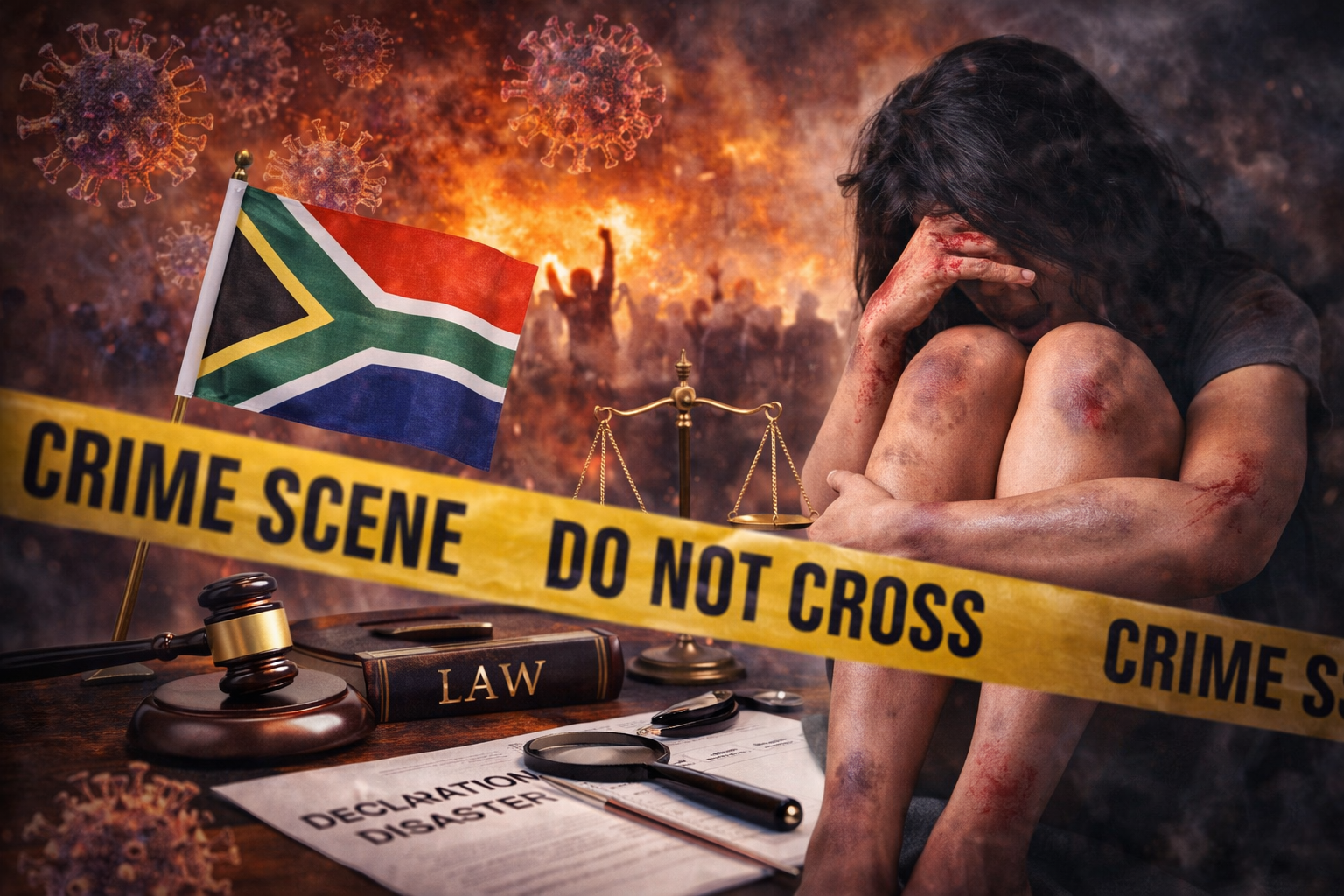
In South Africa, a comprehensive legal structure has been developed to shield children from abuse, neglect, exploitation, and violence. The Republic of South Africa’s Constitution from 1996 acknowledges children as society’s most vulnerable members, deserving of particular care and protection. The right of children to family care, shelter, health services, and protection against abuse and degradation is enshrined in Section 28 of the Constitution. To implement these constitutional rights, Parliament passed laws such as the Children’s Act 38 of 2005, the Child Justice Act 75 of 2008, and the Criminal Law Amendment Act 32 of 2007 (Sexual Offenses and Related Matters). In all matters pertaining to children, the interests of the child are of utmost importance, and South African courts have helped create child protection jurisprudence by emphasizing this.
Despite these legislative advancements, a large number of children in South Africa still face violence, poverty, trafficking, online exploitation, neglect, and sexual abuse. This generates a considerable conflict between the existence of progressive legal safeguards and the reality that susceptible children endure on a daily basis. The continuation of these issues raises a serious legal question: How effective are South Africa’s kid protection legislation if execution is still poor and uneven?
The effectiveness of these laws is diminished by institutional failings, socioeconomic inequality, scarce resources, and shortcomings in enforcement mechanisms, according to this article, even though South Africa has made considerable strides in creating constitutional and legislative safeguards for children. The essay examines the legal structure for child protection, discusses applicable case law, and assesses the problems impacting implementation and legal reform.
ARTICLE BODY
- Constitutional Foundation of Child Protection in South Africa
The Constitution of the Republic of South Africa, 1996, serves as the foundation for the protection of children in South Africa. Children are recognised as vulnerable individuals who need specific care and protection from the state, families, and society, according to Section 28. Among the privileges that the Constitution protects for children are the right to shelter, medical care, family care, social assistance, and protection from abuse, neglect, exploitation, and degradation. Section 28(2) is the most significant since it states that in all issues pertaining to children, their best interests are of the highest importance. South African courts now use this approach as the basis for interpreting child protection legislation.
The Constitutional Court has consistently emphasized the significance of children’s rights in its decisions. The Court debated whether imprisoning a primary caregiver infringed on the constitutional protection of children in *S v M (Centre for Child Law as Amicus Curiae) 2007 (2) SACR 539 (CC)*. Because children have their own constitutional rights, Sachs J decided that courts must take into account how their judgments about sentencing may affect them. The ruling recognized that punishing parents may indirectly affect children and that children’s interests should not be disregarded during legal procedures.
*Minister of Welfare and Population Development v Fitzpatrick 2000 (3) SA 422 (CC)* is another significant judgment. Legislative limitations that forbade foreign individuals from adopting South African children were abolished by the Constitutional Court in this instance. The Court found that the best interests of the child should always come before severe legal restrictions. This ruling reinforced the constitutional notion that children’s welfare should be prioritized in every legal matter involving them.
How the Constitution altered South Africa’s approach to child protection from a welfare based one to a rights-based one is demonstrated by these examples. Although constitutional protections are extensive, actually exercising these rights continues to be a major difficulty.
- Laws That Safeguard Children
2.1 Act 38 of 2005 on Children
The Children’s Act 38 of 2005 is considered the main law in South Africa that protects children. The statute was passed to give section 28 of the Constitution’s rights practical force and to bring national law into compliance with international norms, including the United Nations Convention on the Rights of the Child (UNCRC).
The statute addresses a range of children-related topics, such as parental duties, adoption, child protection services, foster care, and early childhood development. Chapter 7 is one of the Act’s most important provisions since it deals particularly with protecting children from abuse and neglect. Professionals like teachers, doctors, nurses, and social workers have a legal duty under Section 110 to inform the appropriate authorities of any suspected child abuse or neglect.
Additionally, the National Child Protection Register was established by the Act. The register is intended to identify people who are unqualified to work with children and to establish procedures that stop children from being exposed to dangerous individuals.
Despite the fact that the Children’s Act is viewed as being ahead of its time, its execution has drawn criticism from scholars and legal professionals. Due to a scarcity of trained social workers, insufficient money, and little resources, Skelton claims that many of the Act’s goals are challenging to attain. ¹ the legislation’s efficacy is diminished since child protection services are still inaccessible in several communities, particularly those in rural regions.
2.2 Child Justice Act 75 of 2008
For children who come into conflict with the law, the Child Justice Act created a new criminal justice system. Children were frequently treated similarly to adults in the criminal justice system prior to the passage of this law. Thus, by acknowledging that children need a justice system that prioritizes rehabilitation over retribution, the Act signalled a major legal development.
The law promotes restorative justice via counselling, rehabilitation programs, and other diversionary strategies. It also restricts the detention of children and helps them get back into society. This methodology is in line with the UNCRC and the Beijing Rules, which are international standards.
These principles were reaffirmed by the Constitutional Court in *Centre for Child Law v Minister of Justice and Constitutional Development 2009 (6) SA 632 (CC)*. The Court determined that children should be kept in custody only as a last resort and for the shortest possible time. The verdict reaffirmed that children in incarceration are due specific constitutional protection due to their susceptibility.
Despite these legal protections, the Child Justice Act is still being enforced inconsistently. Overcrowded detention centres, inadequate access to mental health services, and insufficient rehabilitation programs continue to be issues for a large number of adolescent criminals. The legislation’s goal of rehabilitation is jeopardized by these issues.
2.3 Safeguarding Against Abuse and Sexual Exploitation
Legislation targeted at addressing sexual offenses against minors has also been enacted in South Africa. The Criminal Law (Sexual Offences and Related Matters) Amendment Act 32 of 2007 broadens the legal definition of sexual offences and outlaws’ actions like grooming, trafficking, sexual exploitation, and child pornography.
In *J v National Director of Public Prosecutions 2014 (2) SACR 1 (CC)*, the Constitutional Court considered the rights of kid offenders under this legislation. Without allowing courts to consider each child’s individual circumstances, the Court ruled the automated inclusion of child offenders in the National Sex Offender Register to be illegal. The Court determined that such automatic registration violated the constitutional rule that the child’s best interests must always be taken into account.
This judgment illustrates the Court’s effort to strike a balance between accountability and rehabilitation and shows the significance of treating children who commit crimes differently from adults.
- South African Child Protection Law Is Impacted by International Influence
International and regional human rights instruments have significantly shaped South Africa’s child protection legislation. In particular, Section 39(1)(b) of the Constitution mandates that courts take international law into account while construing the Bill of Rights Later, in 1995, South Africa ratified the African Charter on the Rights and Welfare of the Child, having previously ratified the United Nations Convention on the Rights of the Child. States are mandated by these international treaties to shield kids from violence, abuse, neglect, exploitation, and damaging social customs.
South African courts’ interpretation of the constitution and the Children’s Act’s drafting were both greatly impacted by international children’s rights instruments, according to Sloth Nielsen. ² as a result, domestic law and court judgments mirror the ideas found in international law.
However, simply incorporating international standards into domestic law does not guarantee adequate protection. Still, the state struggles to turn these responsibilities into concrete and significant Défense for at-risk children.
- 4. Obstacles to Child Protection in South Africa
4.1. Disparity and Poverty
Poverty is one of the most significant impediments to successful child protection in South Africa. Many youngsters still live in low-income neighbourhoods with high rates of unemployment, food insecurity, violence, and subpar housing. Children are more vulnerable to abuse, neglect, trafficking, and exploitation due to poverty.
Poor communities’ susceptibility was acknowledged by the Constitutional Court in Government of the Republic of South Africa v Grootboom 2001 (1) SA 46 (CC). The Court ruled that the government has a constitutional obligation to take fair actions to uphold socio economic rights, especially for children and other vulnerable groups.
Despite the presence of constitutional protections, Hall and Sambu contend that poverty and inequality still jeopardize children’s access to social support services, healthcare, and education. This illustrates that child protection cannot be accomplished by law alone without also taking into account larger socio-economic factors.
4.2 Institutional Breakdown and Violence
High amounts of violence against children and women are still prevalent in South Africa. Child abuse, domestic violence, and rape are still frequent. Since victims are afraid of revenge or don’t trust the legal system, many incidents are never reported.
According to Bont Huys and Alberty, the shortcomings of social welfare agencies, prosecution services, and police enforcement are responsible for the breakdown of child
protection systems. ⁴ Victims are frequently dissuaded from reporting abuse due to delays in inquiries and insufficient victim care.
The shortage of skilled individuals responsible for enforcing child protection legislation is another important issue. Child protection authorities, psychologists, and social workers frequently have a lot of work and little funds, which may be taxing.
The Constitutional Court slammed the government’s failings in managing the foster care system in *Centre for Child Law v Minister of Social Development 2022 (5) SA 323 (CC)*. The Court stressed that children who depend on state assistance are directly impacted by administrative incompetence and institutional inefficiency.
4.3 Online Exploitation and Emerging Threats
New dangers have emerged for children as a result of technological breakthroughs, such as cyberbullying, child pornography, trafficking, and online grooming. In response, the Parliament passed the Cybercrimes Act 19 of 2020 to handle cyber-related crimes.
Even though the legislation is a significant advancement in the legal field, enforcement is still challenging since digital crimes change quickly and law enforcement organizations frequently lack the technological know-how required to effectively investigate them.
- 5. Framework for the Protection of Children Evaluation
Progressive and all-encompassing are the terms most frequently used to describe South Africa’s legal structure for protecting children. Judicial activism, specialized legislation, and constitutional rights have played a major role in the development of children’s rights.
Nonetheless, the ongoing prevalence of institutional breakdowns, trafficking, abuse, and poverty demonstrates a substantial disparity between practical reality and legal protection. The main flaw in the kid protection system is thus not always the lack of legislation, but rather the failure to put those laws into practice.
Significant child protection demands robust institutions, sufficient money, qualified experts, and good cooperation between government agencies, as Skelton points out.⁵ In South Africa, constitutional rights and legislative protections continue to be mostly theoretical for many vulnerable children unless they are properly enforced.
Footnote(S):
- Juta’s Skelton *Commentary on the Children’s Act* (2022) 45.
- Is everything else okay? J Sloth-Nielsen *Children’s Rights in South Africa* (Juta 2017) 67.
- K Hall and W Sambu, “Income Poverty, Unemployment and Social Grants,” in *South African Child Gauge* (2023) 15.
- E Bont Huys & C Alberty *Gender, Law and Justice* (Juta 2007) 212. 5. Skelton’s *Commentary on the Children’s Act* (Juta 2022) 103.
Conclusion
This concludes our exploration of the fascinating world of human psychology. We have delved into the intricate workings of the mind, examining its various components, functions, and the factors that influence it. We have also explored the diverse range of emotions, thoughts, behaviours, and motivations that drive human actions.
We have learned that human psychology is a complex and multi-faceted discipline, encompassing a wide array of subfields, theories, and research methodologies. From the biological underpinnings of behaviour to the impact of social and cultural influences, we have seen how different perspectives contribute to our understanding of the human experience.
Throughout our journey, we have encountered key concepts such as:
Cognition: The mental processes involved in acquiring, processing, and storing information, including perception, attention, memory, problem-solving, and language.
Emotion: The complex affective states that involve physiological arousal, behavioural expressions, and subjective experiences.
Motivation: The internal and external factors that direct and sustain goal-directed behaviour.
Personality: The characteristic patterns of thoughts, feelings, and behaviours that make each individual unique.
Development: The systematic changes that occur in an individual’s psychological capacities over the lifespan, from infancy to old age.
Social Psychology: The study of how individuals’ thoughts, feelings, and behaviours are influenced by the presence of others.
Abnormal Psychology: The study of psychological disorders, their causes, symptoms, and treatments.
We have also discussed the importance of scientific research in psychology, emphasizing the use of empirical methods to gather and analyse data, formulate theories, and test hypotheses. This rigorous approach allows us to move beyond anecdotal evidence and gain a more objective and reliable understanding of human behaviour.
Furthermore, we have touched upon the practical applications of psychology in various fields, such as:
Mental Health: Diagnosis and treatment of psychological disorders through therapy, counselling, and other interventions.
Education: Understanding learning processes, motivation, and strategies to enhance educational outcomes.
Business and Organizations: Improving leadership, teamwork, employee motivation, and consumer behaviour.
Law and Criminal Justice: Forensic psychology, eyewitness testimony, and understanding criminal behaviour.
Sports Psychology: Enhancing athletic performance, managing stress, and improving motivation in sports.
In conclusion, the study of human psychology is a continuous and evolving endeavour. As researchers continue to explore the complexities of the mind, our understanding will undoubtedly deepen and expand. By gaining insights into our own psychological processes and those of others, we can foster self-awareness, improve our relationships, make informed decisions, and contribute to a more compassionate and understanding society.
The journey into the human psyche is an endless one, filled with fascinating discoveries and profound insights. May your curiosity and desire to understand continue to guide you in this remarkable field.
A comprehensive and progressive legal framework designed to safeguard children from violence, exploitation, neglect, and abuse has been created in South Africa. The state’s commitment to protecting children’s rights and promoting the best interests of the child is evidenced by constitutional safeguards found in section 28 of the Constitution, as well as laws like the Children’s Act 38 of 2005, the Child Justice Act 75 of 2008, and the Criminal Law (Sexual Offences and Related Matters) Amendment Act 32 of 2007. By acknowledging children as autonomous rights holders deserving of unique legal protection, rulings made by the Constitutional Court have further solidified child-centred jurisprudence.
Nevertheless, this article’s research reveals that vulnerable children are not automatically effectively protected by progressive legislation. South Africa’s child protection laws are still being hampered by chronic poverty, socio-economic disparity, institutional failures, violence, and a lack of resources. The increasing danger of cybercrime and internet exploitation also shows the obstacles that legal institutions encounter in dealing with current kinds of abuse.
As a result, the report concludes that South Africa’s kid protection system’s main flaw is not a lack of legal safeguards, but rather the poor enforcement and implementation of existing laws. To make child protection effective in practice, more money must be put into social welfare services, law enforcement, education, and institutional capacity. Additionally, in order to guarantee that constitutional rights are upheld in reality, closer cooperation among child protection groups, communities, and government agencies is required. In the end, effective child protection depends on both innovative legal norms and effective government action that can turn those legal safeguards into lived realities for all children in South Africa. # Bibliography and References
Reference(S):
- S v M (Centre for Child Law as Amicus Curiae) 2007 (2) SACR 539 (CC).
- Minister of Welfare and Population Development v Fitzpatrick 2000 (3) SA 422 (CC). 3. Act 38 of 2005, section 110.
- Juta (2022), A. Skelton, Commentary on the Children’s Act. 45.
- Minister of Justice and Constitutional Development and Another v S and Others [2008] ZACC 23; 2008 (10) BCLR 1072 (CC); 2009 (2) SA 102 (CC).
- Sexual Offences and Related Matters Amendment Act 32 of 2007.
- J v National Director of Public Prosecutions 2014 (2) SACR 1 (CC).
- 67 in J Sloth-Nielsen, *Children’s Rights in South Africa* (Juta 2017).
- Government of the Republic of South Africa v Grootboom 2001 (1) SA 46 (CC).
- South African Child Gauteng (2023) 15, W. Sambu and K. Hall, “Income Poverty, Unemployment and Social Grants.”
- 212, E. Bont Huys & C. Alberty, Gender, Law and Justice (Juta 2007).
- Centre for Child Law v Minister of Social Development 2022 (5) SA 323 (CC). 13. Cybercrimes Act No. 19 of 2020.
- Juta 2022’s Commentary on the Children’s Act by Skelton 103.
Bibliography
Laws
* Act No. 75 of 2008, Child Justice Act.
* Children’s Act 38 of 2005.
* 1996 South African Constitution.
* Criminal Law (Sexual Offenses and Related Matters) Amendment Act 32 of 2007. * The Cybercrimes Act, 2020 (Act 19 of 2020).
Cases
* Centre for Child Law v Minister of Justice and Constitutional Development 2009 (6) SA 632 (CC).
* Centre for Child Law v. Minister of Social Development 2022 (5) SA 323 (CC).
* The Republic of South Africa’s Government v. Grootboom 2001 (1) SA 46 (CC).
* J v. National Director of Public Prosecutions 2014 (2) SACR 1 (CC).
* Minister of Welfare and Population Development v Fitzpatrick 2000 (3) SA 422 (CC).
* S v M (Centre for Child Law as Amicus Curiae) 2007 (2) SACR 539 (CC).
Auxiliary Resources
Bont Huys E and Albertin C, *Gender, Law, and Justice (Juta 2007).
In the South African Child Gauge (2023), Hall K and Sambu W contribute the article “Income Poverty, Unemployment and Social Grants.”
Skelton. A Commentary on the Children’s Act (Juta 2022).
Sloth-Nielsen J. Children’s Rights in South Africa. Juta, 2017.