Authored By: Rupsa Banerjee
Sister Nivedita University
ABSTRACT
Marital rape is an unresolved, complex, contentious issue in the criminal justice system of India. The Indian statutory definition of rape remains unchanged from its original form since colonial times, with an exemption for any non-consensual sexual act between an adult man and his adult wife. The purpose of this research paper is to primarily provide a critical analysis of the historical and philosophical basis for the exemption for marital rape and children’s sexual assault against a Parent in English Common Law as a type of forever standing contract of marriage and irrevocable consent to sexual acts between Spouses, to provide an understanding of the impact of the exemption upon the justice system and the laws created or maintained by the current Constitution of India as a whole, through critical analysis of the systemic constitutional contradictions created by male and female Spouse to Spouse Non-Consensual Sexual Assault against the appropriate Constitutional provisions like Articles 14, 15, 19 and 21 of the Constitution of India, the judicial decisions rendered regarding the statute on marital rape and the Judiciary’s definition of appropriate evidence for the sexual assault statute under the Bharatiya Nyaya Sanhita, 2023. Finally, the preservation of the Institution of Marriage cannot diminish the Fundamental Rights of individuals and provide an outline of the statutory pathway for comprehensive criminalization of the acts of marital rape and the children’s sexual assault against a Parent to meet the International Human Rights Standards.
INTRODUCTION
Crime committed by a spouse in the context of an intimate relationship where both parties have been forced to engage sexually against their will is an act of marital rape. Marital rape is often considered an exception to the legal principle that individuals cannot be forced to marry against their own free will since it is a crime specific to marriage. The traditional construct of marriage/family between individuals has evolved over thousands of years, and as such, does not allow for contemporary beliefs about marriage/family relationships to be subject to contemporary law. This is one of the reasons why the crime of marital rape exists as a concept under Indian law, because the majority of those who enforce the law (police officers, judges, lawyers, etc.) do not consider this type of violence to be a crime against women.
This paper seeks to explore, through an examination of the historical development of laws regarding marriage as well as philosophical theories of marriage as a lifelong commitment/contract between two individuals, why marital rape continues to be permitted in many cultures, and why legal protection for the institution of marriage has traditionally been provided to married couples while providing no such protection for unmarried couples, and to explore the ways in which the persistence of the exception to the crime of marital rape violates the fundamental human rights of individuals to have control over their own bodies and autonomy. Finally, this research will demonstrate that colonial-created legal models of marriage, as defined by colonial legal systems, are outdated and discordant with contemporary ideological views concerning marriage
HISTORICAL ORIGINS AND PHILOSOPHICAL FOUNDATIONS
Today’s primary exception was not part of ancient legal systems or systems of the people of India, but is a direct descendant of the English Common Law established during the period of British Colonial Rule. This is embodied in the famous work by Sir Matthew Hale, whose 1736 work, Historia Placitorum Coronae, asserted that husbands cannot be guilty of raping their wives because the act of marrying has already made them agree to have sex with each other, and therefore an act of consent can no longer be taken back.
The doctrine of non-consensual marriage relies on two “legal myths”:
– The Doctrine of Coverture: the marriage of two people results in one legal union in the eyes of the law. In effect, this means that the wife loses her legal identity when the marriage occurs. – The Fiction of Irrevocable Consent: that once a person enters into a marriage with another person there has been a complete and permanent surrender of that person’s ability to make choices about when they will have sexual contact.
While these theories have been antiquated and discarded both by law and by society in the places where these theories originated, they remain entrenched in the current Indian legal system as laws that do not reflect modern constitutional values and logic, but rather reflect laws from the time of British Colonisation.
THE STATUTORY FRAMEWORK: BHARATIYA NYAYA SANHITA (2023)
The Bharatiya Nyaya Sanhita (BNS), the newest criminal law in India, was marketed as a complete and total departure from colonialism with respect to its criminal justice system. However, it also upholds the customary colonial provision which allows an exception to Marital Rape, as defined in Section 63, Exception 2 of the IPC, which states, “Sexual intercourse or Sexual acts committed by a husband upon his wife (who has reached the legal age of consent and is not legally incapable of consent) is not considered rape.”
The three areas available for legal remedies concerning Domestic Sexual Violence are as follows:
- Criminal Law (Bharatiya Nyaya Sanhita) – Criminal Law provides for the punishment of public wrongs, and is intended as a means of deterring crimes through incarceration.
- Civil Law (Domestic Violence Act) – The Domestic Violence Act provides immediate protection for victims of domestic violence, and provides financial support to victims of domestic violence through protection orders and monetary orders.
- Family Law (Personal Laws (Hindu Marriage/special Marriage Act)) – Family Law provides that the contractual obligations arising out of a Marriage can only be modified or discharged through a divorce decree.
CONSTITUTIONAL CCONTRADICTIONS
The exception for marital rape directly violates many of the Constitution of India’s fundamental rights:
Article 14 (Equal Protection Under Law): The law creates an unreasonable distinction among victims of sexual violence based on their marital status. Since the damage and emotional injury caused by rape (or any other act of sexual violence) are the same, there is no rational connection between this exemption and the purpose of the statute.
Article 21 (Right to Life and Privacy): The right to privacy has been held by the Supreme Court in the landmark case of Justice K.S. Puttaswamy (Retd) v. Union of India to include the right to bodily integrity. The sanctity associated with one’s home cannot serve as a legal shield against forms of structural violence.
JUDICIAL TRAJECTORY
The Indian judicial system has divided its thre COVID-19 easa assenporatorsmate percige of judicial bodies. The Supreme Court of India was progressive by striking down any exception that the law may provide for minors to marry men over the age of 18, in the Independent Thought v. Union of India case This ruling does not resolve the issue for adult women. In 2022, the Delhi High Court issued a 2-1 decision in the case of Ravi Kant v. District & Sessions Judge. Justice Shakdher found the exception to be unconstitutional and therefore violated the human right of all to equality; however, Justice Hari Shankar believes the courts should exercise judicial restraint and that the legislative authority should be respected above all else.
COMPARATIVE PERSPECTIVES
There is an international recognition that human rights will still be existent once an individual is inside of their marital home.
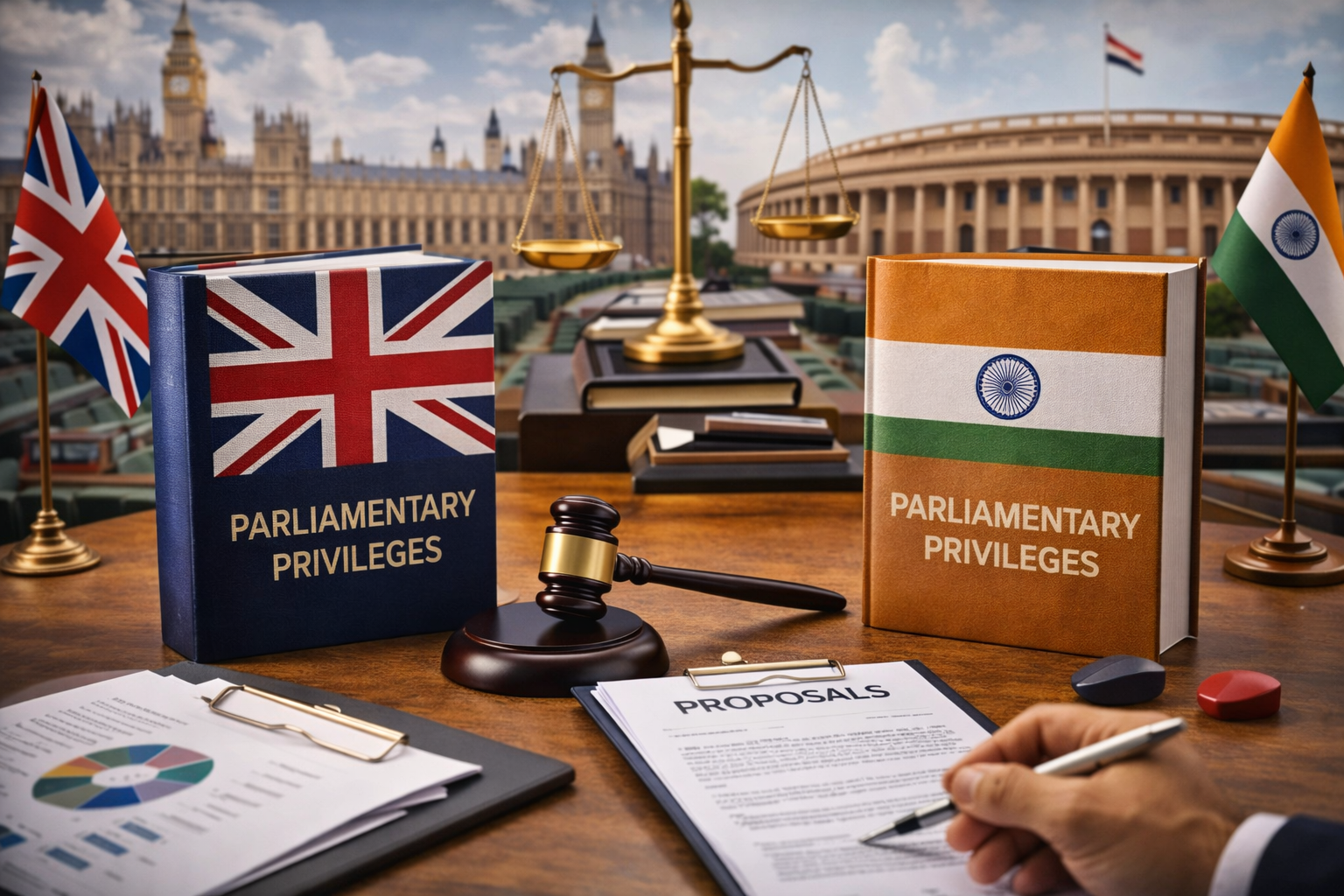
United Kingdom: The case of R v. R [1991] set a precedent in the House of Lords that a husband can commit rape against the wife under the same conditions that a stranger could commit rape against his victim and therefore marriage is a partnership between equals.
Canada: All “marital immunity” from 1983 has been fully removed by statutory reform.
South Africa: Once the new constitution was put into place in South Africa (1993), marital immunity was repealed and thereby brought the definition and protections of rape in the penal code in line with current human rights standards.
ADDRESSING COUNTER-ARGUMENTS
Concerns regarding inappropriate use of the law, evidence issues and risk to family structure have frequently been discussed by critics against proposed reforms. However, from a legal standpoint, the possibility that there might be some misuse does not provide justification or merit prohibiting a base right to have control over your own body. The assertion that criminalisation will prove harmful to the marriage relationship fails to consider the fact that any relationship that exists through physical coercion has ceased to be a viable mutually valued relationship; and thus should not be expected to function in a manner that is commensurate with a healthy marriage.
Proposed Legal/Policy Framework
The legal vacuum created by the absence of the ability for female domestic violence victims to prosecute their abuser from a civil context will require a multi-faceted approach to remedy the existing problem:
- Direct Amendment: The legislator should remove Exception 2 from 63 of The BNS, 2023.
- Procedural Safeguards: To provide protection against the potential for malicious litigation, there should be required review of all applications for an FIR by an appropriate officer prior to the registration of said FIR; including but not limited to circumstances in which there is an active matrimonial dispute.
- Evidence-Based Institutional Support: The appropriate governmental entities (i.e.SECs & domestic violence services) should make significant investments in developing gender sensitive programs for justice system components; as well as develop funding to support strong victim networks and create specialised court units within the justice system to support domestic violence survivors.
III. CONCLUSION
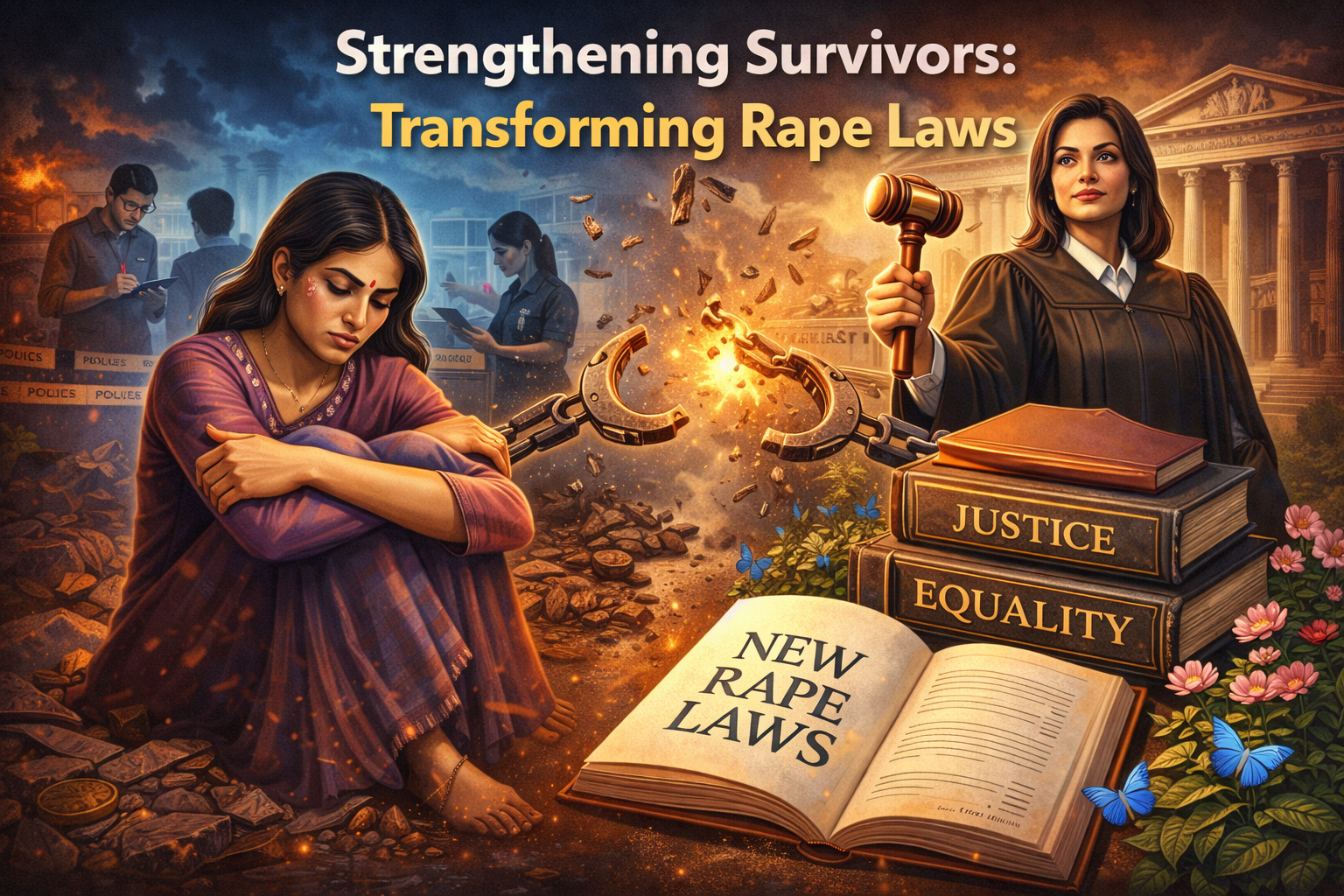
The ability for someone in a marriage to legally have sexual relations without their partner’s consent presents another major obstacle toward achieving gender equality in India. Making an exception for sexual abuse from marriage is not going to put an end to marriage itself; rather, it provides us with the legally defined basis needed to create and maintain a successful partnership based on mutual respect and consent by continuing to give both parties the ability to continue or discontinue an intimate relationship as they see fit for as long as both parties wish to be part of that relationship. The Indian Constitution is applicable in the same way the Indian Constitution is enforced in the public domain.
BIBLIOGRAPHY
Agnes, Flavia, ‘Protecting Women Against Violence? Review of a Decade of Legislation’, Economic and Political Weekly (2013).
Bharatiya Nyaya Sanhita, 2023.
Independent Thought v. Union of India, (2017) 10 SCC 800.
Justice J.S. Verma Committee, Report of the Committee on Amendments to Criminal Law (2013). Justice K.S. Puttaswamy (Retd.) v. Union of India, (2017) 10 SCC 1.
Protection of Women from Domestic Violence Act, 2005.
R v. R, [1991] UKHL 12/ [1992] 1 AC 599.
Ravi Kant v. District & Sessions Judge (Delhi High Court, 2022).