Authored By: Eshika Komal
Ramaiah Institute of Legal Studies
INTRODUCTION:
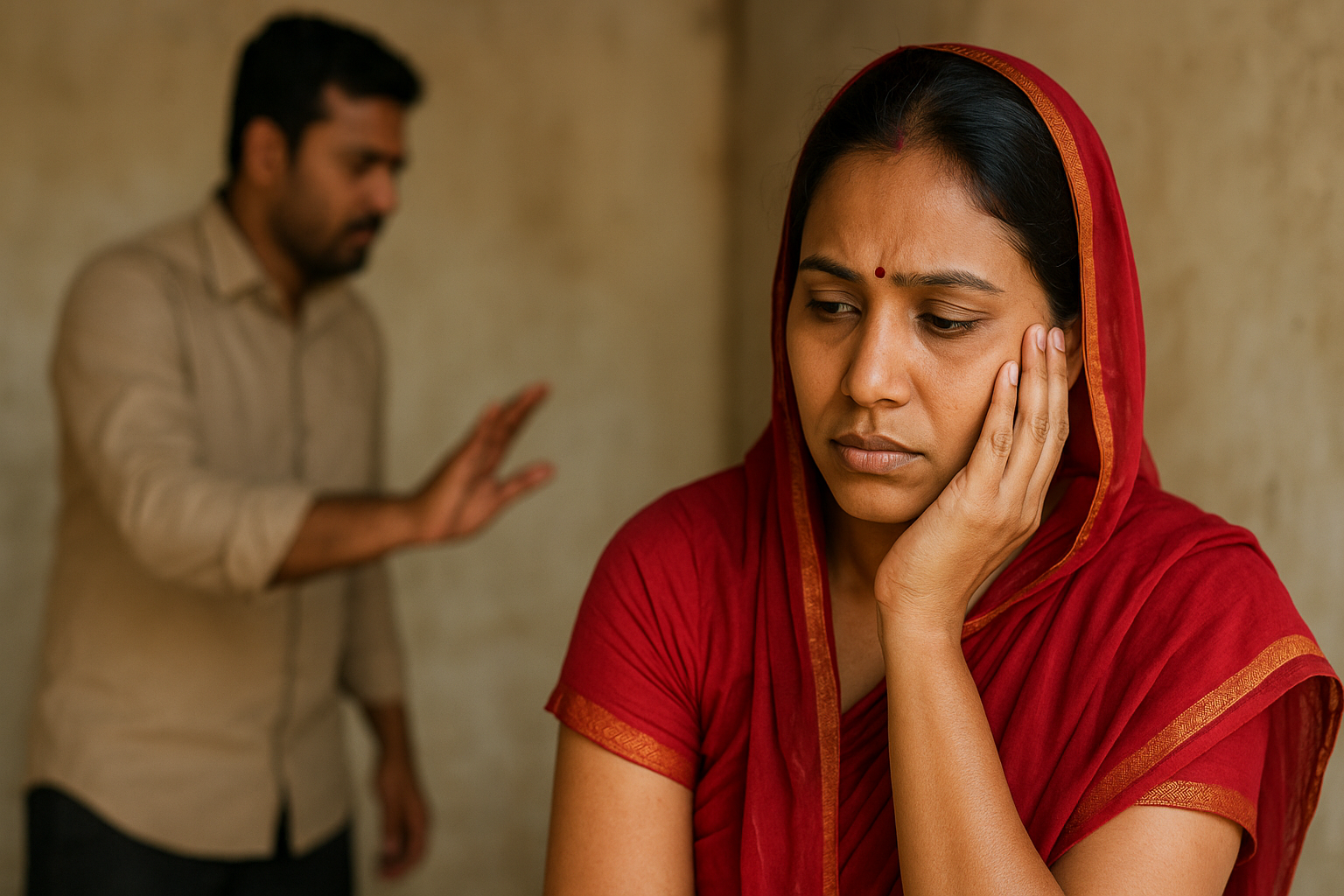
Rural Indian women face systematic barriers in asserting legal rights, despite robust law and courts. Although the Constitution guarantees equality under Article 14 of the Constitution of India and personal liberty under Article 21 of the Constitution of India, enforcement gaps persist. For example, crimes against women (dowry, domestic violence) have been rising nationally. Yet only a fraction of victims file complaints. Barriers include social stigma, economic dependence, low literacy, and patriarchal norms. A recent UNDP study notes that women especially from backward class communities often refrain from seeking formal justice due to “fear of stigma, retaliation and economic dependence”. In the instance, a 42 year old domestic worker after attending a community legal awareness session realised her abuse was unlawful and guided by a trained paralegal volunteer successfully filed a police complaint. This shows how grassroots legal literacy can empower women to overcome barriers.
LEGAL STATUTORY AND FRAMEWORK:
Key statutes include the Protection of Women from Domestic Violence Act,2005(PWDVA), the sexual Harassment of Women at Workplace Act,2013(POSH) and the Prohibition of Child Marriage Act,2006. Yet enforcement is weak in remote areas. Courts are slow, legal aid data show under trial female prisioner languishing due to delays. In practice village area women often rely on formal panchayat justice, which lacks legal safeguards. Formal institutions exists which provide legal safeguards are the National Legal Services Authority (NLSA), which oversees free legal aid nationwide (via the Legal Services Authorities Act,1987). State Legal Services Authorities (SLSAs) and District Legal Services Authorities (DLSAs) implement NALSAs programs locally. The NHRC can also address gender violations, though its process is lengthy.
DATA AND SCHEMES:
Official initiatives attempt to bridge gaps. For instance, NALSA’s National Legal Awareness campaign(2021) held 1,623 legal aid camps with targeted outreach to women, benefiting 75.64 lakh citizens. Similarly, the National Commission for Women (NCW) funds NGOs to run legal literacy programmes; so far 55 Legal Awareness Programmes have been held to educate women on their rights. These efforts cover topics like domestic violence, dowry laws, and maintenance rights. However, coverage remains uneven; many remote villages are yet unreached and follow-up is limited. Police stations in rural areas often lack women officers, deterring complaints.
Sources: Mandates drawn from the Legal Services Authorities Act,1987 and related government descriptions.
PROBLEM STATEMENT AND FIELD OBSERVATION:
Ground studies highlight the chasm between law and reality. In one rural survey (NCRB\DLSA), seasonal labourers were unaware of dozens of welfare and labour schemes they were entitled to. Women in particular face additional hurdles limited mobility and clan pressure can effectively nullify legal provisions. For example, although PWDVA grants shelter and maintenance, few rural women utilise these courts due to fear of family backlashes and abandonment.
RECOMMENDATION AND CONCLUSION: To operationalise justice, a bottom-up approach is needed. Key measures include;Legal Awareness by women leaders: Train local women as paralegal
volunteers or “Nayaya Doots” to educate peers on rights like mirroring NALSA’s paralegal volunteer schemes. Women’s Lok Adalat: organise periodic lok Adalats exclusive for women litigants at the village and block level with female lawyers and justice easing access to free dispute resolution (Odisha,s Mission Shakti; Nari Adalat is a Model).
Mobile Legal Aid Clinics: Deploy mobile vans in rural clusters(as in the 2021 campaign) with paralegals and lawyers to register cases on the spot, especially for PWDVA and maintenance claims.
Coordination with Gram Panchayat: Include awareness sessions in the Gram Sabha meetings, leveraging local self-government to reach all women( listening to issues of child marriage, domestic violence, dowry cases etc.).
Institutional Synergy: The conclusion should emphasise that Legal aid is not merely about providing a lawyer but ensuring a holistic support system. There is a need for stronger synergy between Gram Panchayat, District Legal Services Authorities (DLSA) and local NGOs to create a first point of contact safety net for rural women.
Digital Inclusion: As the Indian Judiciary moves towards digitalisation (e-courts), the conclusion must highlight that rural women face a “digital divide”. Future efforts must focus on establishing common service centres (CSCs) at the village level to facilitate under the Tele-law initiative.
Social-Legal Shifts: conclude by stating that while the Protection of Women From Domestic Violence Act,2005 provides a robust framework, the true measure of success lies in shifting the rural consciousness from “tolerance” to “entitlement”. By combining statutory schemes (like NALSA, POSH, PWDVA) with sustained community outreach, We can bridge theory and practice. In sum, strong grassroots legal literacy and support networks are essential. Empowering rural women through legal education, paralegal support, and community legal clinics will help translate their constitutional rights into tangible justice.
BIBLIOGRAPHY:
Statute;
- Constitution of India, 1950.
- Legal Services Authorities Act, 1987, No. 39, Acts of Parliament, 1987 (India).
- Prohibition of Child Marriage Act, 2006, No. 6, Acts of Parliament, 2007 (India).
- Protection of Women from Domestic Violence Act, 2005, No. 43, Acts of Parliament, 2005 (India).
- Sexual Harassment of Women at Workplace (Prevention, Prohibition and Redressal) Act, 2013, No. 14, Acts of Parliament, 2013 (India).
Reports and Institutional Material;
- MINISTRY OF WOMEN & CHILD DEV., GOV’T OF INDIA, ANNUAL REPORTS.
- NAT’L COMM’N FOR WOMEN, LEGAL AWARENESS INITIATIVES (India).
- NAT’L CRIME RECS. BUREAU, CRIME IN INDIA.
- NAT’L LEGAL SERVS. AUTH., LEGAL AID PROGRAMMES (India).
- U.N. DEV. PROGRAMME (UNDP) INDIA, ACCESS TO JUSTICE REPORTS.
- Tele-Law Scheme, MINISTRY OF LAW & JUSTICE, GOV’T OF INDIA.