Authored By: Abhik Dutta
The Assam Royal Global University
INTRODUCTION
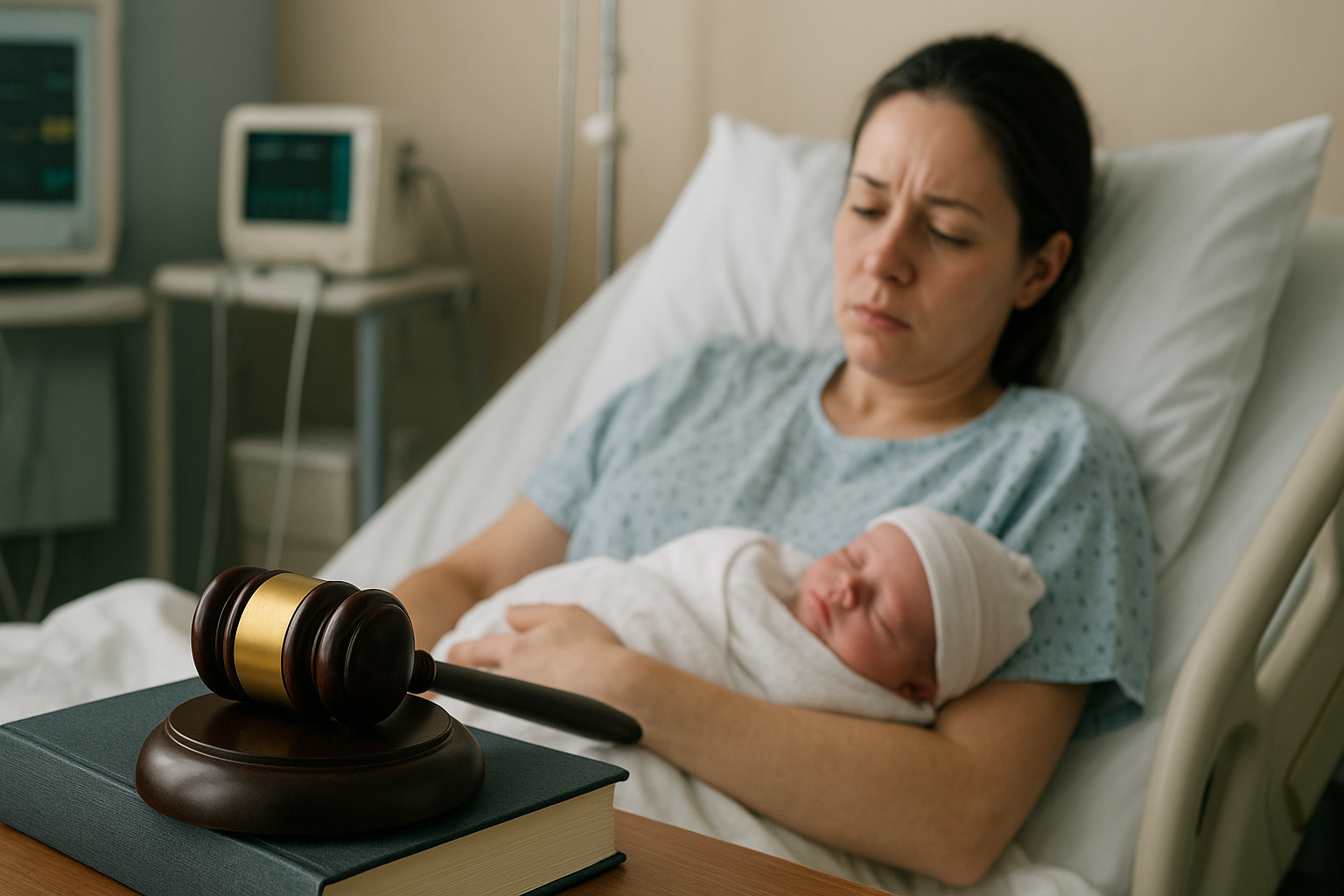
The significant discourse in India today is whether the right to die with dignity challenges the balance between the sanctity of life and personal autonomy. To delve further into this legal principle, it is crucial to understand that right to die with dignity when a person is suffering from a terminal illness or is in a permanent vegetative state falls under the ambit of Article 21 of the Constitution of India. India recognizes passive euthanasia through multifarious judgments of the apex court of the country. ‘Euthanasia’ also known as mercy killing involves the intentional and deliberate act of accelerating an individual’s death, a practice specifically undertaken to prevent further suffering be it physical or emotional suffering arising from an illness which is incurable and in its terminal phase. Euthanasia is of two types, active and passive. The Supreme Court of India recognizes passive euthanasia which implies withdrawal or withholding of life support or medical treatment. On the other hand, active euthanasia is illegal in India. The aim of this article is to study the constitutional foundation of this right and to critically examine this right and the legal gaps that exist in its implementations well as the judicial evolutions that strengthened it.
“RIGHT TO DIE WITH DIGNITY” AND PASSIVE EUTHANASIA
It is considered to be a fundamental right recognized under the scope of article 21 which guarantees the right to life and personal liberty. This article is an integral and most vital part of the constitution as it has been widely interpreted for inclusion of multiple rights that are very fundamental in essence through the mechanism of judicial innovations. The apex court interpreted the aforementioned article vastly and elaborately to include ‘dignity’ and not just mere animal existence to the right to life. The Judiciary has reaffirmed human dignity as intrinsic aspect of right to life thereafter expanding it to the manner of death as well. It becomes crucially important in order to ensure no individual becomes compelled to go through the physical or mental suffering when the scope of recovery is under no circumstances possible. The innovation of this legal principle has evolved through judicial decisions over the passage of time. In the case of Gian Kaur v. State of Punjab the Supreme Court stated right to die was not included under right to life but also reaffirmed that right to live with dignity can be exercised till the utmost and natural end of life. But notably, the court opined there is no legal protection for suicide or to assist it. In the 2011 case of Aruna Shanbaug who had been living in continual vegetative state for several years, a petition was filed in the court requesting to stop her life support system so that she could die with dignity. The request for the same was rejected by the court by disapproval of withdrawal of life support. Despite of the aforesaid disapproval, the court recognized the concept of passive euthanasia in cases that are extremely special and exceptional.
Passive euthanasia when explained in simple words refers to the stoppage of life supporting measures so that an individual can die freely when there is no possible scope of recovery. The Court also crafted detailed guidelines on the procedure of such withdrawals in the strict observation and surveillance of medical board as well as the approval of the High Court to prevent any sort of wrongful use. The legal landscape of the other International countries was also taken into consideration to recognize and regulate the procedures of passive euthanasia in India, these procedures however are strict at India and allowed only in distinct cases of intolerable suffering and impossible recovery. Euthanasia is of two types mainly, active and passive. To explain briefly, the procedure of directly ending a patient’s life, for instance, applying a lethal injection for the same would refer to active euthanasia, however active euthanasia is illegal in India. On the other hand, passive euthanasia refers to stoppage of life support machines for a terminally ill patient with no reasonable scope or possibility of recovery. The primary objective behind this is to save the individual from an unendurable physical or mental suffering and to honor the right to die with dignity of a person.
THE LANDMARK CASE OF COMMON CAUSE V. UNION OF INDIA, 2018
In this case, the petitioners urged the court to form a panel of experts consisting of doctors, lawyers, social experts for the purpose of reviewing ‘living will’ also known as advance medical directive and cases of passive euthanasia , the petitioner further sought clear guidelines on the method of creating living wills and carrying out passive euthanasia. It was further argued that prolonging the natural lifespan of a person through medical or artificial measures amounts to violations of one’s fundamental rights guaranteed in (Part III) of the Indian Constitution, arguably it would lead to the violation of privacy which was considered as a fundamental right in remarkable case of K.S. Puttaswamy v. Union of India. It was stated that privacy encompasses autonomy to take decisions on matters that are intimate or personal, for instance the decision on opting for medical treatments implying the liberty to decide whether to continue the medical treatment or to end the unendurable suffering . The petitioners reaffirmed that the right to live with liberty assures that while the government protects life, it can under any circumstance not impel medical treatment on anyone without their choice or intent, especially when a person is suffering from intolerable physical or mental suffering irreversibly with no reasonable scope of recovery. Denying such a person the choice to end his life would be violation of his right to liberty. In its distinctive judgment the country’s apex court stated that the Gian Kaur case established the principle of right to die with dignity however this case didn’t reflect the concept of allowing passive euthanasia back then. Distinctively, the different types of euthanasia were also differentiated mostly highlighting passive and active ones. Notably the court observed that it’s ruling in case of Aruna Shanbaug was erroneous wherein it stated that passive euthanasia could be executed through a new legislation, moreover the court remarked that being able to use an Advance Medical Directive safeguard strengthens a person’s right to make own choices, on the other hand the concept of ‘best interest’ view can provide a clear path for a caregiver to decide on what is best for a patient who is incapacitated to decide for himself. The highlighted ruling of the European Court of Human Rights in Pretty v. The United Kingdom firmly asserted that people can decide to prevent a painful or scary death; and such a choice is also legally safeguarded by the right to private life under article 8(1) of the European Convention on human rights. It was well emphasized in India that honoring the personal choices regarding one’s death is crucial in protecting right to privacy interlinked with right to life and personal liberty.
INDIA’S SUPREME COURT APPROVES PASSIVE EUTHANASIA IN 2026
In the impactful case of Harish Rana v. Union of India right to die with dignity was first recognized as the Supreme Court allowed passive euthanasia by permitting the withdrawal of life support system. To delve further into the facts of the case, Harish Rana, a 32 year old man had suffered a severe brain damage when he was just a 19 year old student who unfortunately fell from a fourth floor building leaving him in a permanent vegetative state for a period of 13 years with complete paralysis of all four limbs. For all these years, Harish survived only on clinically assisted nutrition and hydration (CANH) that was specifically delivered through PEG tubes. There was no scope of recovery. His father who had filed a plea at the Delhi High Court faced dismissal of the same in 2024 which led the family reach the apex court of the country. For the first time, the implementation of passive euthanasia was approved by the SC; it also approved the collective recommendations from the medical panels and relatives to discontinue Harish’s life sustaining equipment. Further, AIIMS Delhi was instructed to take him into its end of life care section and develop a systematic procedure for a comfort focused final stage support with intense concern that the process of withdrawal must be humane such that there is no abandonment and the dignity of the patient is upheld.
CONCLUSION
A crucial challenge today in the effective implementation of passive euthanasia in India is the absence of codified law or legal framework laying down the detailed guidelines and procedures of it as such a vital process is being regulated only through judicial directives as observed in historically significant cases like Common Cause, Harish Rana. The Judiciary recognizes right to die with dignity under the wide scope of Article 21 but what massively draws attention is the absence of law on it enacted by the legislative organ of the Government. Now, the process itself requires multifarious approvals followed by legal expertise, lengthy paper works and litigation, it also necessitate permissions from medical boards and higher judicial review etc. and it therefore has possibilities of requiring longer duration of time. However, the right to die with dignity is indescribably important to help terminally ill patients avoid the intolerable physical or mental suffering for a long time and end life when there is no further scope of recovery, balancing personal autonomy and humanity.
REFENCE(S):
[1] INDIA CONST. art. 21.
[2] Gian Kaur v. State of Punjab, (1996) 2 S.C.C. 648 (India).
[3] Passive Euthanasia in India, Drishti IAS, https://www.drishtiias.com/daily-updates/daily-news-analysis/passive-euthanasia-in-india (last visited Apr. 29, 2026).
[4] K.S. Puttaswamy v. Union of India (2017) 10 SCC 1 (India).
[5] Pretty v. United Kingdom, No. 2346/02, 2002-IV Eur. Ct. H.R.155.
[6] Shraileen Kaur, Common Cause v. Union of India: Case Analysis, iPleaders, https://blog.ipleaders.in/common-cause-v-union-of-india-case-analysis/ (last visited Apr. 29, 2026).
[7] Harish Rana v. Union of India, 2026 INSC 222 (India).
[8] Drishti IAS, SC Allows 1st Passive Euthanasia in Harish Rana Case, https://www.drishtiias.com/daily-updates/daily-news-analysis/sc-allows-1st-passive-euthanasia-in-harish-rana-case (last visited Apr.30, 2026).