Authored By: Nozipho Ndebele
Great Zimbabwe University
Abstract
A dying declaration is a statement made orally, or in writing by a deceased person about the cause of their death when they had an acquiescent, definite belief of imminent death. They are highly relevant particularly, in a criminal court, in cases of murder and culpable homicide where the cause of the deceased’s death is an issue in dispute. The admissibility of dying declarations in several common law jurisdictions including in Zimbabwe is based on the cornerstone requirement of the deceased’s fear of death. It boggles the mind if it is constitutionally sound to rely and convict an accused based on declarations which were made by a perilously ill person in their deathbed, going through excruciating pain, whose mind could potentially have been infused with all kinds of imaginations. In recognition and acceptance of religious beliefs, there ought to be a balance between promoting justice for the deceased victim and protecting the constitutional rights of the accused. This article is a critical discussion on admissibility of dying declarations in Zimbabwe as adopted from English common law, in a quest to determine its constitutionality and proffering recommendations in order to balance the constitutional fundamental rights of equality and justice for deceased victims.
Key words: Constitutional democracy, dying declarations, equality, religion, criminal justice system.
Introduction
Dying declarations are statements made by the deceased on the brink of death, stating “crucial information about the cause of their death or the circumstances surrounding it”.[1] Dying declarations constitute hearsay evidence since their probative value entirely depends on the credibility of the deceased victim who is not the one presenting such evidence. They are allowed as an exception to the general rule that hearsay evidence is inadmissible, because of necessity as the declarant is unavailable to testify due to death and reliability. The evidence is religiously grounded in the belief that the evidence is reliable as a dying person would not die having lied due to “fear of heaven’s ultimate punishment for false testimony, a violation of one of the Ten Commandments”[2]
The basis of their admissibility is reliant on the religious persuasions, more so on the “fear of divine retribution that a man who goes to meet his creator with lies on his lips will no doubt face the almighty’s full wrath”.[3] Consequently, the belief that a person faced with death is unlikely to be untruthful is the basis of admitting dying declarations, conferring them due weight to convict an accused in the guise to afford the deceased victim justice. Historically, law and religion were intrinsically intertwined and influenced each other, hence this religious belief could be the basis of law. However, in a modern world governed by fundamental rights of equality and freedoms, it is questionable whether it is still tenable for the law and the courts to continue recognising and applying these religious relics in a constitutional democracy where its citizens are allowed to believe in different things. Some are Christians, some are Muslim, some are Hindu whilst others are atheists. This article interrogates if the admissibility of dying declarations is tenable in the modern society.
Admissibility of dying declarations
Section 254 of the Criminal Procedure and Evidence Act [Chapter 9:07] (hereafter, the CPEA) states that “a declaration made by any deceased person upon the apprehension of death, shall be admissible or inadmissible in evidence in every case in which such declaration would be admissible or inadmissible in a similar case pending in the Supreme Court of Judicature in England.” This implies that the admissibility of dying declarations in Zimbabwe hinge on English common law.
In S vs Mbizi HH 453-22, the requirements of admissibility of dying declarations were aptly stated as follows;
1) at the time the statement was made the declarant must have been dangerously ill and was without hope of recovery
2) the person who made the statement must be dead at the time of the trial
3) the trial must be for the murder or culpable homicide of the dead person
4) the statement must relate to the cause of the death of the declarant’s death
5) the declarant must have been a competent witness
In this above-mentioned case, the deceased who was allegedly stabbed by the accused who was found with intestines intruding from his stomach, had informed two witnesses that he was dying and has been stabbed by the accused. Although the deceased’s death was not contemporaneous with the declaration, the court confirmed that “contemporaneity between the utterance and the death is not a prerequisite for the admission of a dying declaration,” instead one should have at the time of making the declaration, had lost any hope of recovery.[4]
In the Zimbabwean jurisdiction, in light of section 254 of the CPEA, the fear of death is the cornerstone of admitting dying declarations. In terms of English law, there have been amendments and the requirement of apprehension of death has been done away with, but Zimbabwe cannot follow suit because this requirement is enshrined in the CPEA in its definition of a “dying declaration.”[5] The courts still uphold that when one’s statements does not express any hopelessness of living, such statements are not a dying declaration and are inadmissible.[6]
Criticism levelled against admissibility of dying declarations
The justification of dying declarations has many flaws and its requirements have in-built shortcomings which sometimes renders the exception unattractive.[7] In S v Gurumombe HH 410-22, the court mocked that it is a trifling argument to believe that a mere ranting of a dying man is reliable because no one at the brink of death is expected to lie, this has everything to do with religious beliefs and nothing to do with the law. The court rightly pointed out that a dangerously ill person experiencing unbearable pain may be subject to all kinds of imagination and their version of events can be bias in being subjectively focused on their own narrative without considering both sides.[8]
Some of the criticism levelled against dying declarations is that they are risky as they are out of court statements often made without an oath and without fear of perjury, they can also be accepted without being subjected to cross-examination to test their credibility as the declarant is unavailable to testify. This raises questions on whether the accused ‘s presumption of innocence and the right to a fair trial guaranteed in the Constitution are upheld. The justification of dying declarations are considered puerile in that “one does not have to believe in a deity or an afterlife to see death as presenting a moment of moral seriousness and clarity,”[9] and admitting such evidence grounded in Christian persuasions in the midst of many religious beliefs in a diverse nation raises questions on equality.
Recommendations
In S v Mbizi, the court held that;
“the criticisms levelled against the exception of dying declarations heightens my conviction that it is in the interests of justice to develop the requirements for their admission as an exception to hearsay evidence in our criminal procedure. The case at hand is a typical reminder that if care is not taken the courts may arrive at completely unsafe verdicts of guilty grounded on the so-called dying declarations. In addition to all the requirements indicated above, there ought to have been a further requirement or rather a qualification of requirement 5 in that in addition to being a competent witness, the declarant’s evidence would have been found to be credible before the court.”
Therefore, the court proposed in addition to enquiring if the declarant was a competent witness, there ought to be a further requirement to determine if the declarant had to testify, if their evidence would have been considered credible. In this case, considering the deceased declarant was stone drunk on the day in question, and was picking fights with several people in the camp where he was injured, it was concluded that there is a high possibility that despite being a provocateur, he might have fabricated his version of events to avoid taking the blame for his own death. Thus, despite the evidence being a dying declaration, the court rejected it insisting that solely relying on the statements of a dying person because they were made when death was impending is absurd as there ought to be a further assessment on whether such declarations are free from obvious imperfection.
The sole reliance on deceased’s statements without verification may be unethical and courts might have to seek supporting evidence to corroborate the dying declaration, especially in securing an accused’s conviction.[10] Also, it is difficult to determine reliability of the person who claims to have been told about the cause of the deceased’s death. In India, it is required that the dying declaration should have been witnessed by at least two competent witnesses, this guards against fabrication and malicious motives against an accused.[11] However, in Zimbabwe, it is not required that the dying declaration should have been witnessed by at least two competent persons. This may cast doubt on the reliability aspect, in S v Gurumombe, it was remarked that the recipient of the dying statements may sometimes be discomposed and not be attentive when such statements are shared as one could be considering the declarant to be merely blubbering due to the gravity of their illness.[12]
Dying declaration are relevant and should be admitted. In as much as they have several shortcomings, necessity demands that they are permissible in criminal proceedings. The mere fact that they have flaws does not mean perpetrators should be “scot-free” because cases of murder are usually done in secret and the dying declarant may be the only witness. Thus, the inadmissibility of these statements would defeat the course of justice.
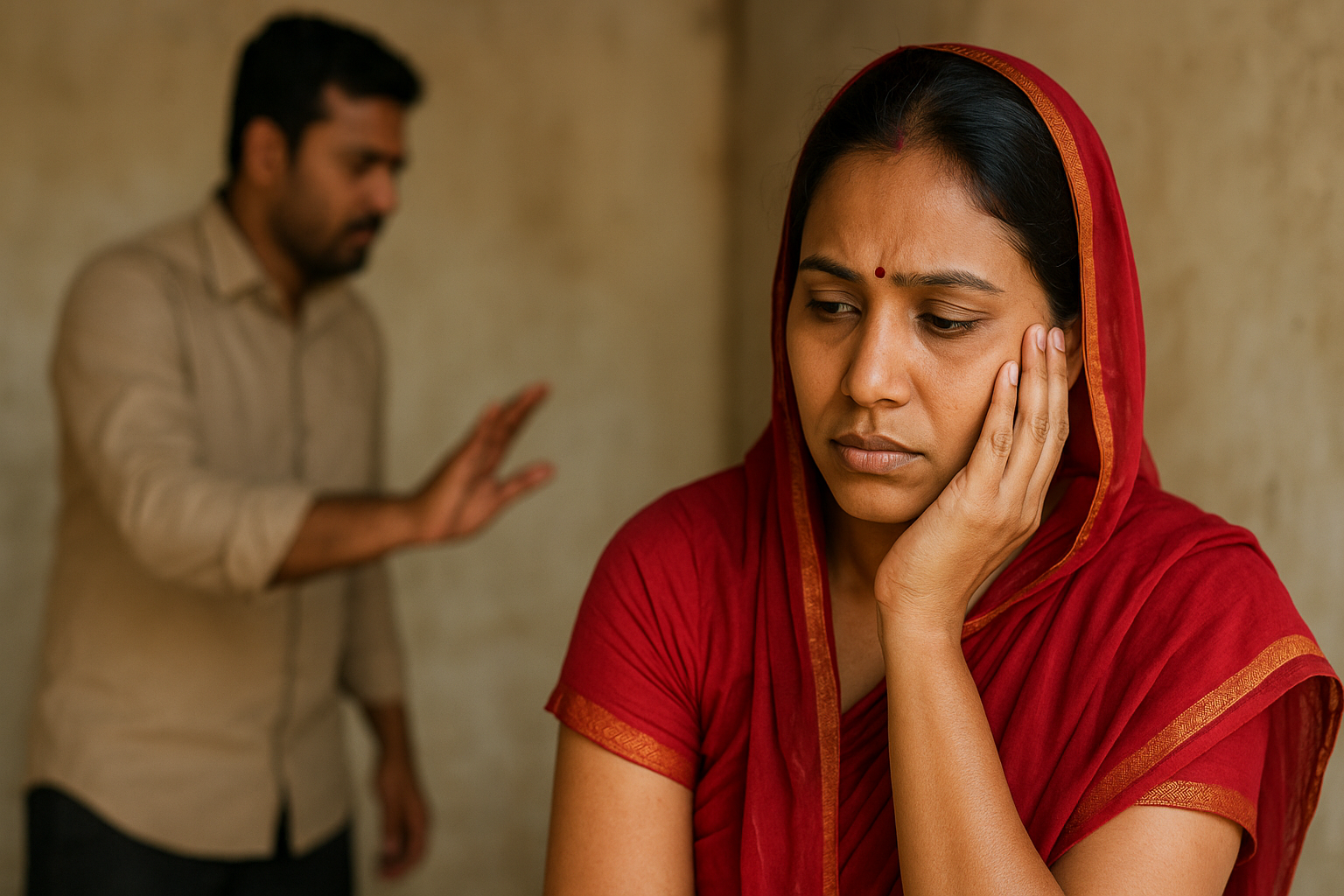
Dying declaration are described as the “most mystical in its theory and the most arbitrary in its limitations.”[13] The requirement of apprehension of death is unreasonably restrictive. In S v Gurumombe, the complainant was allegedly assaulted by her partner and made a statement to a policer officer identifying the accused as the cause of her injuries, which later led to her death.[14] The statement was rejected as a dying declaration because when it was made, the complainant did not foresee death as she did not at any point reference death.[15] It is asserted that women with a record of being a victim of domestic violence during a relationship seldom seek unfair payback, instead, experience shows that most of them still attempt to exonerate their abusers even in their last statements.[16] Psychological education and life circumstances unveil that most women tend to report their abuse when knowing that death is imminent because that’s the moment they have no fear from their violent partner.[17] Since dying declarations are accepted due to necessity, the requirement of apprehension of death should be done away with because “our faith in modern medicine, our genuinely optimistic outlook, or our denial of death,” can make it harder to satisfy this requirement[18] and the victim will be deprived of justice because death closed their mouth.
Wajahat (2026) insists that since the technological era is dominant, it is recommended that dying declarations should be recorded to prevent the risk of distortion or misinterpretation of the statement.
Conclusion
In summation, hearsay evidence is generally inadmissible in Zimbabwe because it is usually not subject to cross examination as its probative value lies on the credibility of someone else other than the one leading the evidence. However, dying declarations are accepted as an exception to the general rule, provided they satisfy all the specified requirements discussed above. The main basis of admitting dying declarations is because of necessity and reliability. This type of evidence is faced with many criticisms from scholars and judgments, showing its flaws in its basis and requirements. It is affirmed that dying declarations ought to continue being permissible in the courts subject to adopting the proffered recommendations such as the doing away with the requirement of apprehension of harm.
REFERENCE(S):
Legislation
Constitution of Zimbabwe (Amendment No. 20) Act of 2013.
Criminal Procedure and Evidence Act [Chapter 9:07].
Case law
S v Gurumombe HH 542-24.
S v Mbizi HH 453-22.
S v Mhunza HH 303-23.
Journal Articles
Fordha, The Admissibilty of Dying Declaration, 38(3) L. Rev. 509 (1970).
Jain, An Analysis of the Admissibility and Reliability of Dying Declarations as Evidence in Criminal Trials, 6 (5). International Journal of Law Management & Humanities (2023).
Orenstein, Her Last Words: Dying Declarations and Modern Confrontation Jurisprudence, 6. Indiana University Maurer School of Law (2010).
Shipra, Dying Declaration: A Critical Analysis of Admissibility, Reliability and Ethical Implications in Modern Era, 10 (2). International Journal of Novel Research And Development. 226-229 (2025).
Wajahat, Dying Declarations; Assessing Its Probative Value under Legal Systems of United Kingdom, United States of America, India & Pakistan, 5(1). Advance Social Science Archive Journal (2026).
Internet Journals
Maharaj, Dying declaration–should the dead have a say in a matter?, De Rebus (April 15, 2026, 16:00pm), https://www.derebus.org.za/dying-declaration-dead-say-matter/.
[1] Jain, An Analysis of the Admissibility and Reliability of Dying Declarations as Evidence in Criminal Trials, 6 (5). International Journal of Law Management & Humanities (2023).
[2] Orenstein, Her Last Words: Dying Declarations and Modern Confrontation Jurisprudence, 6. Indiana University Maurer School of Law (2010).
[3] Orenstein, Her Last Words: Dying Declarations and Modern Confrontation Jurisprudence, 6. Indiana University Maurer School of Law (2010).
[4] S v Mbizi HH 453-22.
[5] S v Gurumombe HH 542-24.
[6] S v Mhunza HH 303-23.
[7] S v Mbizi HH 453-22.
[8] S v Gurumombe HH 542-24.
[9] Orenstein, Her Last Words: Dying Declarations and Modern Confrontation Jurisprudence, 6. Indiana University Maurer School of Law (2010).
[10] Shipra, Dying Declaration: A Critical Analysis of Admissibility, Reliability and Ethical Implications in Modern Era, 10 (2). International Journal of Novel Research And Development. 226-229 (2025).
[11] Shipra, Dying Declaration: A Critical Analysis of Admissibility, Reliability and Ethical Implications in Modern Era, 10 (2). International Journal of Novel Research And Development. 226-229 (2025).
[12] HH 410-22.
[13] Fordham, The Admissibilty of Dying Declaration, 38(3) L. Rev. 509 (1970).
[14] HH 542 – 24.
[15] S v Gurumombe HH 542 – 24.
[16] Orenstein, Her Last Words: Dying Declarations and Modern Confrontation Jurisprudence, 6. Indiana University Maurer School of Law (2010).
[17] Orenstein, Her Last Words: Dying Declarations and Modern Confrontation Jurisprudence, 6. Indiana University Maurer School of Law (2010).
[18] Orenstein, Her Last Words: Dying Declarations and Modern Confrontation Jurisprudence, 6. Indiana University Maurer School of Law (2010).