Authored By: Aakriti
MERI Professional Law Institute
I Introduction
Any sexual intercourse without the free and voluntary consent of the parties concerned is rape, whether or not the parties concerned are married to each other. The traditional patriarchal norms have largely placed wives in a subordinate position to their husbands, thus contributing to the misconceptions about sexual autonomy in marriage. The matrimonial sexual intercourse consent is still an illusion for them: if the spouse has given consent for marriage, she has also given consent for consummation of marriage. Society must understand that if a woman said no to sexual intercourse, it means no- even if she is your girlfriend, friend, stranger or your wife.
This legal article argues for the woman’s right to say no to sexual intercourse even if it is her own husband and what the legal frameworks are for marital rape in India. First, this article examines the contemporary framework of Bharatiya Nyaya Sanhita, 2023. Then it provides a comparative evaluation of global approaches to criminalizing marital rape. And finally, the article outlines a structured legislative roadmap, proposing amendments to the Hindu Marriage Act, 1955, and the Protection of Women from Domestic Violence Act, 2005, as well as procedural mechanisms to ensure justice while preventing systemic abuse.
Historical and Social Roots
Indian society historically viewed wives through patriarchal institutions that limited bodily autonomy. For centuries, India, along with other countries, has fought against various evil societal norms and mostly women are the victims as they are considered a vulnerable group of society. Women have faced sati pratha, child marriage in which they were married just after their menstruation cycle or even before that, being tortured for dowry or not providing enough dowry to the groom and in-laws, domestic violence by husband or his relatives, etc. The current status of these societal norms is that they are abolished or considered illegal for whoever practices/commits them.
A woman’s consent can be withdrawn i.e. it is revocable merely because she has entered into a marital relationship. Men should be taught that it is not their right as a husband to have sexual intercourse with his wife at any time he wants. It has always been observed that talking about sex is a sin, it should happen between husband and wife, and talks shall also remain between husband and wife, but sadly, no one tells that it should also happen with the consent of both partners, to maintain dignity and personal freedom.
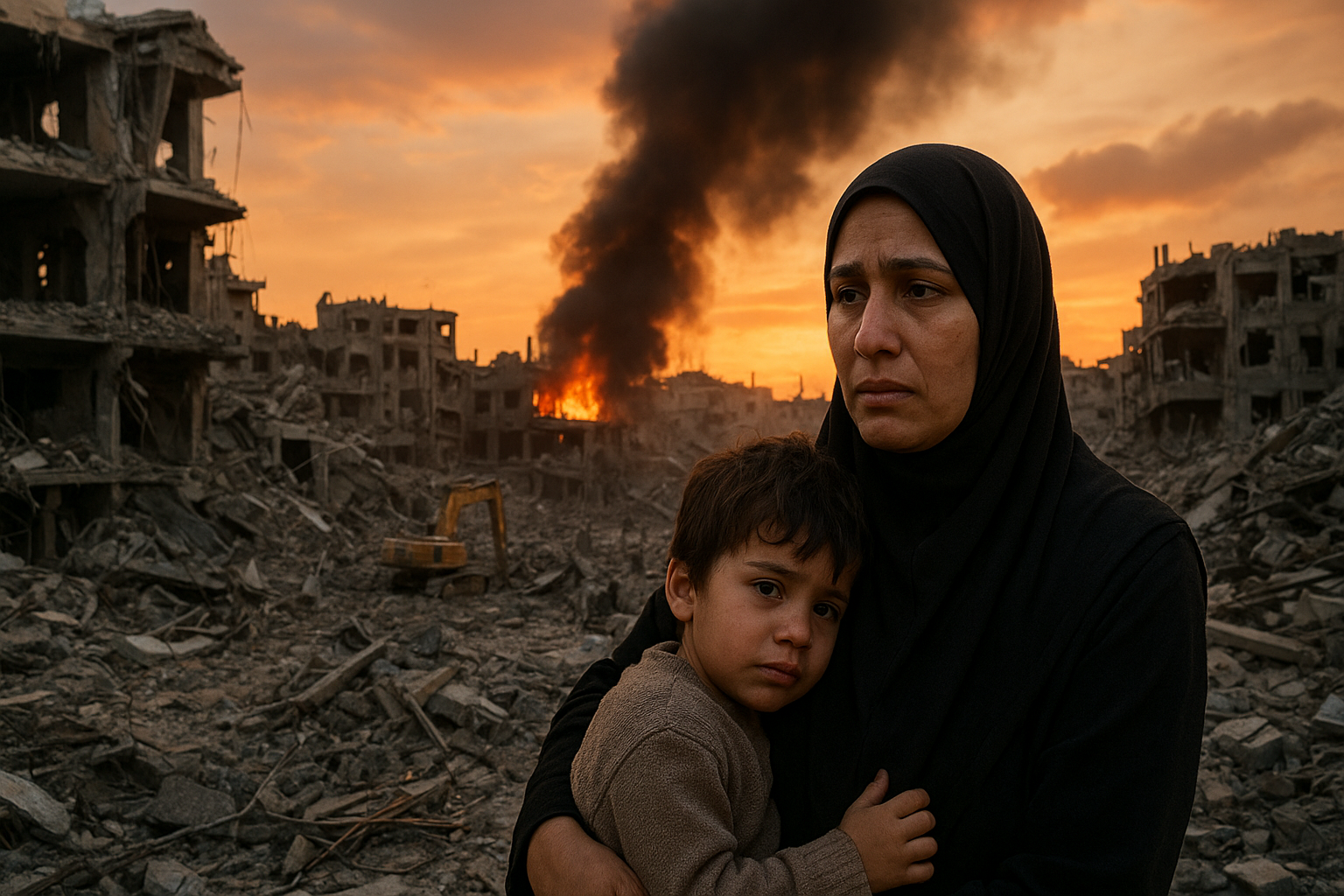
Many people in society know that married women have become silent sufferers of forceful sexual relationships by their husbands. According to the National Family Health Survey (NFHS-6), roughly 22.2% of ever-married Indian women between the age group of 18-49 report experiencing some form of spousal violence in their lifetime. And about 6% of these women specifically report facing forced sexual intercourse and sexual violence committed by their husbands.
II Existing Legal Framework
In India marital rape in limitations is criminalized,Under Section 63(d)(vi) of the Bharatiya Nyaya Sanhita, 2023-A man is said to commit “rape” if he-A man is said to commit “rape” if he— (a) penetrates his penis, to any extent, into the vagina, mouth, urethra or anus of a woman or makes her to do so with him or any other person; or (b) inserts, to any extent, any object or a part of the body, not being the penis, into the vagina, the urethra or anus of a woman or makes her to do so with him or any other person; or (c) manipulates any part of the body of a woman so as to cause penetration into the vagina, urethra, anus or any part of body of such woman or makes her to do so with him or any other person; or (d) applies his mouth to the vagina, anus, urethra of a woman or makes her to do so with him or any other person, under the circumstances falling under any of the following seven descriptions:— (i) against her will; (ii) without her consent; (iii) with her consent, when her consent has been obtained by putting her or any person in whom she is interested, in fear of death or of hurt; (iv) with her consent, when the man knows that he is not her husband and that her consent is given because she believes that he is another man to whom she is or believes herself to be lawfully married; (v) with her consent when, at the time of giving such consent, by reason of unsoundness of mind or intoxication or the administration by him personally or through another of any stupefying or unwholesome substance, she is unable to understand the nature and consequences of that to which she gives consent; (vi) with or without her consent, when she is under eighteen years of age; (vii) when she is unable to communicate consent. This section was widely discussed in the case of Independent Thought vs Union of India.
Under Section 67 of the Bharatiya Nyaya Sanhita, 2023, whoever has sexual intercourse with his own wife, who is living separately, whether under a decree of separation or otherwise, without her consent, shall be punished with imprisonment of either description for a term which shall not be less than two years but which may extend to seven years, and shall also be liable to fine.
There are provisions for cruelty under sections 85 and 86 of Bharatiya Nyaya Sanhita, 2023, but there are no provisions for marital rape for women who are not minors and are not judicially separated.
III Status of Marital Rape in Other Countries
a) Countries where marital rape is illegal
United Kingdom, United States (all states criminalize marital rape, though procedural differences remain), Canada, Australia, New Zealand, Ireland, France, Germany, Italy, Spain, Portugal, Netherlands, Belgium, Sweden, Norway, Denmark, Finland, Switzerland, Austria, Poland (earliest country to criminalize it), Czech Republic, Slovakia, South Africa ,Namibia, Zimbabwe, Brazil, Argentina, Mexico, Nepal, Bhutan, South Korea, Japan (recognized through judicial interpretation),Taiwan etc
b) Countries where marital rape is not criminalized
Brunei, Darussalam, Egypt, India (for adult wives who are not judicially separated), Afghanistan, Pakistan, Bangladesh, China, Haiti, Laos, Mali, Myanmar, Senegal, Tajikistan, Botswana, Democratic Republic of Congo, Iran, Lebanon, Malaysia Nigeria Sri Lanka (except in limited circumstances i.e. judicial separation), Saudi Arabia, United Arab Emirates, Oman, Qatar, Kuwait, Bahrain etc
IV Comparative Perspective
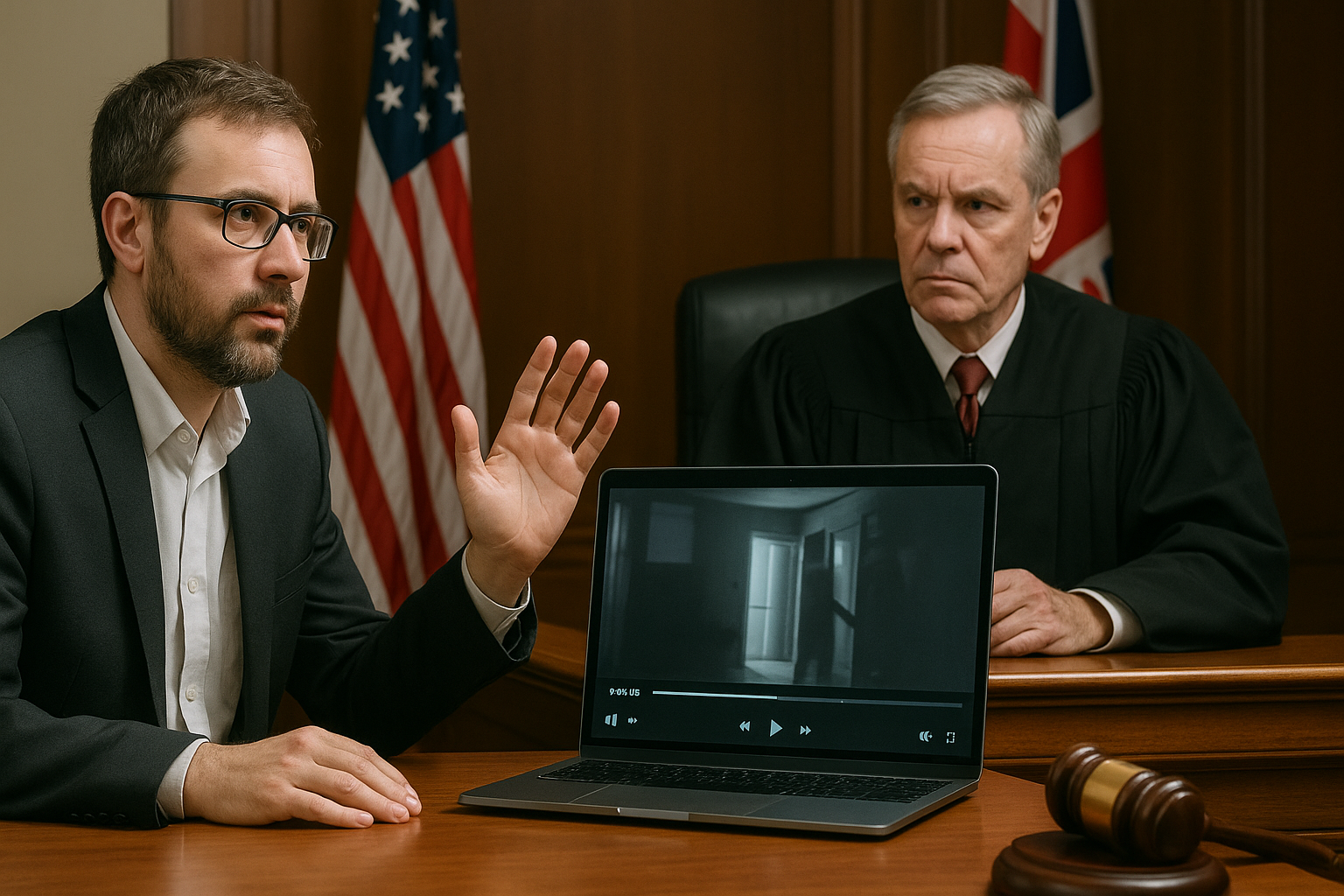
In the United States, there was no such concept of marital rape in the existing rape laws of the U.S.A. until the 1970s, where husband would be convicted of marital rape if he attempted rape on a person who is not his spouse. But the landmark case of People v. Liberta, 64 N.Y.2d 152 (1984), where marital rape was considered unconstitutional, where rape was committed without the consent of the wife.
Facts: A wife filed a criminal complaint that her husband had raped her; The husband stated to dismiss the charges on the grounds that New York Penal Law Section 130.35, which included a marital rape exemption. The trial court agreed with this argument and dismissed the case. The Appellate Division, however, reversed that finding and ordered a trial.
Problem: Constitutionality of New York Penal Law Section 130.35, which created a marital exemption protecting a husband from prosecution for raping his wife.
Judgement: The New York Court of Appeals upheld the Appellate Division decision and found the marital rape exemption unconstitutional.
Analysis: The Court held that no rational basis existed to differentiate marital and non-marital rape. It reasoned that by excluding husbands from the scope of prosecution, the law deprived married women of the same legal protection against sexual violence as unmarried women, and thus was a violation of the Equal Protection Clauses of both the United States and New York Constitutions.
The Court rejected the old common-law idea that marriage meant unconditional consent to sex. It stressed that rape is not merely sex without consent; it is a violent assault on bodily integrity. A marriage license does not confer upon a husband a permanent right to compel sexual relations with his wife.
Importance: This historic ruling abolished the marital rape exemption in New York and reaffirmed that married women have the same rights as unmarried women to bodily autonomy, dignity and legal protection from rape. The judgment is seen as a landmark in the recognition of marital rape as a criminal offence and has influenced legal reforms and constitutional debates in other jurisdictions.
In Poland, women have been provided with laws for marital rape with utmost cruelty. It was the first country to have explicitly criminalized marital rape by early 1932. The Amendment of Article 197 in 2024 has expanded the definition of rape to explicitly cover any sexual act committed without conscious, voluntary consent, closing the historical loopholes.
In India, there is still an ongoing debate about criminalizing marital rape with the case of Hrishkesh Sahoo vs The State of Karnataka and ors. SLP(CRL) NO. 4063-4064/2022 in the Supreme Court of India. The whole nation is waiting for the delivery of this case’s final order as this case would decide whether married women have the same rights as unmarried women to bodily autonomy, dignity and legal protection from rape.
V Proposals for reform in the Indian context
We can take the criminalizing marital rape model from Poland. Article 197 of the Penal Code of Poland, 1932, the definition of Rape is § 1. Anyone who, by force, illegal threat or deceit, subjects another person to sexual intercourse is liable to imprisonment for between two and 12 years. § 2. If the offender forces another person to submit to another sexual act, or to perform such an act in the manner specified in § 1, he or she is liable to imprisonment for between six months and eight years. § 3. If the offender commits a rape 1) in concert with another person, 2) towards a minor under the age of 15, 3) towards a descendant, ascendant, adopter, adoptee, brother or sister, he or she is liable to imprisonment for at least three years. § 4. If the offender commits the rape specified in §§ 1-3, with particular cruelty, he or she is liable to the penalty of imprisonment for at least five years. Why should we adopt only the Polish marital rape model? Because in Poland, as stated under Article 197 § 1. With that, a Polish woman can seek justice against marital rape only if the husband has raped her with utmost cruelty or she was made to sleep with someone else by her husband, against her will.
Further, we can organize special panel sessions for males in schools separately, where they shall be taught about the concept of consent, respect and boundaries, and what would be the legal consequences they would face if they commit any offence against a stranger girl, a known person, or even their own life partner.
If we are criminalizing marital rape, then we can do amendment in Protection of domestic violence act 2005 or the Bharatiya Nyaya Sanhita, 2023 by expanding the definition of cruelty.
Procedural Laws require that the marital rape victims report the incident to the police officer, investigating officer or magistrate as soon as the offence is committed.
For evidentiary support, we can perform a medical examination to understand the level of cruelty and the medical & mental condition of the victim with reference to Section 184 of the Bharatiya Nagrik Surakasha Sanhita, 2023. Under section 397 of Bharatiya Nagrik Surakasha Sanhita, 2023, ensuring free medical treatment for the mental wellness of the victim.
Grant of maintenance for the wife under section 144 of the Bharatiya Nagrik Suraksha Sanhita, 2023. And if the wife wants to be judicially separated from her husband then there is also the requirement of the amendment of Hindu marriage Act, 1955 where we can add a ground for divorce for the wife being the victim of marital rape under section 13(2)(iii) which states that “the husband has, since the solemnization of the marriage, been guilty of rape, sodomy or 1 [bestiality; or]” with addition it can be converted with “that the husband has, since the solemnization of the marriage, been guilty of rape,marital rape, sodomy or 1 [bestiality; or]”.
The penalty for matrimonial rape shall be maintained in a way, if the victim wants to give a second chance to his/her spouse then a specific amount of fine would be justified, but if the spouse who was previously charged with marital rape has convicted the offence again then he must be charged with fine doubled from the fine of first offence and imprisonment with justified minimum and maximum years.
The existing provisions on false evidence, false charge and malicious prosecution in the Bharatiya Nyaya Sanhita are sufficient to prevent misuse while ensuring genuine victims are not deterred from reporting offences. Though the marital rape laws are specifically made for the protection of women’s rights, they should also be made in a way that these laws cannot be misused against the other spouse.
VI Conclusion
The exemption of marital rape from the legal framework of India presents an important judicial failure that promises equality under Articles 14 and 21 of the Constitution of India.
In society, marriage is looked up to as a sacred institution and sexual intercourse between both partners should happen with consent, as it is a matter of human dignity and personal freedom of the life partners.
Women are now independent and only want to get married to a man who is emotionally intelligent, respects others and takes responsibility for handling the household with their wives.
VII BIBLIOGRAPHY AND REFERENCES
Legislation
India Const. Art 14 and 21.
The Bhartiya Nyaya Sanhita, 2023, §63,67,86.
The Bhartiya Nagrik Suraksha Sanhita, 2023, § 184, and397.
The Protection of Women from Domestic Violence Act, 2005.
The Hindu Marriage Act, 1955, § 13(2)(iii).
The Penal Code of Poland, 1932, § 197.
Cases
Hrishkesh Sahoo vs The State of Karnataka and Ors. SLP(CRL) NO. 4063-4064/2022
Independent thought vs UOI AIR 2017 SUPREME COURT 4904, AIR 2018 SC (CRIMINAL) 229, (2017) 12 SCALE 621, (2017) 4 CURCRIR 54, (2017) 4 KER LJ 11, 2017 (4) KLT SN 42 (SC)
People v. Liberta, 64 N.Y.2d 152, 474 N.E.2d 567, 485 N.Y.S.2d 207 (1984)Analiza
Secondary sources
Aisha Akram, The Decriminalization of Marital Rape: How India continues to refuse justice to its married women (Dec 6,2023) Available at Oxford Human Rights Hub https://ohrh.law.ox.ac.uk/the-decriminalisation-of-marital-rape-how-india-continues-to-refuse-justice-to-its-married-women/
Pyne Debabrata, Marital Rape as an Offence: Analysis in the Context of International Legal Instruments (May 26, 2025). Available at SSRN: https://ssrn.com/abstract=5288837 or http://dx.doi.org/10.2139/ssrn.5288837
International Institute for Population Sciences (IIPS) 2026. National Family Health Survey (NFHS-6), 2023-24: India and State/UT Fact Sheets. Mumbai: IIPS.
Jacek Potulski, Michał Poznański, Analysis of the amendment of Article 197 of the Polish Penal Code by the Act of 28 June 2024 amending the Penal Code Act and certain other acts (Journal of Laws of 2024, item 1228)