Authored By: Kamaldeep Kaur
Bharat College of Law, Affiliated to Kurukshetra University, Kurukshetra
Introduction
Back in early 2026, things got really heated in Indian colleges with this new set of rules from the University Grants Commission. They called it the Promotion of Equity in Higher Education Institutions Regulations, and it was supposed to take over from the old 2012 version that had been around for so long. The main idea was to deal with caste discrimination on campuses, which has caused a lot of problems over the years, some pretty bad ones.
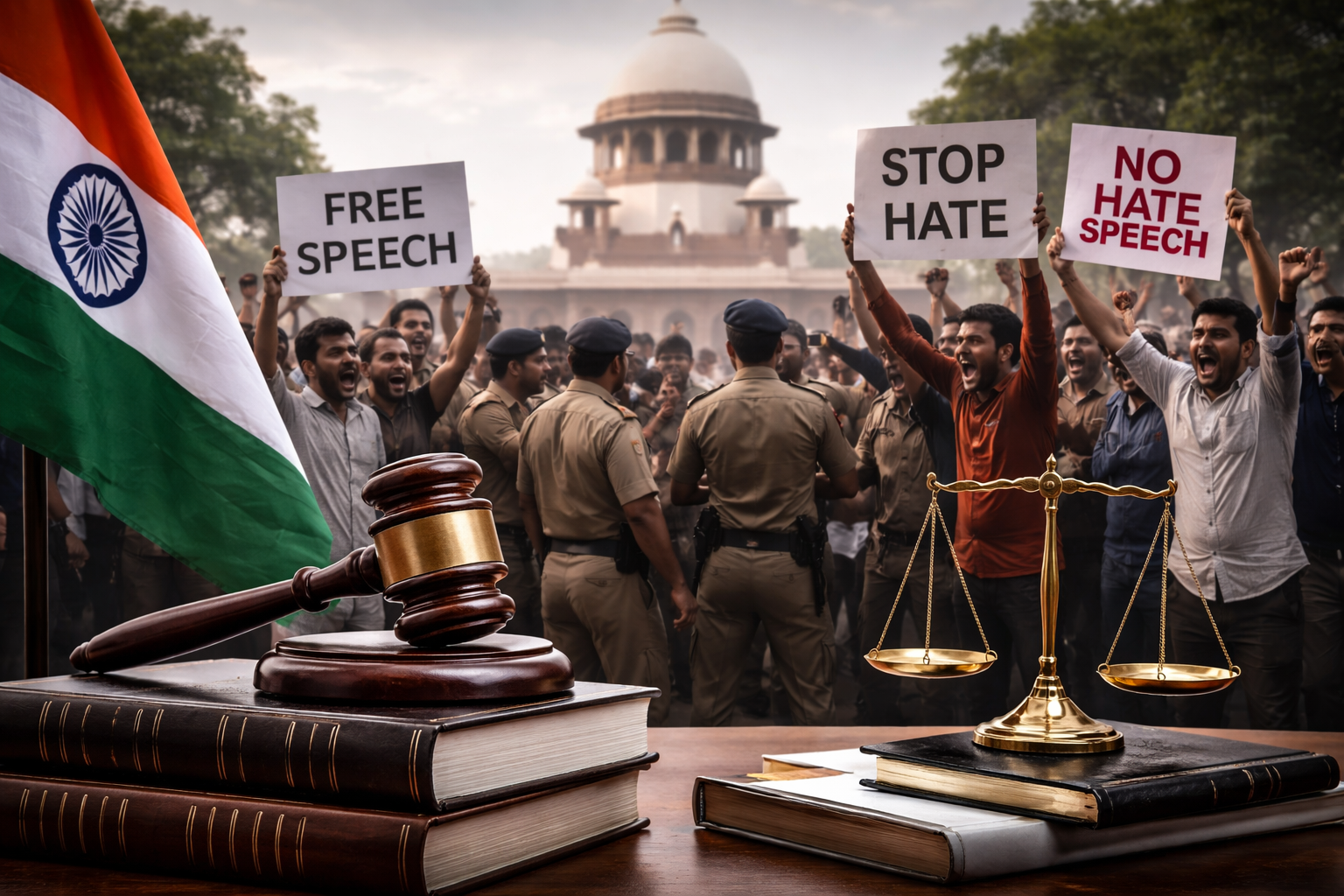
But almost right away, people started arguing about it everywhere. Protests broke out across the country, and it did not take long before the courts stepped in. On January 29, the Supreme Court put a stop to the whole thing, saying the rules were too vague and might end up splitting society even more. I think that part stands out because it shows how tricky these changes can be.
The 2012 guidelines were there for a decade, trying to handle similar issues, but these new ones pushed further. Some parts of the regulations got a ton of backlash, like the ways they tried to enforce equity. It feels like they wanted to make sure discrimination stops, but maybe they went too far in how they worded it.
This whole situation has bigger effects, legally and socially, that are still unfolding. Comparing the two sets of rules highlights what changed and why it caused such a stir. Exploring those controversial bits helps see the policy shift that almost happened, though now its paused. It seems kind of messy, and Im not totally sure how it will play out in the end.
The Shift: From Advisory (2012) to Mandatory (2026)
To get the full sense of what the 2026 rules were really about, you have to go back to the ones from 2012 first. Those UGC regulations on equity in higher education got called paper tigers a lot, and I think that fits because they just said no to discrimination without much force behind it. They were more like suggestions than anything strict. Colleges were supposed to have this one Anti-Discrimination Officer and something called an Equal Opportunity Cell, but it all felt pretty vague. In reality, a bunch of places just checked the boxes to say they did it, without really changing much. Compliance happened sometimes, other times not so much, and since there were no big punishments, schools did not worry too much about fixing complaints properly. That changed with the 2026 version. It came from the National Education Policy in 2020, which pushed hard for equity and inclusion all the way. Now these were not just guidelines anymore, they turned into actual laws that institutions had to follow or face real trouble.
Key Provisions of the 2026 Regulations
The 2026 framework introduced a sophisticated institutional architecture which made all forms of discrimination “administratively impossible” to dismiss. The most significant change introduced by the expanded protection scope permitted the inclusion of Other Backward Classes (OBCs) as protected groups. The 2012 rules primarily focused on Scheduled Castes (SC) and Scheduled Tribes (ST). The 2026 rules recognized that OBC students face systemic barriers which require protection in the same way as SCs, STs, women and persons with disabilities. The new rules required every Higher Education Institution (HEI) to create an Equal Opportunity Centre (EOC). The EOC required a multi-member Equity Committee to handle its operations which replaced the single officer model of 2012. The committee had to be led by the Head of the Institution (Vice-Chancellor or Principal) who needed to include faculty, staff, student and civil society representatives with SC, ST, OBC, women and PwD members having compulsory representation. The 2026 regulations established strict deadlines to solve the ongoing problem of delayed justice. The Equity Committee had to conduct its first meeting within 24 hours after receiving a complaint. The institution had to submit a complete report within 15 working days which required them to follow the report’s recommendations within 7 days. The past open-ended processes received a massive overhaul through this system. The UGC received enforcement authority through the 2026 rules to punish institutions which failed to comply with regulations. Institutions that failed to meet compliance standards faced two major consequences. The institution faces these penalties for failing to follow UGC regulations.
The UGC will withhold all funds from non-compliant institutions. The institution receives public notice through its designation as “non-compliant.” The institution faces total prohibition from UGC program applications. The UGC reserves the right to revoke degree-granting authority under extreme circumstances.
The Controversy: Why the Backlash?
The 2026 regulations faced immediate and strong opposition from student groups and legal experts who represented the General Category because of their declared goal to eliminate discrimination. The three main issues of the controversy involved Exclusion and Vagueness and Due Process.
- The “Exclusionary” Definition of Discrimination: The definition of “caste-based discrimination” became the most disputed point in the discussion. Critics argued that the regulations defined this specifically as discrimination against members of SC ST and OBC communities. According to the arguments presented in the Supreme Court this left students from the General Category unprotected under this specific mechanism.
- “Vague” and “Implicit” Discrimination: The regulations expanded the definition of discrimination to encompass “implicit” bias and all actions that result in “dignity” impairment. While this aimed to capture subtle forms of exclusion like social boycotts or derogatory comments critics warned that the term “implicit” presented dangerous ambiguity. The lack of evidentiary standards allowed personal judgments about “dignity” to create numerous complaints which originated from imagined offenses instead of actual damage.
- Lack of Safeguards Against Misuse: The opponents raised their key worry about the system because it lacked any form of internal control mechanisms. The 2026 regulations removed a draft version of the document which proposed penalties for “false or frivolous” complaints according to the final document. The removal process encouraged victims to report their cases without worrying about possible backlash. The critics who viewed this system as a chance to misuse it received the system as a method of initiating complaints against others.
Supreme Court Intervention: The Stay Order
The Supreme Court received a legal dispute which emerged from the escalating tensions between two parties. The Chief Justice of India Surya Kant and Justice Joymalya Bagchi listened to the petitions on January 29, 2026. The Court’s comments about the case showed strong disapproval of the actions taken by the other party.
The Chief Justice explained that the existing regulations had the potential to create social divisions which would result in serious dangers for the peace that exists between educational institutions. The Court specifically flagged the “non-inclusive definition” of caste-based discrimination, questioning why the state would create a framework that did not protect all citizens from bias. The bench observed that “the regulation language needs expert modulation” because “the regulation language needs expert modulation” because “the regulation language needs expert modulation” to prevent people from using the rules against their intended purpose.
Analysis: Balancing Equity and Fairness
The UGC 2026 regulations show how difficult it is to create new social laws because of the complex social systems found in Indian society. The 2026 rules exist because data showed a need for their establishment. UGC statistics cited in media reports indicated a 118% rise in caste-discrimination complaints between 2020 and 2024. The student suicides from marginalized communities showed how the 2012 advisory approach failed to address the problem. The inclusion of OBCs acknowledged that OBC students now make up a large portion of Indian campuses but still face social exclusion.
The 2026 rules show their main deficiencies through their writing methods and their coverage. The UGC established anti-discrimination rules which protected only defined groups instead of treating it as a rule for all campus members. In a constitutional democracy, laws are generally expected to be “caste-neutral” in their protection (protecting anyone from caste-based abuse), even if they are “caste-conscious” in their affirmative action. The teaching community and non-reserved students became alienated from educational institutions because the law failed to provide common laws for their protection against false complaints.
Conclusion
The Supreme Court’s stay on the UGC Anti-Discrimination Rules 2026 requires people to stop their current discussion to think about the matter. The 2012 rules, which now operate again, remain ineffective because they do not address the fundamental racial biases that exist in higher education. The 2026 attempt showed that legal accuracy together with universal agreement which people find acceptable stands as the essential requirement for effective rule establishment. The UGC needs to establish its future operations through a “middle ground” which will keep the 2026 rules existing institutional structures (EOCs, timelines) while changing their definitions to create universal protections and establish due process systems which will safeguard both complainants and accused parties. Indian universities exist in regulatory limbo because they must follow outdated guidelines while the fight for inclusive campuses continues in the courtroom.