Authored By: Gareth Moyo
University Of Johannesburg
You cannot truly understand South Africa without understanding the deep, unresolved wounds surrounding land ownership. For the black majority, the legacy of colonial and apartheid-era dispossession is not merely a chapter in a history book; it is a living reality that continues to drive some of the most severe socio-economic inequalities in the world.[1] Discriminatory laws systematically stripped people of their land, leaving a fractured society in their wake.[2] When democracy arrived in 1994, the new government made comprehensive land reform a cornerstone of its Reconstruction and Development Programme (RDP), promising to restore dignity and distribute wealth more equitably.[3] However, decades later, there is a bitter and widespread consensus that these reform efforts have been painfully slow and largely ineffective.[4] This deep-seated frustration has given rise to populist political movements demanding expropriation without compensation (EWC) as the only viable way to force societal transformation.[5] Land in South Africa is far more than just a financial asset; it is profoundly tied to personal identity, cultural rootedness, and human dignity.[6] Consequently, the debate over how to return the land has become an inescapable national crisis, forcing a complex reckoning between moral justice, constitutional law, and economic survival.[7]
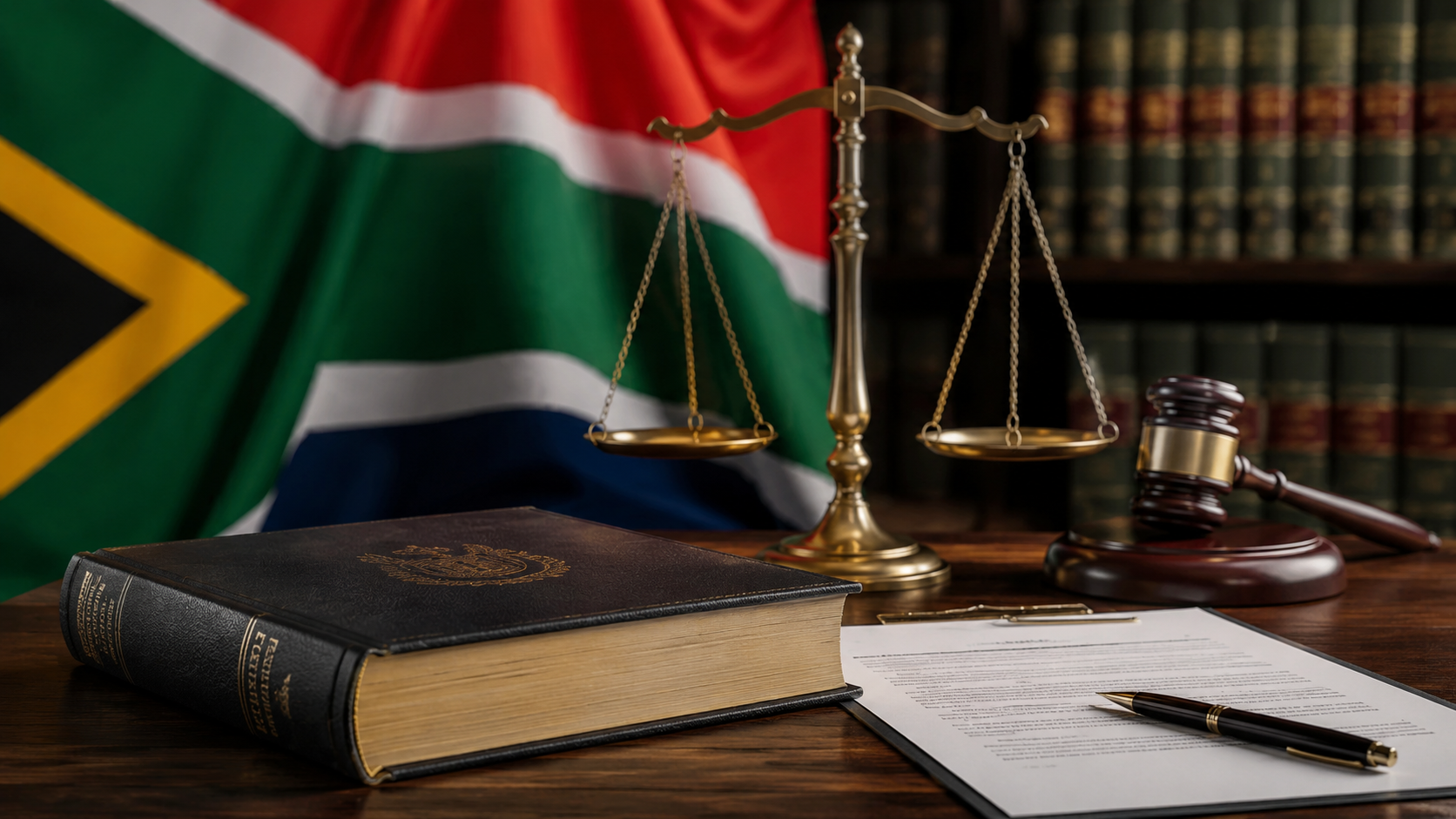
At the very heart of this political storm is Section 25 of the South African Constitution, a masterpiece of legal compromise that is now being tested to its limits.[8] Section 25(1) fiercely protects private property, stating that no one can be deprived of it arbitrarily.[9] Yet, in the exact same breath, Section 25(2) and Section 25(5) mandate the state to actively pursue land reform and allow for expropriation in the public interest, provided that “just and equitable” compensation is paid.[10] For years, the government managed this delicate balancing act using the outdated Expropriation Act of 1965—a relic of the apartheid era that was ill-equipped for modern, transformative justice.[11] Driven by mounting political pressure, the National Assembly attempted in 2018 to officially amend the Constitution to explicitly allow the state to take land for free.[12] When that proposed constitutional amendment ultimately failed to pass, the government took a different route.[13] In early 2025, the President signed a brand-new Expropriation Act into law.[14] This was a monumental shift: it bypassed the need for a constitutional amendment entirely, legally paving the way for the state to confiscate private property without paying financial compensation under specific statutory conditions.[15]
For proponents of expropriation without compensation, this new legislation is not a tragedy, but a long-overdue victory for socio-economic justice.[16] They point out that for decades, the government relied on a “willing-buyer, willing-seller” model, which proved to be an absolute failure—it was simply too slow and far too expensive for the state to afford.[17] Some analysts argue that the real problem has been a chronic lack of political courage to confront entrenched, white-owned agricultural monopolies.[18] From this perspective, EWC is not an act of state vengeance, but a necessary shock to the system required to undo a historic crime of massive proportions.[19] If the government is forced to pay premium market rates to buy back stolen land, comprehensive reform will quite literally bankrupt the nation.[20] Furthermore, legal scholars point out that the Constitution already requires compensation to be “just and equitable,” rather than strictly based on market value.[21] If the state previously subsidized the land, or if it was acquired under highly problematic historical circumstances, calculating a “just and equitable” payout could legally and morally result in an award of zero rand.[22] Advocates therefore view nil compensation not as a destruction of rights, but as the ultimate fulfillment of the Constitution’s promise to ensure that the country truly belongs to everyone.[23]
Unsurprisingly, however, the aggressive push for EWC has terrified domestic property owners and international investors alike.[24] Critics at home and abroad view the 2025 Expropriation Act as a textbook example of “international worst practice” that threatens the very foundation of South Africa’s free and democratic society.[25] The primary fear is economic devastation. Secure property rights are the bedrock of any functioning economy; if the state can seize a farm without paying for it, the incentive to invest capital into South African agriculture vanishes overnight.[26] Opponents warn that handing over highly productive commercial farms to individuals who may lack the financial backing, resources, or technical expertise to run them could trigger a collapse in national food security.[27] Furthermore, the international community has not taken kindly to these domestic policy shifts.[28] The diplomatic fallout was incredibly swift: almost immediately after the 2025 Act was signed, the United States threatened to fundamentally alter its bilateral relationship with South Africa.[29] Critics argue that the politicians pushing hardest for EWC are playing a dangerous game, entirely ignoring the catastrophic macroeconomic realities of stripping away property rights in an already fragile emerging market.[30]
Beyond the domestic political theater, the South African government must also navigate the rigid, unforgiving waters of international law.[31] South Africa does not operate in a vacuum; it is bound by Bilateral Investment Treaties (BITs) and customary international law, which provide robust protections for foreign investors.[32] While international law fully recognizes that sovereign states have the right to expropriate property for the public good, it categorically demands that they follow due process and pay appropriate compensation.[33] Human rights courts around the world rely heavily on the principle of proportionality: the damage inflicted on the property owner must be strictly proportionate to the social good the state is trying to achieve.[34] Because of these strict parameters, taking a person’s property without paying a single cent is generally viewed as an extreme measure, legally justifiable only in highly exceptional, tightly defined circumstances.[35] If the South African government begins seizing foreign-owned land recklessly under the new Act, it risks drowning the country in punishing international lawsuits and crippling economic sanctions.[36]
Ultimately, South Africa finds itself caught in an agonizing tug-of-war between the undeniable moral imperative to right the wrongs of the past, and the cold, pragmatic need to keep its economy afloat.[37] The scars of apartheid are deep, and the democratic state has a fundamental duty to ensure that the land is shared equitably among the people who live and work on it.[38] The 2025 Expropriation Act has given the government the legal teeth it needs to finally accelerate this process, fulfilling the delayed promises of the post-apartheid transition.[39] However, the economic panic and immediate diplomatic backlash from global superpowers prove that rewriting property laws is a highly dangerous undertaking.[40] The true test of South Africa’s land reform will not be found in angry parliamentary debates or new legislation, but in how this power is actually wielded on the ground.[41] If the government can execute land expropriation with absolute transparency, strict adherence to the rule of law, and a focus on genuine agricultural support, it may finally achieve historic justice.[42] But if it fails to balance this justice with economic stability, the resulting collapse will harm the very people the policy was designed to save.[43]
Bibliography
- Akinola AO, Kaseeram I and Jili NN (eds), The New Political Economy of Land Reform in South Africa (Palgrave Macmillan 2021)
- Chitonge H and Harvey R (eds), Land Tenure Challenges in Africa (Springer 2024)
- Iyer D and Calvino LR, ‘Expropriation as an Effective Tool for Land Reform: A Legislative Perspective’ in Adeoye O Akinola, Irrshad Kaseeram and Nokukhanya N Jili (eds), The New Political Economy of Land Reform in South Africa (Palgrave Macmillan 2021)
- Kwarteng AH and Botchway TP, ‘State Responsibility and the Question of Expropriation: A Preliminary to the “Land Expropriation without Compensation” Policy in South Africa’ (2019) 12(1) Journal of Politics and Law 98
- Lubbe H and du Plessis E, ‘Compensation for Expropriation in South Africa, and International Law: The Leeway and the Limits’ (2021) 11 Constitutional Court Review 79
- Maloka T, ‘Balancing Land Restitution and Public Interest in South African Socio-Economic Development’ in Adeoye O Akinola, Irrshad Kaseeram and Nokukhanya N Jili (eds), The New Political Economy of Land Reform in South Africa (Palgrave Macmillan 2021)
- Moyo S, African land questions, agrarian transition and the state (CODESRIA 2008)
- Van Staden M, ‘Expropriation of property without compensation: the case of South Africa and international worst practice’ (Free Market Foundation 2025)
- Vorster N, ‘Land and identity in South Africa: An immanent moral critique of dominant discourses in the debate on expropriation without compensation’ (2019) 75(4) HTS Teologiese Studies/Theological Studies 1
- Xaba MB, ‘South African Land Question and the Dilemma of Land Expropriation Without Compensation’ in Adeoye O Akinola, Irrshad Kaseeram and Nokukhanya N Jili (eds), The New Political Economy of Land Reform in South Africa (Palgrave Macmillan 2021)
[1] Adeoye O Akinola, Irrshad Kaseeram and Nokukhanya N Jili (eds), The New Political Economy of Land Reform in South Africa (Palgrave Macmillan 2021) 1
[2] ibid 11
[3] T Maloka, ‘Balancing Land Restitution and Public Interest in South African Socio-Economic Development’ in Adeoye O Akinola, Irrshad Kaseeram and Nokukhanya N Jili (eds), The New Political Economy of Land Reform in South Africa (Palgrave Macmillan 2021) 214
[4] MB Xaba, ‘South African Land Question and the Dilemma of Land Expropriation Without Compensation’ in Adeoye O Akinola, Irrshad Kaseeram and Nokukhanya N Jili (eds), The New Political Economy of Land Reform in South Africa (Palgrave Macmillan 2021) 98
[5] Abdul Hamid Kwarteng and Thomas Prehi Botchway, ‘State Responsibility and the Question of Expropriation: A Preliminary to the “Land Expropriation without Compensation” Policy in South Africa’ (2019) 12(1) Journal of Politics and Law 98
[6] Nico Vorster, ‘Land and identity in South Africa: An immanent moral critique of dominant discourses in the debate on expropriation without compensation’ (2019) 75(4) HTS Teologiese Studies/Theological Studies 1
[7] See n 3
[8] Hein Lubbe and Elmien du Plessis, ‘Compensation for Expropriation in South Africa, and International Law: The Leeway and the Limits’ (2021) 11 Constitutional Court Review 79.
[9] Desan Iyer and Lizelle Ramaccio Calvino, ‘Expropriation as an Effective Tool for Land Reform: A Legislative Perspective’ in Adeoye O Akinola, Irrshad Kaseeram and Nokukhanya N Jili (eds), The New Political Economy of Land Reform in South Africa (Palgrave Macmillan 2021) 11
[10] See n 8
[11] See n 9
[12] See n 8
[13] Martin van Staden, ‘Expropriation of property without compensation: the case of South Africa and international worst practice’ (Free Market Foundation 2025) 2
[14] ibid 2
[15] ibid 2.
[16] See n 4
[17] See n 1
[18] S Moyo, African land questions, agrarian transition and the state (CODESRIA 2008) cited in Horman Chitonge and Ross Harvey (eds), Land Tenure Challenges in Africa (Springer 2024) 2
[19] See n 9
[20] See n 8
[21] ibid 111
[22] ibid 111
[23] ibid 112
[24] See n 13
[25] ibid 1
[26] See n 5
[27] See n 1
[28] See n 13
[29] ibid 2
[30] ibid 15
[31] See n 8
[32] ibid 79
[33] See n 5
[34] See n 8
[35] ibid 112
[36] See n 5
[37] See n 1
[38] See n 6
[39] See n 13
[40] ibid 2
[41] See n 3
[42] See n 8
[43] See n 1