Authored By: Shylet Nyamupinga
MVN University
Introduction
The courtroom has undergone a profound transformation over the last two decades. Evidence that once existed primarily as paper documents, handwritten records, and physical exhibits is increasingly being replaced by emails, WhatsApp conversations, CCTV footage, cloud-based records, block chain transactions, and artificial intelligence-generated content. As commercial transactions, personal communications, and criminal activities migrate to digital platforms, the administration of justice must adapt to a new evidentiary landscape. The traditional rules governing documentary evidence are no longer sufficient to address questions of authenticity, reliability, and admissibility in an era where digital information can be created, altered, or manipulated within seconds.
India’s enactment of the Bharatiya Sakshya Adhiniyam, 2023 (BSA) reflects an acknowledgment of this reality. Rather than treating electronic records as an exception to conventional evidence, the new legislation recognizes digital evidence as an integral part of modern adjudication. However, legislative reform alone cannot guarantee fairness or efficiency. The increasing sophistication of technologies such as deep fakes, AI-generated documents, and encrypted communications raises complex legal questions that extend beyond statutory interpretation.
This article argues that although the Bharatiya Sakshya Adhiniyam, 2023 modernizes India’s evidentiary framework by strengthening the recognition of electronic evidence, the success of these reforms ultimately depends upon judicial preparedness, forensic capability, and procedural safeguards capable of preserving both technological innovation and the integrity of criminal and civil trials.
From Documentary Evidence to Digital Evidence: A Necessary Evolution
The law of evidence has traditionally developed around tangible forms of proof. Contracts were executed on paper, witnesses testified in person, and documentary evidence generally consisted of physical records whose authenticity could be verified through signatures, handwriting, or official seals. Digitalization has fundamentally altered these assumptions. Today, business transactions are concluded electronically, government services operate through digital platforms, and interpersonal communication occurs predominantly through instant messaging applications and social media. Consequently, the most persuasive evidence in litigation frequently exists in electronic form rather than on paper.
The transition toward digital evidence is not merely technological; it reflects a broader shift in how legal rights are exercised and disputes arise. Financial frauds increasingly involve electronic banking records, cybercrimes depend upon metadata and server logs, while matrimonial disputes often rely upon emails, mobile phone messages, and social media activity. Ignoring such evidence would undermine the truth-seeking function of judicial proceedings.
Indian courts recognized this transformation well before the enactment of the Bharatiya Sakshya Adhiniyam. In Anvar P.V. v. P.K. Basheer, the Supreme Court emphasized that electronic records constitute a distinct category of evidence and established strict requirements governing their admissibility under the Indian Evidence Act, particularly through the certificate requirement contained in Section 65B.^1 The Court’s decision sought to protect judicial proceedings from unreliable or manipulated electronic material by insisting upon procedural safeguards.
However, practical implementation proved difficult. Investigating agencies, litigants, and even courts frequently struggled with obtaining Section 65B certificates, particularly where electronic records originated from third-party service providers or foreign digital platforms. Recognizing these challenges, the Supreme Court revisited the issue in Arjun Panditrao Khotkar v. Kailash Kushanrao Gorantyal, reaffirming the mandatory nature of certification while clarifying circumstances in which parties unable to obtain such certificates could seek judicial assistance.^2
These decisions demonstrate that judicial innovation alone could not adequately address the rapidly evolving nature of electronic evidence. Legislative reform therefore became necessary, culminating in the Bharatiya Sakshya Adhiniyam, 2023, which places electronic records at the center rather than the margins of evidentiary law.
The Bharatiya Sakshya Adhiniyam, 2023: A New Approach to Electronic Evidence
The Bharatiya Sakshya Adhiniyam, 2023 (BSA) represents more than a legislative replacement of the Indian Evidence Act, 1872. It reflects an effort to align evidentiary law with the realities of a digital society where electronic records are no longer exceptional but routine. Unlike the earlier framework, which often appeared to treat digital evidence as an extension of documentary evidence, the BSA recognizes electronic records as a central feature of contemporary litigation. This shift is particularly significant because modern disputes increasingly depend on digital communications, surveillance footage, electronic contracts, cloud storage, and mobile devices.
The legislation broadens the recognition of electronic and digital records while preserving safeguards intended to ensure their authenticity and reliability. Courts are therefore expected to evaluate digital evidence not simply on the basis of its existence, but also through verification of its source, integrity, and chain of custody. This approach seeks to strike a balance between technological convenience and procedural fairness.
However, legislative modernization alone cannot resolve the practical difficulties surrounding electronic evidence. The effectiveness of the BSA ultimately depends upon the institutions responsible for implementing it. Investigating officers must understand digital forensic techniques, prosecutors must appreciate the technical requirements of electronic records, and judges must be equipped to assess increasingly complex technological evidence. Without corresponding institutional reforms, even well-drafted legislation risks becoming ineffective in practice.
An equally significant challenge arises from the uneven availability of forensic infrastructure across India. While metropolitan investigative agencies increasingly possess digital forensic laboratories, many districts continue to rely upon limited technical resources. This disparity creates the possibility that parties with greater financial or institutional capacity may be better positioned to produce and authenticate electronic evidence, thereby undermining procedural equality. Consequently, the modernization of evidentiary law must be accompanied by comparable investment in technological infrastructure and professional training.
Beyond Digital Documents: Deep fakes, Artificial Intelligence, and Emerging Evidentiary Challenges
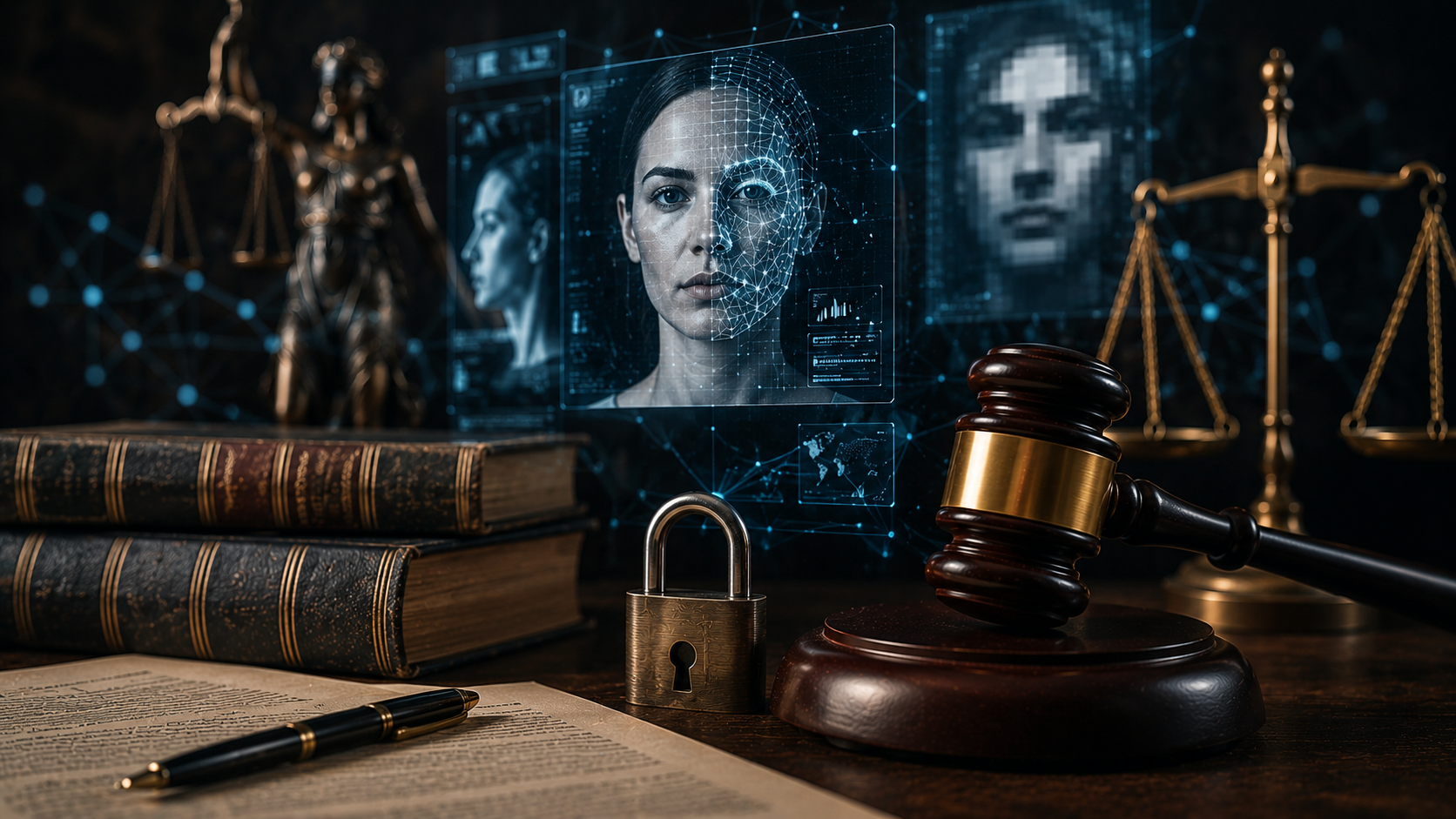
Although the Bharatiya Sakshya Adhiniyam addresses electronic records more comprehensively than its predecessor, technological innovation continues to evolve at a pace that legislation struggles to match. Artificial intelligence now possesses the capacity to generate realistic images, audio recordings, videos, and even legal documents that may appear entirely authentic. Deep fake technology, in particular, presents an unprecedented challenge because fabricated digital content can closely imitate genuine evidence while remaining difficult to detect without specialized forensic analysis.
This development fundamentally alters the traditional judicial assumption that visual or audio evidence possesses inherent credibility. Historically, photographs and video recordings were regarded as particularly persuasive because they appeared to capture objective reality. Deep fakes undermine that assumption by making sophisticated digital manipulation accessible to ordinary users. As a result, courts must increasingly evaluate not only whether electronic evidence is admissible but also whether it accurately represents reality.
The challenge extends beyond criminal proceedings. Civil disputes concerning contractual negotiations, intellectual property, matrimonial litigation, employment relationships, and commercial transactions may all involve AI-generated or manipulated digital content. The legal system therefore faces an expanding responsibility to develop evidentiary standards capable of distinguishing authentic digital records from fabricated material.
This article submits that future evidentiary reform should move beyond questions of admissibility and instead emphasize digital authenticity. Rather than relying primarily upon procedural certification, courts should encourage stronger forensic verification through metadata examination, cryptographic authentication, block chain-based record preservation, and independent digital forensic expertise. These mechanisms would strengthen judicial confidence without imposing unreasonable burdens upon litigants.
Furthermore, judicial education should become a continuing institutional priority. Judges increasingly encounter disputes involving artificial intelligence, algorithmic decision-making, encrypted communications, and emerging digital technologies that were largely absent from traditional legal education. Continuous professional training would enable courts to critically evaluate technological evidence rather than relying exclusively upon expert testimony.
The digital transformation of trial evidence therefore requires a corresponding transformation in legal reasoning. Courts can no longer approach electronic evidence as merely another category of documentary proof. Instead, they must recognize that digital evidence presents distinct questions concerning authenticity, reliability, privacy, cyber security, and technological manipulation. The Bharatiya Sakshya Adhiniyam provides an important legislative foundation, but its long-term success will ultimately depend upon how effectively legal institutions adapt to these emerging realities.
Footnote(S):
1.Anvar P.V. v. P.K. Basheer, (2014) 10 S.C.C. 473 (India).
2.Arjun Panditrao Khotkar v. Kailash Kushanrao Gorantyal, (2020) 7 S.C.C. 1 (India).
3.Bharatiya Sakshya Adhiniyam, No. 47 of 2023, §§ 2, 57–63 (India).
4.Information Technology Act, No. 21 of 2000 (India).
5.Law Commission of India, 185th Report on Review of the Indian Evidence Act, 1872 (2003).
6.Ministry of Home Affairs, Government of India, Criminal Law Reforms: Bharatiya Sakshya Adhiniyam, 2023 (2023).