Authored By: Sneha Batav
Dharmashastra National Law University Jabalpur
INTRODUCTION
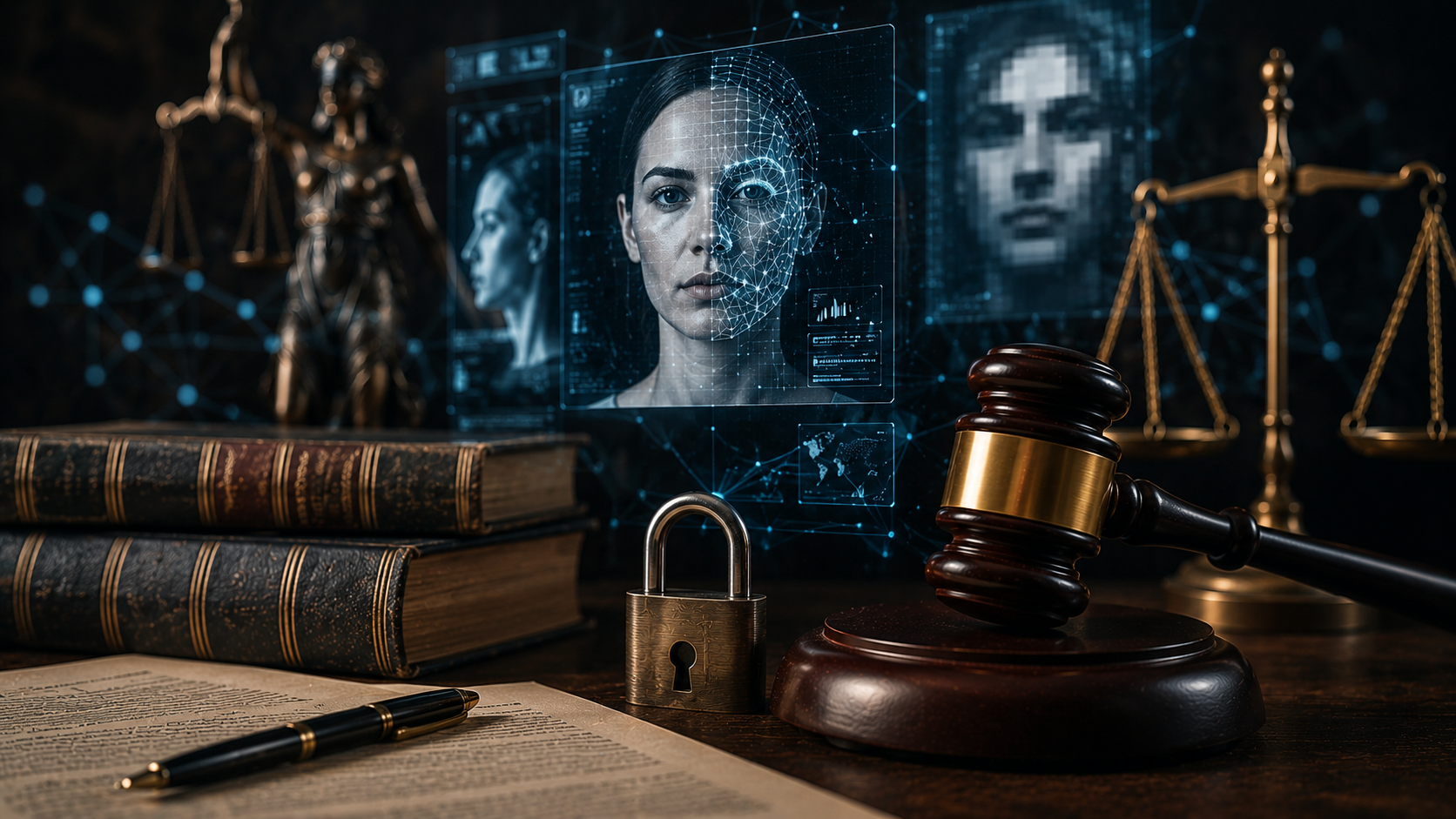
In month of January 2024, lots of manipulated video clips of Indian Public Figures and private individuals circulated widely across social media handles, giving rise to concerns related to the misuse of artificial intelligence in the creation of the content which is completely deepfake in nature. Deepfakes are digitally altered image, video materials and audio which are generated by using artificial intelligence techniques that actually create highly realistic but false representations related to any individuals. While artificial intelligence has resulted into producing the substantial innovation which are in prominent fields such as entertainment, communication, and education, technology of deepfake has simultaneously exposed significant weaknesses in the existing legal systems that concerns the dignity, privacy, consent and cybercrime.
The rapid growth and spread of deepfake content present serious ethical and legal concerns in India. Victims of deepfake often face emotional distress, reputational damage, cyber harassment, identity theft and violations of the norms of informational privacy. Women are disproportionately targeted through non-consensual sexually explicit deepfakes, while the political deepfakes give rise to threaten the electoral integrity and democratic discourse. Despite these risks, Cyber Laws of India continue to rely upon scattered and fragmented provisions under the Information Technology Act 2000, the Bhartiya Nyaya Sanhita 2023, and many such intermediary guidelines that were not specifically designed to address synthetic media which is AI-generated.
This article argues that the current existing Indian Legal frameworks is not adequate to effectively and efficiently regulate deepfake technology because it lacks clear statutory definitions, robust mechanisms related to victim protection, and specialized frameworks governing deepfake standards. The article fist examines the current existing legal frameworks governing deepfake-related harms in India. It then analyses the legal and the ultimate practical challenges posed by the synthetic media. Subsequently, the articles explore the comparative approaches adopted in the various other jurisdictions. Finally, it proposes comprehensive reforms aimed at establishing an effective and efficient regulatory framework for deepfakes in India.
EXISTING LEGAL FRAMEWORK IN INDIA
I] Constitutional Protection of Privacy and Dignity
The constitutional foundation for regulating deepfakes can be traced to Article 21 of Indian Constitution, which guarantees the right to life and personal liberty. In the famous judgement named as “Justice K.S Puttaswamy v Union of India (2017) 10 SCC 1”. The Supreme Court of India recognized privacy as a fundamental right intrinsic to autonomy, dignity, and informational control. This judgement expanded the constitutional understanding of privacy to include the protection against unauthorized use of identity and personal data.
Deepfake content directly interferes with the privacy related to information because it involves the unauthorized manipulation and dissemination of a person’s likeness, identity or voice. In cases which involves sexually explicit deepfakes, the violation extends further into bodily autonomy, mental integrity, and dignity of an individual.
However, while the constitutional recognition provides a normative basis for protection, constitutional remedies alone are not sufficient because victims require specific statutory mechanisms for timely removal of content, criminal prosecution, and compensation.
II] Information Technology Act 2000
The Information Technology Act 2000 still remains India’s primary legislation related to cyber law. Although the Act does not expressly mention deepfakes, several provisions of the Act may apply indirectly.
Section 66C Information Technology Act 2000 penalizes the identity theft involving dishonest use of electronic signatures, passwords, or unique features pertaining to identification. Deepfake impersonation may fall within the scope of identity misuse in certain circumstances.
Section 66D of Information Technology Act 2000 criminalizes the offence of cheating by personation using the resources of computer. Fraudulent deepfakes used for financial scams or deception may therefore attract the liability under this provision.
Section 67, 67A, and 67B of Information Technology Act 2000 prohibit the publication or transmission of obscene and sexually explicit electronic material. These provisions are frequently invoked where non-consensual intimate deepfakes are circulated online.
Further, Information Technology (Intermediary Guidelines and Digital Media Ethics Code) Rules 2021 impose obligations upon intermediaries to remove unlawful content upon receiving notice. Rule 3 requires intermediaries to exercise due diligence and remove material violating impersonation, privacy, or standards of obscenity.
Despite the above provisions, the legal framework remains still fragmented. The Act was enacted at the time when artificial intelligence-generated media did not even exist. Consequently, issues concerning algorithmic manipulation, synthetic identity misuse, and AI-specific liability remain inadequately addressed.
III] BHARATIYA NYAYA SANHITA 2023
The Bhartiya Nyaya Sanhita 2023 also contains certain provisions that may indirectly apply to the offences of deepfake.
Sections of Bhartiya Nyaya Sanhita 2023 related to forgery, defamation, obscenity, and sexual harassment may be invoked depending upon the nature of the content being manipulated. Non-consensual sexually explicit deepfakes may amount to offences relating to an insult to modesty, cyber harassment, and publication of obscene material.
Similarly, forged audio or recordings of video intended to deceive institutions or individuals could constitute the offence of forgery and cheating. However, the application of traditional criminal law concepts to AI-generated synthetic media creates interpretative and evidentiary difficulties.
For example, proving mens rea becomes extremely complicated where the content related to deepfake is anonymously generated using automated tools. Moreover, existing offences do not specifically recognize synthetic media harms as a distinct category of cybercrime.
IV] DIGITAL PERSONAL DATA PROTECTION ACT 2023
The Digital Personal Data Protection Act 2023 provides certain protection that are concerned towards the processing of personal data. Since voice recordings, facial recordings, and biometric identifiers may constitute personal data, unauthorized use of such material for deepfake for creation could potentially violate the consent requirements under the Bhartiya Nyaya Sanhita 2023.
Nevertheless, the legislation primarily regulates data processing rather than synthetic content generation. It does not establish specific remedies tailored to victims of deepfake and obligations actually concerning AI-generated impersonation.
CHALLENGES POSED BY DEEPFAKE TECHNOLOGY
I] The problem of Consent and Identity Manipulation
The main central issue which is surrounding deepfake is the absence of meaningful consent. Individuals whose likeness are manipulated digitally often have no knowledge that their identity is being used.
Traditional legal frameworks treat identity primarily as a matter of reputation or property. Deepfakes, however, transform the original identity into digital data which is manipulatable in nature and capable of being replicated indefinitely. A victim may therefore suffer continuing harm long after the original content is created.
This challenge is especially severe for the minors and women. Studies often indicates that a substantial percentage of online deepfake content mainly consists of non-consensual sexual imagery. Victims frequently experience social stigma, reputational damage, psychological trauma, professional harm, and online harassment.
Existing Indian laws do not provide a unified legal framework recognizing digital consent as an independent legal right in the context of synthetic media.
II] Difficulty of Detection and Attribution
Deepfake technology has become increasingly sophisticated day by day. Advanced AI models can create highly realistic facial movements, voice patterns, and synchronization of lips, making fake content difficult to actually identify.
This creates substantial evidentiary challenges for investigators and courts. Victims may struggle to actually prove that the content is really fabricated, while law enforcement agencies often lack technical expertise in AI forensics.
Attribution also becomes difficult because creators may operate anonymously through the networks via encryption, virtual private networks, or foreign platforms. Intermediaries frequently argue that they merely host user-generated content and cannot monitor all uploaded material.
As a result of which gaps of accountability emerge between content creators, hosting platforms, software platforms, and social media intermediaries.
III] Threat to Democratic Process
Deepfake technology also poses significant risks to democratic governance and electoral integrity. Manipulated fabricated interviews, political speeches, and misleading campaign videos can rapidly spread misinformation.
The danger is actually amplified during elections because emotionally provocative content spreads quickly through algorithms of social media. Even when falsehoods are eventually disproved, the damage to reputation may already be irreversible.
At present scenario India lacks a specialized electoral framework addressing AI-generated political misinformation. Existing election laws were made and drafted in an era preceding synthetic media technologies and therefore fail to adequately address the speed and scale of digital manipulation.
IV] Inadequate Victim Remedies
Victims of deepfake abuse often face procedural delays in obtaining orders of content removal. Reporting mechanisms across platforms remain inconsistent, and jurisdictional conflicts arise where servers or creators are located outside the country of India.
Moreover, process of litigation is expensive and time consuming in nature. Many victims seek immediate removal rather than lengthy criminal proceedings, yet law of India does not currently provide a fast-track civil remedy system specifically designed for deepfake harms.
The absence of specialized cyber tribunals or AI grievance mechanisms further actually weakens enforcement effectiveness and efficiency.
COMPRATIVE PERSPECTIVES
I] The European Union
The European Union has adopted one of the most significant and comprehensive approaches toward AI regulation. The European Union Artificial Intelligence Act imposes obligations concerning accountability, transparency, and risk assessment for AI systems.
Under the Act, AI-generated content must generally be disclosed where synthetic media could mislead the users easily. The approach of European emphasizes transparency obligations and human oversight.
Additionally, the regulation named as General Data Protection Regulation strengthens control of individuals over personal data and imposes strict penalties for unauthorized processing.
The model of European Union demonstrates the importance of combining privacy regulation with AI-specific transparency requirements.
II] The United States of America
The United States of America had acquired and adopted a fragmented regulatory model which involves both state- level and federal initiatives. Certain cases, including Texas and California, have made and enacted laws targeting politics related deepfakes and non-consensual sexually explicit synthetic media.
Law of California prohibits the distribution of materially deceptive deepfakes that are intended to influence political elections within specified time periods before the actual voting. Several states also allow and permit civil actions against the creators of explicit deepfake content.
However, the approach of America continues to face ever growing tensions between the regulation and the First Amendment free speech protections.
III] China
China has enacted and implemented strict form of regulations that are governing the services of synthetic media. Providers of deep synthesis technologies must ensure that manipulated content is properly and clearly labelled and traceable.
Regulations of China also require service providers to verify the identities of users and in order to prevent the misuse threatening national security and public order.
Although, the Chinese Framework raises the concerns regarding the censorship and surveillance of state, it nevertheless demonstrates the regulatory significance of mandatory labelling and platform accountability.
Proposals for Reform in India
I] Enactment of Dedicated Deepfake Legislation
India should create and enact a specialized Deepfake Regulation and Digital Consent Act addressing synthetic media harms comprehensively. The legislation should clearly and properly define deepfakes synthetic media, digital consent with precision, and impersonation of AI. Clear and proper statutory definitions would result in reducing the interpretative uncertainty and improves the consistency of enforcement.
The law should also provide clear distinction between satirical uses or legitimate artistic and malicious non-consensual manipulation.
II] Recognition of Digital Consent Rights
The proposed legislation should formally recognize the concept of digital consent as a legal right. Individuals must possess enforceable control over the commercial or non-consensual use of their facial likeness, voice & video recordings and biometric identity. Any AI-generated use of a person’s identifiable consent without valid consent should attract harsh civil and criminal liability where harm truly results.
Such recognition would strengthen privacy related to information and its protection under Article 21 of Indian Constitution and align Indian law with the emerging standards at International Level.
III] Mandatory Labelling and Watermarking
AI-generated content capable of misleading viewers should be subjected to the mandatory disclosure requirements. Developers and platforms should implement watermarking systems or indicators of metadata that are identifying the synthetic content. Mandatory labelling would reduce deception while preserving legitimate creative innovation.
Failure to disclose the content which is manipulated in nature should attract heavy regulatory penalties, especially in the cases where synthetic media is used in campaigns related to politics, public communications, and advertising.
IV] Fast-Track Remedies and Victim Compensation
India should make efforts towards establishing specialized cyber tribunals or digital grievance authorities empowered to provide urgent and immediate interim relief.
Victims should be able to obtain the injunctions on urgent basis, removal orders and good amount of required compensation through simplified procedures. Fast-track mechanisms are particularly necessary in cases involving explicit sexual deepfakes, impersonation fraud, and electoral misinformation.
The law should also provide confidentiality protections and psychological support for victims of intimate abuse of deepfake.
V] Capacity Building and Public Awareness
Effective regulation requires technical expertise within law enforcement agencies, judiciary and prosecutors. The government should invest in AI forensic laboratories, public awareness campaigns and cyber investigation training which can inform synthetic media risks. Educational institutions and technology companies should also collaborate in the development of ethical AI practices and technologies for detention.
Additional Practical Suggestions
1] India should establish a national AI regulatory authority especially responsible for monitoring emerging artificial intelligence risks, including deepfake misuse and synthetic media fraud.
2] Educational institutions should incorporate digital literacy programmes that teach individuals how to identify manipulated misinformation and online content.
3] Election authorities should formulate special guidelines restricting the circulation of the deceptive political deepfakes during the period of elections.
4] Artificial intelligence developers should adopt ethical design standards prioritizing accountability, transparency, and user safety during software development.
5] Victim support systems, including services of counselling and confidential reporting portals, should be established for individuals affected by non-consensual intimate deepfake abuse.
CONCLUSION
Deepfake technology has created serious challenges relating to misinformation, dignity, privacy, and digital consent in India. This article has demonstrated that the existing legal framework under the Information Technology Act 2000 and other related laws remains insufficient because these provisions were not specifically designed to address AI-generated synthetic media.
The experiences of jurisdictions such as the European Union, the USA, and China show that effective regulation requires transparency obligations, intermediary accountability, and stronger victim protection mechanisms. India must therefore adopt a comprehensive legal framework recognizing digital consent, mandating disclosure of synthetic media, and ensuring swift remedies for victims.
As artificial intelligence continues to evolve, Indian law must also evolve to safeguard constitutional values of dignity, privacy, and trust in the digital environment.
REFERENCES and BIBLIOGRAPHY
Name of the cases involved:
1] Justice K.S. Puttaswamy v Union of India (2017) 10 SCC 1.
2] Shreya Singhal v Union of India (2015) 5 SCC 1.
LEGISLATION
1] Bhartiya Nyaya Sanhita 2023.
2] Digital Personal Data Protection Act 2023.
3] Information Technology Act 2000.
4] European Union Artificial Intelligence Act 2024
5] Information Technology (Intermediary Guidelines and Digital Media Ethics Code) Rules 2021.
BOOKS AND JOURNALS
1] Robert Chesney and Danielle Citron, ‘Deep Fakes: A Looming Challenge for Privacy, Democracy, and National Security’ (2019) 107 California Law Review 1753.
2] Woodrow Hartzog, Privacy’s Blueprint: The Battle to Control the Design of New Technologies (Harvard University Press 2018).
REPORTS AND ONLINE SOURCES
1] UNESCO, ‘Guidance for Regulating Digital Platforms’ (2023)
2] Law Commission of India, Consultation Papers on Data Protection and Digital Privacy.