Authored By: Sangmitra Sharma
KLE Law College
Introduction
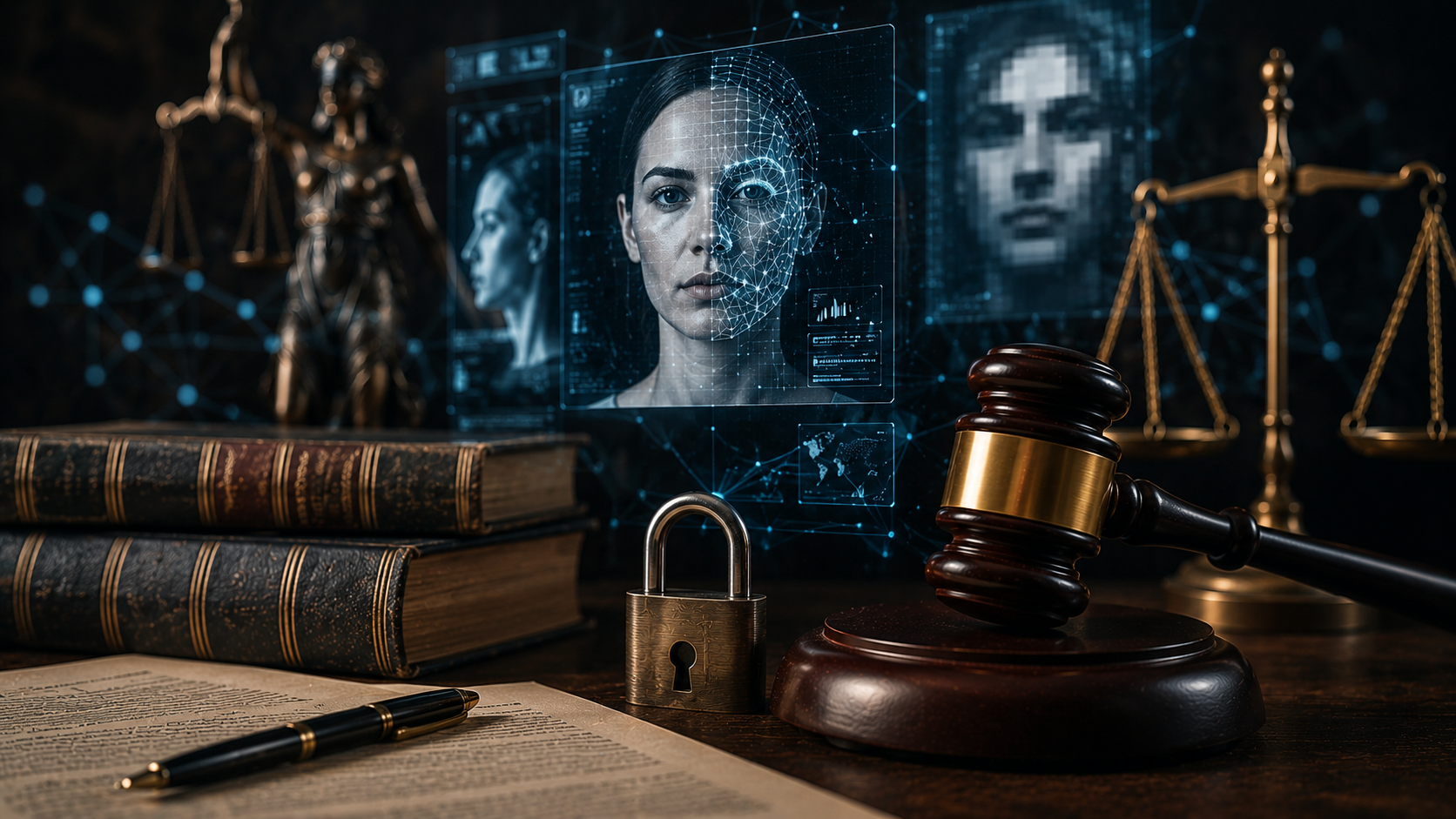
The advancement of technology always seems to put a litmus test on the flexibility of existing laws and their applicability in practice. Deepfake technology arguably represents the most significant threat to existing laws to date. Deepfakes are created using cutting-edge artificial intelligence technologies, which enable the creation of deceptive audio-visual material. Although this technology promises a number of potential benefits in the entertainment industry, its abuse represents a significant threat to individual privacy, reputation, and democratic processes. The extent of the usage of deep fake technology in the context of India is also shown by the prevalence of fake videos of public figures, explicit images of unsuspecting people, and political propaganda on the internet. All these issues represent a significant failure on the part of the existing legal framework, which has not been designed to cope with these issues brought on by technologically advanced means.
This paper argues that although there are certain provisions in the Indian legal framework, they are not sufficient to cope with the issues brought on by deepfake technology. This paper argues that a new legal framework needs to be designed to cope with issues related to deepfakes.
Conceptualization of Deepfake Technology and its Legal Implications
Deepfake technology, in essence, is a type of artificial intelligence, specifically deep learning, which relies on generative adversarial networks (GANs) to manipulate or fabricate digital media, such as videos and images, so as to mimic or reproduce expressions, voice, and other mannerisms of a particular individual, which are indistinguishable from reality The legal implications of deepfake technology vary in different countries, and the main concern revolves around the possible infringement of the right to privacy and dignity. In many countries, the constitutional foundation of the right to privacy is based on the notion that individuals have an inherent right to privacy in Justice K.S. Puttaswamy v. Union of India, which held that informational privacy and personal autonomy are integral to Article 21, is a clear indication of the importance of this right in a democratic society. An infringement of this right arises in a situation where there is a deepfake involving unauthorized use of an individual’s identity.
Deepfakes are also a source of reputational damage, which gives rise to a potential infringement of the law of defamation. In Subramanian Swamy v. Union of India, the Supreme Court upheld criminal defamation as a reasonable restriction on freedom of speech, which is a clear indication of its recognition of reputation as a key aspect of individual dignity. The potential for abuse of deepfakes in disseminating false information, which affects a democratic society, is a source of significant legal implications, which are broader in nature, relating to a potential infringement of the right to a free and fair election, which is a hallmark of a democratic society.
III. Analysing the Existing Legal Framework
Constitutional Protections
The Indian Constitution provides the first level of protection against the adverse effects of deepfakes. Article 21 of the Indian Constitution protects the right to life and liberty. It has been interpreted broadly to cover other rights such as privacy, dignity, and reputation. Furthermore, in R. Rajagopal v. State of Tamil Nadu, the Indian courts have recognized the rights of persons to control the publication of information regarding them, particularly those publications that are unauthorized. However, the general nature of constitutional protections, which depend on judicial interpretations, might prove to be a limitation in protecting against deepfakes.
Information Technology Act, 2000
The Information Technology Act, 2000, is the main legislation on cybercrimes in India. Few sections which involves deepfakes implications:
Section 66D of the Act is related to the prohibition of the act of cheating by personation using computer resources.
Section 67 of the Act is related to the publication or transmission of obscene content.
Section 67A of the Act is related to the sexually explicit content in the electronic form.
The Information Technology Act, 2000, provides some level of protection for persons against deepfakes. However, such protection is indirect since none of these sections specifically address deepfakes. The issue of the regulation of online content has come to the forefront in the case of Shreya Singhal v. Union of India, in which the Supreme Court of India struck down Section 66A of the Information Technology Act of 2000 on constitutional grounds. Further, the court held that intermediaries can remove content only upon actual knowledge in the form of a court order or government notification. Even though this judgment promotes the freedom of expression in India, it simultaneously limits the monitoring power of intermediaries over digital content, thus permitting deepfakes to spread before the initiation of legal proceedings..
Bharatiya Nyaya Sanhita, 2023
The BNS modernizes some aspects of Indian criminal law. The applicability of the BNS to deepfake technology is limited. The provisions regarding defamation, cheating, and criminal intimidation in the BNS may be involved in cases involving deepfake materials. The following are examples of such provisions:
Section 356 BNS, which is related to Defamation, can be applied in cases related to the damaging of the reputation of individuals through the use of deepfake media.
Section 318 BNS, which is related to Cheating, can be applied in cases related to the usage of deepfake media for the purpose of cheating.
Section 351 BNS, which is related to Criminal Intimidation, can be applied in cases related to threats and coercion, as depicted in the media.
These provisions serve as the basis for legal action in cases where the damage has already been done.
Critical Analysis of the Current Legal Framework
Notwithstanding the existence of various legal provisions in the Constitution, the Information Technology Act, 2000, and the Bharatiya Nyaya Sanhita, the existing legal regime is still not adequate to effectively regulate the deepfake technology.
Firstly, the lack of definition on the term “deepfake” is an issue as the relevant laws do not provide an adequate definition on the same, which is creating ambiguity in the minds of the relevant authorities while dealing with such cases.
Secondly, the existing legal regime is dealing with the consequences of the harm caused through the use of deepfake technology, such as defamation or cheating, rather than the act of creating the deepfake content. As such, the relevant laws are only acting as a remedy to the consequences of the harm, rather than the act itself.
Further, the Bharatiya Nyaya Sanhita is an attempt to bring about reforms in the existing criminal laws but still follows the traditional forms of offences, which are not relevant to the technologically advanced world. Moreover, the jurisdictional issues are also creating an impediment in the effective implementation of the existing laws as the deepfake technology is not confined to the geographical boundaries of the countries.
Lastly, the lack of definition on the role of the intermediary is also creating an issue as the deepfake content is easily spreading through the various platforms, while the existing legal regime is not adequate to act as a deterrent.
Taking a Comprehensive Regulatory Strategy
It is vital to develop a specific legal framework for the regulation of deepfake technology in order to address the challenges posed by deepfake technology in India. First, the legislation should specify a clear and precise definition of deepfakes, which can help in differentiating legitimate deepfake technology from harmful deepfakes.
Secondly, the legislation should specify provisions for the criminalization of the creation and dissemination of harmful deepfakes, such as explicit deepfakes, political deepfakes, and identity deepfakes. Moreover, the role of intermediaries should be reevaluated in order to ensure that digital platforms take proactive measures in the identification of harmful deepfakes through the use of artificial intelligence technology.
Lastly, public awareness campaigns should be included in order to educate the public on the harms of deepfake technology. In addition, legal interventions should be complemented by educational initiatives in order to achieve significant results. Finally, technological advancements in the infrastructure of law enforcement agencies are vital in order to address the challenges of deepfake technology in India.
Conclusion
This technology is posing difficulties to the current laws and rules because it is hard to distinguish between what is real and what is not. Although the current laws in India offer some options through the Constitution and laws, they are scattered and not sufficient to address the issue. This paper proved that there is no clear law in this field, which caused confusion. Therefore, to protect the rights of people, the integrity of democracy, and trust in digital information, there is a need to develop a complete and forward-looking legal approach. So, to regulate the deepfake technology and its harms effectively, it is not sufficient to rely on the current laws; we also need to rely on technology and institutions.
Citations
Justice K.S. Puttaswamy v Union of India (2017) 10 SCC 1 (SC).
Subramanian Swamy v Union of India (2016) 7 SCC 221 (SC).
R Rajagopal v State of Tamil Nadu (1994) 6 SCC 632 (SC).
Shreya Singhal v Union of India (2015) 5 SCC 1 (SC).
Constitution of India art 21.
Information Technology Act s 66D.
Information Technology Act s 67.
Information Technology Act s 67A.
Bharatiya Nyaya Sanhita s 356 (Defamation).
Bharatiya Nyaya Sanhita s 318 (Cheating).
Bharatiya Nyaya Sanhita s 351 (Criminal Intimidation).