Authored By: Natasha Chitundu
The University of Zambia
INTRODUCTON
As the word struggles with the devastating impact of climate change, the urgent need for collective action has never been more apparent. With global temperatures projected to rise and far exceeding the target set by the Paris Agreement, the stakes are high. Climate change stands as one of the most pressing challenges of the 21st century, fundamentally reshaping how we understand environmental systems, economies and societies. A critical tension exists between the imperative to mitigate climate change and the entrenched dependence on fossil fuels that drive modern economies. As climate change intensifies, policymakers face the daunting of reconciling economic development with environmental protection, all while grappling with significant scientific uncertainties and complex climate modeling. This article explores the balance that policymakers must strike between the need for economic growth and environmental stability, focusing on both mitigation and adaption strategies as responses to climate change. It further highlights the international and Zambians national legal frameworks that address climate change.
FOSSIL FUEL DEPENDENCE AND ITS ENVIRONMENTAL CONSEQUENCES
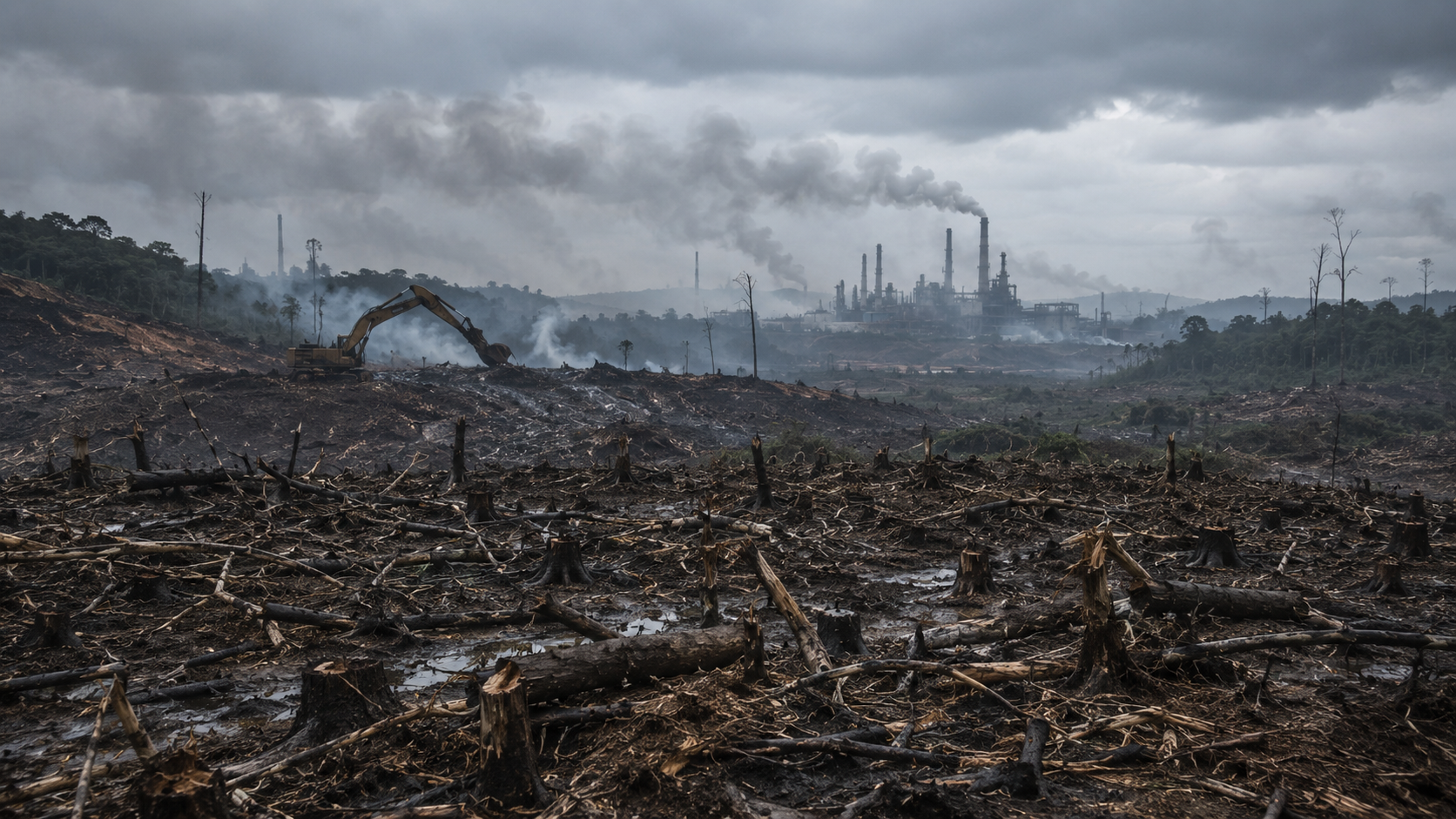
The global economy’s reliance on fossil fuels has fueled industrialization and growth for over a century yielding significant technological infrastructural and social advancements. However these same fuels are primary drivers and largest contributors to global climate change, accounting for over 75% of global greenhouse gas emissions and nearly 90% of all carbon dioxide emissions. As greenhouse emissions blanket the Earth, they trap the sun’s heat, leading to global warming and its associated consequences, including rising sea levels and more extreme weather events[1]. The continued reliance on fossil fuel presents a pressing dilemma, pitting economic development against environmental stewardship. While fossil fuels contribute to underpin global economies, generating employment, energy and government revenue, their sustained use intensifies climate change‘s devastating impacts. Policymakers face the intricate challenge of reconciling these competing priorities, navigating a delicate transition to a low-carbon economy that mitigates economic upheaval[2]. Zambia’s reliance on fossil fuels is primarily for sectors outside electricity generation, as the nation’s energy mix is dominated by hydropower, with coal and petroleum used for energy consumption, and biomass for households which greatly contributes to greenhouse gas emissions[3].
Additionally, climate change poses a significant challenge for policymakers, largely due to inherent uncertainties in the scientific data surrounding it. Although most scientists concur that human activities are the main cause of climate change, accurately forecasting its precise impact remains challenging. Despite the sophistication of climate models they are not fully precise, making it harder to predict future developments[4]. As a result, some policymakers take a cautious stance, delaying decisive action until more conclusive data is available. However, postponing action could have catastrophic effects, such rising sea levels, large-scale displacement, and the collapse of ecosystems[5]. Policymakers must navigate this uncertainty while recognizing the urgency of acting to safeguard the environment.
MITIGATION STRATEGIES
Further the mitigation of climate change involves actions to reduce or prevent the emission of GHGs. The following are some of the key mitigation approached that can be implemented to reduce global dependence on fossil fuels while still supporting economic growth:
The sustainable management and conservation of forests
One effective mitigation strategy involves sustainable management and conservation of forests. Forests act as carbon dioxide and reducing the overall concentration of greenhouse gases in the atmosphere. Measures to reduce degradation are keys for climate mitigation and generate multiple additional benefits. An example is that of mangrove forests which contribute significantly to carbon sequestration, while supporting biodiversity and enhancing climate resilience[6].
Shifting to Renewable Energy
A major mitigation approach involves replacing fossil fuels with renewable energy sources like solar, wind, and hydropower. These renewable energy sources generate minimal or no GHG emissions and are becoming increasingly cost-effective compared to traditional fossil fuels. Countries such as Germany and Denmark have made substantial progress in developing renewable energy sectors, highlighting the potential for economic growth driven by green energy[7]. This shift not only addresses environmental concerns but also promotes energy security and sustainable economic development.
Enhancing Energy Efficiency
Boosting energy efficiency across various sectors, such as transportation, industry, and housing, plays a crucial role in cutting emissions as it is a cornerstone of climate change mitigation. Reducing the energy needed for the same tasks not only lessens dependence on fossil fuels but also lower costs[8].
Implementing Carbon Pricing
Carbon pricing mechanisms, including carbon taxes and cap-and-trade systems, provide an effective way to reduce emissions as it is a market based approach that assigns a cost to greenhouse gas emissions. By setting a price on carbon emissions, these measures create financial incentives for businesses and individuals to minimize their carbon footprints. For instance, the European Union’s Emissions Trading System ETS has effectively reduced emissions by setting an overall cap and allowing companies to trade emission allowance under that limit[9].
ADAPTATION STRATEGIES
The following are some of the adaptation strategies:
Improving Infrastructure to Climate-resilience
One critical aspect of adaptation is development of climate-resilient infrastructure, which aims to protect communities from the increasing frequency and severity of extreme weather events. Investing in flood defenses is essential, particularly in coastal and low-lying areas prone to storm surges and flooding. Such measures include could include building levees, dykes, and seawalls to provide a first line of defense against rising waters. Additionally, retrofitting existing buildings to withstand higher temperatures is an adaptations measure, ensuring that critical facilities such as hospitals and emergency centers remain functional during heat waves. Urban planning must also take rising sea levels into account by designing areas that are less vulnerable to flooding, which may involve using green infrastructure, such as parks and wetland to absorb excess water[10].
Changing Agricultural practices
Certain farming methods release high amounts of methane and nitrous oxide, which are potent greenhouse gases. Regenerative agricultural practices including enhancing soil health, reducing livestock-related emissions, direct seeding techniques and using cover crops. Support mitigation, improve resilience and decrease the cost burden on farmers. Additionally, improved water management, such as efficient irrigation system and rainwater harvesting can help farmers make better use of limited water resources. Crops diversification is another key strategy that can minimize the risk of total crop failure[11].Government and agricultural extension services should play a role in providing farmers with the knowledge, tools and resources needed to adapt to changing conditions.
Strengthening Disaster Preparedness and Response
Strengthening disaster preparedness is critical to minimizing the human and economic toll of climate-related disasters. Effective measures include early warning systems, evacuation plan, and emergency response infrastructure to save lives during extreme weather events. Emergency response infrastructure, such as shelters and supply storage facilities, should be established in vulnerable areas to support communities during and after extreme events. By enhancing disaster preparedness, governments can significantly reduce both the human and economic toll of climate-related disasters[12]. These adaptation strategies are key to building resilience and ensuring that societies can effectively cope with the challenges posed by climate change.
LEGAL AND POLICY FRAMEWORKS ADDRESSING CLIMATE CHANGE
Mitigation and adaptation strategies are pivotal in combating climate change. However, their effective implementation is underpinned by reliable legal and policy frameworks. These frameworks both national and international provide the necessary structure and guidance for coordinated climate change action.
International Instruments on Climate Change
International agreements play a critical role in shaping global climate policy and guiding national actions. The following are key international instruments that that address with climate change.
United Nations Framework Convention on Climate Change (UNFCCC)
The UNFCCC was established in 1992 and entered into force in 1994, this instrument serves as the fundamental international treaty aiming to stabilize greenhouse gas (GHG) concentrations in the atmosphere to prevent dangerous interference with climate system[13]. The convention recognize the principal of common but differentiated responsibilities, acknowledging that developed countries bear a greater responsibility due to their historical contributions to greenhouse gas emissions. Which establishes a framework for future negotiations and sets the stage for more specific agreements.
Kyoto Protocol
The protocol as adopted in 1997 and later entered into force in 2005. It builds upon the UNFCCC by committing industrialized countries and economies in transition to limit and reduce GHG emissions. In its Annex B, the Kyoto Protocol sets binding emission reduction targets, aiming for an average 5% reduction in GHG emissions[14].
Paris Agreement
The agreement was adopted in 2015 and entering into force in 2016. It represents a landmark accord within the UNFCCC framework. Its central aim is to strengthen the global response to the threat of climate change by keeping global temperature rise this century well below 2℃ above preindustrial levels and pursuing efforts to limit the temperature increase to 1.5℃. It emphasizes nationally determined contributions (NDCs) and aims to enhance adaptive capacity and climate resilience[15].
National Legal Framework for Climate Change in Zambia
At national level, Zambia has developed a comprehensive legal and policy framework to address climate change, aligning with international commitments and catering to local contexts. The Ministry of Green Economy and Environment which was established in 2021 is the led institution mandated to coordinate climate change, environmental management and sustainable development initiatives. It play a key role implementing key instruments such as the Green Economy and Climate Change Act[16], the Environmental Management Act[17] and the Forest Act[18] alongside the National Policy on Climate Change. These laws and policies provide the legal foundation for Zambia’s transition toward a low carbon and climate resistant economy, ensuring that environmental sustainability is integrated into the country’s broader development agenda.
Green Economy and climate Change Act, No. 18 of 2024
This landmark Act establishes Zambia’s most comprehensive framework for address climate change. It provides for climate change adaption, mitigation, disaster risk reduction, and low emission development pathways, while also creating a climate change fund to finance interventions. It is also important to note that the act demonstrates Zambian’s international obligations under the UNFCCC and the Paris Agreement, ensuring that national efforts are aligned with global climate goals[19].
Environmental Management Act, No. 12 of 2011 (Amended by Act No.8 of 2023)
This Act regulates environmental protection and natural resources management in Zambia. It sets out provisions for pollution control, waste management and sustainable land use practices. The 2023 amendment strengthened its scope by incorporating measures, reinforcing its role in safeguarding ecosystems that are vital for climate resilience[20].
Forests Act, No. 4 of 2015
The Forests Act[21], repeals the previous 1973 Act and was enacted to provide for establishment and management of various types of forests including National Forests, Local Forests, and Private Forests this illustration is clearly shown under part III of the Act. The Act also establishes a Zambia Forestry Commission. Recognizing the critical role of forests in carbon sequestration and biodiversity conservation, this Act focuses on sustainable forests management, conservation of forests. It also provides for the regulations of forest based carbon projects, thereby directly contributing to Zambia’s emission reduction and adaptation strategies[22].
Challenges in Implementing Climate Change Laws in Zambia
Key challenges include a lack of clear national leadership and inconsistent direction, insufficient and unstable funding, high staff turnover, and inadequate capacity at the local level, particularly in rural areas where poverty and vulnerability hinder implementation. Additionally, there’s a lack of awareness and understanding regarding climate finance mechanisms, potential conflicts between climate action and other development goals and the need to better integrate soil protection into climate policy frameworks[23].
Recommendations
- Ensure effective enforcements of existing climate change policies and strategies, such as the Green Economy and Climate Change Act.
- Increasing investments in renewable energy and energy efficiency measures to reduce dependence on fossil fuels.
- Implementing climate resistant infrastructure and agricultural adaptation measures to protect communities from extreme weather events.
- Explore new climate finance opportunities and collaborate with international partners to support climate change efforts.
CONCLUSION
In conclusion climate change presents a pressing dilemma for the 21st century, pitting Zambia’s economic growth against environmental sustainability. Despite scientific uncertainties, the overwhelming consensus underscores the imperative for immediate action. To effectively address this challenge, policymakers and stakeholders must adopt a dual approach which is to mitigation of climate change through the above stated strategies and lastly adapt to its impacts by investing in climate-resilient infrastructure and agricultural adaptation.
BIBLIOGRAPHY
LEGISLATION
Green Economy and Climate Change Act No. 18 of 2024
Environmental Management Act 2011,
Forests Act 2015
POLICY DOCUMENTATION
Government of the Republic of Zambia, National Policy on Climate Change (2016)
INTERNATIONAL INSTRUMENTS
United Nations Framework Convention on Climate Change (1992)
BOOKS
Nicholas Stern, The Economics of Climate Change: The Stern Review (Cambridge University Press 2008).
ONLINE SOURCES
Chansa Kayumba, Zambia’s Environmental Laws- Key Regulations and what they mean for you- Part II: The Green Economy and Climate Change Act of 2024’ 9Chibesakunda & Company/ DLA Piper Africa, 28 February 2025) https://www.dlapiperafrica.com/en/zambia/insight/2025/zambia-enviromental-law-key-regulations-and-what-they-mean-for-you-part-II accessed 8th September 2025
Encyclopaedia Britannica, Paris Agreement (2015) https://www.britannica.com/topic/Paris-Agreement-2015 accessed 9th September 2025
FundsforNGOs, What are the Challenges Faced during Climate Change Adaptation Project? http://www.fundsforngos.org/proposal/what-are-th-challenges-faced-during-climate-change-adaption-project/ accessed 8th September
Intergovernmental Panel on Climate Change (IPCC). (2021). Sixth Assessment Report. https://www.ipcc.ch/assessment-report/ar6/ accessed 6th September, 2025
Luyando Muloshi, ‘The Environmental Management Act: Interrogating Proposed Amendments and What it Means for Responsible Large Scale Land Based Investments in Zambia Part I’ News Diggers! (14 August 2023) https://diggers.news/guest-diggers/2023/08/14/the-environmental-management-act-interrogating-proposed-amendment-and-what-they-mean-for-responsible-large-scale-land-based-investments-in-zambia-parti/ accessed 8th September 2025
The Just Energy Transition-What Does This Mean For Zambia? PMRC, https://share.google/mbFP56EYAf2V0ta56 accessed on 5th September 2025
Word Bank. (2020). Climate Change and adaptation Strategies. https://www.worldbank.org/en/topic/climatechange accessed 6th September 2025
United Nations Office for Disaster Risk Reduction (UNDRR). (2019). Global Assessment Report on Disaster Risk Reduction https://www.undrr.org/publicatoin/global-assessment-report-disaster-risk-reduction-2019 accessed 8th September, 2025
United Nations Development Programme, ‘What Is Climate Change Mitigation and Why Is It Urgent?’ (UNDP Climate Promise, 9th September, 2021) https://climatepromise.undp.org/news-and-stories/what-climate-change-mitigation-and-why-it-is-urgent accessed 12th September, 2025
United Nations Framework Convention on Climate Change, ‘The Kyoto Protocol’ https://unfccc.int/process-and-meeting/the-kyoto-protocol accessed 8th September, 2025
National Renewable Energy Laboratory.(2020). Renewable Energy Future Study. https://www.nrel.gov/docs/fy20osti/52409.pdf accessed 5th September, 2025
International Energy Agency . (2021).World Energy Outlook. https://www.iea.org/reports/world-energy-outlook-2021 5th September, 2025
[1] United Nations, ‘ Causes and Effects of Climate Change’(2022) https://www.un.org/en/climatechange/science/causes-effects-climate-chang accessed 5th September, 2025
[2] Nicholas Stern, The Economics of Climate Change: The Stern Review (Cambridge University Press 2008)
[3] The Just Energy Transition-What Does This Mean For Zambia? PMRC, https://share.google/mbFP56EYAf2V0ta56 accessed on 5th September 2025
[4] Intergovernmental Panel on Climate Change (IPCC). (2021). Sixth Assessment Report. https://www.ipcc.ch/assessment-report/ar6/ accessed 5th September,2025
[5] Nicholas Stern, The Economics of Climate Change: The Stern Review (Cambridge University Press 2008).
[6] United Nations Development Programme, ‘What is Climate Change Mitigation and Why Is It Urgent?’ (UNDP Climate Promise, 9th September, 2021) https://climatepromise.undp.org/news-and-stories/what-climate-change-mitigation-and-why-it-is-urgent accessed 5th September, 2025
[7] National Renewable Energy Laboratory. (2020). Renewable Energy Future Study. https://www.nrel.gov/docs/fy20osti/52409.pdf accessed 5th September,2025
[8] International Energy Agency . (2021). World Energy Outlook. https://www.iea.org/reports/world-energy-outlook-2021 5th September, 2024
[9]World Bank. (2020). Climate Change and adaptation Strategies. https://www.worldbank.org/en/topic/climatechange accessed 6th September 2025
[10] World Bank. (2s020). Climate Change and adaptation Strategies. https://www.worldbank.org/en/topic/climatechange accessed 6th September 2025
[11]Intergovernmental Panel on Climate Change (IPCC). (2021). Sixth Assessment Report. https://www.ipcc.ch/assessment-report/ar6/ accessed 6th September, 2025
[12] United Nations Office for Disaster Risk Reduction (UNDRR). (2019). Global Assessment Report on Disaster Risk Reduction https://www.undrr.org/publicatoin/global-assessment-report-disaster-risk-reduction-2019 accessed 8th September, 2025
[13] United Nations Framework Convention on Climate Change 1992, Article 2
[14] United Nations Framework Convention on Climate Change, ‘The Kyoto Protocol’ https://unfccc.int/process-and-meeting/the-kyoto-protocol accessed 8th September, 2025
[15] Encyclopaedia Britannica, Paris Agreement (2015) https://www.britannica.com/topic/Paris-Agreement-2015 accessed 9th September 2025
[16] Act No. 18 of 2024
[17] Act No. 12 of 2011( Amended by Act No. 8 of 2023)
[18] Act No. 4 of 2015
[19] Chansa Kayumba, Zambia’s Environmental Laws- Key Regulations and what they mean for you- Part II: The Green Economy and Climate Change Act of 2024’ 9Chibesakunda & Company/ DLA Piper Africa, 28 February 2025) https://www.dlapiperafrica.com/en/zambia/insight/2025/zambia-enviromental-law-key-regulations-and-what-they-mean-for-you-part-II accessed 8th September 2025
[20] Luyando Muloshi, ‘The Environmental Management Act: Interrogating Proposed Amendments and What it Means for Responsible Large Scale Land Based Investments in Zambia Part I’ News Diggers! (14 August 2023) https://diggers.news/guest-diggers/2023/08/14/the-environmental-management-act-interrogating-proposed-amendment-and-what-they-mean-for-responsible-large-scale-land-based-investments-in-zambia-parti/ accessed 8th September 2025
[21] Act No. 4 of 2015
[22] Ibid
[23]FundsforNGOs, What are the Challenges Faced during Climate Change Adaptation Project? http://www.fundsforngos.org/proposal/what-are-th-challenges-faced-during-climate-change-adaption-project/ accessed 8th September