Authored By: Parmis
Bales College
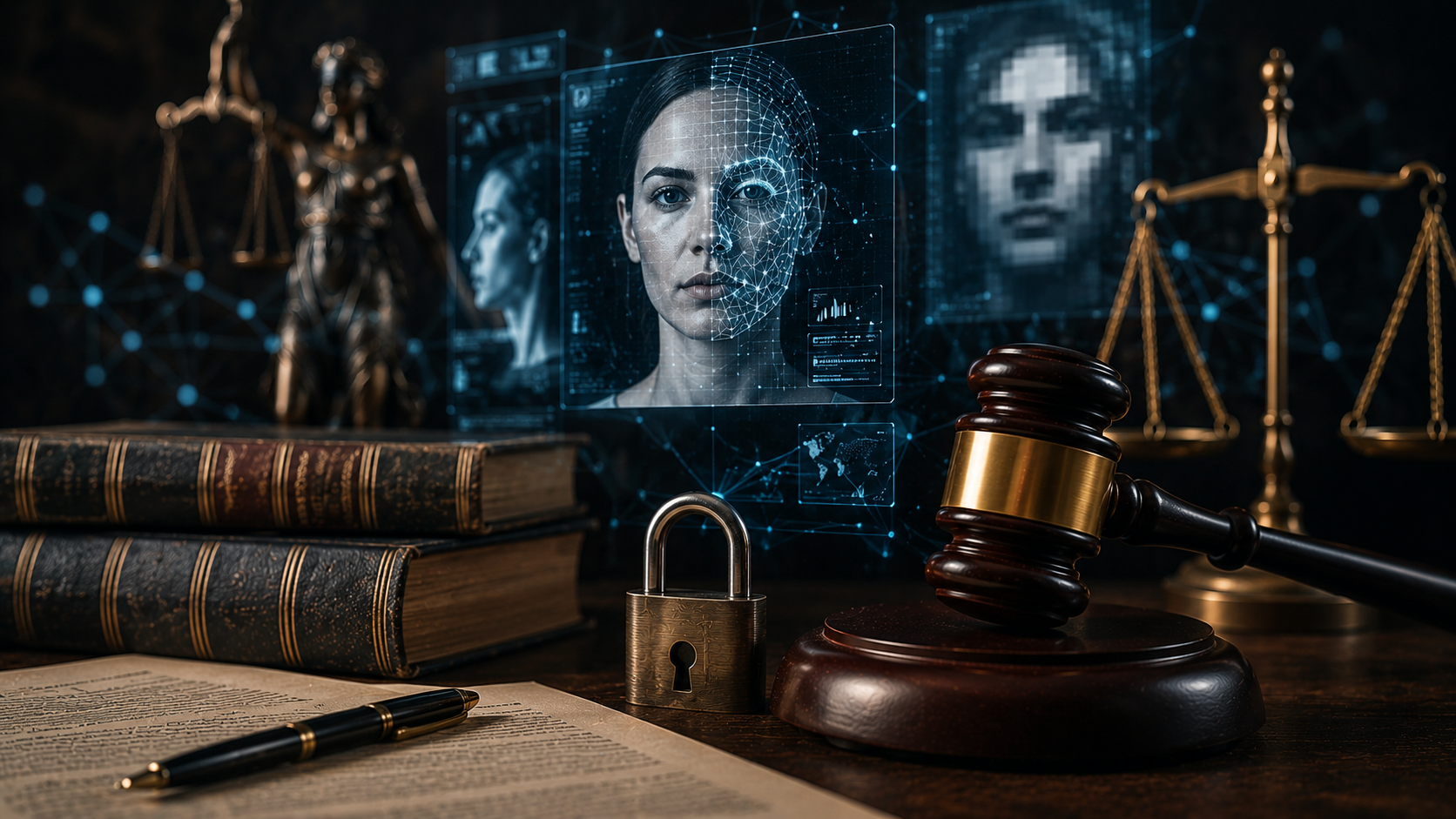
Artificial intelligence systems are increasingly capable of performing tasks traditionally associated with human reasoning, including autonomous driving, financial trading, and predictive decision-making in healthcare. As AI becomes more autonomous, it challenges traditional legal frameworks of liability, responsibility, and accountability. This raises a central question in modern legal theory: whether artificial intelligence should be granted legal personhood. Legal personhood determines which entities can hold rights and obligations in law and is traditionally divided into natural persons and artificial persons. This essay argues that while AI presents significant doctrinal challenges, granting it legal personhood is neither necessary nor desirable, as existing legal principles, regulatory frameworks, and doctrines of liability can adequately address the risks posed by AI without undermining the rule of law.
Legal Personhood and its Doctrinal Foundations
Legal personhood refers to an attribute of a particular individual or a body, which qualifies them to hold rights and obligations in law. Legal personhood is categorized into natural persons and artificial persons. Natural persons refer to human beings, whereas artificial persons include entities such as corporations that are granted legal personality for practical reasons.
The recognition of corporations as a legal person is a concept, which has been recognized by common law for quite some time now. The case of Salomon v A Salomon & Co Ltd [1897] AC 22 is one in which the principle of corporate personality was affirmed. The principle of corporate personality means that a company is a legal entity different from its shareholders and can hold assets and enter liabilities independent of its members. Another case supporting the principle of corporate personality is Lee v Lee’s Air Farming Ltd [1961] AC 12.
Academic commentary supports this functional understanding. As Gierke argued in his real entity theory, organisations can have a legal existence independent of individuals, while Kelsen viewed legal personality as a normative construct created by legal systems rather than a reflection of natural reality. These theories demonstrate that legal personhood is not tied to consciousness but is instead a tool of legal organisation.
Corporate Personhood as a Functional Legal Tool
Corporations exist because they lead to efficiencies legally and economically. They allow continuity, facilitate contracts, and provide joint liability. Nevertheless, the corporate system of liability still rests on human beings since directors and officers can be liable for trading under the Insolvency Act 1986 and due to negligence in case of poor decision-making.
The necessity of attribution to people is very important in terms of legal integrity. Even in cases when corporations are responsible for something, there is always an intermediary that is a person who will decide whether this liability should take place. This issue becomes very significant when we speak about AI systems.
AI, Autonomous Vehicles, and the Responsibility Gap
The issue becomes clearer in the context of autonomous self-driving vehicles, which use machine learning systems to make real-time driving decisions. These systems are increasingly capable of operating without human intervention, raising complex questions about liability when harm occurs.
For instance, in a collision case involving an automated car, there might be no clarity regarding whose fault it is – the manufacturer, the software designer, the consumer or the artificial intelligence system. The law of negligence, as explained by Donoghue v Stevenson [1932] AC 562, rests on the notion of a duty of care between two known people. Again, strict liability for defects in products under Consumer Protection Act 1987 rests on the producer, but the legislation was not intended to apply to automated systems.
Such scenarios give rise to what scholars have called a “responsibility gap” whereby any harmful activity takes place without being attributed to any legal person who can take the blame for it.
Convergence Analysis: Law, Technology, and Ethics
The advent of artificial intelligence systems represents one such case of what scholars refer to as convergence analysis. This is because of the fact that the law cannot be separated from the technological and ethical aspects anymore since an AI system works through intricate algorithmic processes. As Lawrence Lessig famously argued in Code is Law, technological architecture itself regulates behavior, meaning that governance now occurs through both legal and technical systems. Similarly, Frank Pasquale highlights the “black box society,” where algorithmic decision-making obscures accountability.
Arguments for AI Legal Personhood (and Corporate Analogy)
n the context of autonomous vehicles, this convergence forces the legal system to reconsider whether traditional doctrines of causation and fault remain adequate or whether new regulatory structures are required. Advocates of AI legal personhood commonly make an analogy with the legal personhood of corporations. In case corporations without consciousness are legal persons, then AI systems that are also artificial entities might be legal persons.
The European Parliament (2017) contemplated the concept of “electronic personhood” of autonomous systems as a response to the problem of accountability in the context of advanced AI. Proponents claim that legal personhood would give way to a liability system and would enable attribution of any harm done by AI systems.Taking into account practical aspects, Sartor and Lagioia argue that AI might eventually need to have some legal personhood due to its autonomy.
Arguments for Against AI Legal Personhood
However, there are strong doctrinal and normative objections. Unlike corporations, AI systems lack intentionality, consciousness, and moral agency. As H.L.A. Hart emphasised, legal responsibility presupposes the capacity to understand and follow rules. AI systems cannot meaningfully comprehend obligations or be deterred by sanctions.
Furthermore, granting AI legal personhood risks undermining accountability. It could allow corporations to externalise liability onto systems they design and control, weakening the principles established in cases such as Caparo Industries plc v Dickman [1990] 2 AC 605, which emphasises foreseeability, proximity, and fairness in duty of care.
Another aspect of the discussion can be found in the initial deliberations of the European Parliament concerning the notion of “electronic personhood” of autonomous systems. This concept was eventually abandoned by the parliament, but it represents a significant effort towards addressing the legal issues connected with AI through creation of a new legal category. It mainly stems from the concern about liability and compensation when people are harmed due to actions performed by a system that operates autonomously with little human interference. The principle behind electronic personhood is that it would enable the AI system itself to take responsibility and thus ensure that the victims have someone responsible for their harm. The problem in this regard will be even more aggravated in view of the rule of law, which demands that legal responsibility should be easily assignable to those who can comprehend and perform their legal responsibilities. This would mean keeping the human-centered nature of liability intact even as we modify our legal system to take into account technological advancements. This will help ensure that the issue of accountability always remains with something that has an ability to act deliberately, even as we allow our legal system to become flexible enough to deal with innovations.
As a rule of law doctrine propounded by A.V Dicey says, the law must be certain and clear and must be applied to known legal subjects. When legal personality is assigned to machines that have no consciousness and moral autonomy, there could be a weakening of the rule of law principles because a middleman is introduced here, who neither understands legal responsibilities nor can be deterred through any sanction.
However, this approach has been heavily criticized in the academic discourse. Scholars like Bryson, Diamantis, and Grant maintain that recognition of any kind of legal personhood of AI would make human accountability even more obscure rather than helping it to emerge.
From a rule of law perspective, as articulated by A.V. Dicey, legal accountability must remain clear, predictable, and attributable to identifiable legal subjects. Introducing AI as a legal person risks diffusing responsibility in a way that undermines legal certainty and enforceability.
Alternative Legal Solutions
It is not necessary to confer legal personality to existing legal systems, which can instead be modified to meet the needs of autonomous systems. This would include amending the provisions of the Consumer Protection Act 1987 and extending principles of negligence. Also, regulatory measures like mandatory insurance schemes, algorithmic auditing, and product certification can guarantee accountability. This is reflected in the recommendations made by the Law Commission of England and Wales in their report entitled “Automated Vehicles” (2022). Finally, the issue of whether or not AI can be granted legal personhood is part of the general conflict of modern legal systems, which is associated with innovation vs. doctrine. As technology continues to present novel challenges to the conventional classifications of law, the core ideas and concepts of legal responsibility are based on human actions and intentions. However, making AI a legal personality will undermine the basic foundations of legal responsibility without presenting an efficient means of tackling liability problems. In fact, the power of the common law is in its flexibility and ability to adapt and evolve as exemplified by the doctrine of negligence, liability of products, etc. Therefore, instead of redefining personhood, it would be necessary to reformulate doctrines so that they remain relevant to the changing technological environment.
Conclusion
Overall, while there is no doubt that the development of artificial intelligence poses many difficulties to existing legal doctrines, the concept of its personhood is not a needed response and makes no sense. Corporate personhood has proven to be an effective concept for legal practice, but it still relies on human accountability. Self-driving cars show the challenges that are present within the modern legal system, but they can be resolved via a convergence of law and technology. In general, human responsibility should be maintained instead of giving personhood to artificial intelligence.
Bibliography:
Cases
Donoghue v Stevenson [1932] AC 562 (HL)
https://www.bailii.org/uk/cases/UKHL/1932/100.html
Caparo Industries plc v Dickman [1990] 2 AC 605 (HL)
https://www.bailii.org/uk/cases/UKHL/1990/2.html
Lee v Lee’s Air Farming Ltd [1961] AC 12 (PC)
https://www.bailii.org/uk/cases/UKPC/1960/1960_39.html
Salomon v A Salomon & Co Ltd [1897] AC 22 (HL)
https://www.bailii.org/uk/cases/UKHL/1896/1.html
Legislation
Consumer Protection Act 1987
https://www.legislation.gov.uk/ukpga/1987/43/contents
Insolvency Act 1986
https://www.legislation.gov.uk/ukpga/1986/45/contents
Reports / Institutional Sources
Law Commission, Automated Vehicles (Law Com No 404, 2022)
https://www.lawcom.gov.uk/project/automated-vehicles/
Academic Sources / Theory
Hart HLA, The Concept of Law (Oxford University Press 1961)
https://plato.stanford.edu/entries/hart-legal/
Dicey AV, Introduction to the Study of the Law of the Constitution (1885) (Rule of Law doctrine)
https://plato.stanford.edu/entries/rule-of-law/
https://drive.google.com/file/d/1y7-D5wbsVctzz1z-to0x-bQATtVRn-OW/view