Authored By: Elsie Mabena
University of South Africa
Written by: Elsie Mabena (University of South Africa)
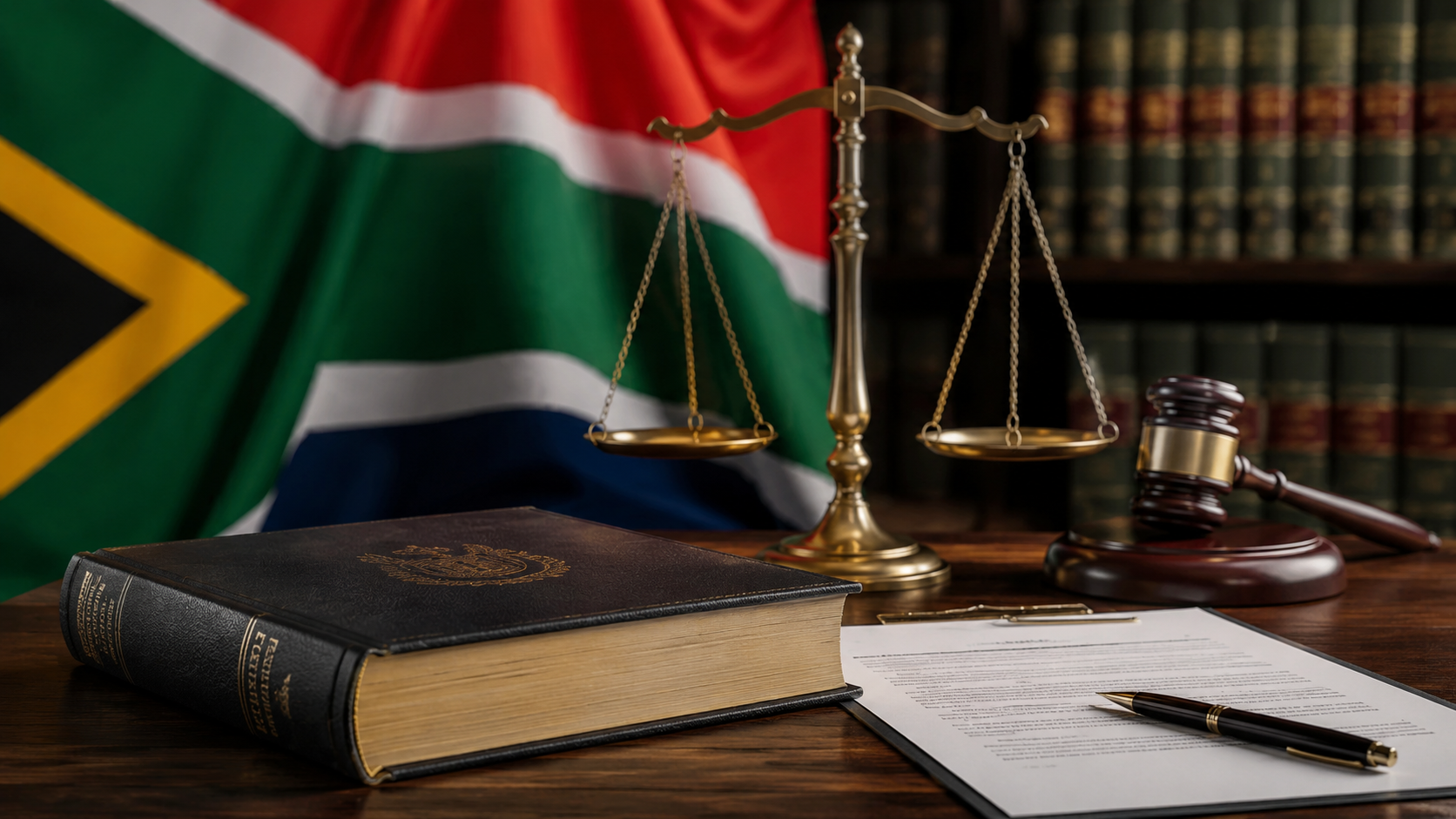
This article explores tender regulations and the increasing incidence of tender misconduct in Southern Africa, particularly within government institutions, municipalities, and among citizens. The recent appointment of the Madlanga Commission of Inquiry by the president raises serious concerns about whether our legislation and justice systems, along with the actions of our cabinets, are being properly followed. This situation prompts the question of whether we are witnessing a significant failure of our justice system. Tender corruption and misconduct have been prevalent among our ministerial cabinets, and the Madlanga task force is now working to address these issues from the top down.This article explores tender regulations and the increasing incidence of tender misconduct in Southern Africa, particularly within government institutions, municipalities, and among citizens. The recent appointment of the Madlanga Commission of Inquiry by the president raises serious concerns about whether our legislation and justice systems, along with the actions of our cabinets, are being properly followed. This situation prompts the question of whether we are witnessing a significant failure of our justice system. Tender corruption and misconduct have been prevalent among our ministerial cabinets, and the Madlanga task force is now working to address these issues from the top down.
Intoduction.
Let’s start with a full explanation of what is a tender. This is a definition given by the South African National Tenders website, which states:
“A tender is an official invitation to suppliers to submit a proposal for the supply of goods or services. It is a common procurement method used by both public and private sectors to ensure the selection of the best supplier based on criteria such as price, quality, and delivery time. The tendering process is competitive, with multiple companies submitting bids in response to an advertised request. In South Africa, tenders are categorised based on the nature of the procurement and the issuing authority. These categories can range from construction and engineering projects to supply and delivery of office equipment, consultancy services, and more. Each tender will have specific requirements, submission guidelines, and deadlines that must be strictly followed. “
Application for tenders is open and eligible for legally registered businesses including
- EMEs (Exempt Micro Enterprises) and QSEs (Qualifying Small Enterprises)
- Black-owned SMEs and cooperatives
- Sole proprietors with the correct documents
- Pty Ltd, CC, or NPOs with active CIPC registered
All these above mentioned must meet the minimum compliance criteria. There also steps that are taken in terms of tenders:
- Find Relevant Tenders
The first step in applying for a tender is to identify relevant opportunities. Various platforms and resources can be used to find available tenders, such as:
- Government Websites
- Tender Bulletin:
- Private Tender Portals
- Understand the Requirements
Read and understand the tender documents. These documents typically include:
- Terms of Reference (TOR): Detailed description of the work or services required.
- Eligibility Criteria: Specific requirements that bidders must meet to qualify.
- Submission Guidelines: Instructions on how to prepare and submit the bid.
- Evaluation Criteria: The basis on which the tender will be evaluated and awarded.
- Prepare the Bid
- Compliance Check
- Technical Proposal
- Financial Proposal
- Supporting Documents
- Submit the Bid
Tenders can usually be submitted either electronically or in hard copy, as specified in the tender documents. It is imperative to adhere to the submission guidelines and deadlines. Late submissions are typically not accepted.
After submitting your bid, follow up with the tendering authority to confirm receipt and express your interest. This shows professionalism and can sometimes provide insights into the evaluation process.
Legislation concerning tender documentation
It is crucial for us to follow the relevant legislation and constitutional guidelines that govern the tender documentation process. By doing so, we guarantee that all tenders are submitted in a fair and transparent manner. This commitment ensures that every company, regardless of its size or background, has a genuine opportunity to participate in providing services within their own country.
The framework that supports this process is outlined in several important legal documents. These include the Public Finance Management Act No. 1 of 1999, which establishes the financial principles for state resources; the Public Procurement Act 28 of 2024, which provides regulations for how public contracts are awarded and managed; and Section 217 of the Constitution, which underscores the necessity for public procurement to be conducted in a manner that is fair, equitable, transparent, competitive, and cost-effective. By adhering to these guidelines, we foster an environment of integrity and opportunity in public procurement.
Relevant Case Law concerning tender misconduct
If one does not follow or comply with regulations when awarded with a tender or in the process of applying for tenders, it is seen as an offence in the eyes of the law. In the case of Tshopo v State (29/12) [2012] ZASCA 193 (30 November 2012) it was stated :
[1] The appellants, a brother and sister, were charged before a magistrate with fraud. They pleaded not guilty. They were convicted and sentenced, respectively, to four years imprisonment in terms of s 276(1)(b) of the Criminal Procedure Act 51 of 1977 and two years imprisonment conditionally suspended for five years. A third accused, one Makathini, was likewise charged and convicted and sentenced to four years imprisonment of which two years was conditionally suspended.
[2] The three accused appealed unsuccessfully to the High Court against their convictions and sentences. They were all granted leave to appeal further to this Court. Only the two appellants have pursued the appeal. The second appellant limited her appeal to her conviction.
The Madlanga Commision Revelation: Tender misconduct, Fraud, Rotation of funds amongst Criminals and Members of the state
The formation of the Madlanga Commission was prompted by a striking statement from General Nhlanhla Mkhwanazi, which unveiled deeply troubling levels of corruption within the South African Police Service. This revelation shed light on persistent issues regarding the mismanagement of tenders by various government institutions, including the judiciary itself, which is meant to uphold justice and fairness.
Despite following all the necessary protocols in the tender awarding process, a troubling and recurring pattern has surfaced. It appears that contracts are repeatedly granted to the same companies or to entities that share familial connections or ties to organized crime syndicates. These relationships often exist in a troubling collaboration with state officials. This situation raises significant concerns about the integrity of the tendering system.
At the heart of the problem lies a detrimental cycle: when state members provide favours to certain citizens—whether through favourable tender awards or other means—they come to expect remuneration in return. This expectation creates a closed loop that restricts tender opportunities to a privileged few, ultimately depriving the wider population of the benefits that a fair and equitable tendering process should provide. As a result, the system becomes a vehicle for corruption instead of a means of fostering growth and opportunity for all.
It shows that corruption has been happening for years despite the fact that we have the constitution that applies to the members of the state and the citizens, but in cases like this it was disregarded. All of these happened away from the public eye. The commission also revealed that the members of the state are connected to various crimes and are in connection to the criminal syndicates and most of the companies that are awarded tenders are owned by criminals and kingpins themselves, this comes after the Madlanga Task Force had to do a lot of research in corporation with the HAWKS, SIU(SPECIA INVESTIGATIVE UNIT) and the SARS( SOUTH AFRICAN REVENUE SERVICES) to do an audit investigating lifestyles of the ministers, municipalities, cabinet, police with high rankings. Some of the companies that were investigated where tenders were awarded were also owned by family members of the members of the state and judiciary systems corruption has persisted as a troubling issue for many years, overshadowing the principles laid out in our constitution, which is meant to govern both state officials and citizens. Unfortunately, in many instances, this constitution has been sidelined. Recent revelations from the commission have shed light on the unsettling connections between numerous state officials and a variety of criminal activities, indicating their involvement with organized crime syndicates. Alarmingly, a significant number of companies granted government tenders are, in fact, owned by individuals who are themselves entrenched in criminal enterprises.
These findings emerged after the Madlanga Task Force conducted an extensive investigation, collaborating closely with the HAWKS, the Special Investigative Unit (SIU), and the South African Revenue Services (SARS). Their audit aimed to scrutinize the extravagant lifestyles of ministers, municipal leaders, high-ranking police officials, and cabinet members, revealing a web of corruption that penetrates deep into the fabric of governance. Furthermore, it was discovered that some of the companies under investigation—who received lucrative tenders—are owned by the family members of prominent state officials and judges, raising serious concerns about integrity and accountability within the judicial and political systems.
One of the criminals who had privileges under law enforcement was Vusimuzi “Cat” Matlala. He was awarded a tender worth R360 billion, which was later withdrawn following an investigation. During this investigation, Matlala was found to be connected to various members of the state and municipalities that also benefited from similar tenders linked to him. Several crimes related to these tenders were exposed. Matlala is not the only one; there are many individuals like him in South Africa that we are unaware of. The question arises about the appointments of the Madlanga Commission and the Ad Hoc Committee, along with the efforts of whistle-blowers like General Nhlanhla Mkhwanazi. Are they trying to alert us to the looming collapse of our state and judicial systems?
Will the state begin to adhere to the proper processes for awarding tenders? There are many legitimate companies in South Africa that deserve a chance to be awarded tenders, and this could help prevent the misuse of funds and the rotation of misconduct among criminals. Perhaps there is still hope for the restoration of the country’s judicial reputation.
BIBLIOGRAPHY
CASE LAW
[1] “The appellants, a brother and sister, were charged before a magistrate with fraud. They pleaded not guilty. They were convicted and sentenced, respectively, to four years imprisonment in terms of s 276(1)(b) of the Criminal Procedure Act 51 of 1977 and two years imprisonment conditionally suspended for five years. A third accused, one Makathini, was likewise charged and convicted and sentenced to four years imprisonment of which two years was conditionally suspended.”
[2] “The three accused appealed unsuccessfully to the High Court against their convictions and sentences. They were all granted leave to appeal further to this Court. Only the two appellants have pursued the appeal. The second appellant limited her appeal to her conviction”
HEHER JA (LEACH AND THERON JJA concurring) in S v Tshopo and Others (29/12) [2012] ZASCA 193 (30 November 2012)
LEGISTATION
- CONSTITUTION OF SOUTH AFRICA SECTION 217
- Public Procurement Act 28 of 2024
- PUBLIC FINANCE MANAGEMENT ACT NO. 1 OF 1999
- Criminal Procedure Act 51 of 1977 s 276(1)(b)
Other Sources
National Tender Explained
Websites
WWW. SAFLII.ORG.ZA/CASES/ZASCA/2013/193
www.gov.za/sites/default/files/gcis_document/202407/50967-publicprocurementact282024
www.treasury.gov.za/legislation/PFMA
www.nationaltenders.co.za/tenders-in-south-africa-complete-overview-guide
Instructions
For all the sources kindly please click on the links on the website section it will direct yu to the relevant source.