Authored By: Fiona Caroline Kupezare
University of Johannesburg
ABSTRACT
The incorporation of artificial intelligence (AI) into the legal field has brought significant opportunities and obstacles, especially around criminal law. With the growing integration of AI technologies in legal systems for tasks like predictive policing, evidence evaluation, sentencing suggestions, and risk assessments, concerns appear about fairness, accountability, and the protection of basic rights. This article analyzes the function of AI in criminal justice, emphasizing its ability to improve efficiency and accuracy while simultaneously revealing systemic weaknesses. The conversation underscores the conflict between technological advancement and constitutional protections, stressing worries about bias, transparency, and due process. Additionally, the article examines the consequences of assigning decision-making roles to algorithmic systems, pondering if these practices are by the principles of justice and human dignity. Through the examination of comparative legal systems and new regulatory structures, the research highlights the importance of reconciling technological progress with ethical and legal limitations. In conclusion, the piece insists that despite AI’s significant promise in criminal law, its implementation needs to be proactively managed to guarantee that progress does not undermine the justice system’s integrity or infringe upon the rights of individuals involved in criminal cases.
INTRODUCTION
BACKGROUND
The fast progress of artificial intelligence (AI) has transformed many industries, such as healthcare, finance, and education. In the legal field, AI technologies are progressively being used to aid decision-making, optimize administrative functions, and improve access to justice. Criminal law specifically has seen the rise of AI-powered tools like predictive policing systems, algorithmic risk evaluations, and automated evidence examination. These advancements offer improved efficiency and precision while also bringing urgent issues about fairness, accountability, and the safeguarding of essential rights.
CONTEXT
The implementation of AI in criminal justice systems brings intricate challenges that go beyond mere technological advancements. Concerns about bias, transparency, and due process underscore the conflict between technological advancement and constitutional protections. Transferring components of legal reasoning or sentencing proposals to algorithmic systems may jeopardize the principles of justice and human dignity if not properly controlled. Comparative legal studies and new regulatory structures show varying methods to reconcile innovation with ethical and legal limitations, highlighting the worldwide importance of this discussion.
RESEARCH OBJECTIVE
This article aims to critically analyze the impact of AI on criminal law, focusing specifically on its effects on justice, equity, and personal rights. The goal is to assess the transformative capabilities and intrinsic dangers of AI-based decision-making in criminal cases. Through the examination of case studies, legal principles, and regulatory actions, the research looks to offer a detailed insight into the integration of AI into criminal law while preserving justice’s integrity and safeguarding constitutional rights.
THE USE OF AI IN THE LEGAL WORLD (CRIMINAL LAW)
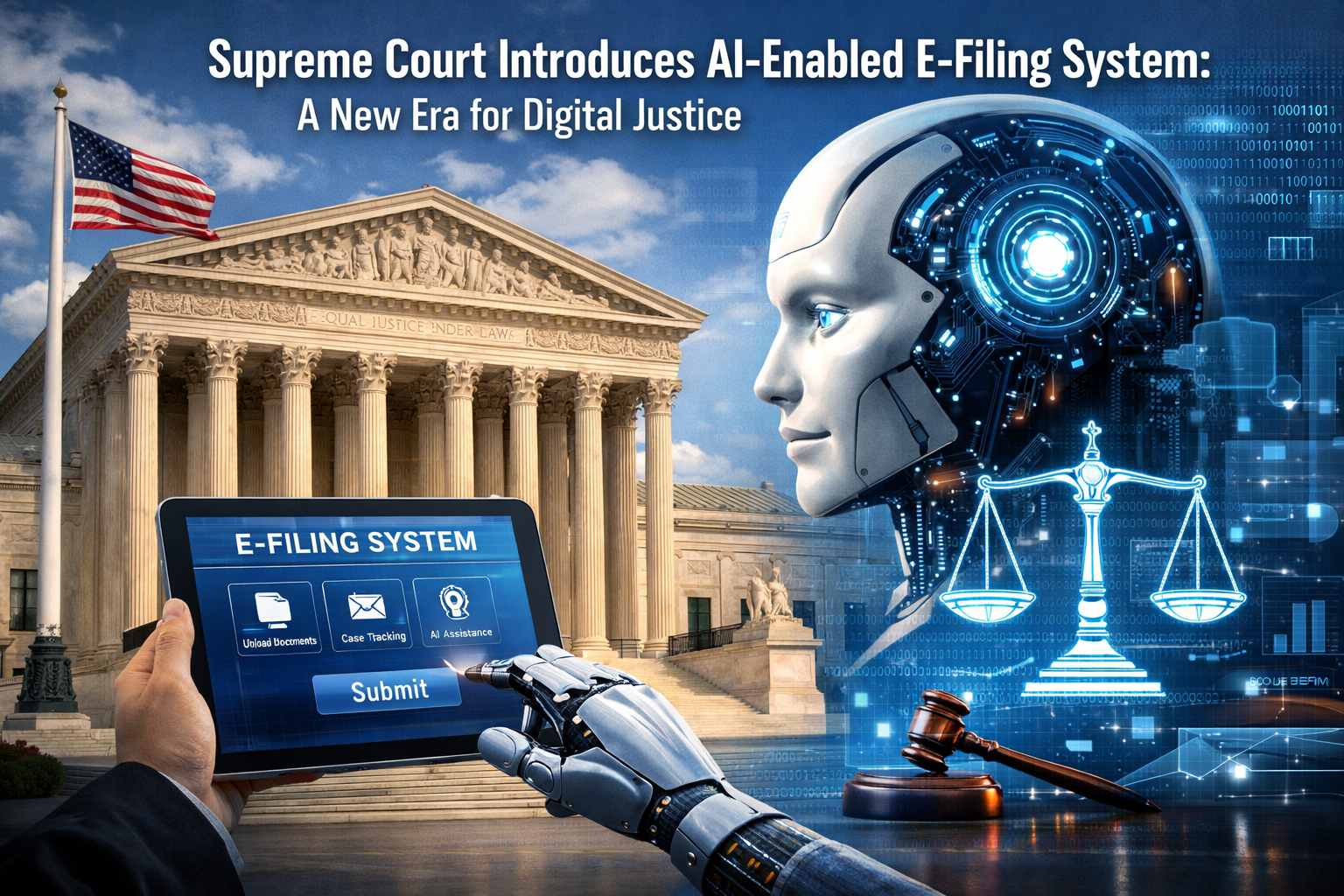
The use of artificial intelligence has rapidly grown over the past 5 years. It has significantly taken over the legal world in a malicious way; however, it has been transforming criminal law by enhancing efficiency and raising serious ethical and legal challenges. There have been times where legal practitioners have been solely dependent on AI to get summaries of case laws. Courts use AI-driven procedures to predict the likelihood of reoffending, influencing bail, sentencing, and parole decisions. These tools aim to reduce bias but often spark debate about fairness and transparency. According to Anatolii P. Getman1, he emphasizes various drawbacks of employing AI in legal decision-making. AI systems, by learning from historical data, may reproduce or intensify existing biases and discrimination, potentially compromising the fairness of outcomes. Numerous AI models function as “black boxes,” making their decision-making hard to grasp or contest, leading to significant transparency issues. Responsibility is another concern, as it is uncertain who ought to be accountable when an AI generates an unfair or mistaken decision. Excessive dependence on technology could diminish the importance of human judgment, empathy, and ethical reasoning within the justice system. Moreover, employing AI brings about risks to privacy and confidentiality as sensitive legal data might be revealed or exploited. Ethical issues occur when efficiency takes precedence over fairness, and unequal availability of sophisticated AI resources could deepen the divide between affluent and under resourced legal practitioners. In general, although AI provides efficiency, its drawbacks focus on fairness, accountability, privacy, and equity.
Artificial intelligence (AI) is progressively influencing criminal law, and equity offers an essential perspective for assessing its application. Researchers emphasize that although AI technologies like predictive policing and risk assessment algorithms offer efficiency, they often perpetuate systemic biases, affecting marginalized communities disproportionately and compromising fairness. Equity requires that defendants receive dignity and equality; however, “black box” algorithms undermine transparency and restrict the capacity to contest evidence, leading to significant due process issues. In State v. Loomis (2016)2, the Wisconsin Supreme Court allowed COMPAS risk scores but warned against excessive dependence, highlighting the necessity for fair protections. Likewise, the AI Act proposed by the European Union categorizes criminal justice AI as “high-risk,” incorporating mandates for human supervision and accountability to ensure fairness. In South Africa, the constitutional tenets of dignity, equality, and fair trial rights imply that the application of AI in criminal law requires examination to confirm it does not reinforce discrimination, with academics highlighting Section 9’s Equality Clause3as a foundational framework. Literature agrees that achieving equity in AI entails harmonizing efficiency with meaningful justice, safeguarding that technological advancements do not undermine basic rights. In the end, fairness demands that AI in criminal law must be clear, responsible, and unbiased, ensuring that justice is not compromised for efficiency or ease.
The application of artificial intelligence (AI) in criminal law provides notable advantages that are increasingly acknowledged in both academic writing and legal applications. A significant benefit is efficiency: AI systems can analyze enormous data sets at speeds unattainable for humans, allowing for faster investigations, optimized case management, and more uniform enforcement of sentencing standards. For instance, risk assessment algorithms can help judges figure out the probability of reoffending, thus easing more informed sentencing choices. From an equity standpoint, AI can diminish human subjectivity and implicit bias by standardizing decision making processes, potentially improving fairness when appropriately designed and overseen. When used judiciously, predictive policing tools can aid law enforcement in more efficiently distributing resources, concentrating on regions with increased crime likelihood and possibly averting crimes before they happen. Additionally, AI-powered legal research tools enable defense
lawyers and prosecutors to find pertinent precedents and case laws more effectively, enhancing advocacy quality and preventing justice from being hindered by procedural delays. An added advantage is found in transparency and accountability: when AI systems are created focusing on explainability, they can offer clear justifications for their results, which enhances defendants’ rights to dispute evidence and bolsters judicial oversight. Crucially, AI can improve access to justice by lowering expenses and making legal procedures more available to communities with limited resources. Nonetheless, these advantages depend on strong protections, such as human supervision, ethical development, and adherence to constitutional values of equality and dignity. Critical examination shows that although AI has the potential to enhance fairness and efficiency, its effectiveness relies on managing bias risks, providing transparency, and defining accountability. The incorporation of AI into criminal law offers a chance to modernize justice systems, if it is directed by principles of fairness, equity, and adherence to fundamental rights.
Artificial intelligence (AI) is progressively influencing legal systems worldwide, yet legal jurisdictions vary in their approach to balancing efficiency, ethics, and human oversight. In China, artificial intelligence is woven into judicial procedures, helping judges evaluate evidence, forecast case results, and even suggest penalties. This method is motivated by the necessity to minimize extensive case delays and improve efficiency, but it generates worries about transparency and the likelihood of state impact on judicial autonomy. Estonia has boldly initiated a trial of AI “robot judges” for small claims disputes, seeking to simplify minor cases and lower expenses. Though novel, this experiment has ignited discussions regarding the potential erosion of core justice principles when judicial power is assigned to machines. Conversely, the European Union has taken a measured and highly principled approach, emphasizing regulatory systems like the EU AI Act4. In this context, AI is mainly applied in legal research, document analysis, and predictive analytics, adhering to stringent standards for transparency, accountability, and human supervision. The United States has extensively adopted AI in legal practices, especially in e-discovery, contract evaluation, and risk assessment applications for bail and sentencing. These applications conserve time and lower expenses but have faced criticism for sustaining racial bias and depending on obscure algorithms. The United Kingdom also utilizes AI in legal practices and judicial systems, highlighting efficiency while fostering significant discussions regarding ethical protections and accountability. Collectively, these instances underscore an international conflict: certain regions emphasize efficiency and innovation, whereas others focus on ethics and accountability. For South Africa, exploring AI’s role in law reveals a clear comparative lesson adoption must be careful, emphasizing supportive roles such as research and case management, while safeguarding that judicial decisions stay human-led to uphold dignity, fairness, and trust in the justice system.
Artificial intelligence (AI) is changing the legal field in ways that showcase both its capabilities and its dangers. A significant discovery is that AI greatly enhances efficiency by automating tasks that are repetitive, including document review, e-discovery, and contract analysis. This enables legal practitioners to shift their attention to intricate reasoning and client representation, ultimately lowering expenses and accelerating procedures. An additional observation is the increasing application of AI in legal settings, specifically in regions such as China and Estonia, where algorithms aid judges or even settle minor claims conflicts. Although this innovation tackles backlogs and improves accessibility, it brings forth ethical dilemmas regarding transparency, accountability, and the diminishing of human oversight in judicial decisions. Conversely, areas like the European Union stress robust regulatory frameworks, such as the EU AI Act, which focuses on fairness, transparency, and human oversight. This emphasizes an international divide between regions that focus on efficiency and those that prioritize ethical protections. Another perspective is the potential bias and discrimination ingrained in AI systems, especially noticeable in the United States, where predictive policing and risk assessment tools face scrutiny for reinforcing racial and socio-economic disparities5. These instances highlight the risks of incorporating historical wrongs into algorithmic decision-making. Simultaneously, AI presents opportunities to enhance access to justice, as chatbots and automated legal assistance platforms provide cost-effective advice for those unable to afford conventional representation. Nevertheless, depending too much on these systems threatens to compromise the quality of guidance and the perception of equity, particularly in delicate situations concerning personality rights or emotional distress. Ultimately, the crucial point is that AI’s influence on the legal sector is twofold: it has the potential to improve efficiency and accessibility, but in the absence of robust ethical protections and human supervision, it threatens to undermine trust, fairness, and the integrity of justice itself .
The outcome of comparative studies indicates that AI could transform efficiency, accessibility, and precision in legal work. AI enables legal professionals to concentrate on intricate reasoning and advocacy by automating tasks like document review, e-discovery, and contract analysis. In places such as China and Estonia, AI has been incorporated into legal systems, showcasing its ability to alleviate backlogs and enhance case processing. Nonetheless, these advancements also underscore the dangers of excessive dependence on algorithms, especially issues related to transparency, accountability, and bias. The European Union’s careful strategy, represented by frameworks such as the AI Act, highlights the necessity of incorporating ethical protections and maintaining human supervision. In the same way, the United States and the United Kingdom demonstrate that although AI can improve efficiency, its unregulated application in predictive policing and sentencing poses a risk of reinforcing discrimination and eroding trust in the justice system.
From these insights, a number of actionable suggestions arise. AI should be utilized mainly as an assisting tool in legal research, case management, and administrative tasks, instead of supplanting human judgment in legal decision-making. Secondly, robust regulatory structures are crucial for guaranteeing transparency, equity, and accountability, with defined standards on explainability and human supervision. Third, investing in training legal professionals to comprehend and assess AI tools critically will aid in avoiding blind dependence and promote responsible usage. Fourth, protections need to be established to identify and reduce bias, guaranteeing that AI systems do not reproduce past disparities6. Ultimately, AI must be utilized to enhance access to justice, especially via cost-effective legal aid platforms, all while ensuring quality control to uphold dignity and fairness7. In conclusion, AI has the potential to improve the legal field if implemented carefully, ethically, and with a strong dedication to maintaining human supervision and public confidence.
REFERENCE(S):
- Getman, A. P., Yaroshenko, O. M., Dmytryk, O. O., Tykhonovych, O. Y., & Hryn, D. V. (2025). The role of artificial intelligence and algorithms in the working conditions formation. AI & Society, 40(5), 3909–3917.
- State v. Loomis, 881 N.W.2d 749 (Wis. 2016)
- Republic of South Africa. (1996). Constitution of the Republic of South Africa, 1996. Section 9. Pretoria: Government Printer.
- Quteishat, E. M. A., Qtaishat, A., & Quteishat, A. M. A. (2024). Exploring the role of AI in modern legal practice: Opportunities, challenges, and ethical implications. International Journal of Law, Policy and Social Review, 6(1), 119–123
- Beg, M. S. (2026). The role of artificial intelligence in legal decision-making. In Healthcare 5.0 (pp. 121–132). Springer Nature.
- Mahima. (2024). The growing influence of artificial intelligence on the legal profession: Opportunities, challenges, and implications. International Journal of Law, Policy and Social Review, 6(1), 119–123.
- Mavundlela v KZN MEC for Cooperative Governance (2025) and Northbound Processing v SA Diamond Regulator (2025)
![Salomon v Salomon & Co Ltd. [1897] AC 22 (HL)](https://recordoflaw.in/wp-content/uploads/2025/12/ChatGPT-Image-Dec-17-2025-08_24_07-PM.png)