Authored By: Amenen Emmanuel Nakadel
Egerton University
Introduction
Same sex relations have raised a lot of questions around the world and especially in Africa. The question as to whether to accept and treat those in LGBTQ+ equally as the rest as remain undecided in most parts of Africa whereby out of fifty four countries only twenty two have decriminalized same sex relations with country like South Africa being one of the first African country to do so .This however shows that Africa is at the interplay of decriminalizing same sex relations .Same sex relations has led to an intersection between the law and morality given that Africa as continent is fundamentally based on culture and religion. Historically same sex relations have been in existence in many African countries for instance in Kenya, communities like the Agikuyu, Nandi, and Keiyo practiced same sex marriage to be precise that of female-to-female marriage where a barren woman could marry another woman to sustain the family lineage. This shows that during the pre- colonial period same sex relations was being practiced at some extend in Kenya, however during the colonial era the British imposed the Indian Penal Code of 1830 which criminalized “Carnal knowledge against the order of nature”. Colonialism enforced the British Victorian standards of morality and Christianity which suppressed the indigenous views on sexuality. After the post- independence era Kenya still upholds the sections of the Penal code act cap 63 sections 162 and 165 which criminalizes same sex relations. This article outlines the contemporary legal framework on same sex relations, the contemporary issues around same sex relations and the comparative jurisprudence on same sex relations.
The Current Legal framework on same sex relations in Kenya
In Kenya there is conflicting rights where same sex relations is concerned. This is clearly shown by the following;
Penal Code (Cap 63, laws of Kenya), s 162
Criminalizes carnal knowledge against the order of nature with penalties ranging from 14 years to 21 years imprisonment depending on the circumstances such as consent and use of force.
Penal code (Cap 63 laws of Kenya), s165: Provides that any male person who commits an act of gross indecency with another male person, or procures another male person to commit an act is guilty of a felony and liable for imprisonment for five years.
On the hand the Constitution of Kenya,2010, art 27(3) guarantees equality and freedom from discrimination.
In the case of Erick Gitari v NGO Co-ordination Board and 3 others [2015] eKLR; The Supreme court of Kenya key holding was “it would be unconstitutional to limit the right to associate through denial of registration of an association, purely on the basis of sexual orientation of the applicants”
The Constitution of Kenya,2010, art 45(2) states that every adult has the right to marry a person of the opposite sex, based on the consent of the parties. This article bans the same sex marriage directly.
Children Act 2022 (Kenya), s21. “An intersex child shall have the right to be treated with dignity, and to be accorded with appropriate medical treatment, special care, education, training and consideration as a special need category in social protection services”
The current legal framework of Kenya shows that same sex relations is criminalized despite ‘small victories’ that have emerged whereby the constitution upholds the protection of rights of every individual regardless of their sexual orientation.
Contemporary Issues on same sex relations
Legislative Protections
There has been emergence of protection of same sex marriages for instance the Respect for Marriage Act guarantees federal recognition of same sex and interracial marriages. Such protection gives the members of LGBTQIA+ in countries where it is criminalized a glim of hope that one day same will catch up with them.
Stigma and Violence
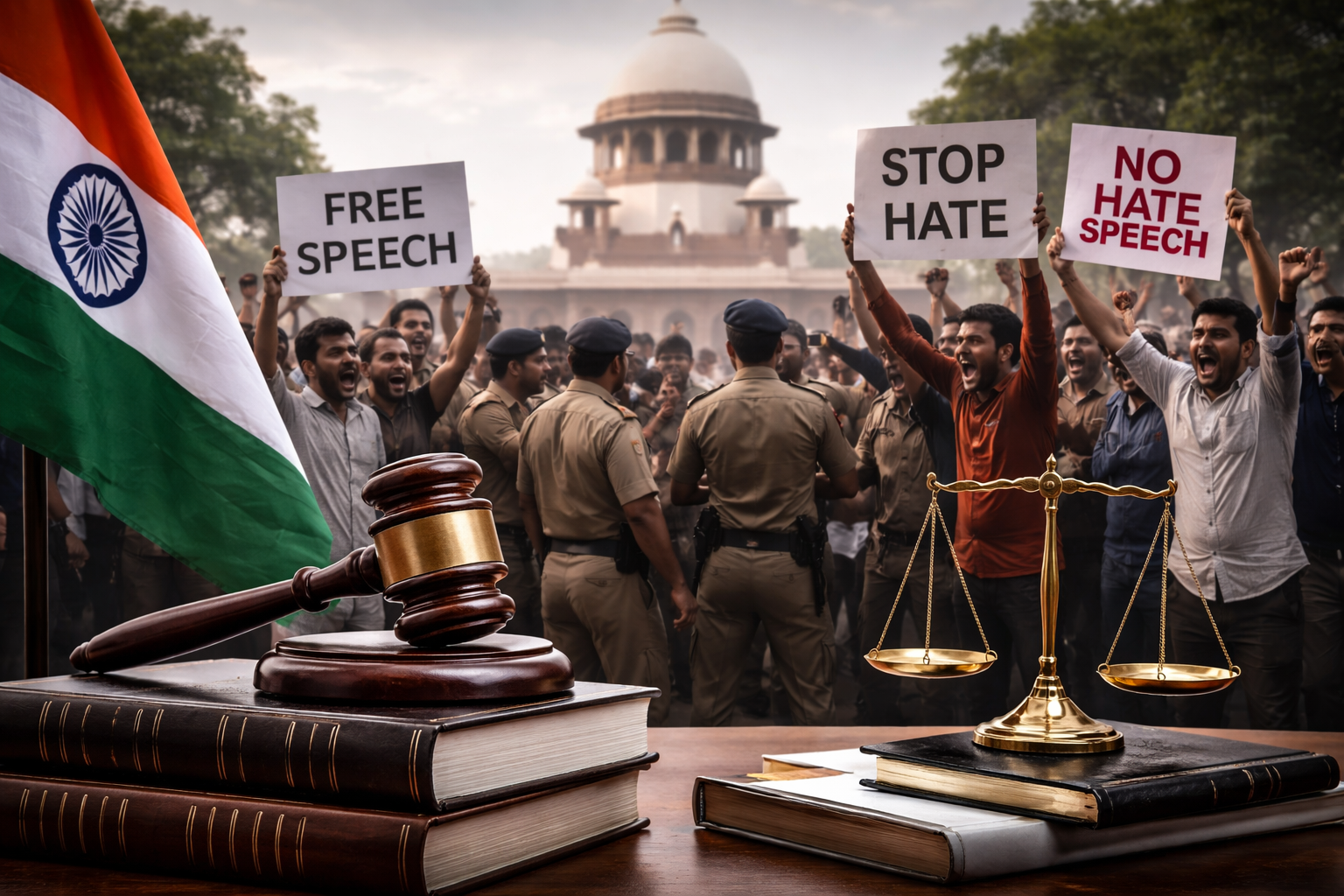
Even in countries with legal protection, such as South Africa the LGBTQ Community still faces a significant social stigma, discrimination and targeted violence including hate crimes. In 2021 south Africa experienced a wave of hate crimes against the members of the LGBTQ members where at least eight died, however the south African courts have tried suppressing the hate speech and such discrimination for example in the case of South African Human Rights Commission v Oscar Peter Bougardt (Equality court, Western Cape, Case No EC 02/2017) the court order prohibited Bougardt from making anti LGBTQ remarks
The Intersectionality matter
Issues of same sex relations often intersect with other social factors like religion and patriarchy. Many religious teachings still oppose the legalization of same-sex marriage. For instance, the Holy Bible, Leviticus 18:22 (NRSV): “You shall not lie with a male as with a woman; it is an abomination”
In the Holy Qur’an, Surah Ash-Shu’ara 26:165-166:“Why do you men lust after fellow men, leaving your pairs that the lord has created for you? In fact, you are transgressing people”
All the above seems to be condemning same sex relations on the basis that it does not support the continuation of species and that is against the morals or rather the natural values.
Education and Awareness
There is lack of awareness in public services, law enforcement and healthcare which often crates barriers to justice and safety among the members of the LGBTQ+.This is experienced mainly in third world countries and developing countries which makes conditions of living for these members hard and full of atrocities.
Economic Impact
Researchers at the World Bank Group have produced studies demonstrating the economic costs of discrimination against LGBTQ+ people in labor markets, highlighting that exclusionary laws and practices reduce productivity and GDP.
Research on same sex marriage has shown that it can create economic efficiencies, improve economic stability for couples, and produce a “marriage premium” for the gay and lesbian employees.
Health and Wellbeing
The LGBTQ+ individuals often experience hire rates of health challenges due to poor sexual education, social taboo, and lack of inclusive healthcare environments.
Mentally, the ongoing struggle for visibility and acceptance in most communities has contributed to psychological stress within the community.
Comparative Jurisprudence on Same-sex relations
South Africa legalized same sex relations through constitutional interpretation. The constitution of the Republic of South Africa,1996, s 9(3): expressly prohibits discrimination based on sexual orientation.
India decriminalized same sex relations through the dignity and privacy jurisprudence whereby in 2018 the Indian Supreme court struck down some parts of section 377 of the Indian penal code.
The United States decriminalized sodomy laws through the right to liberty. In Lawrence v Texas, 539 U.S. 558 (2003) The United States Supreme court struck down a Texas statute that criminalized private, consensual, same-sex sexual activity, effectively invalidating similar laws in other thirteen states at the time.
Kenya appears to be adopting a gradual approach recognizing basic rights but leaving the criminal law unchanged. This suggest that Kenya is at an intermediate stage in constitutional development.
Many other African states still criminalize same-sex relations, out of fifty four countries, thirty two countries have criminalized same-sex relations with only twenty two countries decriminalizing it.
Conclusion
Same-sex relations remain a matter of debate in most parts of the world with the first world countries embracing it while the third world countries in most of the times being against it. The reality is that the issue is there and should be dealt with accordingly. The differences that exist between the moral and law perspectives on same sex relations should be handled with a lot of care to ensure there is a way of balance which neither discriminate nor mistreat the members of the LGBTQ+ society. The laws should not intend to tamper with the private life of individuals as much as it promotes morality and decency in the society. The laws should respect the inherent dignity of rational beings, thus treat each and every individual equally regardless of their sexual orientation. The community also should accept the fact that the world is evolving, meaning what was moral yesterday or in the past may not be necessarily moral in the days to come .Matters of morality are dynamic and not static so everyone in the community should be ready to co-exist with the necessary changes that will take place in the future as in the case of same-sex relations. Last but not least, Humans as rational beings have the will to choose what they want and it will be of no essence to go against their will. We can co-exist with the members of the LGBTQ+ individuals, discrimination and hate will not help to change the fact that they are in that community.
Reference(S):
[1]Constitution of the Republic of South Africa,1996, s 9(3).
The Constitution of Kenya,2010, art 45(2).
The Constitution of Kenya,2010, art 27(3).
Children Act 2022 (Kenya), s 22.
Penal Code (cap63, laws of Kenya), s 162.
Penal Code (Cap 63, Laws of Kenya), s 165.
Erick Gitari v NGO Co-ordination Board and 3 others [2015] eKLR.
South African Human Rights Commission v Oscar Peter Bougardt (Equality court, Western Cape, Case No EC 02/2017) .
Lawrence v Texas, 539 U.S. 558 (2003).
Holy Qur’an, Surah Ash-Shu’ara 26:165-166.