Authored By: Ojanomare Aretha Toluwani
Lead City University
The Nigerian legal world is entering an era in which technology is more than a convenience tool but an important component of legal practice -from electronic filing and virtual court proceedings to artificial intelligence (AI), digital legal research, electronic contracts and automated document review.
Digitalisation presents opportunities for the Nigerian legal profession, particularly in improving efficiency, reducing administrative costs and expanding access to justice.
However, it also raises complex legal concerns relating to data protection, cybersecurity, confidentiality, professional ethics, technological competence and the regulation of AI-generated legal work.
Although Nigeria has established statute laws like the Data Protection Act 2023 the rapid increase in digital development continues to present new challenges.¹
Digitalisation is a global phenomenon which affects Nigeria legal practice and Nigeria must be prepared to explore the opportunities it brings and avoid the risks.
THE EVOLUTION OF DIGITALISATION IN NIGERIAN LEGAL PRACTICE.
Digitalisation in Nigeria has developed gradually from the use of basic electronic communication to the use of electronic filing, virtual hearings, online legal research, digital case management and increasingly sophisticated artificial intelligence tools.
A major acceleration occurred during the COVID-19 pandemic.
Although the COVID-19 measures were introduced in response to exceptional circumstances, they revealed that physical presence is not necessary in every aspect of judicial administration. This furthered the digital transformation of the Nigerian judiciary.
Digitalisation has also transformed legal research. Nigeria legal practice has traditionally relied on physical law reports, textbooks, libraries and manual research but now we have online databases and electronic law reports which enables practitioners and students to locate legislation and judicial authorities significantly faster than traditional physical research.
Digital communication has likewise made interaction between lawyers, clients, courts and other professionals faster and less dependent on geographical location.
“Technology has always evolved faster than the law. Artificial Intelligence has simply widened that gap”. AI systems can assist with legal research, document review, summarisation, drafting and information organisation.
LEGAL FRAMEWORK GOVERNING DIGITALISATION AND LEGAL PRACTICE IN NIGERIA
Nigeria’s legal framework governing digitalisation of legal practice is derived from a combination of constitutional provisions, evidentiary legislation, data-protection legislation, cybercrime legislation, judicial rules and professional obligations. This fragmented framework reflects the fact that digitalisation affects several areas of law simultaneously, including evidence, privacy, cybersecurity, legal ethics and the administration of justice.
- Electronic Evidence and Digital Documents
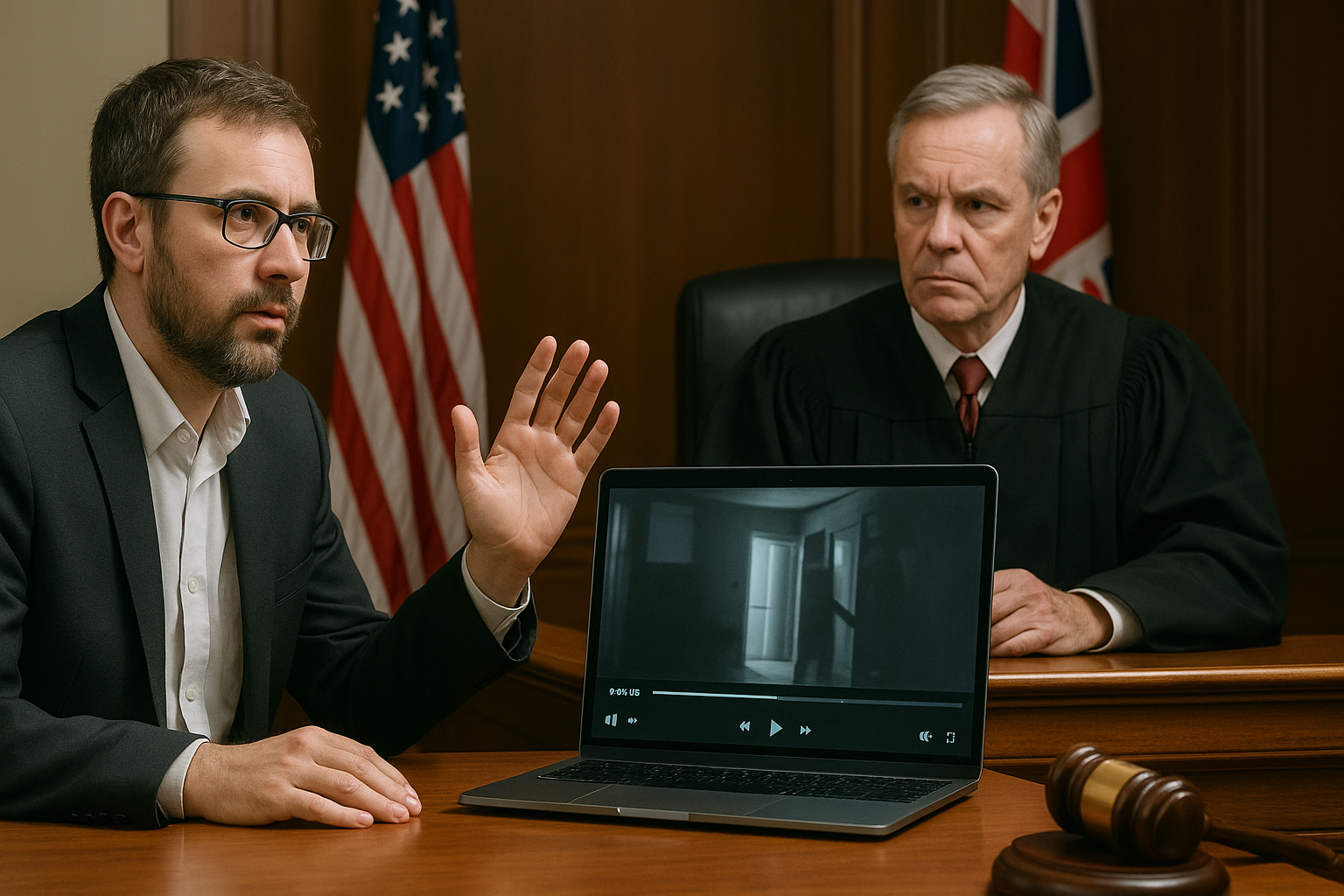
One of the most significant statutory developments has been the recognition of electronic evidence under the Evidence Act 2011. Section 84 establishes conditions for the admissibility of statements contained in documents produced by computers.²
Lawyers increasingly rely on emails, WhatsApp messages, electronic contracts, CCTV recordings, digital photographs, computer printouts and information obtained from websites.
Consequently, the ability to collect, authenticate and properly tender electronic evidence has become an essential aspect of contemporary advocacy.
Kubor v. Dickson (2013) 4 NWLR (Pt. 1345) 534 is a foundational authority that backs up the requirements of Section 84 of the Evidence Act.³
- Data Protection and Confidentiality
Clients personal and sensitive data (names, addresses, identification documents, financial information, medical records, correspondence and litigation documents) may now be stored electronically or transmitted through email, cloud services and messaging platforms.
The Nigeria Data Protection Act 2023 (NDPA) S.1 provides the principal statutory framework for the protection of personal data in Nigeria.⁴
Section 37 of the Constitution of the Federal Republic of Nigeria 1999 protects the privacy of citizens.⁵
- Cybersecurity and Digital Risks
The expansion of digital legal services also brings exposure to cyber threats like phishing, ransomware, unauthorised access, identity theft and data breaches that may compromise sensitive data and information.
The Cybercrimes (Prohibition, Prevention, etc) (Amendment) Act 2024 provides for the statutory response to cybercrime.⁶
Digitalisation creates a corresponding obligation to ensure that technological convenience does not undermine confidentiality, integrity and security.
Nigeria has begun to construct a legal environment capable of supporting digital practice. The more difficult question, however, is whether these laws and institutions have evolved sufficiently to address the realities of contemporary legal technology.
BENEFITS OF DIGITALISATION
Digitalisation has substantial benefits in the Nigerian legal practice which could improve both professional efficiency and access to justice.
- Technology can increase efficiency;
Electronic filing, digital document management and automated administrative processes can reduce the time spent on repetitive tasks.
- Digitalisation can improve access to justice;
Virtual proceedings may reduce the financial and geographical burden, particularly for parties and counsel located far from judicial centres.
- Digital tools can improve legal research and knowledge management;
Databases allow practitioners to identify relevant authorities more quickly and to organise large volumes of case materials. AI-assisted research may further enhance these capabilities, provided that lawyers independently verify the authorities and information generated.
CHALLENGES AND INADEQUACIES OF THE EXISTING FRAMEWORK DIGITALISATION IN NIGERIA
- Infrastructural inadequacies;
Virtual legal services depend upon reliable electricity, internet connectivity, appropriate devices and technological literacy. The (National Judicial Council) NJC’s own virtual-hearing guidelines recognised the necessity of reliable internet, hardware and electricity.⁷ However our lack of proper infrastructure has caused a disadvantage to those without access to technological tools.
- The issue of data security and client confidentiality;
The NDPA provides an important statutory foundation but compliance in legal practice requires more than the existence of legislation.
- Use of AI can lead to incorrect data;
An AI system may generate inaccurate information, misstate legal authorities or produce fabricated case citations. The ultimate responsibility for work submitted to a court cannot realistically be transferred to an algorithm. The lawyer remains professionally responsible for verifying the accuracy and reliability of material placed before the court.
REFORMS NECESSARY FOR THE FUTURE OF NIGERIAN LEGAL PRACTICE
Several reforms are necessary if Nigeria is to move to a sustainable digital legal system.
- The judiciary should develop a uniform national framework for electronic litigation, including electronic filing, service, virtual hearings, digital signatures, electronic records and remote access to court proceedings. This would reduce inconsistencies between different courts and jurisdictions.
- The Nigerian Bar Association, Council of Legal Education and relevant regulatory institutions should develop specific professional guidelines on the use of artificial intelligence (AI) by lawyers.
- Future lawyers should be trained not only in substantive law but also in electronic evidence, cybersecurity, data protection, AI-assisted research and digital legal practice.
- Investment should be made in judicial infrastructure; reliable electricity, broadband connectivity, secure court-management systems and properly trained technical personnel are prerequisites for meaningful digital justice.
CRITICAL EVALUATION: IS NIGERIA PREPARED FOR THE FUTURE?
Nigeria’s legal system is partially prepared for digitalisation, but it cannot yet be described as fully prepared. The existence of the Evidence Act, the NDPA, cybercrime legislation and other legislations demonstrates significant progress. However, this does not constitute a comprehensive framework for the future of technology-driven legal practice.
The greatest weakness is therefore not necessarily the complete absence of law, but the fragmentation between law, regulation, infrastructure and professional practice.
A lawyer may have a statutory right to rely on electronic evidence but that right becomes less meaningful where court infrastructure is inadequate.
Similarly, data-protection obligations become difficult to fulfil where firms lack the technical capacity to secure electronic client information.
Digital justice must supplement, rather than automatically replace, accessible physical mechanisms.
The legal profession cannot remain dependent upon entirely traditional methods when clients increasingly conduct their businesses digitally and disputes themselves increasingly involve digital transactions and electronic evidence.
Lawyers should not be replaced by technology; rather, lawyers should become technologically competent professionals capable of using digital tools while exercising independent legal judgment.
CONCLUSION.
Digitalisation has taken over most aspects of our lives from waking up, payment of items, entertainment, news to research. All these and more are now virtual.
Digitalisation is a rapid movement, it is an emerging reality that is reshaping how lawyers conduct research, manage information, present evidence, communicate with clients and participate in judicial proceedings
Nigeria’s legal system must catch up with digitalisation to avoid miscarriage of justice.
The analysis has demonstrated that Nigeria has made important progress through the recognition of electronic evidence under the Evidence Act 2011, the protection of personal data under the Nigeria Data Protection Act 2023, the regulation of cybercrime and the judiciary’s adoption of technology-assisted proceedings. The decisions in Kubor v Dickson and Mr Ajor John Ajifen v Sovereign Guards Limited further demonstrate the courts’ willingness to accommodate technological developments while maintaining fundamental requirements of authenticity and reliability.
Nevertheless, Nigeria’s preparedness remains incomplete. Inadequate technological infrastructure, cybersecurity risks, fragmented regulation and the absence of comprehensive professional rules governing emerging technologies such as artificial intelligence continue to limit the effectiveness of digitalisation.
Accordingly, the future of Nigerian legal practice should not be based on technology replacing professional judgment, but on technology being responsibly integrated into legal practice. The more realistic future is one in which technologically competent lawyers use digital tools responsibly within a legal framework designed to protect both innovation and the administration of justice.
Nigeria should therefore adopt a coordinated national framework for digital justice, strengthen judicial technological infrastructure, develop specific professional guidelines on the ethical use of AI, and incorporate digital competence, cybersecurity, data protection and electronic evidence into continuing legal education. If these reforms are pursued, digitalisation can become more than a tool for convenience: it can serve as a means of creating a more efficient, accessible, secure and responsive Nigerian legal system.
REFERENCE(S):
¹.Nigeria Data Protection Act 2023, Act No 42 of 2023.
²Evidence Act 2011, s 84(1)–(2).
³Kubor v Dickson (2013) 4 NWLR (Pt 1345) 534, 577–79.
⁴Nigeria Data Protection Act 2023, s 1.
⁵Constitution of the Federal Republic of Nigeria 1999 (as amended), s 37.
⁶Cybercrimes (Prohibition, Prevention, etc) (Amendment) Act 2024.
⁷National Judicial Council, ‘Guidelines for Court Sittings and Related Matters in the COVID-19 Period’ (7 May 2020), paras D.4–D.6 and E.1–E.13.
AGIDI & IYAYI: Admissibility of Computer-Generated Evidence and Secondary Evidence under the Nigerian Evidence Act:
The Crossroad and the Way Forward
SSRN E library
Research gates