Authored By: Huma Sheheryar
International Islamic University Islamabad
I. Introduction
On 23 January 2025, Pakistan’s National Assembly passed the Prevention of Electronic Crimes (Amendment) Act, creating a new Social Media Protection and Regulatory Authority with the power to order platforms to take down content, to license and “enlist” every social media platform operating in the country, and to route appeals against its own tribunal’s rulings straight to the Supreme Court, bypassing the provincial high courts entirely.[1] Journalists’ bodies, digital rights groups, and opposition parties objected almost immediately, and not without reason: a citizen with a modest income cannot easily hire a Supreme Court advocate to contest a takedown order, which is precisely the point critics made when the bill was still moving through committee.
This was not Pakistan’s first run at this. Three years earlier, in February 2022, the outgoing PTI government had promulgated a presidential ordinance rewriting section 20 of the original 2016 cybercrime law so that criticism of “institutions” could be prosecuted as criminal defamation, punishable by up to five years in prison and made, for the first time, a non-bailable offence. The Islamabad High Court’s (IHC) order, which put a stop to the entire matter within weeks, is one of the few instances in South Asian jurisprudence where a court challenged a digital-speech statute head-on rather than deferring to executive judgment about what the internet requires.
The pattern is not unique to Pakistan: a constitution that protects expression in fairly conventional terms, a statutory apparatus the government keeps expanding, and a judiciary that keeps an occasional and inconsistent eye on protecting those who express their ideas. Meanwhile the platforms themselves — Facebook, X, TikTok, YouTube — sit almost entirely outside this domestic legal conversation, complying with blocking directions when it is commercially convenient to do so and largely ignoring the underlying due process question.
That gap is examined in what follows. It begins with the older, predominantly Western theoretical case for free expression, proceeds through the international human rights framework that Pakistan has formally accepted but only partially internalised, examines Pakistan’s constitutional and statutory framework in some detail, goes over the major court rulings, and then poses the question of what a more cohesive legal response might actually look like — one that is tailored to Pakistan’s institutions rather than being copied verbatim from Washington or Brussels.
II. Why the Old Theories Still Matter, and Where They Fall Short
Mill’s argument for tolerating even wrong opinions rests on a fairly simple wager: since no one is infallible, silencing a view risks silencing a truth, and even a false view, contested openly, sharpens everyone’s grip on what is true.[2] It is a persuasive argument that is still used in Pakistani newsrooms and courts, usually without mentioning Mill by name. However, it assumes an actual rivalry of ideas — an assumption a trending hashtag or a WhatsApp forward doesn’t obviously satisfy, where the fastest, angriest, or most shareable claim tends to win by default.
Meiklejohn’s answer to “why protect speech” was more pointed: government requires an informed electorate, and the state has no business deciding in advance which arguments the electorate is allowed to hear before voting.
That logic travels reasonably well into a Pakistani setting where election-season content has repeatedly been the subject of blocking orders, but it was built to restrain government censorship of the press, not to answer what happens when a private platform’s ranking system, rather than any state actor, decides which candidate’s message reaches which voter’s feed.[3] Section 37 of PECA gives Pakistan’s regulators exactly that kind of formal authority, so in one sense Pakistan’s problem is the classical one these theorists addressed. What none of them anticipated is a regulator so vaguely empowered, and content categories so loosely defined, that the formal authority ends up functioning almost as unpredictably as private platform discretion does elsewhere.[4]
III. The International Baseline Pakistan Signed Up To
Pakistan ratified the International Covenant on Civil and Political Rights in 2010, which means Article 19 — the right to hold opinions and to seek, receive, and impart information, subject only to restrictions that are provided by law, necessary, and proportionate to a legitimate aim — is not merely aspirational language for Pakistan but a binding treaty obligation, at least in principle.[5] The Human Rights Committee’s General Comment 34 spells out what “provided by law” actually requires: a rule precise enough that an ordinary citizen can predict what will get them in trouble.
IV. Pakistan’s Constitutional and Statutory Framework
Article 19 of the 1973 Constitution guarantees freedom of speech and expression, subject to reasonable restrictions imposed by law in the interest of the glory of Islam, the security or defence of Pakistan, friendly relations with foreign states, public order, decency, morality, contempt of court, or incitement to an offence; Article 19-A, added by the Eighteenth Amendment in 2010, separately guarantees the right to access information in matters of public importance.[6] Read together, these two provisions gave the Islamabad High Court its strongest textual hook in the 2022 case discussed below: the Court could point not just to expression as an individual liberty but to the public’s own interest in receiving information, which is a slightly different and, on the facts of that case, more useful argument.
A. From PECA 2016 to the 2022 Ordinance
The Prevention of Electronic Crimes Act 2016 was, at the time, sold as Pakistan’s answer to a genuine gap — there was no coherent statute addressing hacking, online fraud, or harassment. Section 37 of the Act, however, gave the (then) Pakistan Telecommunication Authority sweeping power to block online content it considered to fall within a long and loosely worded list of categories, including anything against “the glory of Islam” or “the integrity, security or defence of Pakistan,” with no requirement to give the affected party advance notice or a hearing before the block took effect.
Section 20 of the original Act criminalised the transmission of information a person knew to be false where it intimidated or harmed the reputation of a natural person. In February 2022, President Arif Alvi promulgated an ordinance amending section 20 to widen “natural person” to cover companies, associations, and government institutions, to make the offence non-bailable, and to raise the maximum sentence from three to five years.[7] Journalists’ unions read this correctly as an attempt to let state institutions sue their critics for “defaming” the institution itself, something the original defamation concept was never meant to cover. Media bodies including the Pakistan Federal Union of Journalists, the Pakistan Broadcasters Association, the Council of Pakistan Newspaper Editors, and several individual journalists challenged the ordinance in the Islamabad High Court within days.
B. The Islamabad High Court’s 2022 Order
Chief Justice Athar Minallah’s order came on 8 April 2022, and it did not mince words: the ordinance and its promulgation were declared “unconstitutional, invalid beyond reasonable doubt” and struck down in their entirety, along with the phrase “or harms the reputation” in the underlying section 20 itself.[8] Articles 9, 14, 19, and 19-A together — dignity, liberty, and the guarantee of expression — were where the Court’s reasoning leaned most heavily. Criminalising defamation through arrest and imprisonment, the Court held, produced a chilling effect fundamentally at odds with a democratic constitution. It also directed the Interior Ministry to investigate how the FIA’s Cyber Crime Wing had been using the law against working journalists in the intervening weeks, and it publicly reprimanded the Wing’s director general during the hearing.
Two developments complicate how much protection that order actually delivered. First, a Lahore High Court bench had reached the opposite conclusion about section 20 a month earlier, finding the provision could survive scrutiny as a proportionate protection of personal dignity, which left the law in a genuinely unsettled state pending any Supreme Court resolution that never quite arrived. Second, and more embarrassingly for the system as a whole, Justice Minallah moved to the Supreme Court before writing detailed reasons for his own order, so more than three years later the case sits, as one Pakistani newspaper put it, in “legal limbo” — a short order everyone cites, with no full judgment anyone can actually rely on for its reasoning.
C. The 2025 Amendment and the Social Media Protection and Regulatory Authority
Whatever ground journalists gained in 2022 was substantially overtaken by the 2025 amendment, passed through both houses of Parliament in a matter of weeks despite objections from press bodies and Amnesty International, and signed into law on 29 January 2025.[9] The Act creates the Social Media Protection and Regulatory Authority, effectively replacing the PTA’s role in this space, and gives it power to require every social media platform operating in Pakistan to register, to block content it deems “unlawful” — a category that folds in disinformation, hate speech, and content that runs “against the ideology of Pakistan” or amounts to an “aspersion” against the judiciary, the armed forces, or Parliament — and to refer disputed cases to a newly created Social Media Protection Tribunal whose decisions may be appealed only to the Supreme Court.[10]
Spreading “false” or “fake” information that could cause fear, panic, or unrest is now punishable by up to three years’ imprisonment and a fine of roughly two million rupees. A separate investigating body, the National Cyber Crime Investigation Agency, replaces the FIA’s cyber wing for these offences. A working journalist in Karachi or Peshawar faces a genuinely harder road to challenge a takedown than a journalist did under the very law the 2022 case was fought over.
V. Comparative Perspective to Other Jurisdictions
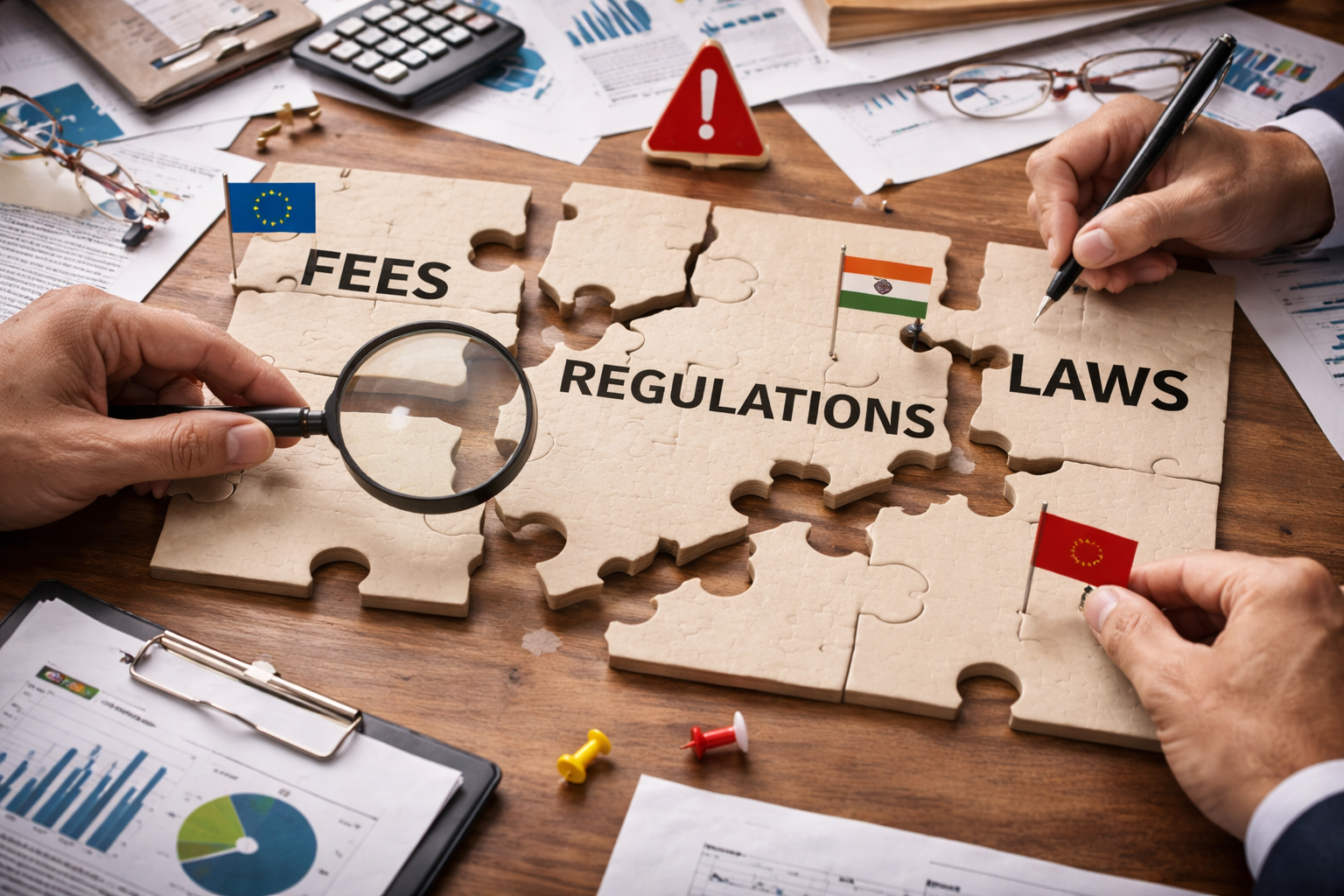
It’s only fair to give the comparative context its due here, rather than treat Pakistan as an outlier in every respect. The United States leaves platform moderation almost entirely to the platforms themselves, courtesy of section 230 immunity and a First Amendment that binds only the state; India’s Supreme Court struck down its own vague cyber-offence provision, section 66A of the Information Technology Act, in Shreya Singhal v Union of India, on essentially the same overbreadth logic the Islamabad High Court used against section 20 three years before Pakistan’s own PECA case.
The Indian judgment is instructive precisely because Pakistan’s courts have not yet done what India’s did there: hold not just one government’s amendment unconstitutional, but the underlying vague category of offence itself, so that no future government can simply reintroduce the same problem under a different ordinance.[11]
The European Union’s Digital Services Act takes a third approach again, regulating platform risk-assessment processes rather than defining prohibited speech categories at all — a structural intervention that sidesteps the vagueness problem by not trying to define “unlawful content” through Parliament in the first place, but through platform-specific risk audits instead.
| Jurisdiction | Who defines restricted speech | Route of appeal | Core weakness |
|---|---|---|---|
| Pakistan | SMPRA / Social Media Tribunal, broad undefined categories | Supreme Court only | Vagueness; single-tier appeal; regulator not judicially independent |
| India | Statute + IT Rules, subject to Supreme Court overbreadth review | High Courts, then Supreme Court | Executive blocking under s69A still opaque |
| European Union | Platform risk assessments audited under DSA | National courts + EU-level oversight | Compliance-driven over-removal risk |
| United States | Platforms’ own terms of service, almost unreviewable | Ordinary courts, but s230 bars most claims | Near-total absence of public accountability |
No system in this comparison gets it entirely right, but Pakistan currently combines the worst available features of each: content categories as vague as anything in Indian or American practice, an appeals structure narrower than any of them, and a regulator that reports to the executive rather than sitting at arm’s length from it.
VI. What Needs to Change
Three reforms would do more work than any amount of additional legislation aimed at new categories of “harmful” content.
First, restore a genuine appellate tier below the Supreme Court. Provincial high courts already have the constitutional writ jurisdiction to hear takedown disputes when the underlying speech occurred in Lahore, Quetta, or Gilgit. Routing everything to a single tribunal followed by the apex court is a design decision rather than a legal requirement, and it actually acts as a barrier to access rather than a guarantee of thoughtful review. There is no principled reason why a takedown dispute should require the resources needed to litigate in Islamabad.
Secondly, the undefined categories in both section 37 of the original PECA and the 2025 amendment — “aspersion,” content against the “ideology of Pakistan,” material that is merely “offensive” — need the kind of precision the Human Rights Committee has asked for. A citizen should be able to read a clause and understand, in general, what will and won’t result in their account being blocked. That is already implied in Article 19’s own “reasonable restriction” language when correctly interpreted; it is not a foreign standard being imported into Pakistani law.
Thirdly, orders under section 37 should require, at minimum, contemporaneous written reasons and a right to be heard before a block takes effect, except in the narrow category of genuinely imminent harm. The Anuradha Bhasin decision from India’s Supreme Court, though it concerned a full internet shutdown rather than individual content blocking, is useful here for the general principle it establishes: restrictions on internet access are restrictions on expression, and they must be proportionate, published, and periodically reviewed rather than open-ended.[12]
None of this requires dismantling the Social Media Protection and Regulatory Authority or accepting the alternative extreme of unregulated platform discretion along American lines, which carries its own, different accountability problems. It requires building the Authority the way the 2022 Islamabad High Court order implicitly demanded — bound by precise categories, subject to real judicial oversight at more than one level, and required to publish its reasoning rather than issue directions that vanish into an administrative file.
VII. Conclusion
Pakistan’s experience over the past few years is a useful case study precisely because it compresses, into a short and well-documented period, most of the tensions this kind of regulation runs into everywhere: the honest need to address real harms like harassment and disinformation, the temptation to use that need as cover for controlling criticism of the state, and a judiciary that has shown, at least once, that it is capable of drawing a firm line even if it has not yet finished explaining, in writing, exactly where that line sits.
The 2025 amendment suggests the lesson from 2022 was only partly learned. A regulator with clearer boundaries and a genuine multi-tier right of appeal would not solve every problem raised in this article, and it would not, on its own, resolve the deeper question of how a state should govern speech that increasingly happens on infrastructure it does not own. But it would put Pakistan closer to the standard its own courts have already articulated, once, in April 2022 — and closer to the treaty obligations it accepted in 2010 and has not yet fully built its domestic law around.
Sources
[1] Prevention of Electronic Crimes (Amendment) Act 2025 (Pakistan); Zeba Bokhari (Minister for Information) quoted in Aamir Latif, ‘Pakistani Journalists Fear Amended Cybercrime Law Will Further Curb Freedoms’ VOA News (30 January 2025).
[2] John Stuart Mill, On Liberty (John W Parker and Son 1859) ch II.
[3] Alexander Meiklejohn, Free Speech and Its Relation to Self-Government (Harper 1948).
[4] Thomas I Emerson, ‘Toward a General Theory of the First Amendment’ (1963) 72 Yale Law Journal 877; Ronald Dworkin, ‘Foreword’ in Ivan Hare and James Weinstein (eds), Extreme Speech and Democracy (Oxford University Press 2009).
[5] International Covenant on Civil and Political Rights (1966) 999 UNTS 171, art 19; UN Human Rights Committee, General Comment No 34 (12 September 2011) UN Doc CCPR/C/GC/34.
[6] Constitution of the Islamic Republic of Pakistan 1973, arts 19, 19-A.
[7] Prevention of Electronic Crimes (Amendment) Ordinance 2022 (Pakistan); see Rana Muhammad Arshad v Federation of Pakistan (Islamabad High Court) on FIA conduct toward journalists under the amended s 20.
[8] Pakistan Federal Union of Journalists v Federation of Pakistan, WP No 666 of 2022 (Islamabad High Court, 8 April 2022).
[9] Prevention of Electronic Crimes (Amendment) Act 2025 (Pakistan); Amnesty International, ‘Pakistan: Authorities Pass Bill with Sweeping Controls on Social Media’ (24 January 2025).
[10] Digital Rights Foundation, ‘The Prevention of Electronic Crimes (Amendment) Act 2025: Analysis and Recommendations’ (2025).
[11] Shreya Singhal v Union of India (2015) 5 SCC 1.
[12] Anuradha Bhasin v Union of India (2020) 3 SCC 637.
Bibliography
Primary Sources
Constitution of the Islamic Republic of Pakistan 1973
International Covenant on Civil and Political Rights (1966) 999 UNTS 171
UN Human Rights Committee, General Comment No 34 (2011) UN Doc CCPR/C/GC/34
Prevention of Electronic Crimes Act 2016 (Pakistan)
Prevention of Electronic Crimes (Amendment) Ordinance 2022 (Pakistan)
Prevention of Electronic Crimes (Amendment) Act 2025 (Pakistan)
Information Technology Act 2000 (India)
Regulation (EU) 2022/2065 (Digital Services Act) [2022] OJ L277/1
Pakistan Federal Union of Journalists v Federation of Pakistan, WP No 666 of 2022 (Islamabad High Court, 8 April 2022)
Rana Muhammad Arshad v Federation of Pakistan (Islamabad High Court)
Shreya Singhal v Union of India (2015) 5 SCC 1
Anuradha Bhasin v Union of India (2020) 3 SCC 637
Secondary Sources
John Stuart Mill, On Liberty (John W Parker and Son 1859)
Alexander Meiklejohn, Free Speech and Its Relation to Self-Government (Harper 1948)
Ivan Hare and James Weinstein (eds), Extreme Speech and Democracy (Oxford University Press 2009)
Thomas I Emerson, ‘Toward a General Theory of the First Amendment’ (1963) 72 Yale Law Journal 877
Digital Rights Foundation, ‘The Prevention of Electronic Crimes (Amendment) Act 2025: Analysis and Recommendations’ (2025)
Online and Institutional Sources
Islamabad High Court: https://islamabadhighcourt.gov.pk/
Supreme Court of Pakistan: https://www.supremecourt.gov.pk/
Pakistan Code (statute repository): https://pakistancode.gov.pk/
National Assembly of Pakistan: https://na.gov.pk/
OHCHR: https://www.ohchr.org/
Digital Rights Foundation (Pakistan): https://digitalrightsfoundation.pk/
Digital Rights Monitor (Pakistan): https://digitalrightsmonitor.pk/
Amnesty International: https://www.amnesty.org/
Supreme Court of India: https://main.sci.gov.in/
EUR-Lex: https://eur-lex.europa.eu/
![Salomon v Salomon & Co Ltd. [1897] AC 22 (HL)](https://recordoflaw.in/wp-content/uploads/2025/12/ChatGPT-Image-Dec-17-2025-08_24_07-PM.png)