Authored By: Nompilo Ngcobo
INTRODUCTION: AI arrives in the Legal Arena
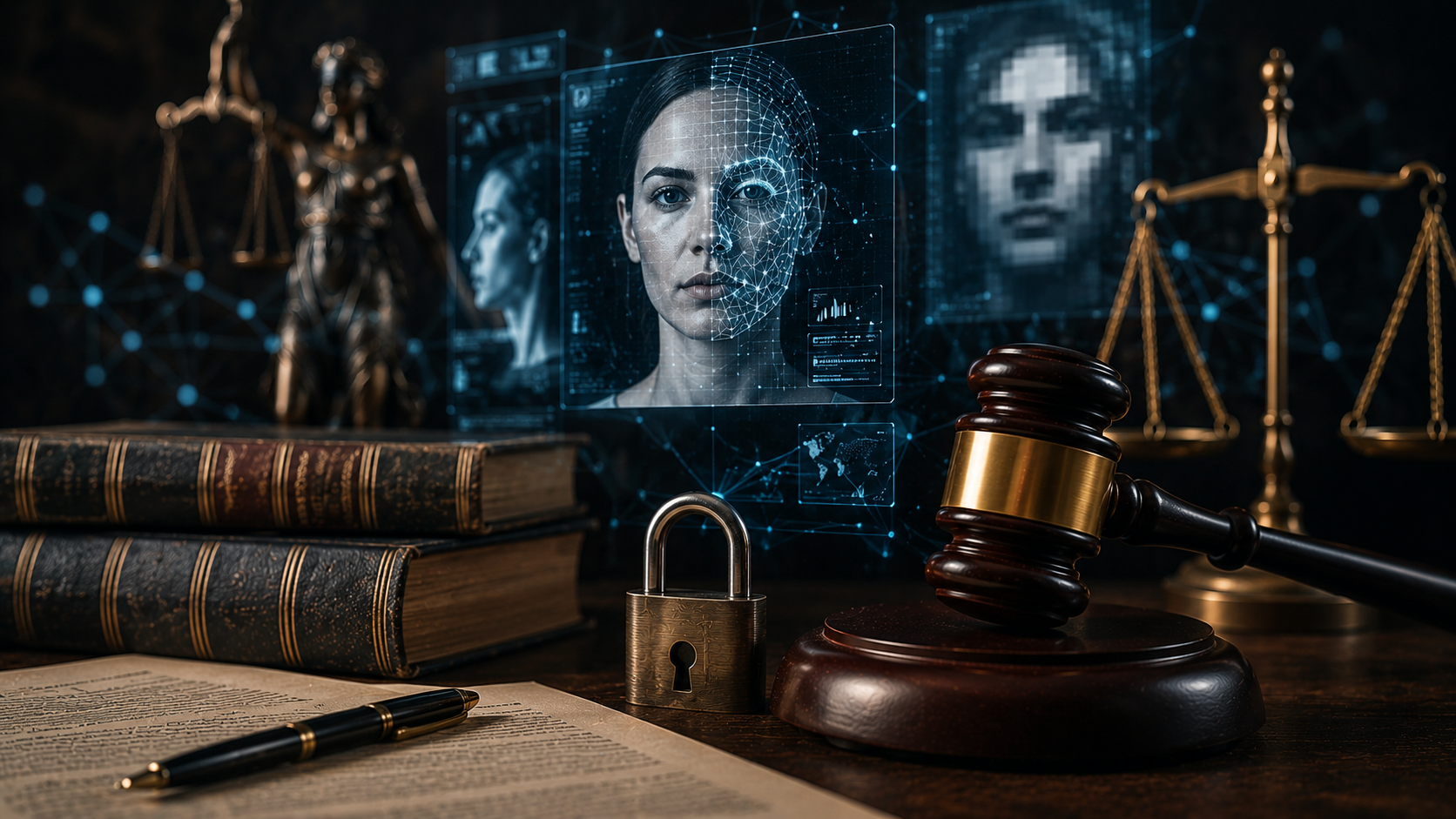
Artificial Intelligence is no longer a futuristic concept confined to science fiction. From the classrooms of Cape Town to the courtrooms of Johannesburg and KwaZulu-Natal, AI applications such as ChatGPT, Claude, DeepSeek, and Gemini have become embedded in our professional and social lives. Yet, South African Law- a system built on precedent, human judgment, and constitutional rights- is only slowly coming to terms with the implications of this technological shift. No comprehensive AI legislation exists in South Africa currently, but courts and regulators are rapidly establishing boundaries for how these tools may operate. This raises an important question of law: Can South African law, built on precedent and human judgment, effectively regulate a technology that evolves faster than legislation can keep pace? By examining recent judicial decisions on AI-generated legal submissions, the performance of AI models in legal research and the constitutional and privacy implications of AI-adjacent technologies in law enforcement, this article argues that, while AI’s legal position remains indirect, the existing framework is sufficient, provided human accountability remains non-negotiable.
THE DUAL NATURE OF AI IN SOUTH AFRICAN LEGAL PRACTICE
The capacity of artificial intelligence to engage meaningfully in South African legal principles has assumed particular significance in light of recent judicial decisions that highlight both its utility and its risks. In Makunga v Barlequins Beleggings [1], the Western Cape High Court acknowledged the potential value of AI tools when a self-represented litigant presented submissions generated by AI, and the court commended its quality. [2] Conversely, in Parker v Forsyth [3], the Johannesburg Regional Court issued a sharp warning against the dangers of AI-generated misinformation, reprimanding legal representatives for submitting fabricated case law that had been produced by AI models. These judgments not only reflect AI’s growing presence in legal practice but also invite a broader scrutiny of whether AI systems can meaningfully interpret and apply South African law. These cases illustrate how unreliable AI can be: at times it performs exceptionally well; at others, it can severely undermine the credibility of legal work. The onus rests on legal professionals to further educate themselves about AI models and how to properly use them in legal research.
AI TOOLS AND THEIR PERFORMANCE IN LEGAL RESEARCH
Findings reveal that while AI models may generally identify and apply South African legal principles correctly, their performance varies significantly. The study by Bhambhoria et al [4] provides a comprehensive evaluation, which tests multiple AI models on their ability to correctly answer legal questions and apply legal principles. The study found that AI models omitted key elements and provided generic reasoning. My own research produced similar results. Claude performed the strongest of the lot, demonstrating well-structured legal reasoning and correct engagement with the South African statutory provisions. ChatGPT followed closely but was hampered by hallucinated case law. Citations were mostly flawed and did not accurately reflect case dates. Deepseek seemed to closely resemble Claude’s strong legal reasoning but it occasionally misapplied South African principles. Gemini was the weakest as it provided incompetent legal analyses and limited case law.
It is important to note that relying on AI to conduct legal research carries significant risk. Overdependence can lead to severe consequences. When considering AI and access to legal information, one must also consider section 32 of the Constitution which guarantees the right to access to information[5], alongside the Promotion of Access to Information Act of 2002 (PAIA). These frameworks shape how information, including AI-generated content, may be accessed and used without infringing constitutional rights.
LIMITATIONS TO AI MODELS
A key limitation across all AI models tested was the unreliable retrieval of information as well as the misapplication of case law, including frequent misinterpretations and fabricated references. Additionally, the models failed to correctly apply statutory legislation where applicable unless explicitly prompted. These shortcomings risk undervaluing the potential of AI as a supplementary tool. Legal research must reflect accuracy, especially in academia where statutory interpretation and constitutional analysis demand precision. Professional human oversight remains essential in ensuring doctrinal accuracy and case law reliability. [6]
BEYOND THE COURTROOM: AI, Privacy and the KZN Transport Campaign
The use of AI and digital tools in law enforcement raises separate but related legal questions. The Department of Transport is currently running an operation in KwaZulu-Natal called “Nenzani La Ezweni”, a law enforcement and road safety campaign primarily focusing on illegal driving and unsafe vehicles in the freight and transport sector. After conducting numerous vehicle legal checks on public roads, thousands of motorists were arrested for offences such as drunk driving, fake permits and unsafe vehicles. Legal experts have raised concerns about the KZN Department of Transport’s practice of ‘naming and shaming’ suspects on social media. The core issue is that this action likely violates constitutional privacy rights and the provisions of the Protection of Personal Information Act (POPIA). A fundamental principle in South African law is that a person is innocent until proven guilty in a court of law, and so by posting images and videos of individuals who have been arrested but not yet convicted, the Department is essentially acting as the judge, damaging reputations before any finding of guilt. Under POPIA, processing of personal information, such as posting videos of arrested individuals, must meet at least one of the several lawful grounds. The Department would likely rely on:
- Legitimate interest: The Department would have to show, on a balance of probabilities, that its interest in publicising arrests outweighs individuals’ substantial right to privacy.
- Public Interest: The Information Regulator has stated that to process information in breach of POPIA for public interest, interest must “outweigh to a substantial degree, any interference with the privacy of an individual.” [7]
Exemptions exist under POPIA but are unlikely to justify the Department’s actions without formal approval. Section 37 allows the Information Regulator to grant an exemption where there is a clear benefit to someone that outweighs the individuals privacy. The Road Traffic Infringement Agency (RTIA) has previously been granted such an exemption, allowing it to process personal information without complying with objection or deletion requests when combating crime. However, this exemption does not automatically apply to the KZN Department. Unless the Department has applied for and received its own specific exemption from the Information Regulator, it must comply with all conditions of POPIA.
In summary, while the KZN Department of Transport may believe its actions are justified in the name of public safety, the practice of publicly posting videos and images of arrested individuals is on legally shaky ground. Without a specific exemption, the Department is likely violating both the constitutional rights to privacy and the provisions of POPIA. These limitations are not confined to the courtroom. When AI-adjacent technologies are deployed in law enforcement, similar risks emerge particularly in privacy and constitutional rights.
CONCLUSION: A Reckoning Underway
As South Africa awaits a comprehensive AI legislation, the existing legal architecture comprising of the Constitution, POPIA, PAIA, and judicial precedents, provides a sufficient foundation regulating AI’s intersection with the law. As reflected, AI tools such as ChatGPT, Claude and DeepSeek offer undeniable utility in legal research, yet their unreliability poses a significant risk to the integrity of legal practice in South Africa. Ultimately, the promise of AI in law does not lie in its capacity to replace human judgment, but in its potential to augment it, provided that its deployment is governed by accountability, transparency and unwavering commitment to constitutional principles.
Beyond the courtroom the operation of AI intersects with broader legal protections, particularly in privacy and data processing. The “Nenzani La Ezweni” campaign shows that the misuse of technology, whether AI-driven or otherwise, can violate constitutional rights and statutory provisions under POPIA. The contrasting judicial responses in Makunga and Parker serve as a cautionary tale: AI can assist but cannot be trusted to stand alone. The reckoning has begun, and how South Africa responds will shape the future of its legal system for generations to come.
BIBLIOGRAPHY
Legislation
Chapter 32 of the Constitution of South Africa, 1996
Section 39 of the Protection of Personal Information Act 4 of 2013
Protection of Personal Information Act 4 of 2013
Promotion of Access to Information Act 2 of 2000
Cases
Makunga v Barlequins Beleggings (Pty) Ltd t/a Indigo Spur [2023] ZAWCHC 322 (1 December 2023)
Parker v Forsyth NNO and Others (1585/20) [2023] ZAGPED 1 (29 June 2023)
Secondary Sources
Bhambhoria, R., Dahan, S., Li, J., and Zhu, X. (2024). Evaluating AI for law: Bridging the gap with open-source solutions, accessed 29 March 2026 http://www.researchgate.net
South African Law Library, accessed 30 March 2026 http://www.lawlibrary.org.za
The Information Regulator, accessed 30 March 2026, http://www.polity.org.za
[1] Makunga v Barlequins Beleggings (Western Cape High Court, unreported), cited in Legal Practice Council, Guidance Note on the Use of Artificial Intelligence by Legal Practitioners (2025), para 16
[2] Makunga v Barlequins Beleggings (Western Cape High Court, unreported), cited in Legal Practice Council, Guidance Note on the Use of Artificial Intelligence by Legal Practitioners (2025), para 17
[3] Parker v Forsyth NNO and Others (1585/20) [2023] ZAGPED 1 (29 June 2023), para 17
[4] https://www.arXiv.org/abs, Bhambhoria et al 2024 Evaluating AI for law: Bridging the gap with open-source solutions, accessed 26 March 2026
[5] Section 32(1) of the Constitution of South Africa
[6] https://www.perjournal.co.za “Can AI think like a lawyer?” Evaluating Generative AI in South Africa, Donrich Theldar, University of KwaZulu-Natal, accessed 26 March 2026
[7] https://www.polity.org.za/article/information-regulator-grants-its-first-exemptions-under-popia 2023 OCTOBER 5, accessed 30 March 2026