Authored By: Asokere Deborah
Lagos state University- graduate
Abstract
The rapid advancement of artificial intelligence has significantly altered traditional notions of creativity and authorship. AI systems are now capable of producing literary, artistic, and musical works with minimal or no human input, raising complex questions for copyright law. Existing copyright frameworks are largely premised on human creativity, originality, and intention, leaving them ill-equipped to address works generated autonomously by machines. This article examines the legal implications of AI-generated works on copyright protection, with particular focus on authorship, originality, and ownership. Through a doctrinal and comparative analysis of legal frameworks and judicial decisions in jurisdictions such as the United States, the United Kingdom, China, and Nigeria, the article highlights existing gaps and inconsistencies in the law. It argues that without targeted legal reforms, copyright law risks becoming increasingly disconnected from modern creative realities. The article concludes by proposing recommendations aimed at balancing technological innovation with the protection of legitimate creative interests.
INTRODUCTION
The rise of artificial intelligence (AI) has transformed creative industries, enabling machines to generate literary, musical, and artistic works without human intervention. This technological advancement raises complex legal questions surrounding copyright protection: specifically, whether AI-generated works can be protected under existing copyright frameworks and, if so, who should be recognised as the rights holder. Traditional copyright law is premised on human authorship, leaving a gap when creativity originates from autonomous algorithms. This article critically examines the legal challenges posed by AI-generated content and explores potential pathways for reform.
What is Artificial Intelligence?
The LexisNexis Legal Glossary defines AI as technology with the ability to perform tasks that would otherwise require human intelligence and which, usually, have the capacity to learn or adapt to new experiences or stimuli, including machine learning, speech and natural language processing, robotics and autonomous systems. Professor Harry Surden, on the other hand, describes Artificial Intelligence as using technology to automate tasks that normally require human intelligence.
What can be described as AI-generated content?
Tim Mucci in an article published on IBM, described Ai-generated content as ‘any type of content, such as text, image, video or audio, which is created by artificial intelligence models.’ The World Intellectual Property Organization describes AI-generated inventions as ‘inventions made autonomously by AI, without human input.
The rise of artificial intelligence has transformed the way creative works are produced, consumed, and protected. From images generated by prompts to AI-written articles and music produced without a single instrument, the boundary between human creativity and machine output has become increasingly blurred. Yet, while technology continues to evolve at an astonishing pace, copyright law remains grounded in a framework that presumes human authorship. This tension has generated one central question that legal systems around the world are now grappling with: Who owns the creativity that comes from a machine?
AI-generated works challenge the very foundations of copyright law such as authorship, originality, and ownership. Courts in the United States, the United Kingdom, China, and several other jurisdictions have already faced disputes involving works produced entirely or substantially by artificial intelligence. Their decisions reveal a sharp divide between technological innovation and legal tradition. For countries like Nigeria, where AI adoption is rising but legislation has not yet caught up, this gap becomes even more glaring.
RESEARCH METHODOLOGY
This article adopts a doctrinal research methodology, relying on primary and secondary legal sources. Primary sources include the Copyright Act of Nigeria, the Copyright, Designs and Patents Act 1988 of the United Kingdom, and international instruments such as the Berne Convention. Judicial decisions from the United States, the United Kingdom, and China are analysed. Secondary sources include academic literature and reports from the World Intellectual Property Organization. A comparative approach is employed.
LEGAL FRAMEWORK
Most copyright systems are built on the assumption that creative works originate from human intellect. In Nigeria, the Copyright Act protects works created by an author, a term consistently interpreted as referring to a natural person. International instruments such as the Berne Convention similarly frame authorship around human creators.
Originality is a core requirement for copyright protection. In Nigeria and the United States, originality is assessed based on skill, labour, and effort. The European Union applies the standard of the author’s own intellectual creation. These tests presuppose human judgment, which autonomous AI systems lack. The provision shifts the focus of authorship from creative intention to control and organisation of the creative process.
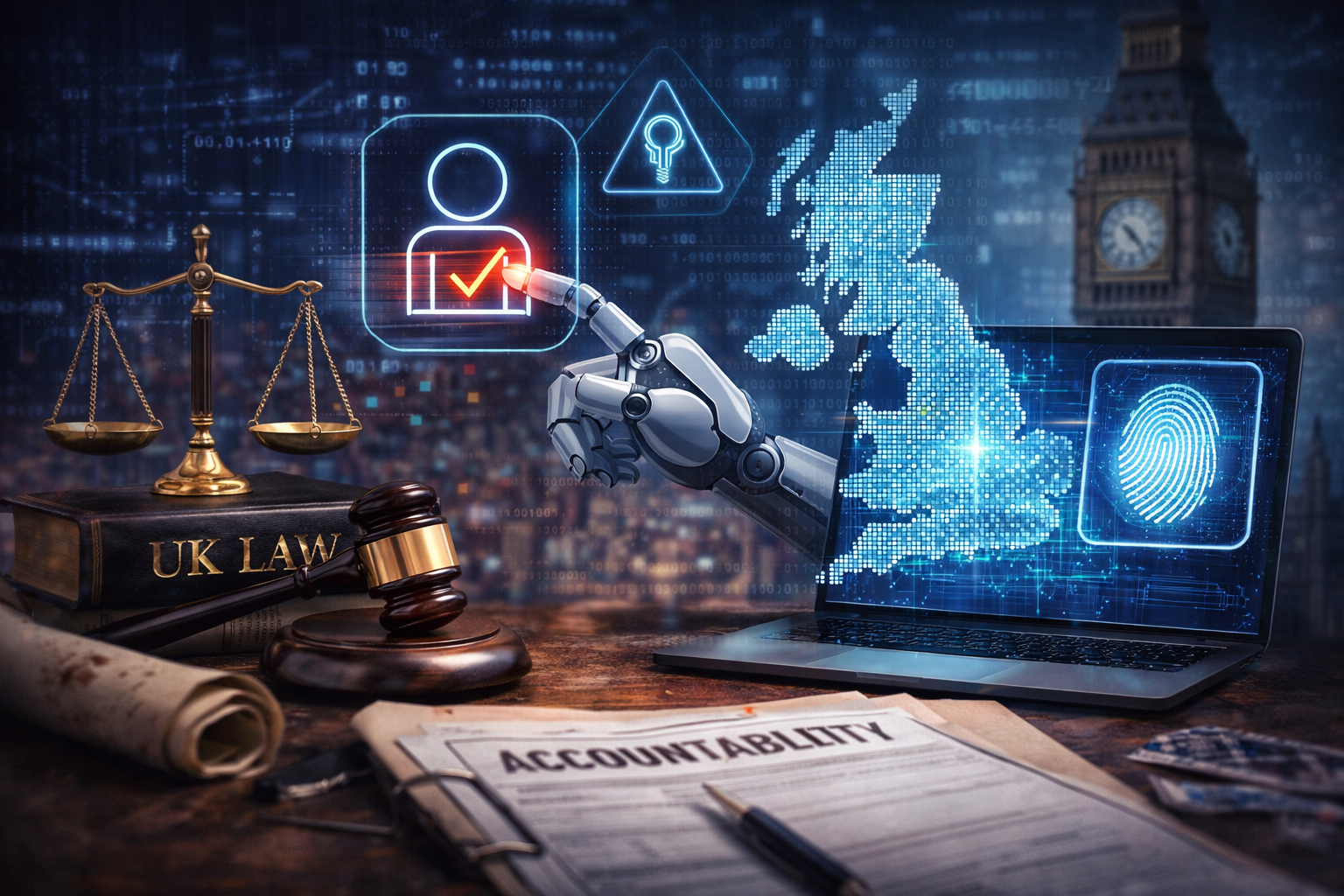
The United Kingdom adopts a unique statutory approach under section 9(3) of the Copyright, Designs and Patents Act 1988, attributing authorship of computer-generated works to the person who made the arrangements necessary for their creation.
JUDICIAL INTERPRETATION
In Thaler v United States Copyright Office, the applicant sought copyright protection for an artwork generated autonomously by an AI system. The D.C. District court upheld the refusal of registration, reaffirming that copyright protection is limited to works created by human authors. This, a work without significant human creative input is not recognized and cannot be copyrighted under the United States Copyright Law
In Naruto v Slater, commonly referred to as the Monkey Selfie case, the court rejected non-human authorship. Although this is not a case on AI-generated content, the reasoning has been widely applied by analogy to AI-generated works. The court in this case confirmed that under the United States law, only humans can be referred to as authors of copyrighted works.
In China, the decision in Shenzhen Tencent v Yingxun recognised copyright protection for an AI-generated article, emphasising human involvement in the design and operation of the AI system. Nigeria has yet to record any judicial decision directly addressing AI-generated works.
Although UK courts have not yet applied section 9(3) of the Copyright, Designs and Patents Act 1988 to modern generative AI systems, judicial interpretations of originality remain instructive. In University of London Press Ltd v University Tutorial Press Ltd, originality was defined as the product of skill, labour, and judgment rather than novelty. This position was reinforced in Ladbroke (Football) Ltd v William Hill (Football) Ltd, where the court emphasised the significance of human selection and arrangement in determining copyright subsistence. Applied to computer-generated works, these principles suggest that authorship under section 9(3) depends on demonstrable human intellectual input in configuring or directing the process that produces the output.
While section 9(3) of the Copyright, Designs and Patents Act 1988 provides a statutory basis for attributing authorship in the absence of a human creator, its reliance on traditional concepts of skill and labour raises doubts as to its adequacy in regulating fully autonomous AI-generated works.
CRITICAL ANALYSIS
AI-generated works expose the limitations of traditional copyright concepts. While AI outputs may appear novel, they are produced through algorithmic processes rather than conscious creativity. Recognising artificial intelligence systems as authors would require a radical departure from established legal principles. Authorship in copyright law is not merely a gateway to economic rights but also entails legal responsibility and moral attribution. AI systems lack legal personality, consciousness, and the capacity to bear rights or obligations. Granting authorship to machines would therefore disrupt the conceptual foundations of copyright law and raise broader concerns relating to accountability, liability, and enforcement.
In the absence of AI authorship, ownership of AI-generated works remains deeply contested. Competing claims may arise from software developers who design and train the algorithms, users who provide prompts or parameters, and corporate entities that own or deploy the AI systems. Existing copyright statutes offer no consistent framework for resolving these claims, resulting in legal uncertainty that risks undermining both innovation and commercial exploitation of creative outputs.
These challenges are particularly pronounced within the Nigerian copyright regime. The Copyright Act 2022, while a significant modernization of Nigeria’s intellectual property framework, remains largely silent on the status of AI-generated works. Like earlier copyright legislation, the Act presumes human authorship and does not contemplate scenarios where creative outputs are produced autonomously by machines. As AI adoption increases across Nigeria’s creative, technological, and commercial sectors, this legislative silence creates a regulatory gap that may lead to inconsistent judicial interpretation and reduced legal certainty.
The problem is further compounded by the doctrine of moral rights under Nigerian copyright law. Moral rights, including the right to attribution and the right to object to derogatory treatment of a work, are premised on the personal and reputational interests of a human author. Where no human creator can be identified, the justification and enforcement of such rights become legally untenable. This raises difficult questions as to whether AI-generated works should be excluded from protection altogether or whether ownership should be statutorily assigned to a human intermediary, such as the programmer or user.
Taken together, these issues underscore the need for deliberate Nigerian copyright reform. Without clear statutory guidance addressing AI-generated works, the law risks either overstretching traditional concepts of authorship and originality or leaving significant categories of creative output unregulated. Nigeria may therefore need to consider targeted legislative intervention—drawing from comparative approaches such as section 9(3) of the UK Copyright, Designs and Patents Act 1988; to clarify ownership, originality thresholds, and the scope of rights applicable to AI-generated content.
RECENT DEVELOPMENTS
Recent regulatory initiatives demonstrate growing awareness of AI-related copyright challenges. The European Union’s Artificial Intelligence Act introduces transparency obligations for generative AI systems. The United States Copyright Office has issued guidance requiring disclosure of AI involvement in copyrighted works. WIPO continues to facilitate international dialogue.
SUGGESTIONS AND WAY FORWARD
Nigeria’s copyright regime must evolve to confront the realities of AI-generated creativity. The Copyright Act 2022, though progressive in many respects, does not expressly address works generated autonomously by artificial intelligence. This legislative silence creates uncertainty regarding authorship, ownership, and the scope of protection applicable to such works. To preserve legal coherence and promote predictability, Nigeria should amend its Copyright Act to expressly recognise and regulate AI-generated works.
A modified adoption of the United Kingdom’s approach to computer-generated works under section 9(3) of the Copyright, Designs and Patents Act 1988 may offer a practical starting point. Rather than attributing authorship to artificial intelligence systems, Nigerian law could assign ownership to the natural or legal person who undertakes the arrangements necessary for the creation of the work. However, any such provision must be carefully tailored to reflect the realities of modern generative AI. Unlike earlier computer-assisted technologies, contemporary AI systems often operate with minimal human intervention, raising concerns about whether mere ownership or deployment of an AI system should suffice to establish authorship.
To address this concern, Nigerian copyright reform should incorporate clear disclosure requirements. Parties claiming ownership of AI-generated works should be required to disclose the extent of human involvement in the creative process, including the role played by prompts, training data selection, and system configuration. Such transparency would assist courts in assessing originality and prevent the unjustified monopolisation of machine-generated outputs that lack meaningful human intellectual contribution.
In addition, Nigeria should pursue greater alignment with emerging international norms on AI and intellectual property. Given the cross-border nature of AI technologies and digital content distribution, isolated domestic regulation risks inconsistency and enforcement challenges. Engagement with international frameworks developed by bodies such as the World Intellectual Property Organization would promote harmonisation, reduce jurisdictional conflict, and enhance Nigeria’s attractiveness as a hub for technological innovation.
Ultimately, targeted legislative reform would strike a necessary balance between encouraging technological advancement and preserving the human-centred foundations of copyright law. By proactively addressing AI-generated works, Nigeria can avoid doctrinal uncertainty, provide guidance to creators and investors, and ensure that its copyright regime remains responsive in the age of artificial intelligence.
CONCLUSION
Artificial intelligence has fundamentally altered the creative landscape, exposing the limitations of copyright law’s human-centric foundations. Without deliberate reform, copyright law risks becoming disconnected from modern creative realities. Addressing the question of who owns the machine’s creativity is essential to the future relevance of copyright protection.
REFERENCES / BIBLIOGRAPHY
Books
Lionel Bently & Brad Sherman, Intellectual Property Law (5th ed. Oxford University Press 2018).
Paul Goldstein & P. Bernt Hugenholtz, International Copyright: Principles, Law, and Practice (4th ed. Oxford University Press 2019).
Journal Articles
Harry Surden, Artificial Intelligence and Law: An Overview, 35 Ga. St. U. L. Rev. 1305 (2019).
Pamela Samuelson, Allocating Ownership Rights in Computer-Generated Works, 47 U. Pitt. L. Rev. 1185 (1986).
Ryan Abbott, I Think, Therefore I Invent: Creative Computers and the Future of Patent Law, 57 B.C. L. Rev. 1079 (2016).
Case Law
University of London Press Ltd v University Tutorial Press Ltd [1916] 2 Ch 601 (UK).
Ladbroke (Football) Ltd v William Hill (Football) Ltd [1964] 1 WLR 273 (HL).
Naruto v Slater, 888 F.3d 418 (9th Cir. 2018).
Thaler v United States Copyright Office, No. 1:22-cv-01564 (D.D.C. 2023).
Shenzhen Tencent Computer Systems Co. Ltd v Yingxun Technology Co. Ltd (2019) Shenzhen Nanshan District People’s Court (China).
Statutes and International Instruments
Copyright Act 2022 (Nigeria).
Copyright, Designs and Patents Act 1988 (United Kingdom).
Berne Convention for the Protection of Literary and Artistic Works (1886), as amended.
Official Reports and Institutional Publications
United States Copyright Office, Copyright Registration Guidance: Works Containing AI-Generated Material (2023).
World Intellectual Property Organization (WIPO), Revised Issues Paper on Intellectual Property Policy and Artificial Intelligence (2020).
European Union, Artificial Intelligence Act (2024).
Official Websites / Articles
LexisNexis Legal Glossary, Artificial Intelligence.
Tim Mucci, What Is AI-Generated Content?, IBM Think (2023),
https://www.ibm.com/think/topics/artificial-intelligence.
World Intellectual Property Organization, WIPO Conversation on Intellectual Property and Artificial Intelligence,
https://www.wipo.int/about-ip/en/artificial_intelligence/.
News Reports / Commentary
Reuters, US Court Rejects Copyright Claim for AI-Generated Art (2023).
Financial Times, Who Owns the Rights to AI-Generated Content? (2023).