Authored BY: MOHD ARFATH
PENDEKANTI LAW COLLEGE
ABSTRACT
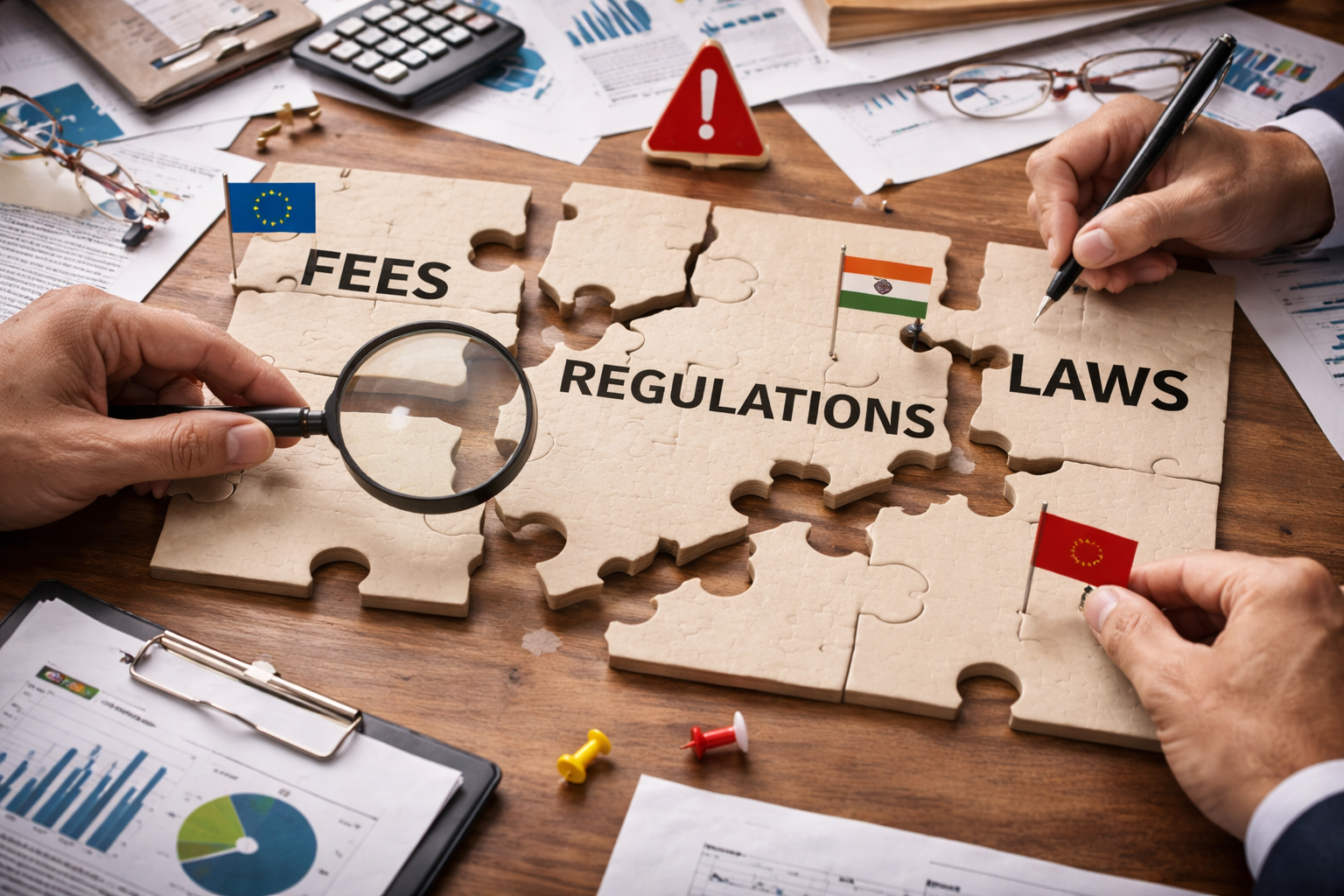
Public procurement is the process basically how the government buys things it needs to run the country and serve the people. This process, funded by taxpayers, is guided by strict regulation to ensure fairness, transparency, and efficiency. At the central level, the term ‘procurement’ is not expressly defined in contrast, several states have enacted specific procurement laws which formally define procurement and codify its procedure. It is important because it drives economic growth, ensure transparency and accountability in how public money is spend, also public procurement is 20-22% of India’s GDP and is essential for the effective delivery of public services like healthcare and infrastructure. However, challenges such as collusion, bid rigging, and noncompetitive practices often undermine these objectives. Competition law primarily through the competition Act, 2002 and the oversight of the Competition Commission of India (CCI) plays a vital role in ensuring fairness, detecting anti-competitive agreements, and penalizing abusive practices. Recent reforms, include the Government e-Marketplace platform facilitating transaction exceeding 5 lakh crores, reflect significant progress. This article argues that, despite notable advances, gaps persist in tackling cartels, restrictive tendering practices, and misuse of blacklisting provisions, underscoring the need for stronger enforcement, recommends the need for a central law, uniformity, and training of officials, and procedural reforms.
introduction
Public procurement is the process basically governments and public sector purchase goods, services, and run the country and serve the people. It is a crucial process, as it is funded by taxpayer money, and is governed by strict regulations to ensure fairness, transparency, and efficiency. It is important because it ensures governments spend taxpayer money transparently and efficiently. It promotes fair competition among suppliers, which help lower costs, improve quality, drive innovation, etc. This process is essential for carrying public services, supporting economic growth, and achieving social and environmental goals. Public procurement is a backbone of public financial management. Public procurement is not merely a financial process but a bedrock of good governance. In India alone, this sector account for approximately 20-22% of GDP, highlighting its vast size and the need for strong frameworks to ensure transparency, accountability, and competitive fairness.[2] With platforms like the Government e-Marketplace (GeM) processing over ₹5.42 lakh crore worth of procurement in FY 2024 – 2025, the scale of public spending highlights the urgent need for fair competition and strong legal oversight.[3] However, despite its important, India’s procurement face serious challenges, most notably inefficiency and lack of transparency. For example, the India Air Force Chief, Air Chief Marshal A.P. Singh, recently highlighted persistent delays in defense acquisition projects, underscoring how procurement delays in timely delivery of critical public projects.[4] Similarly, Various news and reports have reported that procurement processes lacking transparency create risks of corruption and favoritism,[5] which weaken public trust and compromise the value for money principle in government spending. These issues, though reported in different sectors, collectively in India’s public procurement reform. After looking at the problem in public procurement, it becomes clear why reforms are so important. If issues like bid rigging, corruption, and lack of transparency are left unchecked, public money is wasted and fair competition is lost. Reforms are meant to fix these gaps by making the system more open, efficient, and accountable. Development in this area does not only mean changing laws but also improving institutions, training officials, and creating a culture of fairness in government contracts. One big step in this direction came from the courts. In the Excel Crop Care Ltd. V. CCI (2017) case, the supreme court made it clear that bid rigging in public tenders is anticompetitive practice and violates competition law. This judgment pushed for stronger reforms like e-procurement.[6] On the other hand, institution changes can be seen in the ‘CCI Annual Report 2023-2024’ which talks about training procurement officers to detect conflicts. Together, these show how reforms and development are happening at both legal and practical levels.[7] To make public procurement really fair and competitive, two key steps stand out. First, the role of the competition commission of India (CCI) needs to be strengthened. Under the competition act, 2002, the CCI already has the power to act against bid rigging and anticompetitive practices,[8] but in practice these problems still continue. A more initiative approach needed such as, creating an expert unit within the CCI to track suspicious bidding pattens and go a long way in discouraging collusion and protecting public money. Second, India needs greater uniformity in procurement laws. At the national level, procurement continues to depend largely on executive rules like the General Financial Rules (GFR). In contrast, some states have gone further by enacting detailed legislation. The Rajasthan Transparency in Public Procurement Act, 2012 is a good example, it lays down clear procedures, safeguards, and accountability measures.[9] If the other states, or even the union, adopt a similar framework, it would bring consistency and predictability to procurement across the country.
Legal Framework
Central Level Framework
At the union level, India did not have a comprehensive statue on public procurement. Unlike several jurisdiction that have codified procurement laws, the central government primarily relies on the General Financial Rules, 2017 (GFR) and Procurement Manuals to regulate procedure.[10] While these rules emphasize transparency, competition, and accountability, they are just executive instructions rather than binding legislation. This absence of a statutory framework creates gaps in enforceability and leaves significant caution in administrative.
State level Framework
In contrast, some states have enacted dedicated legislation to govern procurement. The Rajasthan Transparency in Public Procurement Act, 2012 provides a detailed framework that defines procurement, prescribes procedures, and ensure safeguards against unfairness.[11] These statutes represent a more structured approach, but these exist only in few states highlight the lack of uniformity across India.
Competition Law and Public Procurement
The competition act, 2002 prohibits anticompetitive practices, include bid rigging and collusive bidding under Section 3(3)(d).[12] the Competition Commission of India (CCI) has identified public procurement as one of the sectors with more anticompetitive practices The Supreme Court, in Excel Crop Care Ltd. v. Competition Commission of India, upheld bid rigging in tenders constitutes anticompetitive practices and violates the Act.[13] This decision strengthened the role of competition law in safeguarding fairness and ensuring that public procurement and serve as purpose of promoting efficiency and value for money.
Issues and challenges
In India Public Procurement continues to suffer from corruption, opacity, and systemic inefficiencies. The central Vigilance Commission (CVC), in its Annual Report 2023, reported 62,602 complaints received against public officials and public sector undertaking, with nearly 6,939 still pending disposal.[14] The CVC also examined procurement cases and found higher contract prices, unaccepted payments, violation of tender procedures, and the government loses money because of the way quantities and rates are calculated.[15] These indicate that administrative caution takes priority over transparent and rule based decision making. In another case Integral Coach Factory v. Super Steels and Alvind Industries, the CCI examined allegations that ICF’s tender eligibility criteria for procurement of steel products unfairly benefitted select suppliers and violated the Competition Act, 2002. The Commission concluded that just specifying to anticompetitive conduct and no evidence of anticompetition or restrictive practice and dismissing the case.[16] This case underlines how procurement process can easily invite suspicion, and yet be legally innocent which highlight the importance of evidence examination and transparent tender design to avoid wrong accusations. Finally, the absence of a comprehensive national procurement law creates irregular standards across states. While some jurisdictions, such as Rajasthan and Karnataka, have enacted procurement statues, the central government continues to rely primarily on executive instructions like the General Financial Rules. This shattered framework, combined with weak examination and enforcement mechanisms prevents the creation of a consistent, transparent, and accountable procurement system.[17]
Types of Anticompetitive practice in procurement
The Competition Act, 2002 was passed to make sure that markets in India remain fair, open, and competitive. It aims to protect both consumers and honest businesses by stopping unfair trade practices. One important area the law focuses on is anticompetitive agreements deals between companies that harm competition and hurt the interest of the public.
Sometimes, companies agree formally or secretly not to compete with each other. These agreements can include fixing prices, dividing markets, limiting supply, or controlling how products are sold. When businesses behave this way, customers usually end up paying more or getting fewer choices. These kinds of agreements are harmful and go against the idea of a healthy, competitive market.
Under Section 3 of the Competition Act, such agreements are banned if they cause, or are likely to cause, a negative effect on competition in India. These agreements are divided into two types:
- Horizontal agreements, where businesses that offer the same products or services agree to act together instead of competing. These are considered serious and are assumed to be harmful without needing much extra proof.
- Vertical agreements, where businesses at different levels like a supplier and a retailer make arrangements that could block competition. These are judged based on how much they actually affect the market.
The Competition Commission of India (CCI) is the body responsible for making sure these rules are followed. If it finds that businesses are entering into anticompetitive agreements, it can investigate, stop the unfair practice, and also impose fines.
The main idea behind these rules is to keep the market fair for everyone small businesses, new startups, and especially consumers. When businesses compete fairly, prices stay reasonable, product quality improves, and innovation increases.
To sum up, anticompetitive agreements are bad for both the economy and everyday people. The law exists to prevent companies from making secret deals that give them an unfair advantage. By enforcing this law, the CCI helps make sure that businesses grow through merit and that customers always get a fair deal, Under the Competition Act, 2002, enforces by CCI there are 8 types of anticompetitive agreement define under section 3(3)[18] horizontal agreement & section 3(4)[19] vertical agreement, these are agreement are presumed as anticompetitive:
- Price fixing – agreements to directly or indirectly determine purchase or sale prices
- Limiting or controlling production, supply, market, technical development, or investment
- Market allocation – dividing or sharing the market or sources of production by geography, product, or customers
- Bid rigging or collusive bidding – manipulating tenders to predetermine the winner or price
- Tie in arrangement – making the purchase of one product conditional on buying another
- Exclusive supply or distribution agreement – restricting a distributor or supplier from dealing with competing goods and services
- Refusal to deal – agreement that restrict or limit who someone can sell or buy from
- Resale price maintenance – imposing a minimum resale price to control downstream pricing
Challenges in Implementation
Improving competition law in public procurement have some major challenges in implementation and various systemic and structural challenges continue to weaken its effectiveness. A major difficulty is the gap between the “Make in India” instruction and its actual enforcement. In early 2025, the Department for Promotion of Industry and internal Trade (DPIIT) reported that 259 tenders were found to be noncompliant with the provision of public procurement.[20] Procedural delay remains a major challenge. In many sectors, the procurement process is so strict that even small projects may be delayed by months if not than years.[21] Moving to small enterprises are another concern area. On paper, the government exceeded its target purchases more than 42% of its total purchases from micro and small enterprises (MSEs) in FY 2024 – 25.[22] But behind this achievement have disturbing trends, the number of participating MSMs actually went down. Many smaller firms find it difficult to meet eligibility criteria, having financial guarantees, or figuring out technical requirements. Finally, there is the broader question of how procurement links to sustainability. India has initiated discussion on Green Public Procurement (GPP), still progress is slowed down because of weak institutional frameworks, lack of certified green products.[23] Unless these gaps are filled, procurement will remain focused only on cost, at the expense of Longterm environmental goals.
Judicial Approach
The judiciary in India plays an important role in shaping the principle governing public procurement. The court consistently held that while government enjoys wide freedom while giving out contracts but this freedom cannot be used in an unfair or random way. The landmark case of Tata Cellular v. Union of India (1994) is often cited as the starting point of the jurisprudence.[24] In this case, the Supreme Court emphasized that public procurement must stick to the principles of fairness, transparency, and equality of opportunity. The Court further held judicial review is available when procurement decisions are weak by mala fides, arbitrariness, or prejudice. Similarly, in Michigan Rubber (India) Ltd. v. State of Karnataka (2012), Court restated that while terms of tender are largely within the authority of getting entity, they must not violate Article 14 of the constitution.[25] Thus, judicial involvement in procurement matters has create framework where executive authority is balanced by constitutional principle of fairness and equality.
Recommendations and way forward
One of the most important Recommendation is the need for a comprehensive central procurement law. At present, India only relies on the General Financial Rules and various procurement manuals, which result in a scattered framework and inconsistent enforcement across states.[26] A codified statue would ensure uniformity and also coordinate procurement with competition principles, thereby reducing event of anticompetition and bid rigging. Further, capacity building of procurement officials is essential. Several reports have highlighted that tender committees often lack to detect collusion and anti-competitive agreements.[27] Training programs for officials, along with closer coordination with the Competition Commission of Indi (CCI), can make enforcement much stronger. Technology can also provide practical solutions. For example, e-procurement platforms like the Government e-marketplace (GeM) have already helped make the process more transparent and saved costs in many sectors.[28] India can also learn from international standards such as the UNCITRAL Model Law on Public Procurement and the WTO Government Procurement Agreement, which focus on transparency, accountability, and fair competition.[29]
Conclusion
Public procurement is not just a financial activity but a process funded by taxpayer money and guided by strict rules to ensure fairness, transparency, and efficiency. Accounting for nearly 20-25% of India’s GDP, it plays a vital role in driving economic growth, promoting social and environmental goals, and reinforcing good governance. Platforms like the Government e-Marketplace (GeM) have already made step in creating more transparent and cost effective procurement practice. However, despite its importance, the system continues to face serious challenges. Bid rigging, corruption, and a lack of transparency remain common, and the absence of a uniform central legal frame work allows inefficiencies and anti-competitive practices to continue. These weaknesses highlight why reforms are essential. If left unchecked, procurement inefficiencies lead to wasted public money and diminished competition. Reform must go beyond changing laws they should also focus on improving institutions, training officials, and cultivating a culture of fairness in government contracts. Judicial judgements such as Excel Crop Care Ltd. v. CCI (2017), which declared bid rigging in tenders as anticompetitive practice under competition law, it significant in pushing for stronger safeguards like e procurement processes which can also invite suspicion, even when legally compliant, emphasizing the need for clarity and transparency. Moving forward, a comprehensive central procurement law is necessary to harmonize existing practices and close current gaps. At the same time, strengthening the Competition Commission of India (CCI) under the Competition Act, 2002 and equipping procurement officials with training and technology. Together, these measures can build procurement in a set of structured rules that ensures transparency, promotes fair competition, protects public resources, and ultimately enhances the credibility of governance.
Reference(S):
[1] B.A. LL.B. Student, Pendekanti Law College, Hyderabad Email: mrarfath786@gmail.com.
[2] Press Information Bureau, Public Procurement in India Report (Apr. 2023), https://static.pib.gov.in/WriteReadData/specificdocs/documents/2023/apr/doc2023427188401.pdf (last accessed Oct. 18, 2025).
[3] Ani, Government e-Marketplace surpasses Rs 5 lakh crore GMV in FY25, The Economic Times (Mar. 17, 2025), https://m.economictimes.com/news/india/government-e-marketplace-surpasses-rs-5-lakh-crore-gmv-in-fy25/articleshow/119121231.cms (Last accessed Oct. 18, 2025).
[4] Why Promise When It Can’t Be Achieved? Air Chief Marshal A.P. Singh Flags Delay in Defense Procurement, Indian Express (Sept. 17, 2023), https://indianexpress.com/article/india/timeline-problem-why-promise-when-cant-be-achieved-air-chief-marshal-ap-singh-flags-delay-defence-procurement-10036636/ (last accessed Oct. 19, 2025).
[5] Public Procurement: Without Transparency, There Is a Risk of Corruption, Favoritism, Hindustan Times (Sept. 13, 2023), https://www.hindustantimes.com/cities/others/public-procurement-without-transparency-there-is-a-risk-of-corruption-favouritism-101727101984471.html (last accessed Oct. 19, 2025).
[6] Excel Crop Care Ltd. v. Competition Comm’n of India, AIR 2017 8 SCC 47 (India), https://indiankanoon.org/doc/156507507/ (last accessed Oct. 19, 2025).
[7] Competition Commission of India, Annual Report 2023-24, https://www.cci.gov.in/public/images/annualreport/en/annual-report-2023-241734695318.pdf (last accessed Oct. 19, 2025).
[8] The Competition Act, 2002, No. 12 of 2003,§ 3(3)(d) (India), https://www.cci.gov.in/images/legalframeworkact/en/the-competition-act-20021652103427.pdf (last accessed Oct. 19, 2025).
[9] Rajasthan Transparency in Public Procurement Act, 2012, No. 21 of 2012 (India), https://prsindia.org/files/bills_acts/acts_states/rajasthan/2012/2012Rajasthan21.pdf (last accessed Oct. 19, 2025).
[10] Ministry of Finance, General Financial Rules 2017 (Updated up to 31 July 2024), Government of India, https://doe.gov.in/files/circulars_document/FInal_GFR_upto_31_07_2024.pdf (last accessed Oct. 20, 2025).
[11] Rajasthan Transparency in Public Procurement Act, 2012, No. 21 of 2012 (India), https://prsindia.org/files/bills_acts/acts_states/rajasthan/2012/2012Rajasthan21.pdf (last accessed Oct. 20, 2025).
[12] Competition Act, No. 12 of 2003, 3(3)(d) (India), https://www.cci.gov.in/images/legalframeworkact/en/the-competition-act-20021652103427.pdf (last accessed Oct. 21, 2025).
[13] Excel Crop Care Ltd. v. Competition Comm’n of India, AIR 2017 8 SCC 47 (India), https://indiankanoon.org/doc/156507507/ (last accessed Oct. 21, 2025).
[14] Central Vigilance Commission, 60th Annual Report 2023, at 175-179 (India), https://cvc.gov.in/files/annual-report-pdf/AR-E-2023.pdf (last accessed Oct. 21, 2025).
[15] Central Vigilance Commission, 60th Annual Report 2023, at 90-94 (India), https://cvc.gov.in/files/annual-report-pdf/AR-E-2023.pdf (last accessed Oct. 22, 2025).
[16] XYZ informant and The Integral Coach Factory, Case No. 18 of 2023, Competition Commission of India, Order under Section 26(2) of the Competition Act, 2002 (July 12, 2024 https://cci.gov.in/images/antitrustorder/en/order1721023102.pdf (last accessed Oct. 22, 2025).
[17] Government of India, Ministry of Finance, Department of Expenditure, General Financial Rules, 2017 (July 31, 2024), https://doe.gov.in/files/circulars_document/FInal_GFR_upto_31_07_2024.pdf (last accessed Oct. 22, 2025).
[18] Competition Act, 2002, No. 12 of 2003, § 3(3) (India), The Competition Act, 2002, https://www.cci.gov.in/images/legalframeworkact/en/the-competition-act-20021652103427.pdf (last accessed Oct. 23, 2025).
[19] Competition Act, 2002, No. 12 of 2003, § 3(4) (India), The Competition Act, 2002, https://www.cci.gov.in/images/legalframeworkact/en/the-competition-act-20021652103427.pdf (last accessed Oct. 23, 2025)
[20] DPIIT Flags 259 Tenders for Violating Public Procurement Norms in 2024, Business Standard (Feb. 7, 2025), https://www.business-standard.com/industry/news/dpiit-flags-259-tenders-for-violating-public-procurement-norms-in-2024-125020701104_1.html (last accessed Oct. 23, 2025).
[21] Public Procurement – India, The Legal 500: Country Comparative Guides (Phoenix Legal, Jan. 2022), https://www.phoenixlegal.in/upload/articles/1644564192_Legal500%20Chapter%202022.pdf (last accessed Oct. 23, 2025).
[22] Financial Express, ‘Public procurement: 42% of all goods purchased by govt in FY25 from micro, small enterprises’ (Financial Express, 2, April 2025), https://www.financialexpress.com/business/sme-public-procurement-42-of-all-goods-purchased-by-govt-in-fy25-from-micro-small-enterprises-3796639/ (last accessed Oct. 23, 2025).
[23] International Institute for Sustainable Development, Green Public Procurement in India: Progress, Challenges, and Opportunities (Dec. 2024), https://www.iisd.org/system/files/2024-12/india-green-public-procurement.pdf (last accessed Oct. 24, 2025).
[24] Tata Cellular v. Union of India, 1994 SCC (6) 651, https://indiankanoon.org/doc/884513/ (last accessed Oct. 24, 2025).
[25] M/S Michigan Rubber (I) Ltd. v. State of Karnataka & Ors, (2012) 8 SCC 216, https://indiankanoon.org/doc/187501619/ (last accessed Oct. 24, 2025).
[26] Ministry of Finance, General Financial Rules 2017 (2024), https://one.oecd.org/document/DAF/COMP/WD(2025)8/FINAL/en/pdf (last accessed Oct. 24, 2025)
[27] Competition Commission of India, Annual Report 2023-24, https://doe.gov.in/files/circulars_document/FInal_GFR_upto_31_07_2024.pdf (last accessed Oct. 24, 2025).
[28] Press Information Bureau, Government of India, Public Procurement Reforms and the Role of GeM (Apr. 2023), https://gem.gov.in/ (last accessed Oct. 24, 2025).
[29] UNCITRAL, Model Law on Public Procurement (2011), https://uncitral.un.org/sites/uncitral.un.org/files/media-documents/uncitral/en/2011-model-law-on-public-procurement-e.pdf (last accessed Oct. 24, 2025).
![Salomon v Salomon & Co Ltd. [1897] AC 22 (HL)](https://recordoflaw.in/wp-content/uploads/2025/12/ChatGPT-Image-Dec-17-2025-08_24_07-PM.png)