Authored By: Uzma Bano
Mahatma Gandhi kashi Vidyapeeth -Varanasi
Abstract
India’s Constitution enshrines equality and justice for women, promising protection against discrimination and opportunities for empowerment. Yet, centuries-old patriarchal norms continue to influence social practices, leaving women vulnerable to violence, economic disparities, and political underrepresentation. This article examines the constitutional and statutory framework safeguarding women’s rights, analyzes judicial interpretations that shaped their practical realization, and critically evaluates ongoing challenges. It also explores recent reforms and government initiatives aimed at bridging the gap between legal guarantees and lived realities. The discussion concludes with recommendations to strengthen enforcement, promote social awareness, and ensure that constitutional promises are transformed into tangible rights, fostering an environment of genuine gender equality.
Introduction
Women’s rights in India have come a long way—from traditional restrictions to constitutional guarantees. The Constitution of India, adopted in 1950, is a landmark document that envisions not only equality for women but also their active participation in nation-building. Articles such as 14 (Right to Equality), 15 (Prohibition of Discrimination), 21 (Right to Life and Personal Liberty), and 42 (Just and Humane Working Conditions) form the legal backbone of women’s empowerment.
Despite these promises, challenges persist. Women still face domestic violence, workplace harassment, wage disparities, and underrepresentation in politics. Movements like #MeToo and government initiatives such as Beti Bachao Beti Padhao have highlighted societal attention to these issues, yet enforcement remains inconsistent. This article explores the journey of women’s rights in India, analyzes judicial interventions, and identifies contemporary gaps while suggesting ways forward.
Thesis Statement: India provides a strong constitutional foundation for women’s rights, but societal norms, enforcement challenges, and legislative gaps prevent these rights from being fully realized.
Research Methodology
This article uses a doctrinal and analytical approach, relying on:
Constitutional provisions and statutory laws such as the Protection of Women from Domestic Violence Act (2005) and Sexual Harassment of Women at Workplace Act (2013).
Landmark Supreme Court and High Court judgments.
Scholarly articles, government reports, and credible news sources.
Comparative insights from international practices, including CEDAW (Convention on the Elimination of All Forms of Discrimination Against Women).
Legal Framework
Constitutional Safeguards
Article 14: Ensures equality before the law.
Article 15(1) & (3): Prohibits discrimination based on sex and allows affirmative action for women.
Article 21: Protects life and personal liberty, interpreted to include security and dignity.
Article 39(a)-(d): Directs equal pay for equal work and just working conditions.
Article 42: Guarantees humane conditions for women workers.
Statutory Measures
Hindu Succession (Amendment) Act, 2005: Grants equal inheritance rights to women.
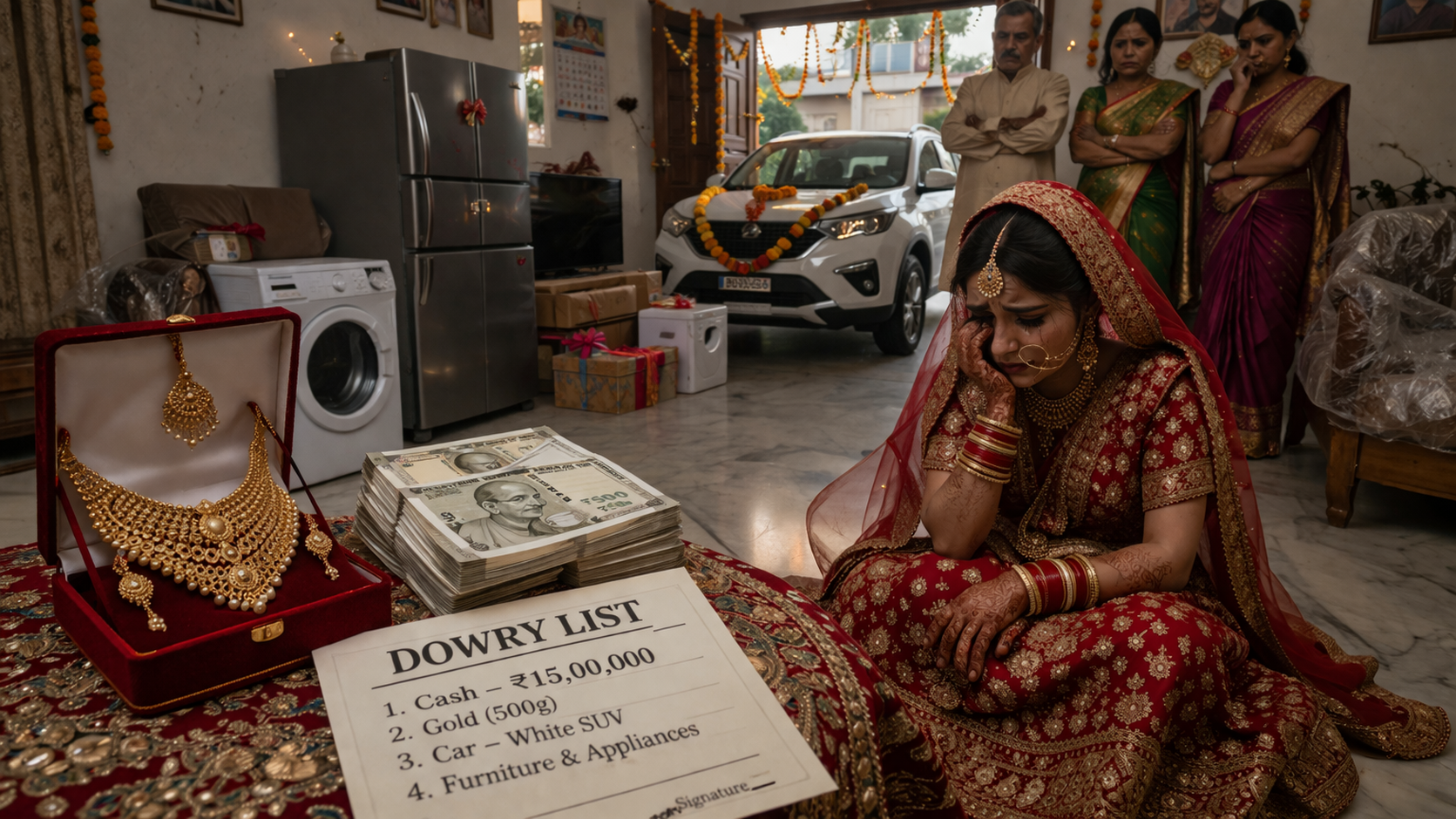
Dowry Prohibition Act, 1961: Criminalizes dowry transactions.
Protection of Women from Domestic Violence Act, 2005: Offers legal remedies against domestic abuse.
Sexual Harassment of Women at Workplace Act, 2013: Mandates safe workplaces and complaint redressal mechanisms.
International Commitments
India is a signatory to CEDAW (1979), committing to the elimination of discrimination and promotion of gender equality. While not all provisions are directly enforceable, they influence domestic reforms and judicial interpretation.
Judicial Interpretation
The judiciary has been pivotal in shaping women’s rights through landmark judgments:
- Vishaka v. State of Rajasthan (1997):
Addressed sexual harassment at the workplace. In absence of specific legislation, the Supreme Court laid down Vishaka Guidelines, forming the foundation for the 2013 Act.
- Shayara Bano v. Union of India (2017):
Challenged the practice of triple talaq. The Court struck it down as unconstitutional, reinforcing gender equality within personal laws.
- Danial Latifi v. Union of India (2001):
Ensured Muslim women’s right to maintenance, balancing religious practices with constitutional safeguards.
- Independent Thought v. Union of India (2017):
Strengthened protections for minors against sexual exploitation, affirming the judiciary’s role in safeguarding vulnerable groups.
Critical Reflection: While courts have intervened effectively, implementation gaps and societal resistance often limit the impact of these judgments.
Contemporary Challenges
Gender-Based Violence
Despite legal protections, domestic abuse, sexual assault, and trafficking remain pervasive. Many cases go unreported due to fear, stigma, or family pressure. Conviction rates are low, reflecting systemic challenges.
Economic Inequality
Women face a persistent wage gap and underrepresentation in formal employment. Cultural norms and workplace biases hinder career advancement.
Political Underrepresentation
Women occupy only about 14% of parliamentary seats, restricting their influence in policymaking.
Socio-Cultural Barriers
Early marriages, gender stereotyping, and entrenched patriarchal attitudes continue to limit women’s autonomy, particularly in rural areas.
Legislative and Enforcement Gaps
Laws exist, but inadequate enforcement, lengthy legal procedures, and low awareness weaken their effectiveness.
Comparative Insight: Countries like Sweden and Canada demonstrate higher female workforce participation and robust protections, highlighting the importance of effective implementation and supportive policies.
Recent Developments
Legislative Initiatives
Criminal Law Amendment Act, 2013: Strengthened laws post-Nirbhaya case.
Maternity Benefit (Amendment) Act, 2017: Extended maternity leave to 26 weeks.
Draft bills on women’s reservation in Parliament and stalking protection reflect ongoing legislative attention.
Government Programs
Beti Bachao Beti Padhao: Promotes education and empowerment of girls.
One Stop Centres: Offer integrated support for women affected by violence.
Public Engagement
Social movements like #MeToo have raised awareness, empowered survivors, and pressured institutions to act responsibly.
Suggestions :-
- Strengthen Enforcement: Establish fast-track courts and gender-sensitive policing.
- Raise Awareness: Educate women about their rights, particularly in rural areas.
- Economic Empowerment: Promote equal pay, skill development, and entrepreneurship.
- Enhance Political Representation: Implement women’s reservation to increase participation in governance.
- Judicial Reforms: Leverage technology for faster reporting and monitoring of cases.
- Cultural Change: Encourage gender-sensitive education and campaigns to challenge patriarchal mindsets.
Conclusion
India’s constitutional framework is robust, yet societal, economic, and cultural barriers hinder the full realization of women’s rights. Judicial activism and legislative reforms have addressed many gaps, but enforcement and awareness remain critical. True empowerment requires a holistic approach—legal reform, societal change, economic inclusion, and political participation. Only then can constitutional promises translate into lived equality, ensuring a society where women are genuinely safe, respected, and empowered. The journey from promises to reality continues, demanding commitment from all sectors of society.
References / Bibliography
- Constitution of India, 1950
- Hindu Succession (Amendment) Act, 2005
- Protection of Women from Domestic Violence Act, 2005
- Sexual Harassment of Women at Workplace Act, 2013
- Vishaka v. State of Rajasthan, (1997) 6 SCC 241
- Shayara Bano v. Union of India, (2017) 9 SCC 1
- Danial Latifi v. Union of India, (2001) 7 SCC 740
- Independent Thought v. Union of India, (2017) 10 SCC 800
- National Crime Records Bureau, Crime in India Reports (2010–2023)
- United Nations, CEDAW (1979)