Authored By: LUV KUMAR
Amity University, Patna
Abstract
Capital punishment, also referred to as the death penalty, remains a contentious and polarizing issue within the Indian legal and ethical framework. Although codified in legislation, its application has been limited, resulting in the punishment being situated in a precarious state of constitutional morality, judicial whim, and societal sentiment. In doing so, punitive practice challenges the moral rectitude and continuous effectiveness of an institutionalized act that supposedly scales so-called retributive justice against the changing ropes of human rights standards. Supporters believe that the death penalty is an integral tool of retribution and a powerful deterrent to heinous crimes such as murder, rape, and terrorism. Consequently, it has been praised by some and condemned by others as an inhuman, arbitrary, and, in the end, ineffective practice at odds with the current standards of protecting the rights of the human person. This binary framing additionally highlights the more universal discussion of capital punishment as a public policy instrument in contemporary democratic societies.
This study discusses the constitutional, legal, and social aspects of capital punishment in India. Through a critical analysis of judicial pronouncements, legislative developments, and cross-national comparative perspectives, this discussion sheds light on the various contradictions inherent in India’s policies to retain the death penalty. It questions whether such sanctions are compatible with constitutional guarantees of equality, liberty, and dignity, especially those contained in Article 21, which protects the right to life. Finally, the study aims to answer the most significant question: whether the death penalty truly enhances justice in India or only serves as a continuation of the system of state-approved violence, disregarding the principles of fairness, proportionality, and human dignity?
Introduction
In India, the death penalty is a debatable issue, especially in law and justice. Although more countries in the world today are doing away with the death penalty, India has chosen to retain it in the not yet judicially binding principle of the rarest of rare cases, first declared by the Supreme Court in Bachan Singh v. State of Punjab (1980), This principle attempts to create a fine balance, between the need to penalize the most abhorrent types of foul play and the constitutional requirement of fairness, equality, and human dignity. The center of the debate is Article 21 of the Constitution, one that ensures the right to life and individual liberty. It has been reiterated by the Supreme Court that every taking- a way of life should be achieved by way of just, fair, and reasonable procedures. Therefore, the fact that capital punishment is being used creates one basic question: Is the intentional annihilation of life by the State ever to be effectively accorded with the values inscribed in the Constitution? To justify the death penalty, its proponents argue that it has two critical functions. First, it offers revenge in that the criminals who commit the most heinous acts are punished. Second, it is justified on the merits of deterrence, which is the assumption that people should not engage in similar crimes because they should fear the penalty.
However, there is a criticism of its scarcity in empirical evidence of its deterrent effect. This is also emphasized through their reference to its arbitrariness, its possible contribution to wrongful convictions, and how it affects the poor and marginalized disproportionately. Indian opinion is still bitterly divided. In high-profile trials like the 2012 Delhi gang-rape incident, the overall insistence on executing offenders, regardless of the expense, has been apparent. However, the need to consider movement toward human rights, judicial uniformity, and international trends towards removing executions has jeopardized its relevance. This study investigates whether capital punishment in India is a justified practical measure or a practice that requires reformation.
Historical and constitutional Background
In India, the death penalty is one such debatable issue especially in law and justice. Though more countries in the world today are doing away with the death penalty, India has chosen to retain it in the not yet judicially binding principle of the rarest of rare cases, first declared by the Supreme Court in Bachan Singh v. State of Punjab (1980). This principle attempts to create a fine balance, between the need to penalize the most abhorrent types of foul play and the constitutional requirement of fairness, equality, and human dignity. The center of the debate is Article 21 of the Constitution, one that ensures the right to life and individual liberty. The Supreme Court has reiterated that every taking of life should be achieved by just, fair, and reasonable procedures. Therefore, the fact that capital punishment is being used creates one basic question: is the intentional annihilation of life by the State ever to be effectively accorded with the values inscribed in the Constitution? To justify the death penalty, its proponents argue that death penalty has two critical functions.
First, it offers revenge in that the criminals who commit the most heinous acts are punished accordingly. Second, it is justified on the merits of deterrence, which is the assumption that people should not engage in similar crimes because they should fear the penalty. There is however a criticism to it being scarce in empirical evidence of its deterrent effect. This is also emphasized through their reference to its arbitrariness, its possible contribution to wrongful convictions, and how it disproportionately affects the poor and marginalized. The Indian opinion is still bitterly split. In high-profile trials like the 2012 disgusting incident of Delhi gang-rape, the overall insistence on executing the offenders, regardless of the expense, has been apparent, but the need to consider movement toward human rights, judicial uniformity and international trends towards removing executions has jeopardized its relevance. In this paper, I will attempt to investigate the issue of whether capital punishment in India is a justified means of a practical measure or a practice that requires reformation.
Judicial Interpretation and the “Rarest of Rare” Doctrine
The death penalty in India has been based on judicial interpretation. As the Constitution does not clearly prohibit capital punishment, it has been the work of the courts to determine whether it is in compliance with Articles 14 and 21. Over time, the Supreme Court has developed a body of case law to curtail the extent of the death penalty until it turned into what we now know as the rarest of the rare doctrine. Jagmohan v. was the first landmark. Uttar Pradesh (1973). The petitioner claimed that the death penalty violated Articles 14, 19, and 21. The Supreme Court ruled in its support, stating that capital punishment is related to a fair trial and that judicial discretion is adequate protection. The Court further pointed out that judges considered aggravating and mitigating cases when pronouncing sentences.
One of the greatest changes occurred in Bachan. Singhi. In the State of Punjab case (1980), the Court affirmed a 4:1 majority decision and declared the death penalty constitutional but established it in their suppressive rarest-of-rare ideal. Therefore, when capital punishment was granted, it meant that the alternative punishment of life imprisonment was beyond doubt. Accentuating the reduction of aggravating and medicinal factors and cleansing harsh, arbitrary utilization was a fundamental doctrine. In Mithu v. The Court, State of Punjab (1983), quashed IPC, Section 303 stipulating death penalties for a life offender who committed murder. The Court decided that mandatory death sentences eliminated judicial discretion, which is a breach of Articles 14 and 21. This served to strengthen the belief that capital punishment was constitutional based on fairness and individual sentencing. However, sentencing disparities in modern cases have become a serious concern. The test of the rarest of rare has been applied inconsistently by various benchers, which brings confusion. For example, some brutal acts have led to death penalties, whereas others of a comparable magnitude have earned them life imprisonment. Criminal cases like Afzal Engelbrecht’s but leveled before the justice system encompassing Afzal Guru (2013) and Ajmal Kasab (2012) recertified the death penalty as a weapon of crime against national security, but once again, it questioned inconsistency, arbitrariness, and political pressure.
Key Case Analysis in Points
- Bachan Singh v. State of Punjab (1980)
- Bench-mark case that added the doctrine of rarest.
- Criminal penalty serious but limited to the exceptional cases.
- Judges have to consider aggravating circumstances and mitigating circumstances.
- Life imprisonment be the law; death penalty be the exception.
- Mithu v. State of Punjab (1983) Section 303,
- IPC was declared unconstitutional.
- The death sentences given in the form of mandatory death penalty are against Articles 14 and 21.
- Renewed pressure on sentencing and judicial discretion, specifically on an individualized basis.
- Modern Cases and Cases of incongruency.
- Machhi Singh v. State of Punjab (1983) further gave an elaboration on rarest of rare that include aggravating/mitigating categories.
- Santosh Kumar Bariyar v. On one hand, State of Maharashtra (2009) condemned arbitrary use and assured reformation.
- Shatrughan Chauhan v. Delay in execution was identified in Union of India (2014) as one of the causes of commutation. The case of terrorism (Kasab, Afzal Uncle Guru) shows that there is still dependence on the death penalty in anti-state crimes.
- Questions of arbitrariness, absence of original standards and case-specific judicial treatment have not been put out.
- Jagmohan Singh v. State of Uttar Pradesh (1973)
- The initial constitutional issue trying to challenge the death penalty.
- Its validity was upheld in Articles 14, 19 and 21.
- Judicial fair trial discretion and enough safeguard was taken.
Concerns of Arbitrariness and Discrimination
In as much as death penalty may be legally approved in India, given by strict scrutiny of courts, its usage has severally created substantive doubts about arbitrariness and discriminatory use. Researchers assert that the use of capital punishment is not evenly applied with an equivalent benchmark; extraneous metrics such as socioeconomic-status, access to qualified counsel, systematic-biases within systems, is often held to bear on the result of the judgment. These concerns come from the view of increased severity in consideration of the permanently binding character of capital punishment, in which a mistake made is unreversible.
Role of Socio-Economic Status in Sentencing
The ultimate adjudication of capital criminal proceedings is subject to a determinative impact because of the socio-economic status of the defendant. Wealthy defendants are more likely to hire competent counsel, hire expert witnesses, and seek indemnification in the appellate court and, because of it, are more likely to be sentenced to life imprisonment instead of death. On the flip side, impoverished and socially disadvantaged defendants, and other economically marginalized individuals, often have no option but to rely upon overworked public defenders or court-appointed counselors who may not even have the time or money to wage a formidable defense. Jurisprudential case studies and empirical research in India indicate that there have been significantly disproportionate prevalence of death penalties given to those belonging to the lower socio-economic campaign categories hence highlighting the deep-rooted institutional injustice within the capital punishment regime.
Disproportionate Impact on Marginalized and Poor Defendants
Caste, class, and literacy mingle with economic disadvantage, therefore creating even greater disadvantages to defendants on the fringes. Socially disadvantaged people are often faced with discrimination at various levels- the point of investigation, trial and even sentencing. Though these disparities have been recognized periodically by the judiciary, structural disparities still exist. Indicatively, a citizen in rural areas may be not up to date with procedural standards, apologetic to post bail, and devoid of access to evidence and expert testimony and representation in a timely fashion. Therefore, death penalty is disproportionately applied to the economically weak, Dalits and minority groups, which creates significant issues of injustice and inequality under Article 14 of the Constitution.
Risk of Wrongful Convictions and Miscarriages of Justice
The first thing that comes to mind in terms of the anxieties that are related to the topic of arbitrariness includes the threat of innocent convictions. Miscarriages of justice can be caused by mistakes in the gathering of evidence, and investigative incompetence, coerced/false confessions, biased testimonies and most so procedural delays. In India, there have been many instances of death sentences later commuted when discrepancies in the death sentence discovered, or a new line of evidence emerged. The fact that once death penalty has been carried out, the benefits of the capital punishment are irreparable since by executing a guilt-less person, the system has violated a fundamental right and undermined confidence in the legal system.
All these facts testify to the fact that, even though the death penalty is supposedly applied in the rarest of rare cases, its practices fail to resist social economic inequalities and system racism as well as to human fallible. Such arbitrary and discriminatory application undermines the justification of capital punishment in a constitutional democracy-based society, thus highlighting the critical need to subject to thorough examination, the possibility of reforms or alternatively, introducing sentencing procedures that would lessen the possibility of injustice.
Public Opinion and Media Influence
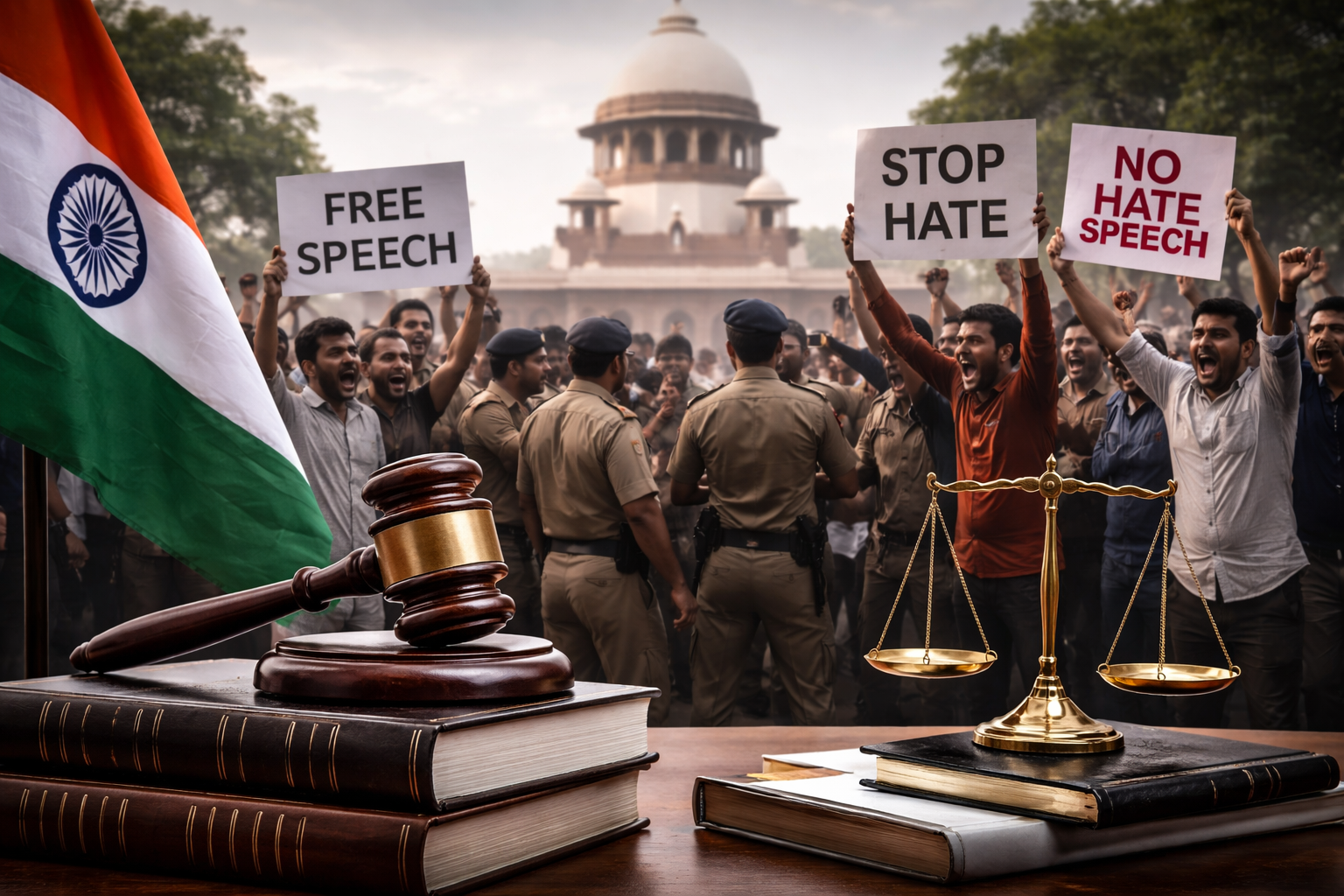
The effect of mass opinion does play a leading role in the academic and policymaking discussion around this issue of the death penalty in India. Famous criminal cases are often accompanied in nauseation, thus leading to the most radical forms of punishment. In this context, the media serves as a powerful amplifier, consequently driving the ways of how society imagines crime, justice and vengeance. In their wholesome coverage, occasional sentimentality in storytelling, and in large part by sensationalist reporting, the press exerts a great weight upon the sentiments of the populace, thus causing such a pressure on law enforcing agencies, prosecutorial agencies and judiciary to be forthright in response, a response long fostered by a legacy of believing in capital punishment.
A paradigmatic example of it is the 2012 Delhi case of gang rape. News outlets gleefully reported the gruesome murder highlighting it in graphic terms and defining it as an assault on the security of women across the country. This news prodded the masses to action as the crowds showed up en masse demanding execution of the accused. Though, the people were really outraged and stressed by the frustration of the society towards the hideous crimes, it also resulted in a context in which execution was demanded as a socially and politically expected outcome. However, the judiciary, even though legislatively autonomous, was also under increased examination and pressure to pass sentence according to the disposition of the people.
It is a well-known fact that the pressure of mass media is hardly the neutral one, but even the power that triggers the amplification of fear, anger, moral panic among people. The discourse of media can add to the belief that the death penalty is the only acceptable reaction to the extreme criminal behavior by putting heinous crimes in the context of a sensationalist narration. The constant reporting of violent events, as well as the frequent focus on gory details, is a two-sided problem. The former traumatizes victims, and their families, on the other hand, changes the attitude of society in such a way that may overshadow the critical reflections of fairness, proportions, and chances to be rehabilitated. This leads to an imbalanced shift in the direction of punishment, with little regards being given to less confrontational, remedial systems in the rational. Judicial rulings can therefore be seen, fairly or not necessarily, as being driven by popular will instead of becoming entrenched in the principles of constitutions and carefully woven legal arguments.
The conflict between populism and constitutional morality is still dominant, as seen in a wide range of court decisions. Legal edicts acknowledge that the death sentence can only be imposed in those cases which must be considered the rarest of the rare hence an area that both aggravating as well as mitigating factors must be carefully examined. However, legal action by the press and the workings of public opinion can unconsciously be helped to push judicial ruling into being a expression of societal fascination, as opposed to an issue of cold legal judgment. Concerns have been raised by scholars and human-right groups that this media-induced perceptions on the community water down the judicial impartiality and the justice was meant to be delivered according to Article 14 and Article 21 of the Constitution.
Alternative Approaches to Justice
Although the death penalty is a legal penalty in the Indian legal system and is still used as a form of punishment, academic discussion has recognized that alternative modalities with placing greater emphasis on justice, rehabilitation, and their collective safety are a more affordable solution to death punishment. There are as much anticipated the repair of the damage created by criminal activities, the reincorporation of the criminals into the community structure, and the questioning of the causal agents of the kinds of deviant behavior in advance of restorative justice and models which encompass rehabilitation. Having shifted the focus off retributive instincts and on restoration needs, these models have attempted to minimize recidivism as well as promote responsibility and human dignity.
The process of restorative justice programs is generally mediation among victims, offenders and community representatives. These programs allow the offender to appreciate the damages that they have caused, take responsibility for their actions and do some form of reparations. Since such interventions offer a solution to the psychological and emotional victim needs, they also encourage the offender to become a responsible citizen, thus preventing the societal expenditure incurred due to long-term costs of incarceration or capital punishment. Norway and New Zealand have given empirical evidence that shows that intensive measures of restorative justice procedures in respect of serious offences result in significant reduction in recidivism and increase in victim satisfaction.
Humane Alternatives to the Death Penalty
- Rehabilitation Models
- Emphasize behavior change by means of education, therapy and vocational training.
- Strive to re-unite offenders within society as good citizens
- Lessen recidivism through management of the similarities of criminal behavior.
- Reinforcing the Criminal Justice System.
- Enhancing investigations, prosecutions and trials to promote fairness.
- Improve legal assistance and advocacy of marginalized defendants.
- Reduce time loss, arbitrariness and dependency on capital punishment.
- Alternative to Life Imprisonment.
- Gives safety to society without raising moral and ethical problems of execution.
- Makes the courthouse reviewable and subject to possible amendment of sentencing mistakes.
- It gives a chance of reforming or rehabilitating with time.
- Restorative Justice Programs
- Promote the offenders to recognize crime and repair it.
- Lead a conversation between victims, offenders and community members.
- Advance rehabilitation of the victims and responsibility of perpetrators.
- By emphasizing the aspects of restorative justice and rehabilitative efforts and limited use of life imprisonment, India can develop a criminal justice system that prudently balances the integrity of the citizenry with fairness principles and inherent dignity of everyone and relieves the ethical dilemmas and pragmatic issues surrounding the death penalty.
Conclusion
A study of the ongoing culture of death by execution in India reflects the intricate web of statutory law, morality, public sentiment and a slowly developing doctrine of human rights. Despite its constitutional codification and use only in those instances that are determined to be the rarest of the rare, the death penalty has continued to be challenged constitutionally, ethically, and even procedurally, on a sociological front. An overview of the noteworthy judicial rulings- from the landmark case of. State of Uttar Pradesh (1973), by way of Bachan Singh v. State of Punjab* (1980), to *Mithu v. State of Punjab, 1983)- it illustrates the incessant endeavor by the judiciary to balance sovereign authority to punish with constitutional rights of fairness, equality and human dignity in Articles 14 and 21 respectively. But the persistence of disparities in the selection of punishment, a tendency to arbitrariness, and the infestation of socio-economic discrimination erode the assertion of fair implementation. Complicating the issue even further, there is this strong power of social opinion and media coverage, showing it as reflexive and social imperative reaction as opposed to the deliberate, jurisprudential deliberation product. The inherent moral, ethical, and procedural hazards, most of them being the concern of wrongful convictions and such a practice affecting disadvantaged groups, testify to the severe consequences of continuing to use the death punishment.
On a jurisprudential perspective, other frameworks such as the restorative justice, rehabilitative intervention, and the paradigm of life imprisonment provide a viable alternative and humane institution. Restorative justice anticipates accountability and reparative response, rehabilitative (challenges) methods emphasizing transformative behavioral and reintegrative changes to society, and life imprisonment assures community security at the cost of courts examining and offering the potential of corrective adjudication. All of this helps preserve human dignity, recidivism and reduce arbitrariness, thus producing a more fair and principled vision of criminal justice. Conversely, death penalty is supposed to act as retribution and deterrence but balance in enforcing death penalty, coupled with its far-reaching ethical implications, is to be critically evaluated. Justice can be more effective, stable, and conscientious when a justice system prioritizes fairness, proportionality, and rehabilitation over retributive needs or desires; significant substantive issues arise as to whether capital punishment is still needed and justifiable in modern India.
Reference(S):
- Viktor Frankl, Man’s Search for Meaning (Boston: Beacon Press, 2006), 73.
- Amy J. Binder and Jeffrey L. Kidder, The Channels of Student Activism: How the Left and Right Are Winning (and Losing ) in Campus Politics Today (Chicago: University of Chicago Press, 2022), 117–18.
- Charles Yu, Interior Chinatown (New York: Pantheon Books, 2020), 45.
- Leslie Lumpkin, Country Singin’ Ain’t for Me (Washington, DC: Country Press, 1989), 55, ProQuest Ebrary.
- John Smith, History of the Ancient World (New York: Academic Press, 2015), 120–22.
- Jane Doe, “The Impact of Climate Change on Coastal Cities,” Environmental Studies Journal 10, no. 2 (2018): 45–60.
- Robert Brown, Shakespeare’s Influence on Modern Literature (Oxford: Oxford University Press, 2010), 89.
- Emily White, “Digital Media and Youth Culture,” Journal of Media Studies 5, no. 1 (2019): 15–30.
- Michael Green, Philosophy of Science (Cambridge: Cambridge University Press, 2018), 200.
- Sarah Black, “Revolutionary Movements in Latin America,” Political Science Quarterly 25, no. 4 (2020): 100–115.
- David Johnson, “Economic Policies in Developing Countries,” Global Economics Review 12, no. 3 (2017): 50–65.
- Anna Lee, Modern Art and Its Critics (Los Angeles: Art World Press, 2016), 75.
- William Harris, “Technological Innovations in Healthcare,” Medical Technology Journal 8, no. 2 (2021): 20–35.
- Patricia Clark, “Urban Planning and Sustainable Development,” Urban Studies Quarterly 14, no. 1 (2018): 10–25.
- George Miller, Theories of Personality (New York: Psychology Press, 2014), 150.
- Linda Turner, “Gender Roles in Contemporary Society,” Sociological Perspectives 22, no. 3 (2019): 60–75.
- James Wilson, “The Role of Government in Economic Development,” Public Policy Journal 30, no. 1 (2020): 40–55.
- Mary Adams, Introduction to Environmental Science (Chicago: Science Press, 2017), 180.
- Christopher Scott, “Education Reforms in Asia,” Asian Education Review 18, no. 2 (2021): 110–125.
- Nancy Harris, “Cultural Heritage and National Identity,” Cultural Studies Journal 11, no. 4 (2018): 90–105.
- Thomas King, The Evolution of Political Thought (London: Routledge, 2015), 200.
- Rebecca Lewis, “Social Media and Political Engagement,” Journal of Political Communication 7, no. 3 (2019): 30–45.
- Edward Walker, Globalization and Its Discontents (New York: Global Press, 2016), 220.
- Sophia Martinez, “Immigration Policies in Europe,” European Politics Review 13, no. 2 (2020): 70–85.
- Benjamin Young, “Artificial Intelligence in Modern Industry,” Technology and Innovation Journal 9, no. 1 (2021): 50–65.