Authored By: Motshegetsi Zawadi Kekana
University of South Africa
ABSTRACT
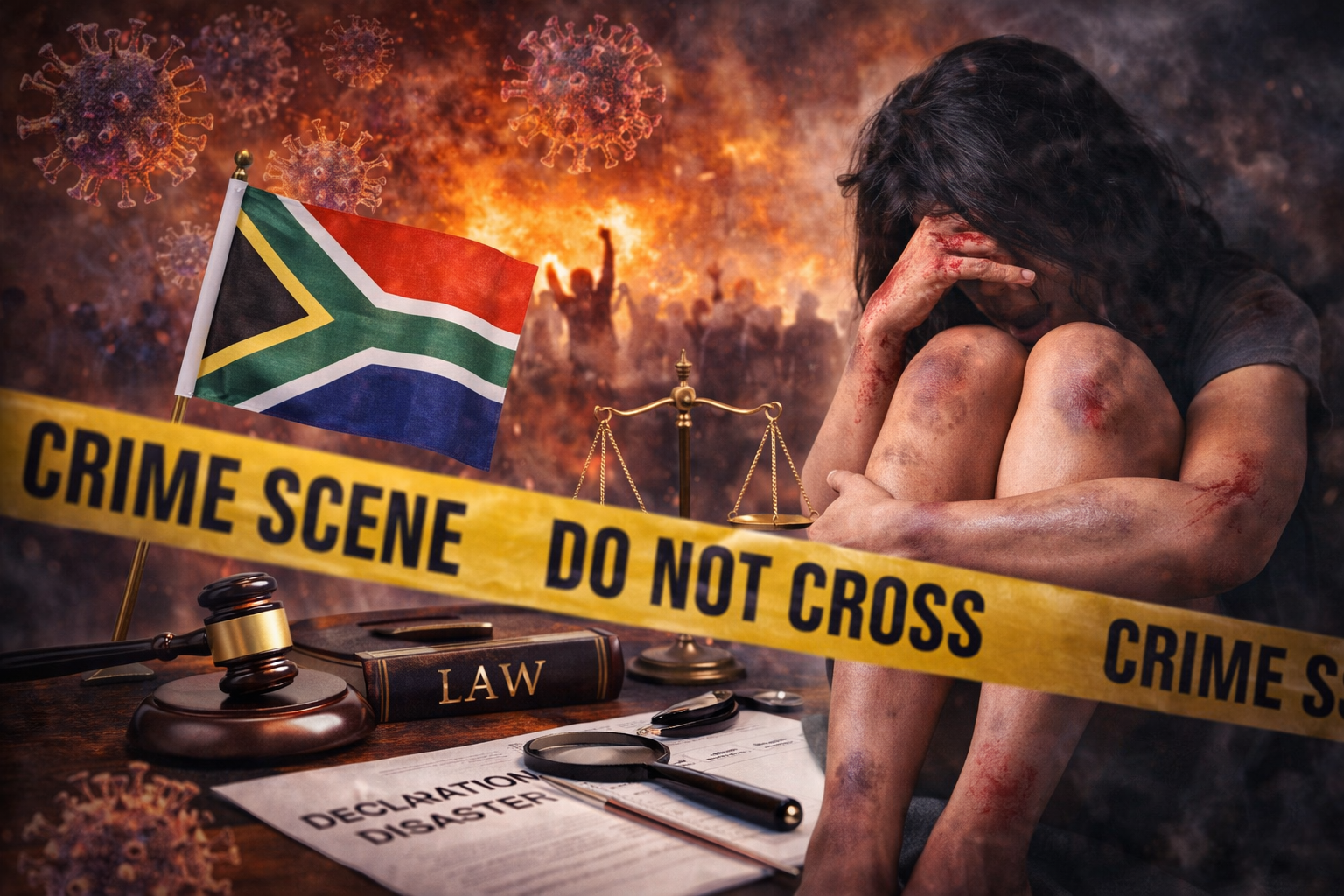
Gender-based violence continues to be one of the most urgent human rights matters in South Africa, despite a comprehensive constitutional and legislative framework that protects equality, dignity, and the right to safety and security. This article looks at how those constitutional rights have been compromised by the institutional culture, inhumanity, and lack of enforcement of the legal system. It analyzes important laws, constitutional clauses, court interpretation, and some case studies that show systemic failure using doctrinal and analytical approaches. It is maintained that the state must combine moral commitment, responsibility, measured execution, and legal change to eliminate GBV.
INTRODUCTION
South Africa’s Constitution promises a society founded on the inviolability of human dignity, equality and freedom. But every week headline news indicates something different: women and children ill-treated, murdered or having to undergo the traumatic experience of a failed system that should be there to protect them. Social movements and public protests like #AM I NEXT, #, Justice for Uyinene and #Justice for Cwecwe demonstrate massive frustration and a demand for fundamental changes as well as social media platforms such as Women for change that demonstrate a cry for the justice of GBV in South Africa. . The mismatch between the constitutional promise and real life is stark. This article explains why laws, however well drawn up, have so frequently failed to deal effectively with the violence perpetrated against women and children. It argues that the malady is due to the combined influence of institutional neglect, procedural incompetence and the absence of moral goodwill. The articles proceed as follows, sets out the legal framework, considers judicial pronouncements defining state duties, analyses a few cases showing operational incompetence and proposes reforms combining legal competence with human compassion.
RESEARCH METHODOLOGY
This article uses a doctrinal approach with analytical commentary. The primary sources used are the Constitution of the Republic of South Africa, 1996, the Domestic Violence Act 116 of 1998 and its amendments; and the Criminal Law (Sexual Offences and Related Matters) Amendment Acts, rules of court and recent constitutional decisions which are consulted in order to clarify the duties imposed on the State in respect of victims of domestic violence and sexual assault. Secondary material includes institutional reports and analysis from civil society to give context to operational difficulties. Two recent case studies, one concerning a child victim (the prosecution was ultimately abandoned), and the other being a high-profile case of a famous Pastor(a suspect in sexual offences), are employed as factual instances pointing to the reality of institutional failure. The aim of the methodology is to provide a balance of careful legal analysis with moral reflection suitable to a national crisis.
LEGAL FRAMEWORK
The south African constitutional rights are pivotal to the state’s responsibility to prevent and respond to GBV. Section 9 of the constitution guarantees equality and prohibits discrimination on grounds of sex and gender.1 Section 10 safeguards human dignity of the citizens2, and Section 12(1)(c) secures freedom and security of the person, including protection from violence3. These provisions go beyond only creating a clean slate, they require the state to act positively for them to take reasonable measures to protect individuals from any violent acts. Positive obligations may include legislation, policy, resource allocation, and the establishment of procedures for effective investigation and prosecution.
Statutory law complements the Constitution. The Domestic Violence Act provides civil remedies including protection orders and recognizes varied forms of abuse and relationships.4 The amendments sought to modernize protections, broaden definitions, and make mechanisms more accessible. The Criminal Law (Sexual Offences and Related Matters) Amendment Acts expand definitions of sexual offences and clarify duties on police and prosecutors to adopt victim-sensitive procedures. 5Global instruments, such as Convention on the Elimination of all forms of Discrimination against Women (CEDAW) and many further require the state to pursue prevention, protection and prosecution towards victims and Women in general. This is evident in the Carmichele v Minister of Safety and Security case whereby it is a duty for the state to protect women against perpetrators; it is a constitutional duty6. Yet the existence of laws and obligations is only the starting point, it is the quality of implementation that determines whether victims obtain the rights promised to them.
JUDICIAL INTERPRETATION
The duties of the state are genuine and enforceable, according to the Constitutional Court. In landmark rulings, the Court acknowledged that governmental incompetence in law enforcement and prosecution might amount to a violation of constitutional obligations. According to judicial logic, administrators must take reasonable, coordinated action to defend life and dignity. However, courts have occasionally recognized the operational and resource limitations that institutions suffer. However, a lack of resources cannot be used as a general justification for inactivity. Rather, constitutional litigation has frequently served as an inspiration for shaping policies and the clarification of minimal reasonableness requirements. Many victims have not received justice because of the inadequate implementation of legal counseling by prosecution services and enforcement authorities, regardless of these declarations.
A few cases serve as good examples for the state’s constitutional right to protect individual however in these cases, the state has failed to do, sparking a mistrust from the South African citizens.
Carmichele v Minister of safety and security
In this case, an applicant, Ms. Carmichele was a victim of attempted sexual assault/violent offences by a man who had been charged previously with the similar charges. He was released on warning despite the accusations towards him. The state decided that they did not see it fit to deny him bail because the prosecutor, Mr. G.Oliver, did not provide information about Coetzee’s previous sexual offences, therefore they only released him with a warning. 7
His release from prison seemed unjust and unconstitutional. Coetzee committed a subsequent offence with Ms. Carmichele; therefore, she filed a lawsuit against the state because the official failed to protect her from a known offender. The constitutional court stated that section 39(2) of the constitution is important section for court interpretation because the values are required to be upheld according to the bill of rights.8 It is the state’s responsibility to ensure safety and protection of their citizens. The state was seen liable for the violent attempt that has transpired between Coetzee and Carmichele because of failing to act rightfully, and the officials failed to follow the correct procedure with this matter leading to the attack. Thus, the court’s order broadened responsibility to cover public officials’ careless omissions in addition to vicarious duty.
S v Baloyi9
This case set a significant precedent in South African law regarding domestic violence. An army officer was found guilty of attacking his wife and violating an interdict given to him from the Prevention of family violence act 133 of 1993.10 He then argued that the decision to find him guilty under the statute was unconstitutional. The court stated that since the clause infringed upon the right to a fair trial, the Constitutional Court declared it to be unconstitutional. The court emphasized the necessity of striking a balance between the accused’s rights and the state’s obligation to protect victims of domestic abuse. The ruling emphasized how serious domestic abuse is and how important it is to make sure that legal actions don’t infringe constitutional rights. The Constitutional Court acknowledged that domestic violence is a constitutional issue that threatens equality and freedom rather than being a personal matter.³ The Court emphasized that to protect victims, the state must take preventative measures.
CRITICAL ANALYSIS
Although South Africa has a detailed legal structure regarding gender-based violence (GBV), its implementation is not straight forward and sometimes inconsistent. Survivors and those who lost their lives continue to be denied justice to police’s lack of professionalism, incomplete investigations, and procedural delays. The disconnect between constitutional principles and real-life situations that need legal implementation reveals how frequently institutions fall short in protecting the most vulnerable in this country from harm.
According to 2025 journal article research by Oxfam South Africa, survivors tend to find themselves stranded “without justice, closure, or meaningful remedies,” this article, “The crisis of Gender based violence and a failing justice system; from poor police responses and delays in prosecution to the inability to bring cases to a fair and reasonable conclusion.” 11 The Commission for Gender Equality agrees, noting persistent issues such as missing evidence, low government accountability, and a lack of victim assistance in township and rural regions, basically nationwide.12
The recent cases illustrate the systemic holes in the justice system. The case of Cwecwe, a 7- year-old girl who was sexually assaulted in school has sparked outrage from the public. The 7-year-old girl was deprived of Justice when the case was withdrawn. Prior to the matter being public, there was a lack of urgency from the police officials as well as the school that the victim attends. Although the child survived, the withdrawal of the case and stating that there is lack of evidence, illustrated that the state violated the right to the child’s protection. 13
Another recent case is the case of Pastor Timothy Omotoso who was charged with rape, human trafficking as well as sexual offences. His unguilty verdict was devastating to his victims and to those who have suffered from GBV in the past, this has damaged public confidence.14 Just in the article, this meant “ You are on your own”.
These incidents demonstrate the lack of urgency , empathy from the state and inconsistent legal action. The violence against women and children is out of hand, and the justice system tends to fail them consistently. Some survivors receive justice and others don’t. Every citizen in south African has equal right.
This is a moral failure. Every case that is turned away, ignored or taken lightly opens doors for perpetrators to take advantage of the law in South Africa. The very same law that is meant to protect its citizens.
Gender based violence will be prevented if legal action and human compassion are combined by the state. This is a call to stop Gender based violence in South Africa.
RECENT DEVELOPMENTS
Developments in South African were seen with the changes the parliament has tried to implement to strengthen protection against gender-based violence. The Gender-based Violence and Femicide National Strategic Plan was implemented in 2019 to respond to Gender based violence. This plan ensured to work effectively with the state and the public to help everyone affected by GBV, including those who couldn’t fight for themselves, e.g. the elderly, the mentally ill and disabled. Its main goal is to make the response to GBV be more effective and accommodative to everyone affected instead of inconsistency and it being scattered to different victims/survivors. Another NGO movement called women for change was also created to assist in raising awareness, putting the stories of survivors on public platforms and ensuring that they influence decisions of the state and police officials.15 They highlight issues such as a weak justice system and lack of humanity or empathy from the government officials, and they have also added GBV guides. However recently these reforms have been on a standstill, and the state/police officials is still inconsistent with legal action, there has been excuses of lack of police vans in police stations whenever a victim reports a crime, lack of staff and no sense of urgency for any case reported. However, these reforms did not ensure consistent legal action everywhere, some victims receive protection and others don’t.
SUGGESTIONS/WAY FORWARD
Altering the gaps between law and reality requires concrete measures to do and ensure that the law aligns with the constitutional values by make sure to ensure safety and prevent criminal activities.
- Enough resources at police stations/organization to assist victims.
- Proper police training to ensure that police officials who deal with cases on GBV on murder respond quickly to the matter and have empathy towards them because they are the hope of those survivors/victims.
- Negligence from police officers should be prohibited and they should be held accountable for ignoring victims and ignoring evidence on cases they receive. They should receive disciplinary hearing for such behaviour.
- There should be educations for the public on what to do when facing danger and educate them on the legal protections.
- Victim-centred methods should be implemented. Trauma counselling should be done, and victims should not be forced to be in the same court room as their attackers. 6. Statutes should be reformed especially where there are gaps on the protection of citizens.
- Police and prosecutors should be monitored on how they handle GBV cases and to make sure that all victims receive the justice they deserve.
CONCLUSION
South Africa’s legal framework against gender-based violence is formidable in theory, but it is far too frequently inadequate. The case studies and real-life incidents mentioned above show how constitutional guarantees of security and dignity are violated when prosecution inconsistencies, procedural errors, and popular views of leniency come together. Both institutional change and a moral revolution that integrates compassion into institutional operations are necessary for effectively addressing GBV. Law and life may be brought closer together with specific, measurable outcomes including specialized courts, required training, supervision, fast reaction teams, and empathy towards those affected. Although such effort will be lengthy and difficult, it is required by law and morality. Action is necessary for justice and the public need reassurance and to have faith in their justice system.
REFERENCE(S):
Committee on the Elimination of Discrimination against Women | OHCHR Oxfam South Africa, Press Statement: The Crisis of Gender-Based Violence and a Failing Justice System (July 2023), https://www.oxfam.org.za/press-statement-the crisis-of-gender-based-violence-and-a-failing-justice-system/
1NSP GBV&F 2020-2030FIN3
S v Baloyi and Others (CCT29/99) [1999] ZACC 19; 2000 (1) BCLR 86 (CC); 2000 (2) SA 425 (CC); 2000 (1) SACR 81 (CC) (3 December 1999)
JusticeForCwecwe – Wikipedia
Lubna Nadvi, GBV in South Africa: Unpacking the Failures of the Justice System, IOL (Apr. 26, 2025), https://www.iol.co.za/thepost/opinion/2025-04-26-gbv-in-south africa-unpacking-the-failures-of-the-justice-system/.
1 The constitution of South Africa Act 108 of 1996 s9
2 Act 108 of 1996 s10
3 Act 108 of 1996 s12(1)(c)
4 Domestic violence Act 116 of 1998
5 The criminal law( sexual oƯence ad related matters) amendment, Act 32 of 2007
6 Carmichele v Minister of Safety & Security & Another 2001 (4) SA 938 (CC).
7 Carmichele v Minister of safety and security (CCT 48/00) [2001] ZACC 22; 2001 (4) SA 938 (CC); 2001 (10) BCLR 995 (CC); 2002 (1) SACR 79 (CC) (16 August 2001)
8 Act 108 of 1996 s39(2)
9 S v Baloyi and Others (CCT29/99) [1999] ZACC 19; 2000 (1) BCLR 86 (CC); 2000 (2) SA 425 (CC); 2000 (1) SACR 81 (CC) (3 December 1999)
10 Prevention of family violence act, 133 of 1993
11 https://www.oxfam.org.za/press-statement-the-crisis-of-gender-based-violence-and a-failing-justice-system/
12 Commission for Gender Equality, Annual Report on Gender-Based Violence in South Africa (2023)
13 https://www.sabcnews.com/sabcnews/protesters-demand-justice-for-7-year-old-rape-victim/
14 S v Omotoso and Others (CC15/2018) [2025] ZAECQBHC 8 (2 April 2025)
15 Women For Change