Authored By: Muhammad Ayaz Abro
Shaheed Zulfiqar Ali Bhutto University of Law Karachi
Introduction
Artificial Intelligence AI, has quickly transformed in the legal, economic and social landscape across the world. From automated decision making systems ( AI Languages), and predictive analytics to generative AI tools like ChatGPT, Gemini AI, the integration of AI into everyday life is not futuristic concept but an present reality. In Pakistan, use of of an AI is gradually emerging in sectors such as banking, healthcare, education, surveillance, and even judicial administration. However, this technological progress has not been matched by an equally robust legal and balanced framework.
This article argues that Pakistan presently lacks a comprehensive legal structure specifically governing artificial intelligence, which creates significant concerns relating to privacy, accountability, data protection, and constitutional rights. While certain existing laws, such as the prevention of Electronic Crimes Act 2016 (PECA) provide indirect coverage for technology related issues they remain insufficient to address the complex legal questions raised by AI. This article first examines the legal framework in Pakistan, then analyses the key legal challenges posed by AI, and finally propose the need for a dedicated national AI regulatory framework
Existing Legal Framework in Pakistan
At present time Pakistan does not have any legislation that specifically deal or regulate artificial intelligence The legal response to technology related concern is primarily found in general statutory and constitutional provisions.
The most relevant statute is the Prevention of Electronic Crime Act 2016 (PECA), which criminalises unauthorized access to information systems, data interference, cyberstalking, identity theft, and electronic fraud. Although PECA addresses cybercrime and misuse of digital systems, it was not drafted yet with AI system in mind. Consequently, it does not adequately regulate issues such as alogorithmic decision making, machine learning liability, or AI generated misinformation.
In addition, the Constitution of Islamic Republic of Pakistan 1973 provides certain fundamental rights that become relevant in the context of AI. Article 14 (Dignity of Man) it guarantees the dignity of man and privacy of home, which may extend to digital privacy concerns arising from AI surveillance and mass data collection. Similarly, article 19 protect freedom of speech and expansion, a right that may be implicated byy Al driven content moderation systems, deep fakes and misinformation.
The constitutional framework therefore offers foundational legal principles, yet it does not directly address the specialized challenges of artificial intelligence. This legal vacuum is particularly problematic because AI systems often function autonomously and can affect individuals without transparent human intervention.
Legal Challenges Posed by Artificial Intelligence in Pakistan
Privacy and Data Protection
One of the most important concern rising from AI is that collection, processing, and use of personal data. AI system rely heavily on large datasets to train and improve its tool performance . In Pakistan, the absence of a comprehensive data protection law creates a serious legal gap.
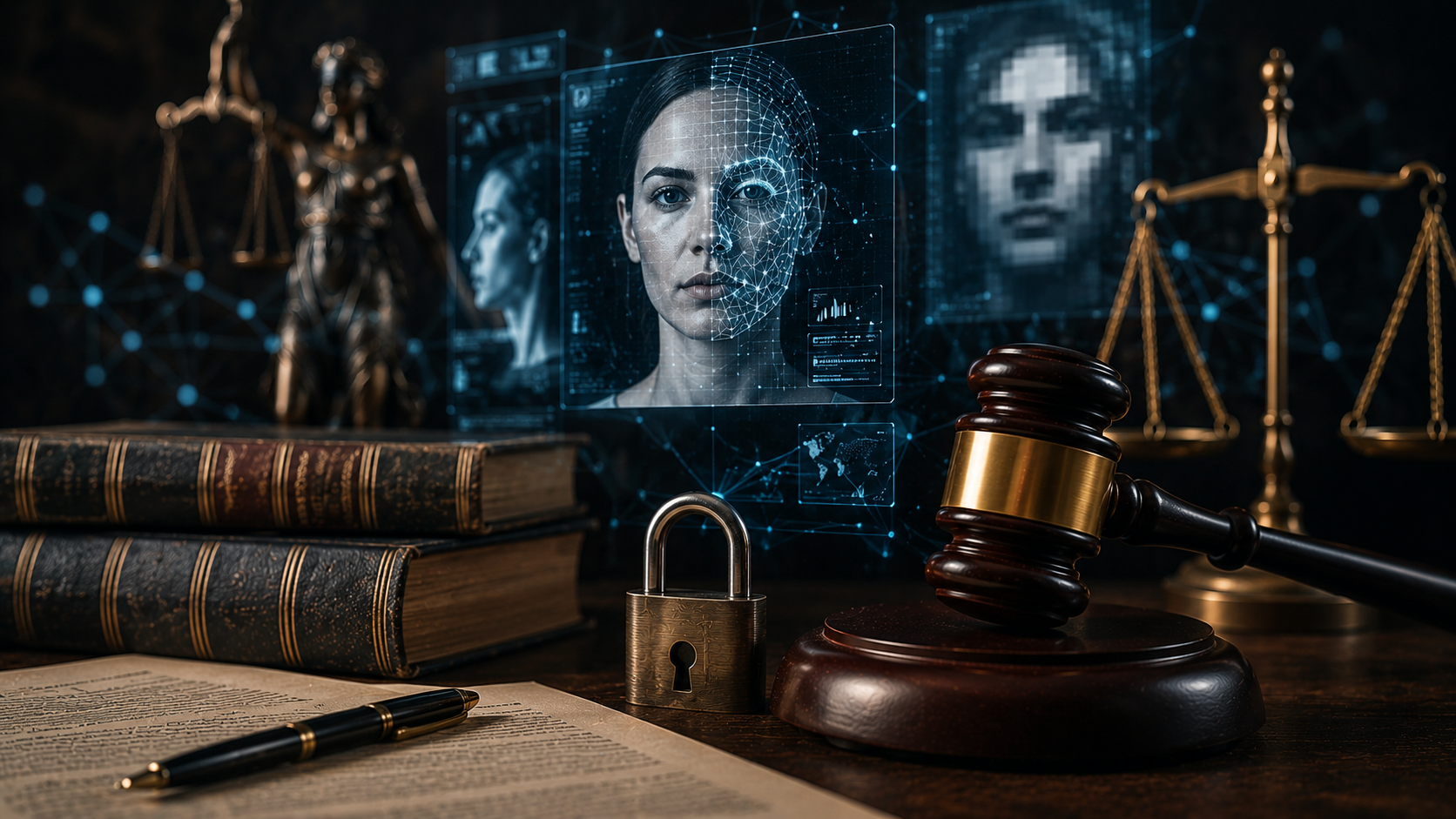
AI based surveillance tools facial recognition systems and automated profiling mechanisms may include upon individual privacy rights protected under article 14 of the constitution without clear legislative safeguards there remains a risk of excessive state or private sector surveillance. The misuse of personal information for commercial or government purposes can undermine constitutional protection and public trust.
This issue becomes even more concerning in a developing legal system where regulatory oversight mechanisms are still evolving it is submitted that Pakistan urgently requires a statutory framework defining concent data retention limits and the liability for misuse of personal data by AI system
Accountability and Legal Liability
Another major issue is the question of liability when an AI system causes harm if an Ai based financial system makes a discriminatory lending decision or if an AI healthcare tool provides an incorrect diagnosis the legal question arises who should be held responsible?
Traditionally legal principles of negligence and liability are based on human conduct and intention. AI system however, often operate autonomously or semi autonomously. This creates ambiguity regarding whether responsibility lies with the developer the operator, the institution deploying the system or another party.
Pakistan’s current legal framework does not provide a clear answer to this question. PECA deals with primarily with intentional cyber offences and therefore cannot adequately address civil liability or tort based harms caused by AI decision making systems.
The absence of clear liability standards may discourage innovation while simultaneously leaving victims without an effective legal remedy. A modern AI decision law must therefore establish clear standard of accountability
Bias, Discrimination, and fairness
AI system are only as the data on which they are trained if the data contains social economic or cultural bias the resulting output may perpetuate discrimination.
In Pakistan where socio economic inequalities are already significant biased AI system may reinforce existing disparities in access to employment credit education and justice. For example automated recruitment systems may disadvantage candidates from underrepresented backgrounds if trained on biased historical data.
Such outcomes raise serious constitutional concerns under the principles of equality and non discrimination while Pakistan’s constitutional jurisprudence supports equal treatment before law there is no specific legal mechanism audit or review algorithmic bias.
Judicial Developments and Emerging Recognition of AI
Recent judicial development indicates that the Pakistani legal system is beginning to acknoeledge the role of artificial intelligence in Ishfaq Ahmed v Mushtaq Ahmed (2025 SCP 112), the Supreme Court of Pakistan recognized the utility of AI as an assistive tool within judicial processes while making it clear that the such technology cannot replace human judicial reasoning.
Tjis case is significant because it demonstrate judicial awareness of technological change. At the same time it highlights the cautious approach adopted by the courts in Pakistan. The recognition of AI as a supportive mechanism rather than a substitute for human adjudication reflects an attempt to balance innovation with the rule of law.
The decision may serve as an early judicial foundation for future AI regulation in Pakistan never the less isolated judicial observations cannot substitute for comprehensive legislation.
Comparative Perspective and the Need for Reform
A comparative perspective further illustrates Pakistan’s balances the gap.
Jurisdictions such as the European Union have moved towards the detailed legal regulation of AI through specialized legislative frameworks. These developments emphasise transparency, risk classification and accountability.
Pakistan, by contrast remains at a preliminary stage the absence of dedicated AI law places the country at risk of falling behind international legal standards and technological governance norms.
A national AI framework should include the following
- Data protection legislation specifically addressing AI driven data processing.
- Liability rules for harm caused by automated systems.
- Mandatory transparency requirements for high risk AI applications.
- Algorithmic audit mechanisms to direct bias and discrimination.
- Judicial and administrative oversight bodies for enforcement and review.
Such a framework would not only protect constitutional rights but alsp encourage responsible technological development and foreign investment.
Conclusion
Artificial intelligence is rapidly reshaping legal and institutional systems worldwide and Pakistan cannot remain outside this transformation while existing laws such as PECA 2016 and constitutional protections offer some indirect safeguards they are insufficient modulate the unique risks posed by AI.
This article has argued that Pakistan faces significant legal challenges in the areas of privacy accountability and algorithmic fairness due to the absence of a dedicated AI regulatory framework. The emerging judicial recognition of AI in Ishfaq Ahmed v Mushtaq Ahmed, marks an important development yet it also underscore the need for legislative action.
It is therefore recommended that Pakistan enact a comprehensive national AI law that balances innovation with the protection of fundamental rights such as the reform is essential to ensure that technological progress occurs within a clear and constitutionally sound framework
Reference(S):
- Constitution of the Islamic Republic of Pakistan 1973, article 14 and 19.
- Prevention of Electronic Crimes Act 2016
- Ishfaq Ahmed v Mushtaq Ahmed (2025 SCP 112)