Authored By: Anannya Shivani Choudhury
Symbiosis Law School Pune
Abstract: In the entertainment world, the role people play is very impactful. Public figures are expected not only to visually appeal to the audience, but also to maintain a high level of moral standards, such as being humble, not promoting smoking, drinking, or drugs, and not having links with the underworld. Today, these expectations are strongly enforced through cancel culture, where people are not just the audience but also act as judges.
In this article, we examine how South Korea has developed powerful mechanisms to control and regulate the entertainment industry and protect its public image. This is contrasted with India, where celebrities are often worshipped and audiences are highly sentimental towards them.
Introduction: Entertainment doesn’t just entertain people; it also sets a standard for how we live, behave, and think. That’s why for a celebrity, just looking good on screen is not enough. Off-screen personality matters too. They should behave decently and responsibly. This is where cancel culture comes in; people are not just the audience, they also act as judges.
During Sushant Singh Rajput case, many other issues also came up — drugs, Bollywood mafia, and the pressures of the entertainment industry, especially nepotism.
When the term “Bollywood mafia” became widely discussed, some fans even called for boycotts of actors like Alia Bhatt on social media. In the drug case, names like Deepika Padukone and Rakul Preet Singh came up, showing a darker side of Bollywood.
Another example is actor Sooraj Pancholi, whose career failed to take off as he was linked to a murder case even before his debut, showing how cancel culture can damage a career early on. In contrast, Aryan Khan, despite facing a drug case, was not found guilty and was later able to rebuild his reputation, showing that cancel culture does not always end a career when the legal outcome is favourable.
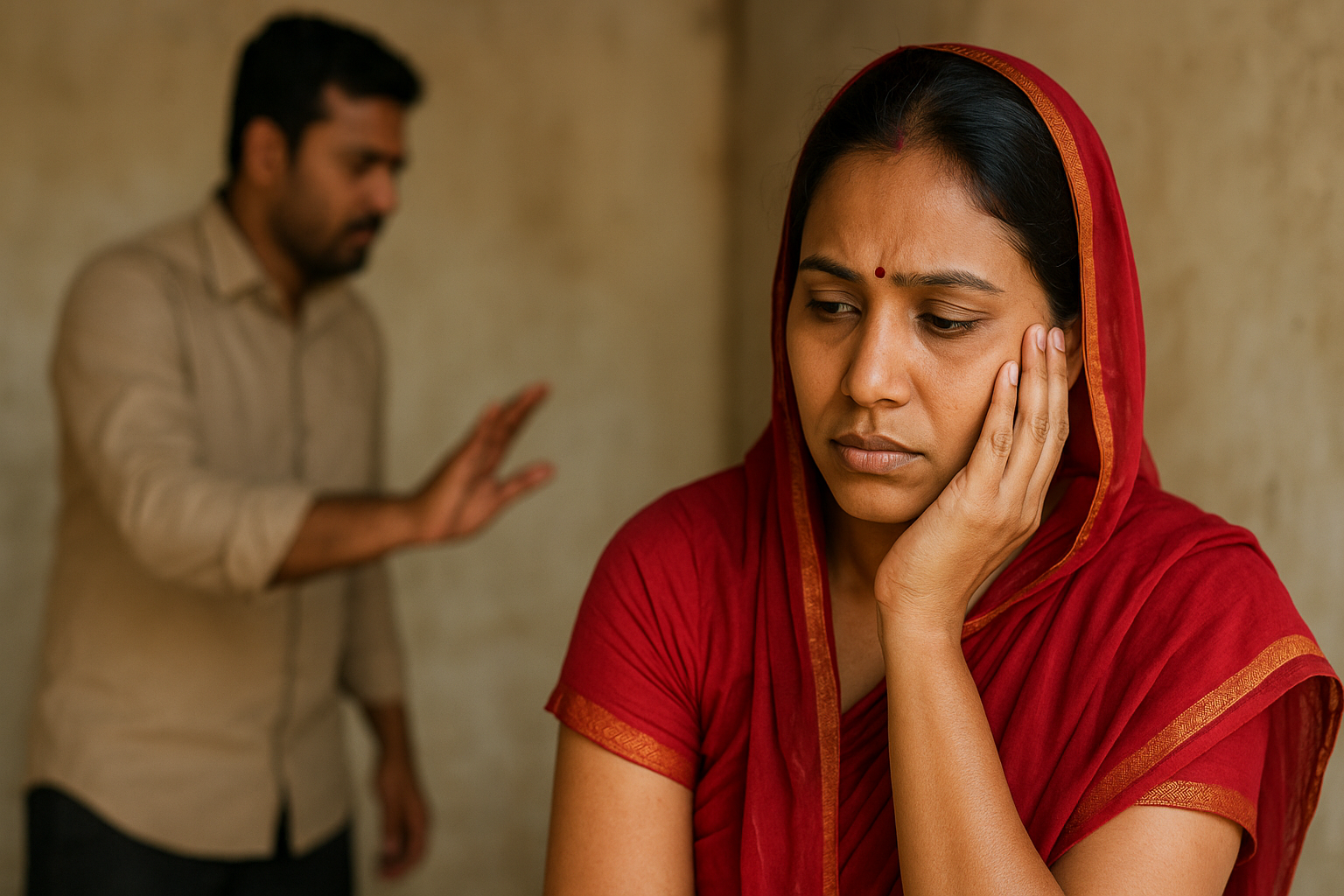
South Korea has developed powerful mechanisms to control and regulate the entertainment industry and protect its public image, which clearly contrasts with the situation in India. A Cancel culture often turns private matters into public discussion
Research Methodology: This article follows a doctrinal and comparative research methodology based on secondary sources such as case laws, statutes, news reports, and academic articles. It compares the operation of cancel culture in the entertainment industries of India and South Korea and analyses relevant legal cases to understand its impact on freedom of speech, defamation, and online regulation.
Cancel culture is used by consumers to show that a celebrity is not only expected to perform well at work but is also expected to have a clean personality and background. Think about a politician who has the responsibility of running the country but has a criminal background. Would you accept such a person as a CM or PM? Most likely, no.
South Korea is one of the countries where cancel culture works as a powerful and sometimes dangerous tool for celebrities. Although recovery is possible, only about 20–30% of celebrities manage to rebuild their careers[1]. Mainly because netizens react very quickly to scandals and often demand explanations from brands and call for boycotts even before any legal decision is made. Cancel culture in South Korea works through collective online action, where platforms like Nate Pann and more play a major role in spreading allegations and public opinion.
Compared to Western countries such as the United States, South Korea is much more unforgiving. This is largely due to cultural and social values that place strong importance on moral behaviour and public responsibility, sometimes giving more weight to public judgment than to formal legal processes.
Now it is hard to say why, on the other side, in India, cancel culture has much less power. Celebrities here seem more concerned about getting new projects and staying relevant than worrying about being cancelled. Ironically, cancel culture in India often feels more like online bullying. Social media leaves no one untouched, and its speed and scale can be intense. It all happens at once, and now it is not just about holding celebrities accountable for misconduct or values, but also about attacking people whose opinions or expressions are different. Many people who speak up are targeted, while others stay silent to avoid backlash.
In India, cancel culture often overlaps with a deeply polarised socio-political environment. A single comment or tweet can be interpreted in thousands of ways. With such a large population, there is no strong framework to deal with this issue, and it raises questions about whether freedom of expression is actually protected when online bullying is justified in the name of cancel culture. A recent example Arjun Kapoor and Varun Dhawan troll case. Arjun Kapoor was trolled in a way that went beyond online criticism and turned into emotional pressure, shame, and humiliation, which can even lead to mental health issues like depression or suicide. Varun Dhawan was also trolled for his facial expressions, showing how even harmless behaviour can become a reason for public ridicule. What starts as public criticism sometimes becomes defamation, because rumours and claims spread faster online than the truth.
In this way, India appears to be a place where people worship celebrities, yet calling for cancel culture becomes convenient when moral values or alleged misconduct are questioned. However, such actions can have a deep and lasting impact on a celebrity’s personal and professional life. A similar situation can be seen in the case of Kim Seon-ho, whose career was almost destroyed overnight due to allegations made by an anonymous individual. His case later became an example of recovery, as the personal issues were publicly clarified. Although his private life was heavily scrutinised, he was eventually seen as not guilty in the eyes of the public and was able to return to prominent projects in recent years.
Our legal framework is still not ready for cancel culture is because we do not have enough clear and understandable laws. No proper law or Act that clearly deals with online comments and their impact. With the DPDP Rules now final, organisations must move beyond privacy policies and ensure real compliance through consent, data security, and accountability, marking a shift to actual legal responsibility in India.
Referring to the Shreya Singhal case[2], where just one political comment was treated as a serious offence and the right to freedom of speech and expression was challenged. Because it was seen as a political issue, the people involved were even sent to jail in the first place. Don’t you think this clearly shows how easily free speech can be misused or misunderstood?
Another problem is that even after the court struck down Section 66A of the IT Act[3] for being unconstitutional, there is still no law that clearly draws a line between a normal comment and serious offences like sedition. Because of this gap in the law, people do not know where freedom of expression ends and where punishment begins, which makes cancel culture more confusing and dangerous.
Defamation can also happen in the name of cancel culture. Legally, this form of cancel culture is very hard to deal with because it can leave a celebrity without any way to survive professionally. It also creates a chilling effect on speech, where people start thinking too much about what they should say or not say. In such situations, major responsibility lies on intermediaries, who are expected to monitor and regulate such actions under Section 79 of the IT Act[4].
Kunal Kamra case[5], where the idea of setting up a government fact-checking unit was questioned. But don’t you think it becomes confusing when the government itself starts deciding what is true and what is false? This becomes even more problematic in political matters, where opinions differ and criticism can easily be taken in a negative sense.
X Corp. (Twitter) case[6], the platform objected to government orders that blocked certain content and user accounts. Twitter argued that these actions affected freedom of speech and did not properly follow the process under Section 69A of the IT Act. However, in 2023, the Karnataka High Court rejected the challenge and supported the government’s authority to block online content.
Conclusion: in S. Korea Cancel culture targets celebrities who affect moral standards or get involved in things that are not acceptable to society. But in India, social media has amplified it on a much larger scale, turning it into a platform for harsh public opinion. In other words, freedom of speech and expression is still a big part of the debate. Cancel culture is not wrong, but it must be used responsibly, as society expects celebrities to maintain good conduct and act as role models beyond their on-screen roles.
Cancel culture often turns private matters into public debates, making people hesitant to express their opinions, which can sometimes prevent unnecessary harm. In India, its impact remains limited due to the lack of strong digital laws and effective regulation.
Reference(S):
- Press Information Bureau, DPDP Rules, 2025 Notified: A Citizen-Centric Framework for Privacy Protection and Responsible Data Use (Nov. 17, 2025), https://static.pib.gov.in/WriteReadData/specificdocs/documents/2025/nov/doc20251117695301.pdf.
- IIMUN, Cancel Culture in India — Digital Justice or Online Bullying?, https://iimun.in/blog/others/cancel-culture-in-india-digital-justice-or-online-bullying/.
- The Culture Gully, Cancel Culture in India: The Evolution of Digital Outrage in a Complex Socio-Political Landscape, https://www.theculturegully.in/post/cancel-culture-in-india-the-evolution-of-digital-outrage-in-a-complex-socio-political-landscape (Mar. 15, 2025).
- Ashutosh Srivastava, Cancel Culture in India: Understanding Its Impact and Consequences, https://www.drashutoshsrivastava.com/post/cancel-culture-in-india-understanding-its-impact-and-consequences (Jun. 15, 2024).
- How Did Kim Seon‑ho Survive Cancel Culture? The Hometown Cha‑Cha‑Cha Actor’s Return, South China Morning Post (Nov. 17, 2021), https://www.scmp.com/magazines/style/celebrity/article/3156368/how-did-kim-seon-ho-survive-cancel-culture-hometown-cha.
[1] Daxue Consulting, South Korea’s Cancel Culture: How Consumers Hold Celebrities and Brands Accountable (Jan. 25, 2026), https://daxueconsulting.com/south-korea-cancel-culture/.
[2] Shreya Singhal v. Union of India, AIR 2015 SC 1523.
[3] Information Technology Act, s 66A.
[4] Information Technology Act, 2000, s 79.
[5] Kunal Kamra v. Union of India, 2023.
[6] X Corp. (formerly Twitter) v. Union of India, 2025.