Authored By: Reabetswe Potsane
Eduvos
ABSTRACT.
The abolition of the death penalty in South Africa was grounded in the Constitutional Courtd finding that capital punishment constitutes Cruel, inhuman, and degrading punishment. This conclusion, articulated in the S v Makwanyane, was premised on the assumption that imprisonment represents humane and constitutionally acceptable alternative. However, persistent and systemic failures with South Africa’s correctional system raise serious questions about the continued validity of this assumption. This article argues that, when assessed contextually, life imprisonment under prevailing prison conditions may itself amount to cruel, inhumane, and degrading punishment. Consequently, the death penalty can no longer be categorically distinguished as inherently more degrading. A comparative analysis with India’s constitutional retention of capital punishment under the “rarest of rare” doctrine demonstrates that constitutional democracies may legitimately diverge on this issue without abandoning fundament rights.
INTRODUCTION.
The prohibition of cruel, inhuman, and degrading punishment is a cornerstone of constitutionalism and international human rights law. In South Africa, this principle was given definitive constitutional meaning in S v Makwanyane and Another, where the Constitutional Court declared the death penalty unconstitutional for violating the rights to life an dignity. 1 The judgement marked a decisive break from South Africa’s apartheid era penal practices and aligned the country with international abolitionist treads.
However, Makwanyane was decided within a normative framework that assumed the existence of humane alternatives to capital punishment, particularly life imprisonment. Nearly three decades later, South Africa’s prison system is plagued by overcrowding, violence, and intuitional decay.2 This reality necessitates a reassessment of whether life imprisonment, as implement in practices, remains constitutionally distinguishable from the death penalty in terms of cruelty and degradation.
Such a reassessment requires moving beyond abstract constitutional ideals to an examination of lived penal realities. Life imprisonment, as currently administered, frequently entails prolonged exposure to degrading living conditions, chronic insecurity, limited access to healthcare, and profound psychological harm. For inmates serving indeterminate or effectively irreducible sentences, incarceration may constitute a sustained form of suffering that erodes human dignity over time. In this context, the distinction between a punishment that ends life and one that slowly extinguishes the quality and meaning of life becomes less clear-cut.
In analysis the article, seeks to interrogate the assumed hierarchy of punishments by critically comparing the experiential realities of life imprisonment with those of capital punishment. In doing so, it aims to contribute to a more nuanced constitutional discourse, one that recognizes that cruelty is not defined solely by the finality of death, but also by the duration, intensity, and conditions of suffering imposed by the state.
Constitutional Framework in South Africa.
The constitutional basis for the prohibition of cruel punishment is found in Sections 10,11 and 12 (10) (e) of the Constitution of the Republic of South Africa, 1996.3 These provisions protect human dignity, the right to life, and freedom from cruel, inhuman, or degrading punishment.
In Makwanyane, the Court held that the death penalty is inherently incompatible wit these rights because it extinguishes life, negates rehabilitation, and treats human beings as means to an end.4 While the court acknowledged the legitimacy of retribution and deterrence as sentencing objectives, it rejected their use as justifications for capital punishment.5Importantly, the Court assumed that imprisonment preserves dignity because it allows for continued existence and moral reform.
This assumption warrants scrutiny where imprisonment itself undermines dignity through systemic failure
South African Prison Conditions and Human Dignity
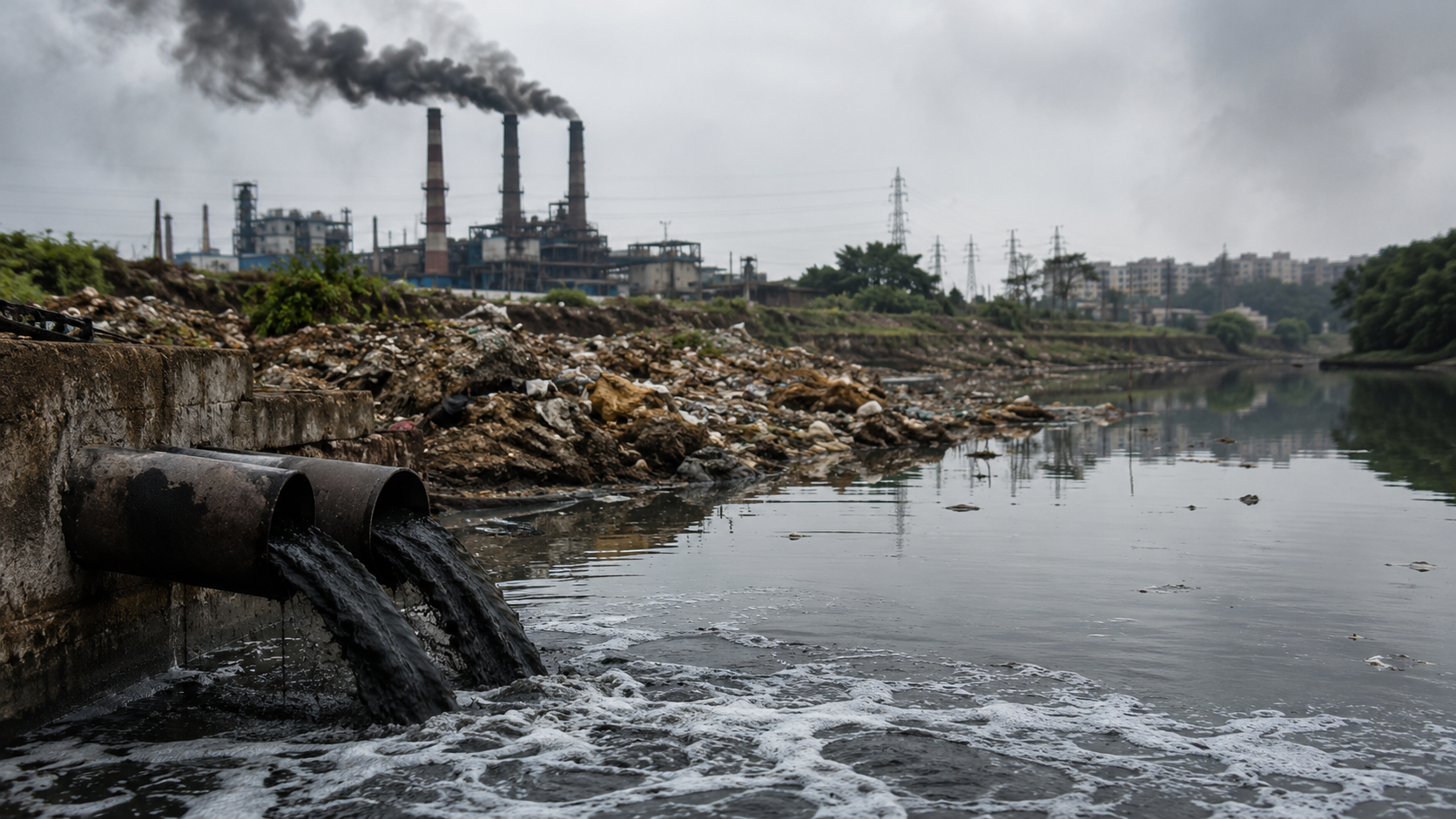
South African prisons are characterized by severe overcrowding, gang control, sexual violence, and inadequate healthcare. The Judicial Inspectorate for Correctional Services has repeatedly warned that these conditions pose serious risks to inmate safety and wellbeing.6These failures are not isolated incidents but structural features of the correctional system.
While incarceration lawfully restricts liberty, it does not extinguish constitutional rights. Prisoners retain their inherent dignity and must be detained under conditions consistent with constitutional standards.7 Where the state fails to provide such conditions, imprisonment may exceed lawful punishment and constitute cruel, inhumane, or degrading treatment.
Life imprisonment under these circumstances exposes offenders to decades of psychical danger and psychological suffering. As Muntingh observes, prolonged detention in degrading conditions may itself violate the constitutional guarantee of dignity.8
Reassessing Cruelty: Duration Versus Finality.
A central argument against the death penalty is its irreversibility. Execution forecloses any possibility of correcting wrongful convictions or facilitating rehabilitation. However, irreversibility should not be determinative of cruelty.
Life imprisonment without a realistic prospect of release if functionally irreversible. It permanently excludes the offender from society and subjects them to prolonged institutional suffering. Comparative jurisprudence supports this view in the Vinter v United Kingdom, the European Court of Human Rights held that irreducible life sentences may violate human dignity because they extinguish hope.9
When cruelty is assessed cumulatively, prolonged exposure to violence, deprivation, and phycological trauma may be more degrading than finite punishment carried out under strict procedural safeguards.
Psychological Suffering and Punishment.
Punishment encompasses both psychological suffering. Long term incarceration in unsafe and degrading environments produces chronic fear, anxiety, and despair. Prisoners serving life sentences may experience a gradual erosion of identity and purpose, particularly where rehabilitation programs are ineffective or absent.
While the death penalty undeniably entails psychological suffering, particularly during the period preceding execution, this suffering is temporally limited. By contrast, life imprisonment exposes offenders to indefinite psychological torment. When cruelty is assessed in terms of intensity and duration combined, prolonging incarceration may constitute a more sever punishment. International human right law recognizes that prolonged mental suffering can amount to cruel or degrading punishment.10
Comparative Constitutional Perspective: India
India presents a constructing constitutional approach, Article 21 of the Constitution of India protects the right to life but permits deprivation of life through a “procedure established by the law”.11 In Bachan Singh v State of Punjab, the Supreme Court upheld the constitutionality of the death penalty, limiting its application to the “rarest of rare” cases.12
The Court rejected the argument that capital punishment is per se unconstitutional, emphasizing proportionality, structured judicial discretion, and procedural safeguards. Subsequent cases, such as Machhi Singh v State of Punjab, clarified the circumstances under which the death penalty may be imposed.13
In applying this framework, Indian courts have developed a detailed sentencing methodology that requires a careful balancing of aggravating and mitigating factors. The offender’s personal circumstances, prospects of reform, age, mental condition, and the possibility of rehabilitation must be weighed against the nature of the crime, its societal impact, and the way it was committed. This individualized sentencing approach seeks to ensure that the death penalty is imposed not as a rule, but as an exceptional response to the gravest offences where life imprisonment is deemed wholly inadequate.
Subsequent jurisprudence has further refined this approach.
These developments demonstrate that India’s retention of the death penalty operates within an evolving constitutional framework that emphasizes due process, proportionality, and human dignity. Rather than treating capital punishment as inherently incompatible with constitutional rights, Indian jurisprudence reflects a pragmatic attempt to regulate its application through stringent safeguards, offering a comparative perspective that challenges absolutist abolitionist assumptions.
India’s approach illustrates that constitutional democracies may legitimately retain capital punishment without adding commitments to dignity and fairness. It adopts a contextual, rather than absolutist, assessment of cruelty.
Proportionality, Retribution, and Public Confidence
Punishment serves retributive, deterrent, and expressive functions. Crimes involving extreme brutality or terrorism profoundly undermine social order and public trust in the justice system. In such cases, life imprisonment under degrading prison conditions may be perceived as insufficiently proportionate.
South African jurisprudence recognizes proportionality as a core sentencing principle. 14 where punishment fails to reflect the gravity of the offence, its legitimacy is undermined. India’s retention of the death penalty reflects recognition of this concern, particularly in cases that shock the collective conscience.15
Although empirical evidence on deterrence remains contested, the symbolic deterrent value of the death penalty cannot be dismissed outright. Moreover, life imprisonment imposed significant financial and administrative burdens on an already overstretched correctional system.
South Africa’s exclusive reliance on incarceration has not resolved systemic prison failures, India’s experience demonstrates that capital punishment can exist within a constitutional framework while acknowledging systemic flaws and limiting its application.16
To conclude the categorical characterization of the death penalty as inherently cruel, inhuman, and degrading punishment warrants reconsideration when measured against the lived realities of South Africa’s penal system. While the Constitutional Court in S v Makwanyane correctly grounded its reasoning in the values of human dignity, life, and freedom from cruel punishment, its assessment was largely framed within abstract moral reasoning rather than a sustained comparison with the practical effects of alternative sentences, particularly life imprisonment under severe prison conditions. Nearly three decades later, the realities of prolonged incarceration in overcrowded, violent, and degrading environments compel a reassessment of how cruelty is experienced in practice rather than presumed in theory.
Life imprisonment in South Africa often entails decades of exposure to systemic violence, inadequate healthcare, psychological deterioration, social isolation, and the erosion of human dignity. For many inmates, especially those without realistic prospects of parole, incarceration becomes a slow, cumulative form of suffering rather than a rehabilitative process. The mental anguish associated with indefinite detention, combined with unsafe and degrading living conditions, may result in harm that rivals, or even exceeds, the suffering associated with a finite, procedurally regulated execution. Cruelty, in this sense, is not defined solely by the finality of death but by the intensity, duration, and inevitability of suffering imposed by the state.
Furthermore, the absolute rejection of the death penalty risks obscuring the state’s constitutional responsibility to ensure humane conditions of detention. If life imprisonment is upheld as the morally superior alternative yet is administered in conditions that violate dignity and bodily integrity, the punishment itself may become constitutionally suspected. A legal framework that condemns capital punishment while tolerating degrading incarceration arguably reflects an inconsistency in the application of constitutional values. True constitutional fidelity requires scrutiny of all forms of punishment, not only those that are symbolically troubling.
Comparative constitutional practice further undermines the claim that abolition of the death penalty is the sole marker of a rights-respecting democracy. India, a constitutional democracy with a robust commitment to fundamental rights and judicial review, retains the death penalty within a narrowly circumscribed “rarest of the rare” doctrine. While not uncontroversial, India’s approach illustrates that constitutional systems may diverge on capital punishment without abandoning commitments to dignity, due process, and proportionality. This comparative experience suggests that constitutional morality is not monolithic and must be interpreted within specific social, institutional, and penal contexts.
CONCLUSION
In closing, assessments of cruelty should be grounded in empirical realities rather than abstract moral assumptions. A punishment’s constitutionality should be evaluated by examining how suffering is experienced by those subjected to it, and whether the state can justify that suffering considering its constitutional obligations. Reconsidering the death penalty does not necessitate its reinstatement; rather, it invites a more honest and comprehensive evaluation of punishment, dignity, and state power. Ultimately, a constitutional order committed to human rights must confront not only the symbolism of punishment, but its real and lasting human consequences.
Bibliography (OSCOLA)
Table of cases
Bachan Singh v Stae of Punjab AIR 1980 Sc 898 (SC India)
Machhi Singh v State of Punjab Air 1983 SC 957 (SC India)
S v Dodo 2001 (3) SA 382 (CC)
S v Makwanyane and Another 1995 (3) SA 391 (cc)
Vinter v United Kingdom (2013) 55 EHRR 34
Legislation
Constitution of India 1950
Constitution of the Republic of South Africa 1996
Secondary Sources
Hoctor S, ‘The Death Penalty, Deterrence and the South African Constitution’(2014) 27 South African Journal of Criminal Justice
Judicial Inspectorate for Correction Services, Annual Report 2021/2022 (Department of Correction Services 2022)
Law Commission of India, Report No 262: the Death Penalty (2015)
Muntingh L, Punishment and human Dignity: Prison Conditions under South African Law (Civil Society Prison Reform Initiative 2015)
UN Human Rights Committee, General Comment No 20: Article 7 (Prohibition of torture or other Cruel, Inhumane or Degrading Treatment or Punishment) (1992)
1S v Mkawanyane and Another 1995 (3) SA 391 (cc).
2Judicial Inspectorate for Correctional Service, Annual Report 2021/2022 (Department of Correctional Service 2022).
3 Constitution of the Republic of South Africa, 1996 ss 10-12.
4 Makwanyane (n1) paras 94-96
5Idid paras 129-131
6Judicial Inspectorate for Correctional Services (n2) 34-41
7S v Dodo 2001 (3) SA 382 (CC) para 38
8Lukas Muntingh, Punishment and human Dignity: Prison Conditions under South African Law (CSPRI 2015) 87-102 9 Vinter v United Kingdom (2013) 55 EHRR 34 para 113 -122
10 UN Human Rights Committee, General Comment No (1992) para 6.
11 Constitution of India, 1950 art 21.
12 Bachan Singh v State of Punjab Air 1983 SC 957
13 Machi Singh (n13) paras 32-38.
14 S v Dodo (n7) para 38
15 Machin Singh (n13) paras 32-38
16 Law Commission of India, Report No262: the death penalty (2015)