Authored By: Bhavika Khetrapal
S.S. Khanna Girls' Degree College, University of Allahabad
Introduction
In the contemporary digital age, ownership has progressed way beyond property. Intellectual Property Rights (IPR) constitute one of the strongest legal channels through which creators can protect and monetise their intangible assets. Legal protections are guaranteed by these rights to authors, artists, inventors, as well as other creative experts in such a manner that their work, which was original, would not be open to misuse or use without authority. Of the different IPR categories—such as patents, trademarks, and trade secrets—copyright has a very special position in the world of digital content. Copyright provides creators with certain rights to reproduce, distribute, perform, or display their original work, and to prepare derivative works based on it.
With the advent of the internet age, and more so with the emergence of platforms like YouTube, the applicability and complexity of copyright law have increased. YouTube, as a video-sharing behemoth, has made content creation accessible to everyone. The very structure of YouTube leaves it vulnerable to copyright infringement, both deliberate and accidental.
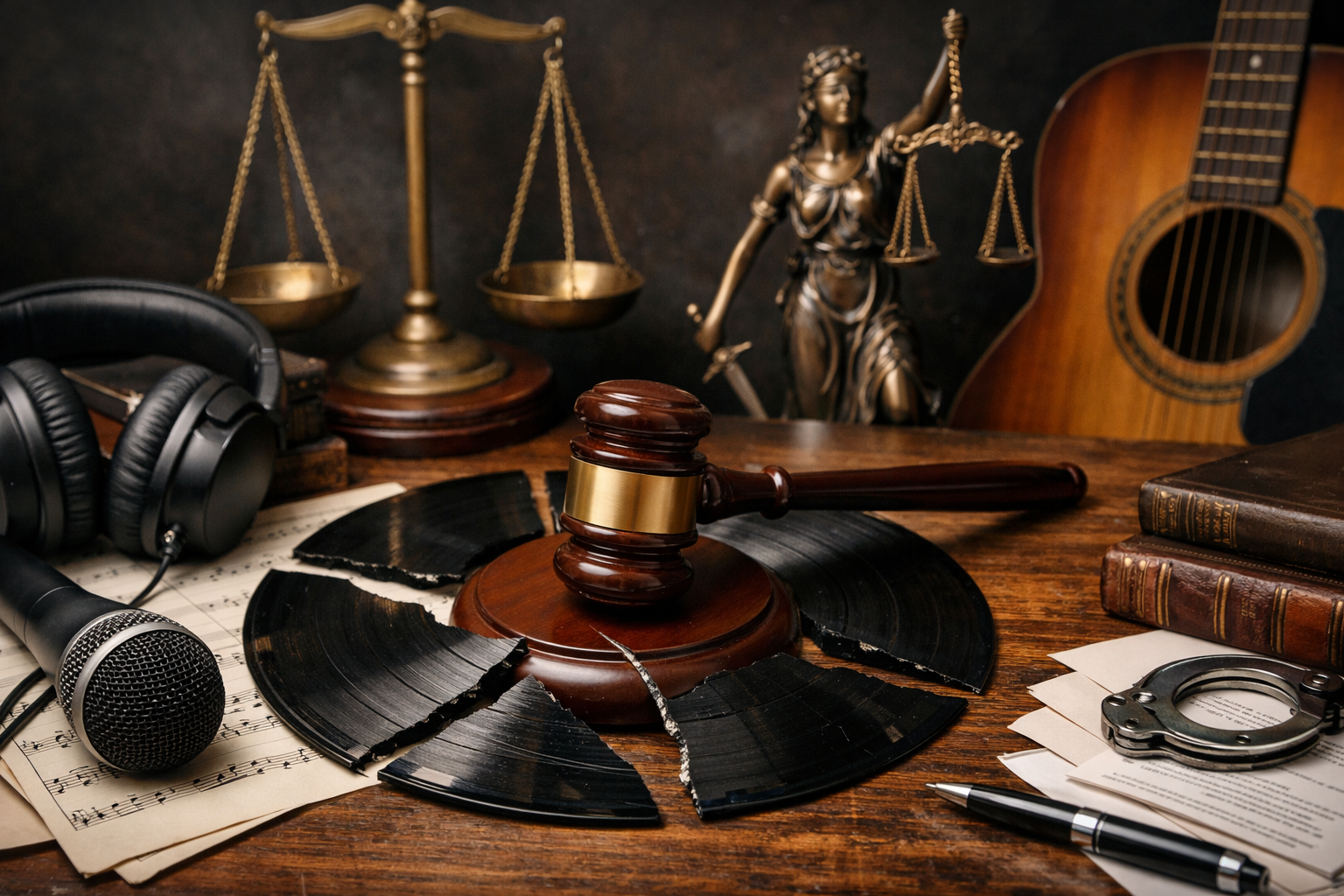
This article examines these controversies and discusses the implications under the law using the Copyright Act as a lens, highlighting actual YouTube cases that elicited public controversy. The essential question is: How do we balance the need to protect the rights of original creators with the need to foster a climate that encourages free expression and innovation? This article investigates this query by considering the intersection of copyright law and the platform YouTube.
Overview of Copyright Law
Copyright is a statutory mechanism that provides original creators with exclusive rights over their work. It covers a vast array of intellectual forms, such as literature, music, movies, photographs, computer programs, architecture, and more. The main aim of copyright is to promote creativity and the sharing of information by making the creators entitled to proper recognition and economic rewards for their efforts. In India, this legal protection is mainly regulated by the Copyright Act, 1957. Elsewhere in the world, other significant laws are the United States’ Digital Millennium Copyright Act (DMCA), which was passed in 1998 to deal with problems resulting from digital content and online media.
The legislation has been modified several times, with important amendments brought in 1994, 2012, and more recently to synchronize with digital advances. The Act protects literary works (such as software), dramatic works, musical compositions, artistic works, cinematographic films, and sound recordings. The DMCA contains a number of provisions that enable online content management, most notably the “safe harbor” provision that shields platforms such as YouTube from liability, as long as they respond promptly to takedown notices.
Moral rights, however, focus on the creator’s relationship with the work. These rights cover the right to attribution of the work and the right to prevent distortion or alteration likely to cause damage to the creator’s reputation.
The Rights Granted to Copyright Holders
There are many rights granted to Copyright Holders (that is, to the owner) which are dealt with under Section 14 of the Copyright Act, 1957;
Right of Reproduction: The creator has the sole right to make copies of their work in any form, whether digital or physical.
Right of Communication to the Public: This allows the creator to make their work accessible to the public through various mediums such as broadcasting or online streaming.
Right of Adaptation: The work can be transformed into a new form, like turning a novel into a film.
Right of Distribution: Copies may be made available to the general public for purchase, loan, or rental by the copyright holder.
Right of Public Performance: This guarantees that performances cannot take place without permission and is especially relevant to musical and dramatic works.
Right of Translation: Creators have the exclusive right to translate their works into different languages.
Despite these safeguards, the law recognizes that certain uses of copyrighted material must be allowed without a license.
Concept of Fair Use/ Fair Dealing
Fair dealing and fair use are doctrines that are exceptions to the exclusive rights of copyright holders, which are specified under Section 52 of The Copyright Act, 1957. These are intended to prevent copyright from being a barrier to learning, research, comment, and creativity.
Fair dealing is allowed in India for the following reasons:
- Private or personal use, including research
- Criticism or review, whether of that work or of any other work
- Reporting of current events and current affairs, including the reporting of a lecture delivered in public
- Use by teachers or students during educational activities
Role of YouTube in Content Creation
YouTube has completely changed the way people share content by giving anyone in the world a platform to make and share videos. It opens doors for individuals as well as organizations to reach a wider audience coverage without having to go through the traditional media channels. It converted regular internet users into influencers, entertainers, educators, and entrepreneurs. YouTube provides a wide variety of content, including cooking lessons, tech reviews, political commentary, vlogs, and make-up tutorials.
Creators often seek to enrich their videos with the use of third-party content such as music, film clips, memes, or news footage in order to enhance entertainment, commentary, or educational value. Sometimes these videos could be said to pose a legitimate challenge to copyright if they are contrary to the fair use/fair dealing convention.
If any copyrighted material is contained in a video, even in small amounts, the copyright holder may claim the revenue, or the video may be demonetized or taken down. Many creators have reported false claims or exaggerated claims in which their videos get taken down or demonetized even when used legally, such as commentary, satire, or education. The fact can be a direct consequence of another common human use fixed in this technology.
From Claims to Courts: Landmark Legal Battles Between YouTubers and Rights Holders (2023–2025)
The period 2023–2025 observed ever-intensifying legal conflicts between YouTubers and copyright holders. There is a third extremely important dimension in IP issues when the shift from one kind of digital content creation into another is made: what could formerly have been dealt with via automated Content ID claims is now being argued in court and being set with heavy precedents for the digital age.
Rise in Copyright Disputes
Between 2023 and 2025, YouTube copyright claims have soared. The sudden burst of digital content creation, especially short-form videos (like YouTube Shorts), has seen creators using more music and visual content than ever before. This has controlled an outburst of automated copyright notices and takedown notices, even when arguably the content falls under fair use.
Many creators have expressed frustration at the lack of transparency in the Content ID system.
One of the most prominent cases across the globe was that between an independent educational YouTuber and a global media corporation. The YouTuber had used short extracts from news segments in a documentary-style video attempting to analyse the media bias. The creator has challenged it in court for the right use of copyrighted material for criticism and educational purposes. This victory for smaller creators called attention to the significant role judicial interpretation will play in matters involving copyright.
Content ID and Algorithm Controversies
Content ID has been in controversy. After all, in most instances, creators are being claimed by takedown notices or demonetised for content that is either;
- In the public domain
- Used under fair use, such as thorough commentary, parody, or education
- Illegally claimed by someone who doesn’t hold the copyright (this practice is known as copyright trolling).
In response, YouTube introduced minor updates to the system to help in the dispute resolution process. However, a considerable number of users still report great delays with the dispute process and show an unfair bias towards copyright holders.
Crackdowns in the Music Industry
In 2024, record labels tightened controls on the ways their music should be used on YouTube. Even short background clips or reaction videos are no exception to demonetization. Thousands of small creators worldwide have been impacted by this. Even for remixes or memorials, some Indian music labels, such as T-Series and Zee Music, have started issuing mass takedown notices. For example, several Indian YouTubers reported takedowns of videos using classic Bollywood songs, despite claims of fair use. These actions led to online protests and legal discussions about overreach by large companies.
A worldwide uproar was sparked by a YouTube music parody that used an AI-generated voice of a well-known singer. Claiming impersonation and unauthorized use of the singer’s identity, the music label filed copyright claims against the video. However, the creator argued that it is a parody and has no direct sampling from the original artist but was made using AI tools.
Influencer and Creator Advocacy
During the time period between 2023 and 2025, a number of prominent artists, including Indian influencers CarryMinati, Dhruv Rathee, and Triggered Insaan, publicly denounced misuse of copyright law in the name of justice. In some instances, their videos have been either unlawfully taken down or monetized by some third parties. This has led to debates on platforms such as Twitter and Reddit, as well as on legal forums.
Major YouTube Copyright Controversies
- T-Series vs. PewDiePie
The battle for subscribers that pitched T-Series, India’s biggest music label, against Swedish YouTuber Pewdiepie drew attention from the rest of the world, but it was also where the issues of copyright fell into place. T Series claimed copyright on PewDiePie diss tracks, claiming that it used their brand name and referenced their content without permission. This also showcased that such powerful copyright holders can take actions against individual creators, reflecting the absence of a power balance on a content site like YouTube.
- Lata Mangeshkar Songs Taken Down
In another situation, different Indian YouTubers had to face copyright strikes for content that made use of Lata Mangeshkar’s songs, especially concerning tribute videos or mashups. In the name of copyright infringement, music labels took down the videos paying tribute to the actress. This raised a wide debate as to what constitutes fair use and whether transformative works such as mashups or tribute content deserve judicial protection.
- Lenz v. Universal Music Corp. (“Dancing Baby” case)
This is one of the most popular international cases, often referred to as the “Dancing Baby” case. Stephanie Lenz, the mother who posted a videotape of her dancing infant to the song “Let’s Go Crazy,” which was Prince’s song, exposed the issue online. Universal Music Corporation, holding the rights to the song. The video’s content is only about 29 seconds long and is not in the least commercial, yet Universal Music Corporation has filed for a takedown under the Digital Millennium Copyright Act (DMCA). Lenz claimed fair use, and so the matter went into litigation. Subsequently, the American judicial system held for Lenz and further cemented that copyright holders must consider fair use prior to issuing a takedown notice, tilting the balance in favor of users.
Conclusion
This being said, platforms such as YouTube have democratized content consumption and production in this realm of digitization. Once in this realm, perhaps millions of individuals across the world become storytellers, educators, performers, and influencers. However, this huge wave of content production has come at a clash with equally critical areas of Intellectual Property Rights (IPR), chiefly copyright law.
Numerous controversies in real life highlight the friction within the system—ranging from takedown campaigns initiated by Indian music label T-Series to celebrity high-profile trials such as Prince v. Lenz or CarryMinati takedown episodes. Copyright owners, certainly, are supposed to be able to protect their works; however, the creators argue use for their works under commentary, parody, or educational purposes should be considered transformative use and thus protected by law under doctrines such as fair use (U.S.) or fair dealing (India). On the other hand, YouTube’s automated enforcement mechanisms have been met with both acclaim and criticism for their Content ID system and enforcement.