Authored By: Prudence Phiri
University of Zambia
Abstract
This article examines the recognition and enforcement of the right to a healthy environment in Zambia, exploring its legal progress and remaining challenges. It argues that although Zambia has made commendable strides through constitutional provisions such as Article 255 and legislation like the Environmental Management Act, the realization of this right is undermined by weak enforcement, limited public participation, and inconsistent domestication of international environmental obligations. Using cases such as James Nyasulu and Others v Konkola Copper Mines and Others (2011) and Moses Lukwanda and Others v Zambia Airforce Projects Limited and Others, the article demonstrates growing judicial acknowledgment of the link between environmental protection and human rights. It concludes that achieving full environmental justice in Zambia requires stronger institutional capacity, public awareness, and political will, affirming that environmental protection is not merely ecological but a moral and legal imperative safeguarding human dignity and life.
Introduction
The intrinsic link between human rights and the environment is increasingly recognized in global legal frameworks.[1] A safe, clean, healthy, and sustainable environment is essential for the enjoyment of human rights such as the right to life, health, food, and water.[2] Consequently, environmental degradation can lead to violations of these rights, affecting vulnerable communities disproportionately.[3] In July 2022, the United Nations General Assembly declared the right to a clean, healthy, and sustainable environment, acknowledging its fundamental role in the realization of all human rights.[4] Zambia, as a member of the international community, has made notable strides in integrating the right to a healthy environment within its constitutional and legislative framework. The 2016 constitutional amendment enshrined environmental principles[5] and subsequent legislation has strengthened the country’s commitment to environmental justice.[6] However, challenges persist in ensuring that this right is effectively realized for all citizens. This article explores how Zambia recognizes the right to a healthy environment, examines the legal progress made, and identifies the challenges that remain in guaranteeing this fundamental right.
The Right to a Healthy Environment
Although there is no universal definition of the right to a healthy environment, the right is generally understood to encompass both substantive and procedural elements.[7] The former includes clean air, access to safe water and adequate sanitation, and a safe and stable climate among others. The latter includes access to information, access to justice and effective remedies, and participation in decision-making.[8] The right to a healthy environment is increasingly recognized as a fundamental human right that underpins the enjoyment of other rights, including life, health, water, and food.[9] It is said to be a prerequisite for the enjoyment of other rights, arising from the interdependence between human rights and environmental protection.[10] Though in its nature, the right is often regarded as a third generation or solidarity right, it is unique in that it embodies elements of the various categories of human rights (first and second generation).[11] Globally, instruments such as the African Charter on Human and Peoples’ Rights (ACHPR)[12] and the Rio Declaration on Environment and Development (Rio Declaration)[13] emphasize the importance of environmental protection for human well-being. The United Nations has also highlighted the interdependence between human rights and environmental protection, noting that environmental degradation undermines the enjoyment of fundamental rights,[14] particularly for vulnerable populations. In the Advisory Opinion on the Environment and Human Rights,[15] Colombia requested the Inter-American Court of Human Rights (IACtHR) for clarity on the scope of State obligations relating to the environment. The request was as a result of transboundary environmental harm in the Caribbean region and the potential impact on human rights. The Court held that the right to a healthy environment exists as an autonomous human right, distinct from other rights. It emphasized that environmental degradation can violate human rights even when there is no direct or immediate harm to individuals. Through this opinion, the IACtHR became one of the first tribunals to explicitly recognize the right to a healthy environment as a stand-alone, justiciable human rights. This global recognition provides a foundation for national frameworks, such as Zambia’s, to integrate environmental protection within human rights law.
Legal Framework in Zambia
The scale and severity of environmental damage resulting from human activities justify the need to address environmental issues within the framework of human rights.[16] Hence, Zambia has progressively integrated the right to a healthy environment into its constitutional and legislative frameworks. The Constitution of Zambia (Amendment) Act (2016) (the Constitution),[17] though does not explicitly provide for the right to a healthy environment, has provisions essential for environmental protection. It further provides general principles in Article 255,[18] which govern the management and development of the environment and natural resources. The incorporation of these principles into the Constitution embeds environmental protection into the supreme law of the country,[19] thereby laying the constitutional foundation for the right to a healthy environment.
The Environmental Management Act (EMA) in Section 4(1)[20] provides for the right to a clean, safe and healthy environment. The Section further articulates in subsection (3)[21] that a person may institute legal proceedings against another whose act or omission threatens, or is likely to threaten, the right referred to in subsection (1), where such conduct posses a risk of harm to human health or the environment. The provision is universal and empowers any person to bring about an action, whether or not they are directly affected.[22] This means that Zambia embraces a broad and liberal approach on locus standi. The implication of this provision is that it makes environmental protection rights legally enforceable, enhances public participation in environmental governance[23] and supports the precautionary principle (which requires preventive action to be taken when there is a threat of serious or irreversible damage despite lack of scientific evidence).[24] In addition, Section 7 of the EMA[25] establishes the Zambia Environmental Management Agency (ZEMA), which enforces environmental standards and promotes sustainable practices. Furthermore, Zambia’s adherence to regional and international environmental instruments reinforces its commitment to the right to a healthy environment.[26]
Progress Made
Zambia has made significant progress in promoting and enforcing the right to a healthy environment. The establishment of ZEMA has enhanced monitoring and enforcement mechanisms.[27] Public participation through environmental impact assessments has improved transparency and accountability in development projects.[28] Legal reforms, especially the 2023 amendment to the Environmental Management Act (EMA Amendment), have strengthened enforcement measures and increased penalties for non-compliance.[29] Furthermore, the enactment of the Human Rights Commission Act No. 4 of 2024 amplifies the enforcement of the right to a clean and healthy environment provided for in the EMA. Section 2 of the Human Rights Commission Act provides that ‘human rights mean the rights, liberties and freedoms conferred on or guaranteed to a person by the Constitution or any other written law in the Republic.’[30] The inclusivity of the definition allows the aforementioned right to fall within the ambit of human rights recognized in Zambian law. This development illustrates the growing acknowledgement of Zambia that a healthy environment is foundational to the realization of other human rights.
In James Nyasulu and Others v Konkola Copper Mines and Others,[31] where the Court dealt with a claim brought by residents of Chingola against the first defendants. The plaintiffs claimed that the effluent from the operations of the defendant had polluted the Kafue River, their main source of water, causing serious harm to them. The Court held the first defendant liable. The Court stated that the dire need of Zambia for foreign investment to enhance the well-being of its people does not justify the dehumanization of its citizens through greed and crude capitalism that prioritizes profit over human life. This highlights that environmental degradation undermines human dignity, which lies at the heart of all human rights. Though not explicitly recognized by the Court, the case affirms the right to a healthy environment as a human right.[32]
In Moses Lukwanda and Others v Zambia Airforce Projects Limited and Others,[33] the appellants initiated legal proceedings against the respondents. They contended that developmental activities within Lusaka East Forest Reserve No. 27 (Forest 27) threatened the ecological integrity of the area, particularly the Chalimbana River, which serves as a vital water source for the community. They claimed that the respondents violated the provisions of the EMA and the Water Resources Management Act No. 21 of 2011. The Court granted an interim injunction restraining the respondents from continuing the activities in Forest 27. The Court emphasized the potential for serious and irreversible environmental harm due to the developmental activities. The Court recognized the right to a clean, safe and healthy environment guaranteed by the EMA in section 4. Underscoring its significance as integral to the right to life. The decision of the Court reflects a commitment to upholding environmental rights and ensuring legal mechanisms are in place to protect them.[34] Judicial decisions such as the two articulated above also demonstrate the judiciary’s growing recognition of the right to a healthy environment.
Challenges
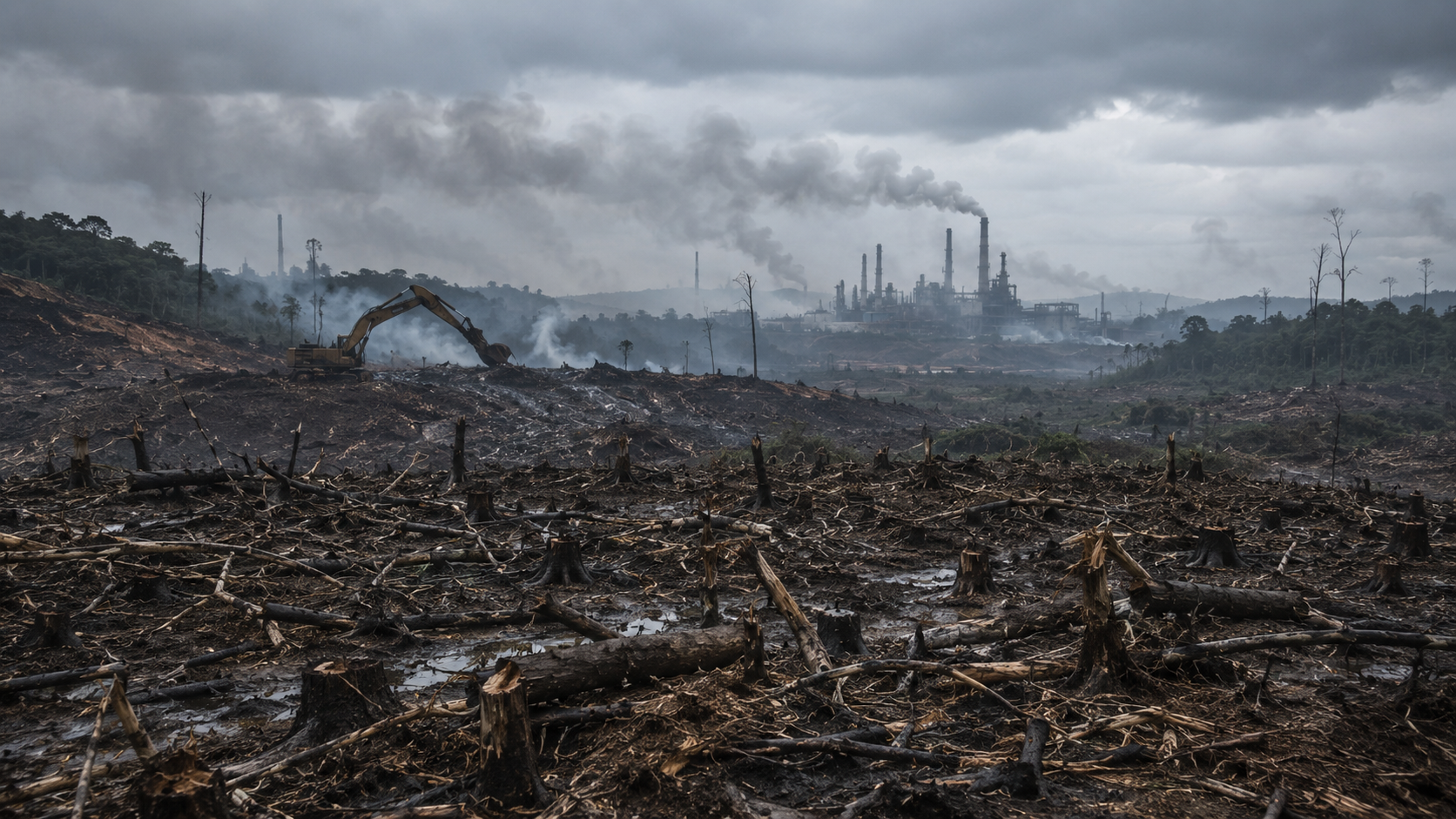
Despite these developments, the effective realization of this right remains constrained by weak enforcement mechanisms, limited institutional capacity, inadequate funding,[35] and non-adherence to legislation enacted to protect the environment. As illustrated in the Moses Lukwanda case.[36] Economic activities, particularly in mining and agriculture, continue to threaten environmental sustainability.[37] These activities have increasingly contributed to widespread environmental degradation and related human rights violations. These include soil and land degradation, desertification, deforestation, water pollution, ecological imbalance, loss of species and biodiversity, climate change, and the disappearance of numerous water sources such as underground aquifers, rivers, streams, lakes, and ponds.[38]Public awareness and participation in environmental decision-making are still limited, weakening the protection of this right.[39] The violation of these procedural rights contributes to environmental harm.[40] Many communities affected by pollution or environmental degradation lack access to information, legal representation, or mechanisms to effectively engage in environmental governance.[41] This limitation undermines the general environmental principles of access to information, participation, and justice in environmental matters, embodied in the Constitution and the EMA.[42]
Moreover, the translation of international environmental commitments into enforceable domestic rights remains inconsistent, hindering full implementation.[43] Strengthening legal institutions, civic education,[44] and cross-sectoral coordination is vital to overcome these challenges.
Conclusion
The recognition of the right to a healthy environment in Zambia reflects the state’s growing alignment with global human rights and environmental standards. Constitutional and legislative reforms demonstrate commendable progress. However, as the analysis has shown, challenges persist. Limited public awareness, weak institutional capacity, and inconsistencies in translating international environmental commitments into domestic legal obligations continue to undermine effective implementation. For Zambia to ensure that every citizen enjoys a clean, safe and healthy environment, it must reinforce institutional frameworks, enhance public engagement, and integrate international obligations effectively. Protecting the environment is not merely an ecological goal, rather it is a moral and legal imperative that safeguards human dignity and the right to life itself. Thus, ensuring environmental justice in Zambia requires not only strong laws and courts but also an active citizenry and political will to place people and the planet above profit.
Bibliography
Statutes
Constitution of Zambia (Amendment) Act No 2 of 2016.
Environmental Management Act No. 12 of 2011.
Environmental Management (Amendment) Act No 8 of 2023.
Human Rights Commission Act No. 4 of 2024.
African Charter on Human and People’s Rights 1981.
Rio Declaration on Environment and Development 1992.
UNGA Res 76/300, The Human Right to a Clean, Healthy and Sustainable Environment’ (30 July 2022) UN Doc A/RES/76/300.
Caselaw
Inter-American Court of Human Rights Advisory Opinion OC-23/17 (2017).
James Nyasulu and Others v Konkola Copper Mines and Others [2011] ZMHC 114.
Moses Lukwanda and Others v Zambia Airforce Projects Limited and Others [2020] ZMCA 134.
Obligations of States in Respect to Climate Change (Advisory Opinion) [2025] ICJ NO. 187 (Request for Advisory Opinion).
Books
Addaney M and Jegede A, Human Rights and the Environment under African Union Law (Springer Nature 2020).
Boyd D, The Right to a Healthy Environment: Revitalizing Canada’s Constitution (UBC Press 2012).
Sambo PT, ‘Access to Environmental Justice in Zambia: A Critical Review of Three Significant Cases’ in Environmental Justice in Africa: Cultural and Economic Impacts on the Legal Systems (Pretoria University Law Press 2025).
Sands P and Others, Principles of International Environmental Law (3rd edn, Cambridge University Press 2018).
United Nations Development Programme, What is the Right to a Healthy Environment? Information Note (UNDP 2022).
Journals
Bolaji A, ‘Upholding Environmental Human Rights Through Judicial Interpretation of Peaceful Enjoyment of Property’ (2021) 29 International Islamic University of Malaysia Law Journal.
Organisation of African Unity, African Charter on Human and Peoples’ Rights (adopted 27 June 1981, entered into force 21 October 1986) 1520 UNTS.
Sambo PT, ‘Moses Lukwanda and 9 Others v Zambia Airforce Projects Limited and 7 Others CAZ/08/323/2019,’ (2020) 3(1) SAIPAR Case Review.
Sambo PT, ‘The Environmental Management Act (2011): a Basis for the Growth of an Environmental Ethos And Good Environmental Governance in Zambia?’ (2019) 38 Law Environment Africa.
[1] Philippe Sands & Others, Principles of International Environmental Law (3rd edn, Cambridge University Press 2018) 45.
[2] United Nations Development Programme, What is the Right to a Healthy Environment? Information Note (UNDP 2022) 5.
[3] David Boyd, The Right to a Healthy Environment: Revitalizing Canada’s Constitution (UBC Press 2012) 12–14.
[4] UNGA Res 76/300, ‘The Human Right to a Clean, Healthy and Sustainable Environment’ (30 July 2022) UN Doc A/RES/76/300.
[5] Constitution of Zambia (Amendment) Act No. 2 of 2016, Art 255.
[6] Environmental Management Act No. 12 of 2011; Environmental Management (Amendment) Act No 8 of 2023.
[7] United Nations Development Programme (n2) 9.
[8] Ibid.
[9] Ibid, 5.
[10] Obligations of States in Respect to Climate Change (Advisory Opinion) [2025] ICJ NO. 187 (Request for Advisory Opinion).
[11]Michael Addaney and Ademola Oluborode Jegede, Human Rights and the Environment under African Union Law (Springer Nature 2020) 35.
[12] African Charter on Human and People’s Rights 1981, Art 2
[13] Rio Declaration on Environment and Development 1992, Principle 4.
[14] United Nations Development Programme (n2) 10.
[15] Inter-American Court of Human Rights Advisory Opinion OC-23/17 (2017).
[16] A Bolaji, ‘Upholding Environmental Human Rights Through Judicial Interpretation of
Peaceful Enjoyment of Property’ (2021) 29 International Islamic University of Malaysia
Law Journal 253.
[17] Act No. 2 of 2016.
[18] Ibid, Art 255.
[19] Ibid, Art 1.
[20] Act No. 12 of 2011, S4(1).
[21] Ibid, S4(3).
[22]Pamela Towela Sambo, ‘The Environmental Management Act (2011): a basis for the growth ofan environmental ethos and good environmental governance in Zambia?’ (2019) 38 Law Environment Africa 657.
[23] Ibid.
[24] Rio Declaration, Principle 15.
[25] EMA, S7.
[26] Organisation of African Unity, ‘African Charter on Human and Peoples’ Rights’ (adopted 27 June 1981, entered into force 21 October 1986) 1520 UNTS 217.
[27] EMA, S9.
[28] EMA, S29.
[29] Environmental Management (Amendment) Act No. 8 of 2023, S4; S8; S9; S27.
[30] Human Rights Commission Act No. 4 of 2024, S2.
[31] [2011] ZMHC 114.
[32] Pamela Towela Sambo (n22) 658.
[33] [2020] ZMCA 134.
[34] Pamela Towela Sambo, ‘Moses Lukwanda and 9 Others v Zambia Airforce Projects Limited and 7 Others CAZ/08/323/2019,’ (2020) 3(1) SAIPAR Case Review 57-58.
[35] Phillipe Sands and Others (n1) 47.
[36] Pamela Towela Sambo (n34)
[37] David Boyd (n3) 23.
[38] Pamela Towela Sambo, ‘Access to Environmental Justice in Zambia: A Critical Review of Three Significant Cases’ in Environmental Justice in Africa: Cultural and Economic Impacts on the Legal Systems (Pretoria University Law Press 2025) 149.
[39] David Boyd (n3) 23.
[40] Pamela Towela Sambo (n38) 154.
[41] Ibid
[42] The Constitution, Art 255; EMA, S6.
[43] UNGA Res 76/300 (n4).
[44] United Nations Development Programme, (n2) 13.