Authored By: Vardhan Rajendra Majgaonkar
Shahaji Law College, Kolhapur
INTRODUCTION
In today’s digital age, the concept of “trial by media” has shifted justice from courtrooms to online platforms. A recent case in Kerala exemplified this phenomenon. A 35-year-old influencer uploaded a video while travelling in a bus and accused a fellow passenger of sexual harassment. The video gained over 20 lakh views, and within a few days, the accused man — facing intense online humiliation — died by suicide. The man’s family filed a complaint against the woman, and she was arrested on charges of abetment to suicide. Notably, after his death, public opinion began to shift, and many people questioned the allegation itself, showing how quickly perceptions can change. This highlights the dangers of trial by media, where individuals — often without full understanding of legal nuances — form judgments that can irreparably harm a person’s reputation and mental well-being. While social media can give a voice to victims, it also ignores legal nuances, prioritizing viral outrage over due process. This article examines how trial by media shapes public opinion and whether it ultimately supports or undermines the principles of justice and a fair trial.
WHAT IS TRIAL BY MEDIA?
Trial by media occurs when newspapers, television, or digital platforms create a widespread narrative about the guilt or innocence of an accused person before a legal verdict is passed. This directly affects the fundamental legal principle of presumption of innocence — the principle that an accused is considered innocent until proven guilty in a court of law.
Media influence on trials is not a recent problem. Historically, high-profile cases have often attracted significant attention from the media. One such instance is the case of K.M. Nanavati, a Naval Commander charged with the murder of his wife’s lover. The case gained enormous media attention and was extensively covered by newspapers. Blitz, a weekly magazine, published articles portraying Nanavati as an honourable officer and loyal husband who had been betrayed. Prem Ahuja, the wife’s lover, was depicted as a corrupt playboy.
The media portrayal of Nanavati was so influential that popular opinion was already swayed in his favour before the verdict was delivered. This had a significant impact on the jury, and Nanavati was acquitted. However, the higher courts later reversed the judgment, observing that the jury had been misled and that the decision was inconsistent with the evidence. See K.M. Nanavati v. State of Maharashtra, AIR 1962 SC 605. This case demonstrates how media can shape public perceptions even in the absence of digital technology.
Media influence has not diminished — if anything, the current situation is far more complex. Social media platforms are decentralized and operate without strict control over content. Millions of users can share information, express opinions, and instantly construct a narrative, which often leads to unverified claims and rumours going viral within minutes.
THE SHIFT TO DIGITAL PLATFORMS
Social media has fundamentally changed how people consume news. Platforms like Instagram, Facebook, and YouTube allow anyone to create content and reach a global audience instantly. This phenomenon has given rise to the concept of “citizen journalism” — where individuals report news in real time. While this makes information more accessible, it also raises serious concerns, as many citizen journalists lack professional training in media ethics, legal analysis, and an understanding of the consequences of public defamation.
Social media platforms also use algorithms to determine what users see. These algorithms do not evaluate the accuracy of content or whether it originates from a verified source. They prioritize user interaction and retention. In such an “attention economy,” content that evokes strong emotional responses — outrage, fear, or shock — is far more likely to go viral than content that is factually accurate.
Algorithms do more than simply promote sensational content. They also create echo chambers — environments where audiences are exposed only to information that aligns with their existing beliefs, reinforcing confirmation bias. During criminal trials, this becomes particularly dangerous when users are repeatedly served content that reflects dominant local opinions, progressively shaping their perception of truth. As a result, algorithms are not neutral; they actively amplify certain narratives while suppressing others, turning public discussion into intense, personalized media trials.
RISE OF ARMCHAIR DETECTIVES
An “armchair detective” is an amateur who investigates crimes from home using the internet. These are often true crime enthusiasts, social media influencers, or ordinary web users who use platforms like TikTok and Reddit to share theories and analyze evidence. However, their actions frequently cause real-world harm.
A prominent example is the 2020 death of actor Sushant Singh Rajput. His death was shrouded in mystery due to a lack of immediate clarity from authorities. Online users immediately began speculating about the cause of his death, analyzing personal information, interviews, alleged leaked messages, and selective reports — generating a vast number of unverified theories.
Actress Rhea Chakraborty, his then-girlfriend, became the primary target of intense online hostility fuelled by misinformation. She faced formal allegations of abetment to suicide, and in some online theories — though not in formal legal charges — even murder. She reportedly received rape threats, illustrating how far media-driven public perception can stray from legal reality.
The families involved were also profoundly affected by the online narrative, subjected to constant scrutiny, unfounded assumptions, and intrusions into their private grief. Their mourning was often turned into public spectacle aimed at capturing emotion rather than establishing facts.
The phenomenon of armchair detectives demonstrates that unregulated public involvement in sensitive cases can result in widespread misinformation, biased narratives, and even interference with the legal system.
THE THREAT OF ARTIFICIAL INTELLIGENCE
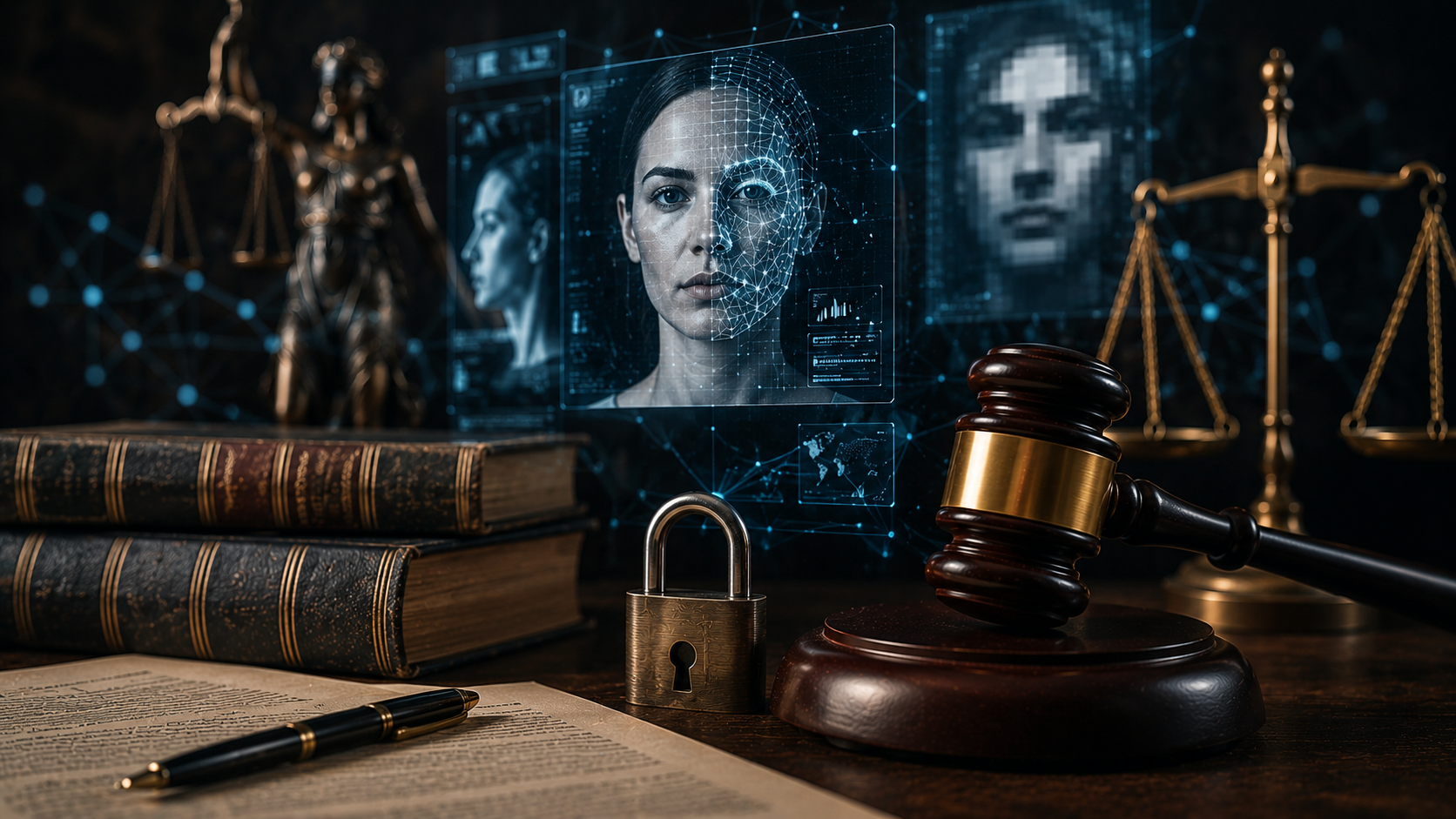
The problem of trial by media is being compounded by the rise of Artificial Intelligence (AI). AI technology now enables the creation of highly realistic fake videos and audio recordings, commonly known as deepfakes.
The quality and quantity of deepfakes have increased dramatically. Experts estimate that the number of online deepfakes rose from approximately 5,00,000 in 2023 to around 80,00,000 in 2025.1 The latest deepfakes maintain consistent facial features and realistic voice cloning; they have become indistinguishable from authentic recordings for the average person.
A fabricated video can be shared across social media platforms to frame an innocent person or ignite public outrage. Furthermore, deepfakes have given rise to a concept known as the “Liar’s Dividend” — the ability of a guilty defendant to claim that real, authentic video evidence is merely AI-generated content. Courts are currently grappling with how to develop reliable frameworks for handling AI-generated evidence.
ANALYSIS
The issue of trial by media reveals a clear conflict between the freedom of speech and the right to a fair trial. In India, the Constitution protects both. Article 19(1)(a) guarantees freedom of expression, while Article 21 guarantees the right to life and personal liberty — which courts have interpreted to include the right to a fair trial. Reasonable restrictions on free speech are permitted under Article 19(2), including on grounds of contempt of court and defamation, but the rise of social media has made maintaining this balance considerably more difficult.
Online platforms use algorithms that promote content based on popularity rather than accuracy. During criminal trials, this can lead to the spread of biased or incomplete narratives that influence public opinion well before a court reaches its decision — effectively eroding the principle of presumption of innocence.
At the same time, completely restricting speech is neither fair nor desirable. Social media plays a vital role in raising public awareness and holding authorities accountable. A balanced approach is therefore necessary. Measures could include reducing the algorithmic visibility of sensitive content during ongoing trials, and taking strict action against demonstrably biased pre-trial reporting. The focus should not be on restricting speech itself, but on regulating how harmful content is amplified and spread online.
CONCLUSION
The digital age has fundamentally transformed the traditional concept of trial by media. Social media algorithms, citizen journalists, armchair detectives, and artificial intelligence all contribute to an environment where public opinion often forms far more rapidly than legal verdicts. This relentless flow of information can significantly compromise an individual’s right to a fair and impartial trial.
At the same time, protecting the integrity of the justice system is essential to a functioning democratic society. Freedom of speech must be preserved, but it should not be permitted to systematically undermine a person’s right to due process. Governments and legal institutions must modernize their frameworks to address these challenges. By introducing proportionate regulations and holding digital platforms accountable for the consequences of their algorithms, it is possible to protect both free expression and the right to a fair trial — not as competing values, but as complementary pillars of justice.
REFERENCE(S):
Times of India, Rhea Chakraborty Files an Official Police Complaint Against the Rape and Death Threats She Received Post Sushant Singh Rajput’s Demise (July 15, 2020), Times of India.
International Journal for Multidisciplinary Research, Research Paper No. 71899, IJFMR.
Public Broadcasting Institute, Rise of the Armchair Detective: The Impact of Social Media on Court Cases, Public Broadcasting Institute.
Jordan Gruce, Social Media and the Court: Exploring Impacts, Challenges, and Legal Considerations in the Digital Age, Indiana State University.
iPleaders, K.M. Nanavati v. State of Maharashtra Case Analysis, iPleaders.
Andhra Pradesh High Court, Judiciary and Media, AP High Court.
Francesco Ernesto Alessi Longa, The Presumption of Innocence and the Media: An Examination of Fair Trial Rights in the Digital Era.
WSHBLaw, Strategies for Overcoming Challenges Presented by the Impact of Social Media on Juries, WSHBLaw.
Brennan Center for Justice, Deepfakes, Elections, and the Shrinking Liar’s Dividend, Brennan Center.
Wikipedia contributors, Sushant Singh Rajput, Wikipedia, Wikipedia.
1 Deepfake statistics sourced from Brennan Center for Justice, Deepfakes, Elections, and the Shrinking Liar’s Dividend (see above).